

Selling affiliate products on Shopify in 2026 is absolutely possible, but you need to set the store up in the right way. Shopify is built for direct ecommerce, so if you want to earn commissions from third-party products, the core job is to replace the normal cart flow with outbound affiliate links while still giving shoppers a polished, trustworthy experience.
In my experience building Shopify apps and working with merchants across launches, upsells, reviews, and on-site conversion flows, this model works best when you treat it like a content-led commerce business rather than a standard catalogue store. You are not just listing products. You are curating recommendations, building trust, and sending buyers to the right merchant at the right moment.
If you are starting from zero, this guide will show you how to sell affiliate products on Shopify step by step. If you already run a store, it will also help you add affiliate offers without making the site feel messy or confusing.
What is selling affiliate products on Shopify?
Selling affiliate products on Shopify means displaying third-party products on your Shopify store and sending visitors to an external merchant using your unique tracking link. When someone buys through that link, you earn a commission, typically around 5% to 15% for physical products, though some programmes pay more.
This is different from dropshipping. With dropshipping, the customer usually checks out on your store and a supplier fulfils the order. With affiliate selling, the customer usually leaves your Shopify store to complete the purchase elsewhere. That means no inventory, no fulfilment, and no customer shipping operations on your side.
Affiliate marketing continues to be a serious channel, not just a side hustle trend. Current research shows it drives roughly 16% of ecommerce sales, and some brands report around $15 in revenue for every $1 spent on affiliate activity. That is why both independent publishers and established retailers are investing more heavily in it.
Can you really use Shopify for affiliate marketing?
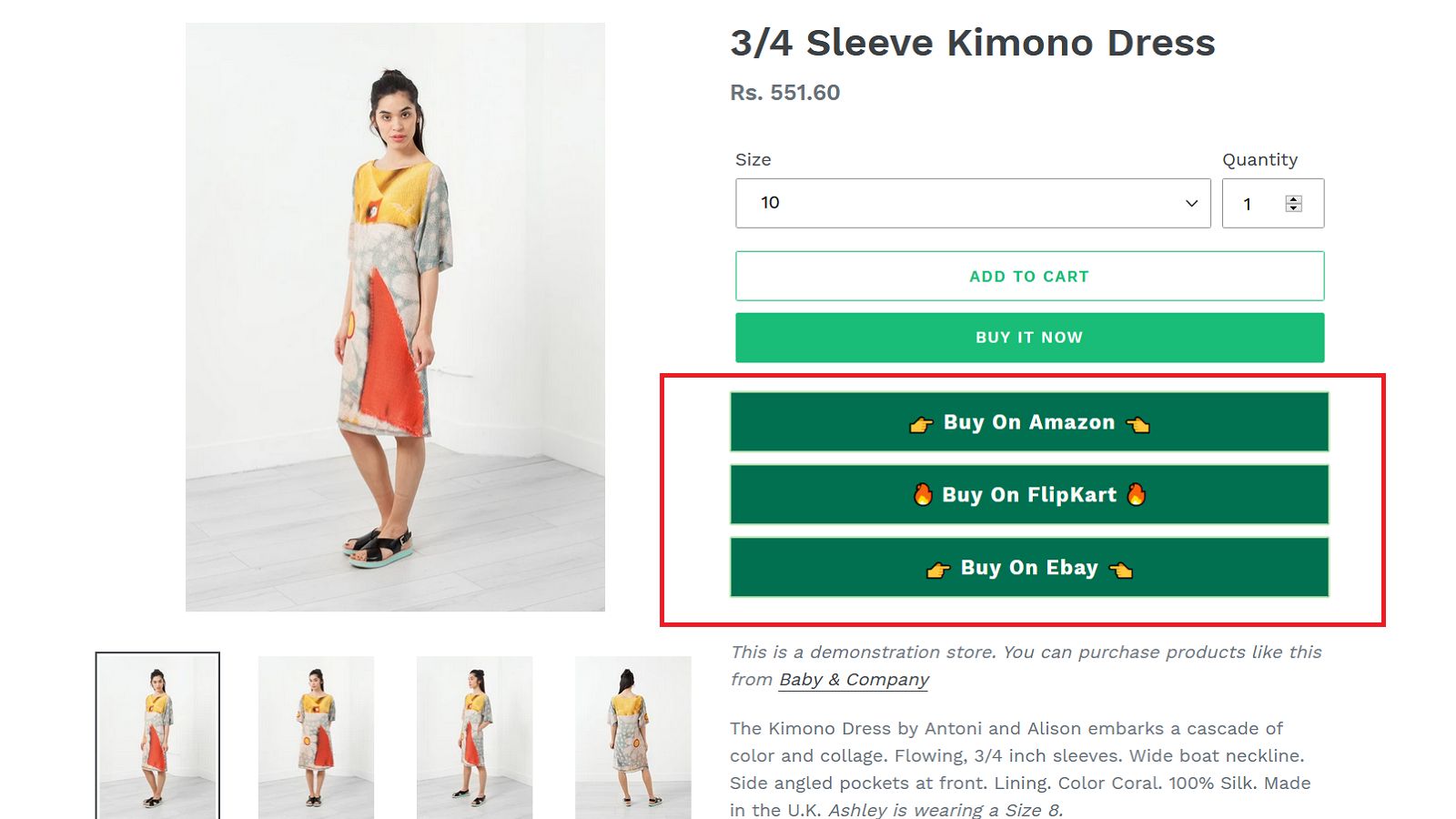
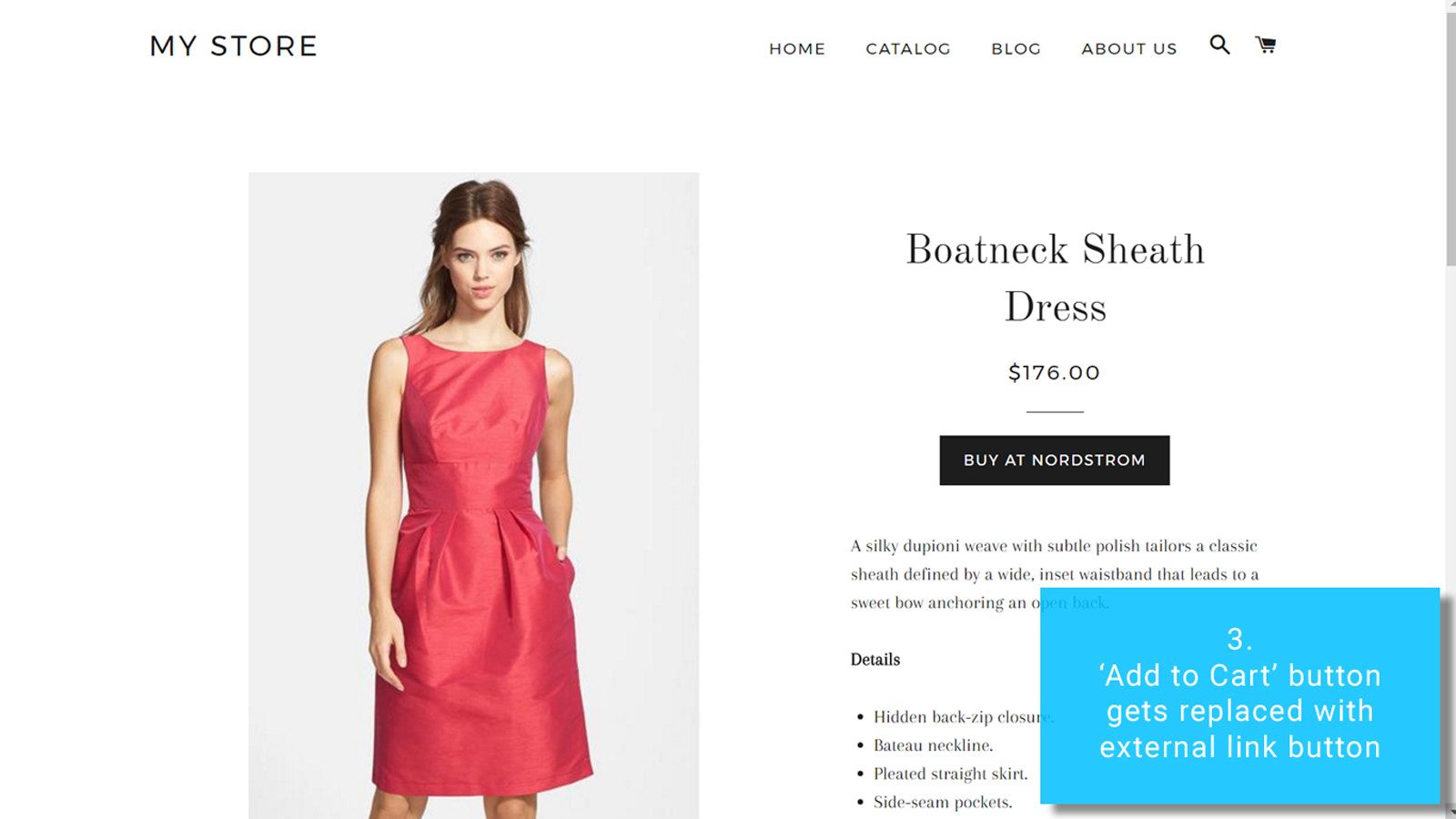
Yes, Shopify can be used for affiliate marketing, even though it is not the default setup out of the box. The simplest route is to create product pages as normal and then use an app or theme customisation to swap the Add to cart button for a Buy on partner site or similar external link.
There are two main ways people use Shopify in affiliate marketing. The first is building a store made up mostly or entirely of affiliate products. The second is adding affiliate products or recommendations to an existing store as a supplementary revenue stream.
In practice, I usually recommend the second route for merchants who already have traffic. If you already publish content, rank for niche search terms, or have an email list, adding well-matched affiliate offers can be a smart extension. If you are still pre-launch, our Shopify store launch checklist is a useful place to start before layering in affiliate offers.
Why sell affiliate products on Shopify in 2026?
The biggest reason is simple: low operational overhead. You can monetise traffic without managing stock, packaging, returns, or delivery support.
That makes affiliate selling especially attractive for content-led stores, niche publishers, comparison sites, creators, and merchants testing demand before developing their own products. In my experience, it is also a practical way to learn which products and categories convert before you invest in inventory.
- No inventory risk - you do not buy stock upfront
- No fulfilment burden - the merchant handles shipping and returns
- Fast to test - you can validate niches and product angles quickly
- Good for SEO content - buying guides, comparisons, and reviews fit naturally
- Easy to combine with your own products later - useful for hybrid stores
The trade-off is margin and control. You are dependent on third-party merchants, their conversion rates, their landing pages, and their commission rules. That is why choosing the right programmes matters more than many beginners realise.
How do I choose the best affiliate products to sell on Shopify?
The best affiliate products for Shopify are closely aligned with your niche, have decent commission rates, and solve a clear problem for your audience. Relevance usually matters more than raw commission percentage.
For example, if your store focuses on fitness apparel, adding unrelated gadgets just because they pay well usually underperforms. A tighter fit would be resistance bands, recovery tools, supplements, or smart fitness accessories. The closer the affiliate product is to the reason someone visited your store, the better your click-through rate tends to be.
When I test product ideas, I usually score them against four factors: audience fit, average order value, merchant trust, and conversion intent. A product with a slightly lower commission can still win if the brand converts better and the product naturally fits the content.
What product categories tend to work well?
Strong affiliate categories usually have clear buyer intent, visual appeal, and enough margin to support commissions. Evergreen niches also make content creation easier over time.
- Clothing and accessories
- Pet supplies
- Health and beauty
- Smartphone accessories
- Home and kitchen tools
- Fitness products
- Digital tools and SaaS products
SaaS can be especially attractive if your audience is business-focused because commissions are often much higher. Physical products are usually easier to present in a Shopify storefront, but software can outperform on pure earnings if the audience is right.
What should I avoid?
You should avoid products that do not match your audience, merchants with poor landing pages, and programmes with weak tracking or unclear terms. High commissions mean very little if the merchant site does not convert.
- Low-trust brands with poor reviews
- Products with weak or confusing landing pages
- Very low commission products unless volume is high
- Overly broad catalogues with no niche positioning
- Programmes with short cookie windows and unclear payout rules
Which affiliate programmes and networks should you join?
The best affiliate programme is the one that matches your niche and converts reliably. For beginners, broad marketplaces are easier to start with, while niche-specific programmes often perform better once you know your audience.
Popular options in 2026 include Amazon Associates, CJ Affiliate, ShareASale, Rakuten Advertising, and specialist private affiliate programmes run by individual brands. Research from current market roundups also highlights larger affiliate ecosystems and partner networks for broader offer access.
Amazon Associates is easy to understand and has huge product coverage, but commissions can be modest. Niche brand programmes often pay better, especially in software, education, finance, and premium consumer products.
| Programme type | Best for | Typical commission | Main downside |
|---|---|---|---|
| Amazon Associates | Beginners, broad catalogues | Up to 10% | Lower margins in many categories |
| Affiliate networks | Access to many brands in one place | Varies widely | Approval can be stricter |
| Private brand programmes | Niche sites and stronger offers | 5% to 20%+ | More manual setup and outreach |
| SaaS affiliate programmes | B2B and creator audiences | 20% to 50% recurring | Smaller fit for general consumer stores |
Before joining, check the cookie duration, payout threshold, approval process, brand guidelines, and whether the merchant allows promotion through a storefront model. Some programmes prefer editorial content rather than product-listing style promotion.
How do I add affiliate products to Shopify?
To add affiliate products to Shopify, you create a normal product listing and then replace the standard purchase flow with an external affiliate link. The product page still needs a title, images, description, and clear call to action.
This is where most beginners get stuck. Shopify expects a cart and checkout. Affiliate stores need an outbound click instead. You can handle that with a dedicated external-link app, or with theme edits if you are comfortable working in Liquid.
- In Shopify admin, go to Products and create a product.
- Add a strong title, description, images, and any useful comparison details.
- Install an external-link app to swap the button behaviour.
- Paste in your affiliate URL with tracking parameters.
- Change the button text to something clear such as View deal, Buy on partner site, or Check latest price.
- Test the link on desktop and mobile before publishing.
If you are manually editing themes, check your product template and make sure the external link replaces or conditionally overrides the cart button. I generally suggest using an app unless you are confident maintaining theme code through future updates.
What are the best Shopify apps for affiliate product links?
The best Shopify apps for affiliate product links are the ones that make outbound linking simple, stable, and easy to manage at scale. For most merchants, that means using a dedicated external-link button app rather than hacking the theme.
I have not built one of these specific apps myself, but I have worked on enough Shopify storefront behaviour to know that simple, reliable button logic matters. If the product page is confusing, or the button looks broken, your clicks and commissions drop fast.
| App | Best for | What it does | Link |
|---|---|---|---|
| AOD External Links | Simple outbound product buttons | Lets you replace Add to cart with external product links | View app |
| Outlink External Links | Affiliate product stores | Designed for external and affiliate product linking | View app |
| BL External Links Button | Basic external button swapping | Adds external link buttons to product pages | View app |
Here are the main options worth considering:
 AOD External Links - a straightforward option for replacing the product button with an external link.
 Outlink External Links - one of the most obvious fits for affiliate product setups.
 BL External Links Button - useful if you want a simpler external-link implementation.
If you also want to run your own affiliate programme later, that is a different app category entirely. In that case, look at UpPromote, GOAFFPRO, BixGrow, and Shopify Collabs. We have a full guide on that here: best affiliate apps for Shopify.
How should affiliate product pages be written for conversions?
The best affiliate product pages are helpful, specific, and honest. They should explain who the product is for, why it is worth considering, and what happens when the shopper clicks through.
One mistake I see often is copying manufacturer descriptions. That rarely converts well and it does very little for SEO. In my experience, product pages perform better when they include real buying context, such as use cases, comparisons, pros and cons, and practical guidance.
What should each page include?
Each affiliate product page should answer the shopper’s key questions quickly. The clearer the page, the higher the click-through rate tends to be.
- Clear product title
- Original description focused on benefits, not fluff
- High-quality product images where permitted
- Who it is best for
- Pros and cons
- Pricing context if allowed
- A visible affiliate disclosure
- Strong external CTA
If your theme allows it, add comparison blocks or related recommendations. If you need help structuring product recommendations well, these guides on recommended products and related products can help improve merchandising logic.
How do I disclose affiliate links properly?
You should disclose affiliate relationships clearly and conspicuously. A simple, visible statement near the link or at the top of the page is usually the safest approach.
This matters for trust as much as compliance. The FTC endorsement guidance makes it clear that affiliate relationships should be disclosed in a way consumers can easily notice and understand. If you serve UK or EU audiences, you should also review local advertising and consumer protection guidance.
Good disclosure examples include:
- This page contains affiliate links. We may earn a commission if you buy through them.
- Affiliate link label next to external CTAs
- A short disclosure in comparison tables and buying guides
Do not bury disclosures in a footer or a legal page. If the link is central to the page’s purpose, the disclosure should be visible near that decision point.
How do I optimise an affiliate Shopify store for SEO?
SEO is one of the best traffic sources for affiliate stores because buying guides, comparisons, and niche product pages can rank for high-intent searches. The key is to publish original, useful content instead of thin pages built around copied descriptions.
In my experience, the stores that do best with affiliate monetisation are not the ones with the biggest catalogues. They are the ones with the clearest content strategy. They target specific search intent, answer buyer questions properly, and make the next step obvious.
What content works best?
The best affiliate content usually sits between editorial content and commerce. It helps the shopper decide, rather than just pushing a click.
- Best product roundups
- Product comparisons
- Problem-solution guides
- Niche buyer guides
- Use-case landing pages
- Review pages with genuine opinions
For example, instead of creating a page called “Protein shaker bottle”, you might publish “Best protein shaker bottles for commuting” or “Best leak-proof shaker bottles for gym bags”. That is more specific, more useful, and often easier to rank.
What technical SEO basics matter most?
The most important technical SEO basics are site speed, mobile usability, clean metadata, and proper internal linking. Mobile optimisation matters especially because a large share of ecommerce browsing still happens on phones.
Compress images, keep layouts uncluttered, and make sure external buttons are easy to tap on smaller screens. If your store is slow, rankings and click-throughs both suffer. You can also use tools like PageSpeed Insights to spot performance issues.
If SEO is a major growth channel for you, our guide on optimising conversion rate on Shopify pairs well with this because traffic without clicks and conversions is not enough.
How do I drive traffic to affiliate products on Shopify?
The best traffic sources for affiliate products on Shopify are SEO, content marketing, email, and social content. Paid ads can work, but they are harder to make profitable unless commissions are high and the merchant converts very well.
I generally recommend starting with organic channels. Affiliate margins are thinner than owned-product margins, so you need traffic sources with compounding upside. Blog content, Pinterest, YouTube, TikTok, Instagram Reels, and email newsletters can all work if the content matches the product category.
- Blog content for search traffic and evergreen clicks
- Email for curated recommendations and seasonal roundups
- Short-form video for product demos and use cases
- Pinterest for visual consumer niches
- YouTube for reviews and comparisons
For many stores, the strongest model is content first, product pages second. Publish useful content that ranks or gets shared, then funnel readers into your curated product pages.
What metrics should I track for an affiliate Shopify store?
You should track outbound click-through rate, affiliate conversion rate, earnings per visitor, and top-performing pages. Revenue alone does not tell you where the bottleneck is.
Because the final sale happens off-site, your analytics setup needs to focus on the handoff. If a page gets traffic but very few outbound clicks, your content or CTA is weak. If it gets clicks but poor commissions, the merchant or offer may be the problem.
| Metric | Why it matters | What to do if it is low |
|---|---|---|
| Outbound CTR | Measures page-to-merchant handoff | Improve CTA, layout, and product positioning |
| Affiliate conversion rate | Shows how well the merchant converts | Test different programmes or products |
| Earnings per visitor | Helps compare page profitability | Prioritise higher-value content and offers |
| Top traffic pages | Shows where growth opportunities are | Add stronger monetisation paths |
Most affiliate networks provide dashboard reporting, but I also recommend tracking outbound button clicks in your site analytics so you can see which pages and placements actually drive action.
What are the biggest mistakes people make when selling affiliate products on Shopify?
The biggest mistakes are poor niche fit, thin product pages, weak disclosures, and trying to force Shopify into an affiliate model without fixing the user journey. The store needs to feel intentional, not improvised.
- Using generic copied descriptions
- Listing too many unrelated products
- Hiding the fact that shoppers will leave the site
- Choosing programmes based only on commission rate
- Ignoring mobile usability
- Not testing links regularly
- Expecting quick passive income without content or traffic strategy
One more mistake is treating affiliate selling as the final destination. Often, the better long-term play is to use affiliate data to discover what your audience wants, then introduce your own products, bundles, or digital offers later.
Should you eventually move from affiliate products to your own products?
Yes, in many cases moving into your own products is the smarter long-term strategy. Affiliate marketing is great for validation and monetisation, but owned products give you better margins, stronger brand control, and more customer lifetime value.
This is the path I would seriously consider if your store starts getting consistent traffic and you notice repeat interest in a specific product type. Affiliate content can show you exactly what people click, what they buy, and which categories deserve deeper investment.
How do you make that transition?
The simplest transition is to start with affiliate content, identify winners, and then launch your own version or complementary product. You do not need to replace everything at once.
- Analyse your top affiliate pages and best-performing product categories.
- Look for products with strong demand but mediocre merchant experiences.
- Source or develop your own product in that niche.
- Keep affiliate recommendations where they still add value.
- Use upsells, bundles, and email flows to improve margins.
If you go down that route, these guides on building sales funnels and upselling on Shopify become much more relevant because you control the checkout and post-purchase experience.
What if I want to run my own affiliate programme instead?
If you want other people to promote your products, you need an affiliate management app rather than an external-link button app. This is the opposite model: instead of sending traffic away, you recruit affiliates to send buyers to you.
For Shopify merchants, the most commonly used tools include UpPromote, GOAFFPRO, BixGrow, and Shopify Collabs.




If that is your goal, read our full walkthrough on setting up a profitable affiliate programme for Shopify. It covers commissions, recruitment, and launch structure in much more detail.
Is selling affiliate products on Shopify worth it in 2026?
Yes, selling affiliate products on Shopify is worth it in 2026 if you have a clear niche, a traffic plan, and realistic expectations. It is a strong model for monetising content and testing demand, but it is not magic passive income.
The merchants I would back in this space are the ones who build trust first. They create genuinely useful pages, disclose clearly, track performance properly, and choose offers that make sense for their audience. Done well, Shopify gives you a flexible front end for affiliate commerce. Done badly, it just becomes a thin site full of outbound links.
My honest view is that affiliate selling on Shopify works best as either a focused niche business or a stepping stone towards owned products. If you treat it like a real business, not a shortcut, it can absolutely become a meaningful revenue stream.