
Shopify cart abandonment is still sitting at around 70% in 2026, but a good chunk of that is recoverable. In my experience building Shopify apps and auditing stores, the fastest wins usually come from showing shipping costs earlier, simplifying checkout, and running a proper abandoned cart recovery flow.
This guide explains what abandoned carts are, why they happen, and what I would prioritise if I wanted to reduce them on a Shopify store this week. I have also included the practical fixes I see working repeatedly across real stores, not just generic advice copied from forum threads.
What are abandoned carts in Shopify?
An abandoned cart is when a shopper adds one or more products to their cart but leaves without completing checkout. The average abandonment rate is roughly 70%, which means most stores are losing a large amount of recoverable revenue every day.
There are two useful ways to think about abandonment. First, there is cart abandonment, where someone adds to cart and disappears. Second, there is checkout abandonment, where the shopper gets further into the process, often entering email or shipping details, which makes recovery much easier.

That distinction matters. If a first-time visitor adds a product and leaves, you may only be able to retarget them with ads or web push. If they begin checkout and provide contact details, you can usually recover them with email, SMS, or a direct checkout link.
Why is Shopify cart abandonment so high in 2026?
Shopify cart abandonment is high because many shoppers use carts as a shortlist, but a lot of abandonment is also caused by avoidable friction. The biggest preventable reasons are still unexpected shipping costs, slow or confusing checkout flows, and weak trust signals.
Recent research and competitor content are all pointing in the same direction. The top causes typically include unexpected shipping costs at 47-63%, complicated checkout, forced account creation, limited payment methods, and worries about returns or payment security.
- Window shopping - some users were never ready to buy
- Distraction - they got interrupted and forgot
- Price comparison - they found a better offer elsewhere
- Shipping shock - costs appeared too late
- Poor UX - slow pages, awkward forms, too many steps
- Lack of trust - unclear returns, no contact details, weak branding
- Payment friction - their preferred method was missing
- Mobile issues - tiny buttons, laggy drawers, annoying popups
In my experience, merchants often overestimate the impact of discounting and underestimate the impact of clarity. A store can have decent products and fair pricing, but still lose sales because delivery information is vague or the cart drawer is cluttered with distractions.
How do I calculate my Shopify cart abandonment rate?
Your cart abandonment rate is the percentage of shoppers who add products to cart but do not complete a purchase. Tracking it properly matters because you need to separate a real conversion problem from noisy data caused by bots or low-intent traffic.
A simple formula is:
Cart abandonment rate = 1 - (completed purchases / shopping carts created) x 100
For example, if 1,000 carts were created and 300 orders were completed, your abandonment rate is 70%. That is fairly normal for ecommerce, but it does not mean you should accept it.
In 2026, I strongly recommend filtering out bot traffic and ghost carts before making major decisions. If you are running broad paid traffic or getting scraped heavily, your numbers can look worse than reality. Use Shopify analytics, GA4, Meta events, and session recording tools together so you can spot whether the issue is traffic quality or checkout friction.
What are the fastest ways to reduce abandoned carts on Shopify?
The fastest ways to reduce abandoned carts are to show shipping thresholds early, enable the easiest possible checkout, and add recovery automations. These are the changes I would make first because they usually produce results without a full redesign.
If you only have a few hours, focus on the shortlist below before doing anything more advanced.
- Display free shipping thresholds clearly
- Show delivery times and returns near the add to cart button
- Enable guest checkout and express payment methods
- Reduce cart drawer friction and remove unnecessary steps
- Set up a 3-message abandoned cart flow
- Use exit-intent offers carefully
- Retarget abandoners with dynamic product ads
- Audit mobile checkout speed and usability
How do I reduce shipping-related cart abandonment?
Shipping-related abandonment is usually reduced by being transparent earlier in the journey. Unexpected shipping costs are one of the biggest reasons shoppers leave, so the fix is to remove surprises before checkout.
The most effective tactic here is a free shipping progress bar. If your threshold is sensible, it can both reduce abandonment and increase average order value. Research cited in recent 2026 content suggests this can lift AOV by 8-12% when implemented well.
What I like to see on a store:
- A top announcement bar with the threshold
- A product page reminder near the buy button
- A cart or cart drawer progress bar showing exactly how much is left
- Estimated delivery timing before checkout starts
- A link to a clear shipping policy written in plain English
If you are using a cart drawer, this is also where apps like Kartify can help by making the cart more informative and conversion-focused. I have seen stores reduce drop-off simply by making shipping incentives visible at the right moment instead of burying them in a policy page.
If you need help tightening your cart messaging, I would also read How to Add Text to the Shopify Cart Page. Small bits of reassurance like delivery notes, returns promises, or dispatch cut-off times can make a surprising difference.
How do I make Shopify checkout easier to complete?
The best way to make Shopify checkout easier is to remove friction, especially on mobile. That means guest checkout, fewer required fields, and faster payment options like Shop Pay, Apple Pay and PayPal.
When I review stores with high abandonment, I usually find one or more of these issues:
- Too many popups appearing before checkout
- Slow-loading apps in the cart drawer
- No express payment buttons on product or cart pages
- Confusing discount code behaviour
- Poor mobile spacing and tiny tap targets
- Forced account creation or weak guest flow
Shopify already gives merchants a strong checkout foundation, but theme and app choices can still create friction before the user reaches it. If your store has heavy media, bloated scripts, and too many widgets competing for attention, abandonment will rise.
For speed improvements, I would also look at How to Easily Add Lazy Loading to Your Shopify Store. Faster product and cart experiences reduce the number of users who leave out of frustration rather than intent.
If you sell to mobile-first audiences, test the entire path on a real phone. Do not just click around in desktop preview mode. In my experience, mobile checkout friction is where a lot of hidden abandonment lives.
What trust signals reduce abandoned carts the most?
The trust signals that reduce abandonment most are clear returns messaging, visible payment icons, delivery estimates, and strong product reviews. Shoppers need proof that your store is legitimate and that buying from you is low risk.
At minimum, I would place these near the add to cart button or cart area:
- 30-day returns or your real returns promise
- Secure checkout messaging
- Accepted payment methods
- Estimated dispatch or delivery window
- Review ratings and customer photos where possible
- Contact details and a real support route
This is especially important for new brands without much recognition. If the store feels anonymous, shoppers hesitate. If it feels established and transparent, more of them complete checkout.
I have written before about broader conversion improvements in How to Optimize Your Conversion Rate on Shopify, and the same principle applies here: clarity beats cleverness. Fancy design does not compensate for missing reassurance.
Should I use exit-intent popups to stop cart abandonment?
Yes, exit-intent popups can work, but only if they are used carefully. The best exit offers catch hesitant shoppers before they leave without making the store feel desperate or training everyone to wait for a discount.
What tends to work best in 2026:
- A small incentive such as 10% off or free shipping
- An offer triggered only for users showing real exit behaviour
- Auto-applied discount codes to reduce friction
- Different offers for new versus returning visitors
- Suppression rules so existing customers do not see the same popup repeatedly
I would not lead with discounts for every store. Start with reassurance first. For example, remind them of free returns, dispatch times, or a limited-time bonus. If you immediately discount every time someone moves their mouse towards the close button, you can damage margins and shopper expectations.

How do I recover abandoned carts on Shopify?
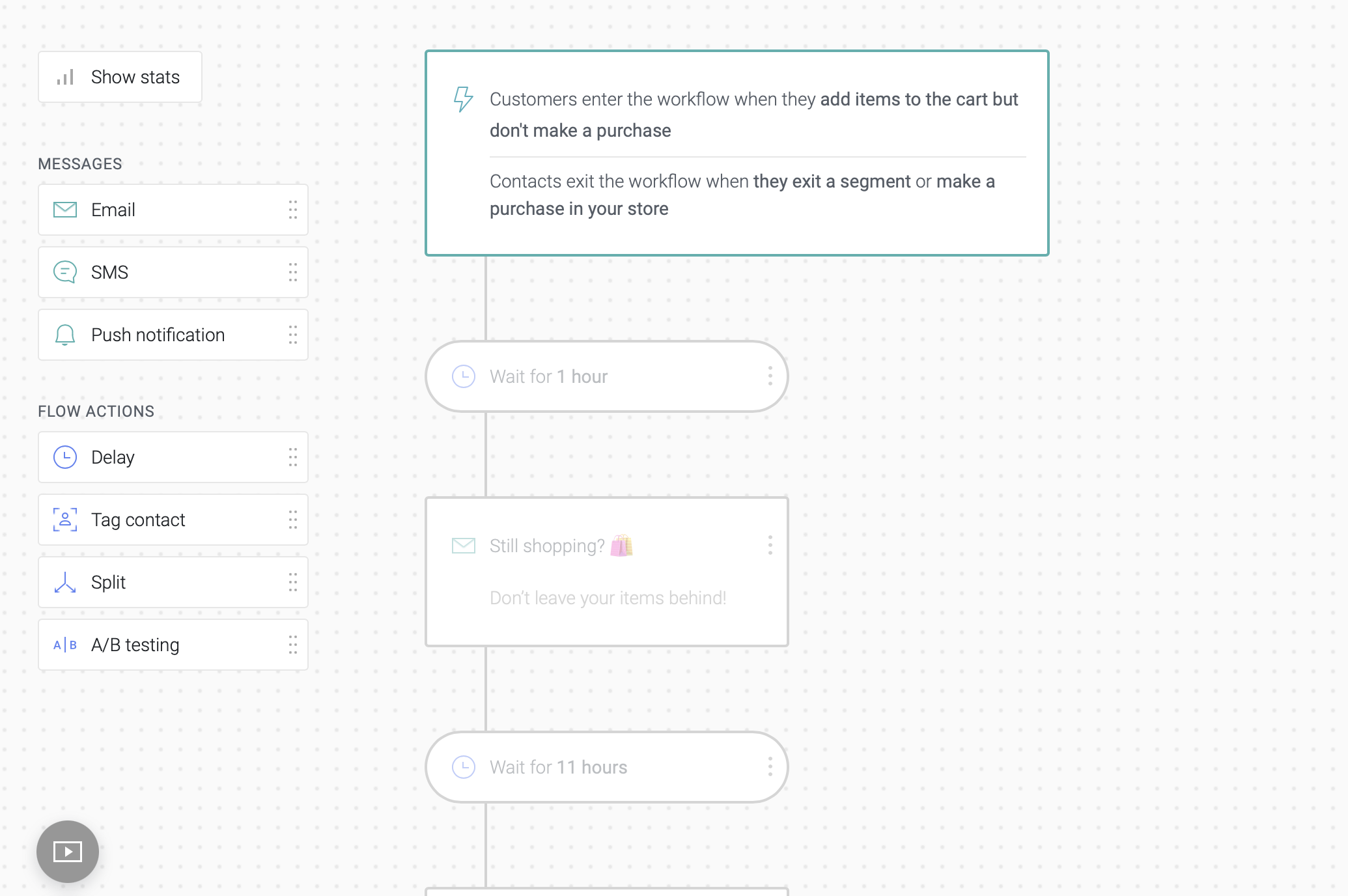
The most effective abandoned cart recovery setup is a mix of email, SMS, and sometimes push notifications or retargeting ads. A strong flow can recover 15-25% of abandoned carts without additional ad spend.
Once you have addressed the root causes, you should build a recovery system for the carts that still drop off. Not every abandoned cart is recoverable, but enough are that it is worth doing properly.
How do I send a manual abandoned checkout email in Shopify?
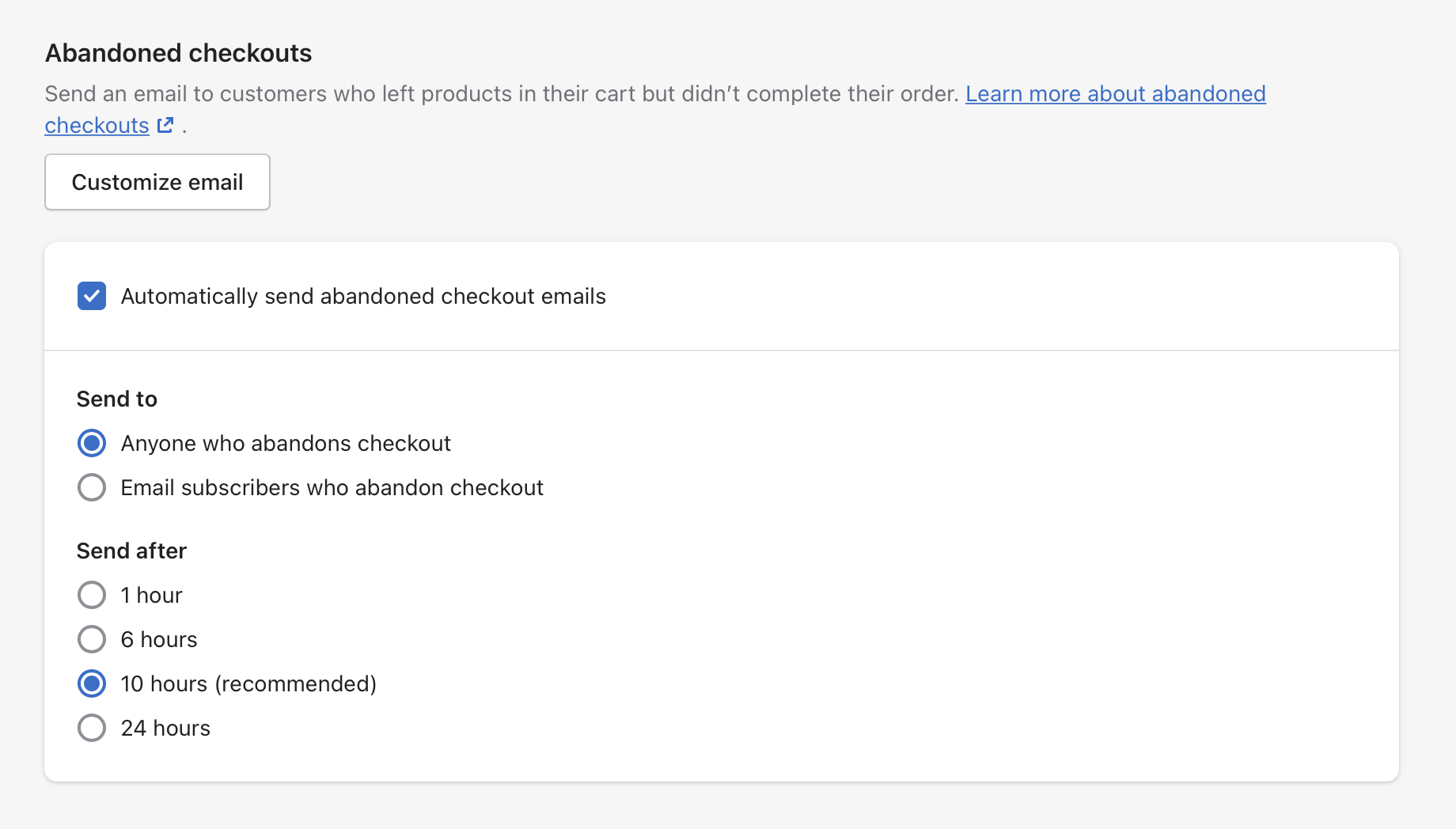
You can manually send a recovery email from Shopify if a customer started checkout and left. This is useful for high-value orders or when your support team wants to add a personal note.
- Go to Orders and then Abandoned Checkouts
- Select the checkout you want to recover
- Click Send a cart recovery email
- Add a custom message if needed
- Click Review email
- Select Send notification
If the customer completes the purchase later, Shopify updates the status to show it was recovered. This is basic, but still useful for stores with lower volume and higher order values.
What is the best abandoned cart email sequence?
The best abandoned cart email sequence is usually a 3-email flow sent over 24-72 hours. The first email should be a reminder, the second should handle objections, and the third can include an incentive if needed.
This is the timing I usually recommend:
| Message | Timing | Goal | What to include |
|---|---|---|---|
| Email 1 | 30-60 minutes | Recover distracted shoppers | Product image, cart link, simple reminder, no discount |
| Email 2 | 12-24 hours | Reduce hesitation | Reviews, returns policy, shipping info, FAQs |
| Email 3 | 24-72 hours | Close the sale | Small incentive or urgency, expiry date, direct checkout link |
Keep the emails short and obvious. One main CTA. One clear path back to checkout. If you need inspiration for subject lines, this post will help: Lost Shopping Carts? 54 Best Abandoned Cart Subject Lines.
Which apps are best for abandoned cart recovery?
The best app depends on your stack, budget, and whether you want email, SMS, or both. For most Shopify stores, Klaviyo and Omnisend are the strongest starting points for email-led recovery.
| App | Best for | Channel | Verdict |
|---|---|---|---|
|
|
Advanced segmentation and flows | Email, SMS | Best for scaling brands |
|
|
Simpler automation setup | Email, SMS, push | Best for ease of use |
| Mailchimp | Existing Mailchimp users | Fine if already in the ecosystem | |
| Active Campaign | CRM-heavy brands | Email, automation | Strong for lifecycle marketing |
| SendInBlue | Budget-conscious email automation | Email, SMS | Solid alternative |
|
|
Conversational SMS recovery | SMS | Great for high-intent carts |
| SMSBump | SMS-first recovery | SMS, email | Useful for fast follow-up |
|
|
Web push reminders | Push notifications | Good extra channel |



My general view is simple. Klaviyo is excellent if you want deeper control and already care about lifecycle marketing. Omnisend is often easier for smaller teams. SMS tools like TxtCart or SMSBump can perform very well when you have consent and a product with decent urgency.
Should I use SMS and push notifications for cart recovery?
Yes, but only if you have proper opt-in and a sensible strategy. SMS and push can outperform email on speed and visibility, especially for mobile shoppers, but they are more intrusive and should be used carefully.
SMS works well for:
- High-intent products
- Repeat customers
- Time-sensitive offers
- Stores with strong mobile traffic
Push notifications are useful because they can bring back users who never entered an email address. Tools like Pushowl can add another recovery layer without relying entirely on inbox placement.
If you want to test additional messaging channels, you can also look at Tapsend depending on your workflow and audience.
How do retargeting ads help recover abandoned carts?
Retargeting ads help by showing shoppers the exact products they left behind after they leave your store. For many brands, abandoned cart audiences deliver 3-5x ROAS compared with colder prospecting traffic.
I would normally create a short retargeting window of 7-14 days and separate users by intent. Someone who viewed a product is not the same as someone who reached checkout. Your creative and offer should reflect that.
- Use dynamic product ads on Meta and Google
- Exclude recent purchasers
- Set a shorter window for checkout abandoners
- Test reminder ads first, discount ads second
- Keep budgets modest, often $5-15/day is enough to start
Retargeting works best when paired with email or SMS rather than replacing them. It is an extra nudge, not the whole recovery strategy.
What product page changes reduce cart abandonment before it starts?
Better product pages reduce abandonment by answering objections before shoppers ever reach the cart. The best product pages make the purchase feel easy, safe, and worthwhile.
Focus on these improvements:
- High-quality product images and short videos
- Clear sizing, specs, and delivery details
- Visible reviews and user-generated content
- Sticky add to cart on mobile where appropriate
- Clear differentiation versus competitors
- Relevant cross-sells that do not distract from the main purchase
In my experience, weak product pages create abandonment upstream. The cart gets blamed, but the real issue is that the shopper still has unanswered doubts. If you want to improve this area, read Discovering Visitor Behavior on Your Shopify Store and watch where people hesitate.
Also be careful with upsells. They can help AOV, but too many can create friction. If you want to do this properly, see How to upsell on Shopify in 2026. The goal is to increase value without interrupting checkout intent.
What should I test first on my Shopify store?
The best first tests are the ones closest to the biggest friction points. Start with shipping transparency, mobile checkout ease, and recovery automation before redesigning everything.
If I were running a practical 14-day sprint, this is the order I would use:
- Add or improve a free shipping threshold message
- Show delivery estimates and returns near add to cart
- Audit mobile cart and checkout flow on real devices
- Enable express payment methods and guest checkout
- Install a 3-step abandoned cart email flow
- Layer in SMS or push for opted-in users
- Launch a checkout abandoner retargeting campaign
- Review analytics weekly and filter out bot noise
Do not test ten things at once if you can avoid it. Change a few meaningful variables, measure them properly, and keep what works. In my experience building apps for Shopify merchants, the stores that improve fastest are the ones that treat abandonment reduction as an ongoing optimisation process, not a one-off fix.
What is a realistic target for reducing abandoned carts in 2026?
A realistic target is not to eliminate abandonment completely, because that will never happen. A better goal is to reduce preventable abandonment by 10-20% and recover 15-25% of abandoned carts through automation.
If your store currently has poor shipping visibility, weak trust signals, and no recovery emails, you may improve faster than that. If your store is already well-optimised, gains will be smaller but still worthwhile.
The key is to focus on recoverable revenue. You do not need every shopper to convert. You need fewer good shoppers to slip away for avoidable reasons.
Final thoughts: what actually works best?
The most effective way to reduce abandoned carts on Shopify in 2026 is to remove surprises and reduce effort. Show shipping costs early, make checkout frictionless, build trust fast, and follow up automatically.
That is the pattern I keep seeing across stores of different sizes. Merchants often search for a magic app or a single clever tactic, but the real gains usually come from getting the basics right and then layering smart recovery on top.
If you want the shortest possible action list, start here today: fix shipping messaging, test mobile checkout, and launch a 3-step recovery flow in Klaviyo or Omnisend. That combination alone can move the needle surprisingly quickly.