
Faire de l’upsell sur Shopify en 2026 n’est plus seulement un « plus » agréable. C’est en réalité l’un des moyens les plus efficaces d’augmenter votre chiffre d’affaires sans avoir besoin de plus de trafic. Avec la hausse des coûts d’acquisition et une concurrence de plus en plus rude, beaucoup de marques e-commerce intelligentes se concentrent sur l’augmentation de leur valeur moyenne de commande (AOV). Et elles y parviennent grâce à des leviers comme les upsells, les add-ons et les offres post-achat.
Si vous cherchez des façons concrètes de passer à l’action, vous pouvez découvrir les outils que nous avons créés chez LaunchTip, notamment nos solutions d’upsell conçues spécifiquement pour augmenter l’AOV.
Dans ce guide, je vais vous expliquer précisément comment faire de l’upsell sur Shopify, les stratégies qui fonctionnent le mieux en 2026, et comment commencer à les mettre en place pour générer une croissance régulière.
Qu’est-ce que l’upsell (et pourquoi c’est important en 2026)
Alors, qu’est-ce que l’upsell, exactement ?
Dans l’idée, il s’agit simplement d’encourager les clients à dépenser un peu plus que prévu au départ, que ce soit en passant à un produit de gamme supérieure ou en ajoutant un extra à leur commande.
Par exemple, cela peut prendre la forme d’un passage d’un produit basique à une version premium, de l’ajout d’accessoires ou d’articles complémentaires, ou même de l’acceptation d’une offre simple en un clic après le paiement.
Alors, pourquoi est-ce important ?
Eh bien, l’upsell peut augmenter le chiffre d’affaires e-commerce d’environ 10 à 30 % en moyenne. Et même de petites hausses de la valeur moyenne de commande peuvent avoir un impact énorme sur votre rentabilité globale. Le meilleur dans tout ça : vous générez plus de revenus sans dépenser un centime de plus en publicité ou en trafic.
Si vous débutez en optimisation de conversion, comprendre comment l’upsell s’intègre dans une stratégie e-commerce plus globale est essentiel, surtout lorsqu’il est associé à des outils conçus spécifiquement pour les marchands Shopify.
Qu’est-ce que la valeur moyenne de commande (AOV) ?
Alors, que veut-on dire par valeur moyenne de commande, ou AOV ?
C’est tout simplement le montant moyen dépensé par un client à chaque commande sur votre boutique.
Si vous voulez la calculer, c’est assez simple : vous prenez votre chiffre d’affaires total et vous le divisez par le nombre de commandes.
C’est important parce qu’augmenter votre AOV est l’un des moyens les plus rapides de faire grandir une boutique Shopify. Et lorsque vous combinez cela avec des upsells et des add-ons qui incitent les clients à dépenser un peu plus à chaque fois, l’impact sur votre chiffre d’affaires global peut être énorme.
Pourquoi l’upsell fonctionne si bien sur Shopify
L’upsell fonctionne parce qu’il s’aligne parfaitement sur ce que le client est déjà en train de faire.
Quand quelqu’un est en plein achat, il est beaucoup plus ouvert à l’idée de dépenser un peu plus, que ce soit en ajoutant un article pertinent à sa commande, en passant à une meilleure version du produit, ou en choisissant un bundle à la place.
C’est pourquoi les boutiques qui maîtrisent l’upsell voient souvent des résultats rapides, à la fois sur les taux de conversion et sur la valeur moyenne de commande.
Et pour que tout cela fonctionne sans accroc, beaucoup de marchands utilisent des applications Shopify dédiées qui gèrent les upsells tout au long du parcours client, de la page produit jusqu’au post-achat.
Les 7 meilleures stratégies d’upsell Shopify en 2026
1. Upsells sur la page produit (des add-ons qui ont du sens)
Pour commencer : les upsells sur la page produit. C’est l’un des endroits les plus simples pour démarrer, parce que vous affichez des offres exactement là où la décision d’achat se prend.
Des bundles « fréquemment achetés ensemble », des accessoires, ou même des upgrades fonctionnent très bien ici. L’essentiel est de rester pertinent et de proposer un prix raisonnable par rapport au produit principal. Bien fait, cela paraît utile plutôt qu’insistant.
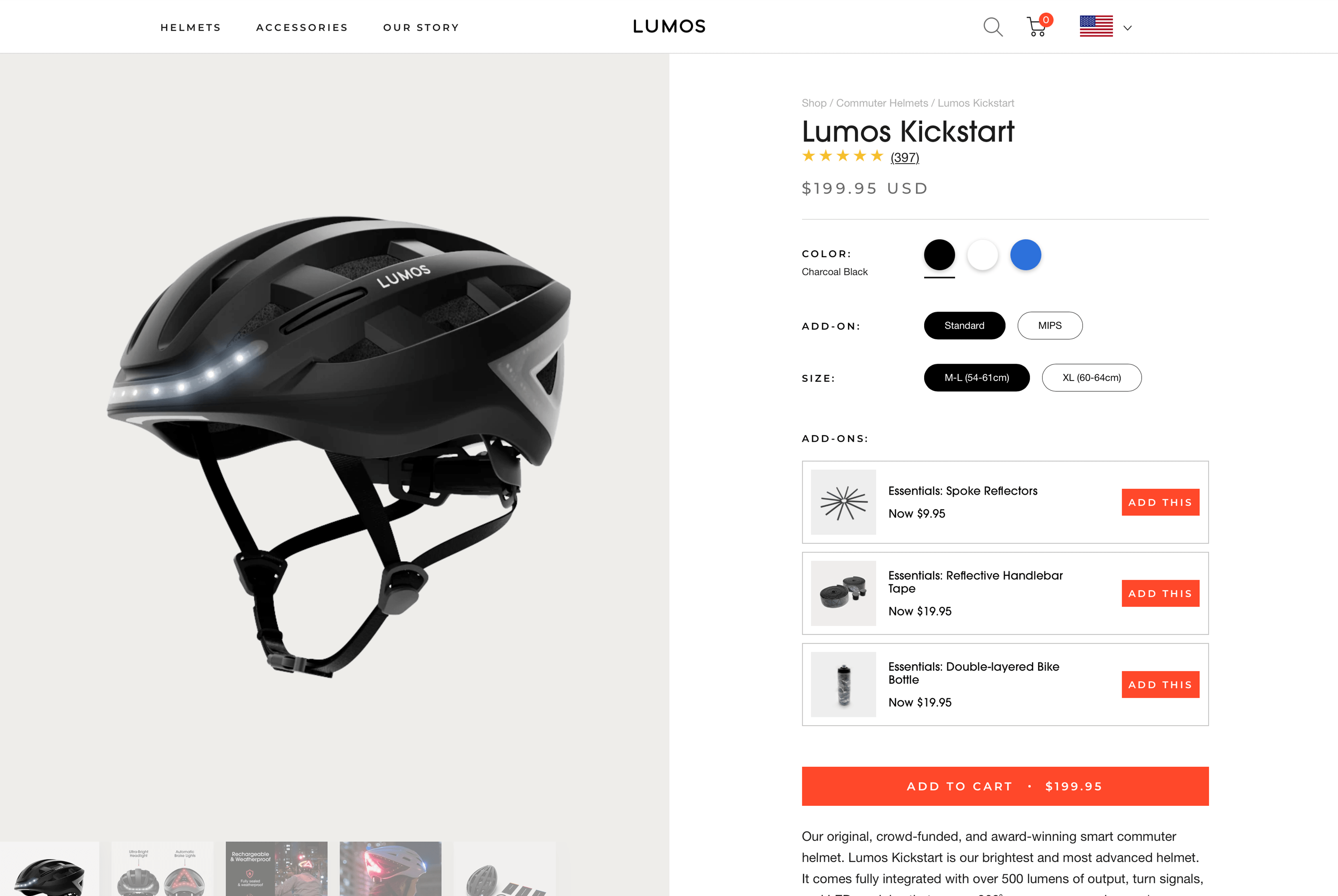
2. Bundles de produits (le multiplicateur d’AOV)
Ensuite, il y a les bundles de produits, qui sont honnêtement l’un des moyens les plus efficaces d’augmenter la valeur moyenne de commande.
Les bundles fonctionnent parce qu’ils simplifient la décision pour le client et augmentent la valeur perçue. Qu’il s’agisse de kits de soins, de tenues complètes ou d’accessoires tech, vous incitez les clients à acheter davantage en une seule fois, sans trop réfléchir.
3. Upsells dans le panier (add-ons de dernière minute)
Ensuite, vous avez les upsells dans le panier, qui apparaissent juste avant le checkout : un moment vraiment clé.
À ce stade, le client a déjà décidé d’acheter, donc il est beaucoup plus ouvert à ajouter quelque chose. Cela peut être un emballage cadeau, de petits add-ons, ou des produits complémentaires à faible coût. Beaucoup de boutiques Shopify obtiennent des résultats rapides ici quand c’est bien fait.
4. Seuils de livraison gratuite (upsell psychologique)
Une autre stratégie très puissante consiste à utiliser des seuils de livraison gratuite.
Vous avez probablement déjà vu ça : quelque chose comme « Dépensez 50 £ pour bénéficier de la livraison gratuite ». Ça marche parce que les gens ne veulent pas passer à côté de l’avantage, donc ils ajoutent souvent plus d’articles à leur panier pour y avoir droit. C’est simple, mais l’impact sur la valeur moyenne de commande peut être important.
5. Upsells post-achat (zéro risque, gros potentiel)
Les upsells post-achat sont un autre levier majeur, et ils sont souvent sous-estimés.
Ils se déclenchent après que le client a déjà payé, donc il n’y a aucun risque de perdre la vente initiale. Vous pouvez proposer des offres en un clic, des réductions limitées dans le temps ou des produits complémentaires sur la page de remerciement. Comme le client s’est déjà engagé, ce format convertit généralement très bien.
6. Upsells au checkout (add-ons fluides)
Ensuite, il y a les upsells au checkout.
Ce sont des add-ons affichés pendant le processus de paiement : protection d’expédition, traitement plus rapide, ou petites améliorations. Lorsqu’ils sont bien intégrés, ils ne paraissent pas intrusifs ; ils ressemblent simplement à des options utiles.
7. Upsells personnalisés (pilotés par l’IA en 2026)
Et enfin, les upsells personnalisés. C’est là que les choses vont en 2026.
Avec la bonne configuration, vous pouvez recommander des produits en fonction de ce que fait le client, afficher des add-ons dynamiques et adapter les offres à chaque personne. Ces upsells performent généralement bien mieux que des offres génériques, car ils sont plus pertinents et mieux synchronisés.
Comment mettre en place des upsells sur Shopify (intelligemment)
Toutes ces stratégies sont excellentes en théorie, mais en pratique, c’est l’exécution qui fait vraiment la différence.
Pour réussir l’upsell, vous avez besoin d’un système capable de tout gérer de manière fluide. Cela signifie pouvoir afficher des add-ons pertinents sur vos pages produit, dans le panier, et même après le checkout. Vous devez aussi pouvoir créer des offres d’upsell simples en un clic, les personnaliser pour qu’elles correspondent à votre boutique, et suivre leurs performances afin d’améliorer en continu votre valeur moyenne de commande.
Et honnêtement, essayer de construire tout ça de zéro peut vite devenir compliqué. C’est pourquoi la plupart des marchands Shopify finissent par utiliser une application d’upsell dédiée, qui se connecte directement à leur boutique et fait le gros du travail à leur place.
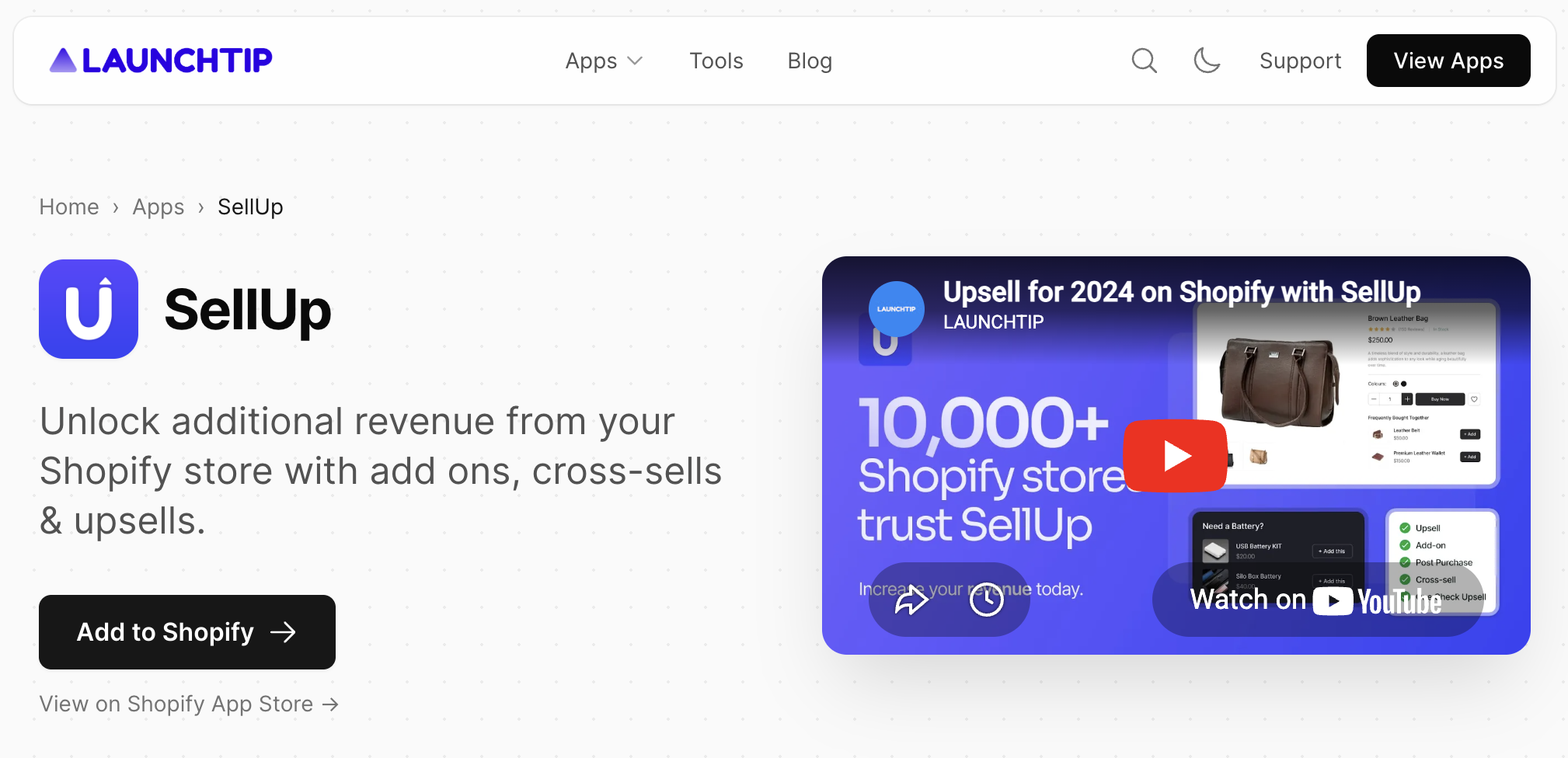
Augmentez la valeur moyenne de commande Shopify avec SellUp
Si vous voulez commencer à mettre en place des stratégies d’upsell à forte conversion sans vous retrouver bloqué dans une configuration compliquée, c’est exactement pour ça que SellUp a été conçu.
Il est conçu spécifiquement pour les boutiques Shopify qui veulent augmenter leur valeur moyenne de commande sans se compliquer la vie.
Si vous voulez voir comment ça fonctionne, vous pouvez le découvrir ici : https://www.youtube.com/watch?v=wxv9eMRb0CE&t=39s
Avec SellUp, vous pouvez facilement ajouter des upsells et des add-ons sur vos pages produit, créer des offres dans le panier et après le checkout, et afficher des recommandations ciblées en fonction de ce que font vos clients. L’objectif est de vous aider à augmenter l’AOV avec le moins d’effort possible.
Bonnes pratiques pour l’upsell sur Shopify
Pour tirer le maximum de votre stratégie d’upsell, il y a quelques principes simples à garder en tête.
Gardez des upsells pertinents
D’abord, gardez vos upsells pertinents. Si l’offre n’a aucun lien avec ce que le client achète déjà, elle semblera aléatoire, et cela peut nuire à la fois à la confiance et aux conversions.
Ne submergez pas les clients
Ensuite, ne submergez pas les gens. C’est tentant d’afficher beaucoup d’offres, mais dans la plupart des cas, moins d’upsells — mieux ciblés — donnent de bien meilleurs résultats.
Fixez le prix des add-ons de façon stratégique
Vous devez aussi réfléchir à la façon dont vous fixez le prix de vos add-ons. Les meilleurs upsells ressemblent généralement à une décision facile : quelque chose auquel le client peut dire « oui » sans trop réfléchir.
Testez et optimisez
Et enfin, assurez-vous de tester et d’optimiser. Même de petits changements dans l’emplacement d’un upsell ou dans sa formulation peuvent avoir un impact notable sur votre valeur moyenne de commande.
Si vous voulez continuer à progresser dans le temps, cela vaut la peine de revoir régulièrement les performances de vos upsells et d’ajuster votre approche en fonction du comportement réel des clients.
Erreurs courantes d’upsell à éviter
Il est tout aussi important de savoir ce qu’il ne faut pas faire en matière d’upsell.
L’une des plus grosses erreurs consiste à proposer des produits qui ne sont pas vraiment liés à ce que le client achète déjà. Si cela paraît aléatoire, les gens auront beaucoup moins envie d’interagir avec l’offre.
Un autre problème fréquent est d’interrompre le parcours de paiement. Si vos upsells gênent quelqu’un au moment de finaliser son achat, vous risquez de faire baisser les conversions au lieu de les améliorer.
Le pricing est un autre point à surveiller. Si vos add-ons semblent trop chers, les clients les ignoreront. Les meilleurs upsells ressemblent généralement à une évidence.
Vous ne devez pas non plus négliger le mobile. Beaucoup de vos clients achèteront sur leur téléphone, donc vos upsells doivent être propres visuellement et fonctionner parfaitement sur les petits écrans.
Et enfin, assurez-vous de suivre votre valeur moyenne de commande. Si vous ne mesurez pas les performances, il est très difficile de savoir ce qui fonctionne et ce qui ne fonctionne pas.
Au final, éviter ces erreurs est tout aussi important que de mettre en place les bonnes stratégies d’upsell.
Conclusion : l’upsell est la clé de la croissance en 2026
Si vous voulez vraiment développer votre boutique Shopify en 2026, l’upsell doit faire partie intégrante de votre stratégie.
Plutôt que de courir en permanence après plus de trafic, il est souvent bien plus efficace de se concentrer sur le fait de tirer plus de valeur du trafic que vous avez déjà. Cela signifie augmenter votre valeur moyenne de commande, ajouter les bons add-ons et améliorer chaque étape du parcours client.
Les marques qui gagnent sont celles qui transforment chaque commande en une commande plus importante.
Et avec des outils comme SellUp, mettre ces stratégies d’upsell en pratique est beaucoup plus simple qu’avant.