Yes, you can run a hire rental business through Shopify, but Shopify does not handle rentals natively. To make it work properly, you need a specialised rental app that manages date selection, availability, deposits, returns, and booking rules.
In my experience building Shopify apps, this is where many merchants get caught out. Shopify is excellent for standard ecommerce, but a rental business has very different operational logic. You are not just selling stock once - you are lending inventory out, bringing it back, checking condition, and making it available again on the right dates.
This guide explains how to setup and run a hire rental business through Shopify, which apps are worth considering, how to structure your store, and the practical mistakes I would avoid if I were launching a rental brand today.
Can Shopify be used for a rental business?
Shopify can be used for a rental business, but only with the help of a booking or rental app. Out of the box, Shopify is designed for one-time sales, not date-based inventory management.
That distinction matters. A normal Shopify product page assumes that if you sell one unit, stock goes down permanently. A rental business needs the system to understand pickup dates, return dates, blackout periods, maintenance windows, deposits, and late returns. Without an app layer, Shopify simply does not know how to manage that.
This is why most successful rental merchants on Shopify use a hybrid setup. They keep Shopify for storefront, payments, content, and marketing, then add a rental tool for the operational side. That gives you the best of both worlds: strong ecommerce UX and proper booking logic.
Why run a hire rental business on Shopify at all?
Shopify is still a strong platform for rental businesses because it gives you excellent themes, checkout reliability, app integrations, and marketing tools. The missing piece is rental logic, not the storefront itself.
If I were launching a rental store today, I would seriously consider Shopify because it is much easier to market and optimise than many niche rental platforms. You get access to robust SEO controls, email tools, landing pages, analytics, and a huge app ecosystem. That matters once you move beyond the initial setup and start trying to grow.
- Better design flexibility than many standalone booking systems
- Strong mobile checkout and conversion-focused themes
- App ecosystem for upsells, reviews, support, and automation
- Easy content marketing through pages, blogs, and collection pages
- Scalable operations as your catalogue grows
For example, if you also sell products alongside rentals, Shopify becomes even more appealing. A party hire company might rent backdrops and arches, but also sell balloons, signage, or disposable accessories. A camera rental business might rent bodies and lenses, while also selling straps, batteries, or memory cards.
That mixed model is one of Shopify's biggest advantages. If your business needs both rent and buy, Shopify is often a better fit than a pure rental platform.
What does Shopify not do well for rentals?
Shopify does not natively manage rental-specific workflows such as date-based availability, return scheduling, deposits, and overbooking prevention. That is the core limitation you need to solve.
Based on what I have seen across Shopify stores, these are the biggest gaps:
- No built-in rental calendar on product pages
- No native pickup and return logic
- No automatic buffer periods for cleaning, prep, or repairs
- No damage deposit workflow by default
- No native late fee handling
- No date-aware inventory availability without an app
This is also why I would not recommend trying to hack rentals together with variants, line item properties, and manual spreadsheets unless you have a tiny catalogue and very low order volume. It might work for a week or two, but it becomes messy fast.
How do I setup a rental business on Shopify?
To setup a rental business on Shopify, you need to create your product catalogue, install a rental app, configure booking rules, update your product pages, and publish clear rental policies. A basic setup can be done quickly, but a polished setup usually takes around a week including testing.
That timeline is realistic. In the latest research, many apps can be installed in under 15 minutes, but a full store setup with deposits, delivery logic, policy pages, and testing usually takes longer. In my experience, the testing is the part merchants underestimate.
1. How should I prepare my product catalogue?
Your rental product listings need more operational detail than a standard Shopify product page. Customers need to understand exactly what they are hiring, for how long, and on what terms.
Each listing should include multiple photos, dimensions, materials, what's included, and any restrictions. If an item requires setup, specialist handling, or a minimum hire period, say so clearly. If there is a deposit, show the amount prominently.
- Rental duration options - daily, weekend, weekly, monthly, or custom
- Condition expectations - normal wear vs chargeable damage
- Delivery or collection details
- Deposit amount and when it is refunded
- Lead times - for example, 48-hour notice required
If you are still building your store from scratch, our guide on how to build a Shopify store from scratch is a good companion piece before you add rental functionality.
2. Which rental app should I install?
The best rental app depends on whether you rent physical products, book time slots, or run a mixed rent-and-buy model. There is no single perfect app for every merchant.
For this article, I have focused on the apps already in the original post because they are still relevant and available in the Shopify App Store. All three can work, but they suit slightly different use cases.
What are the best apps for running a rental business on Shopify?
The best Shopify rental apps for most merchants are IzyRent, BookThatApp, and Product Rentals Pro. The right choice depends on whether you need appointments, product hire, calendar syncing, buffers, or a rent-or-buy workflow.
When I assess apps as a developer, I look beyond the feature list. I care about theme compatibility, admin usability, support quality, and how much manual work the app removes. Rental businesses are operationally heavy, so even small UX issues can become expensive.
| App | Best for | Standout features | App Store |
|---|---|---|---|
| IzyRent | General rentals, bookings, events, services | Dynamic availability, deposits, calendar sync, add-ons | View app |
| BookThatApp | Appointments, classes, tours, rentals, ticketed events | Custom booking rules, reminders, group bookings, calendar integrations | View app |
| Product Rentals Pro | Physical product rental businesses | Buffers, fulfilments, returns, insurance upsells, rent or buy | View app |
Is IzyRent a good Shopify rental app?
IzyRent is a strong all-round option for merchants who need flexible booking and rental functionality inside Shopify. It is especially useful if your business spans products, events, appointments, or services.

IzyRent has remained one of the more credible options in this category, and the original article was right to include it. It is designed for bookings, rentals, events, services, and appointments, which makes it useful if your business model is broader than straightforward equipment hire.
Its biggest strength is flexibility. You can manage dynamic availability rather than manually setting every date, and it supports deposits, partial payments, special date pricing, booking notes, and calendar syncing. For a lot of merchants, those are the exact features that stop rental operations becoming chaotic.
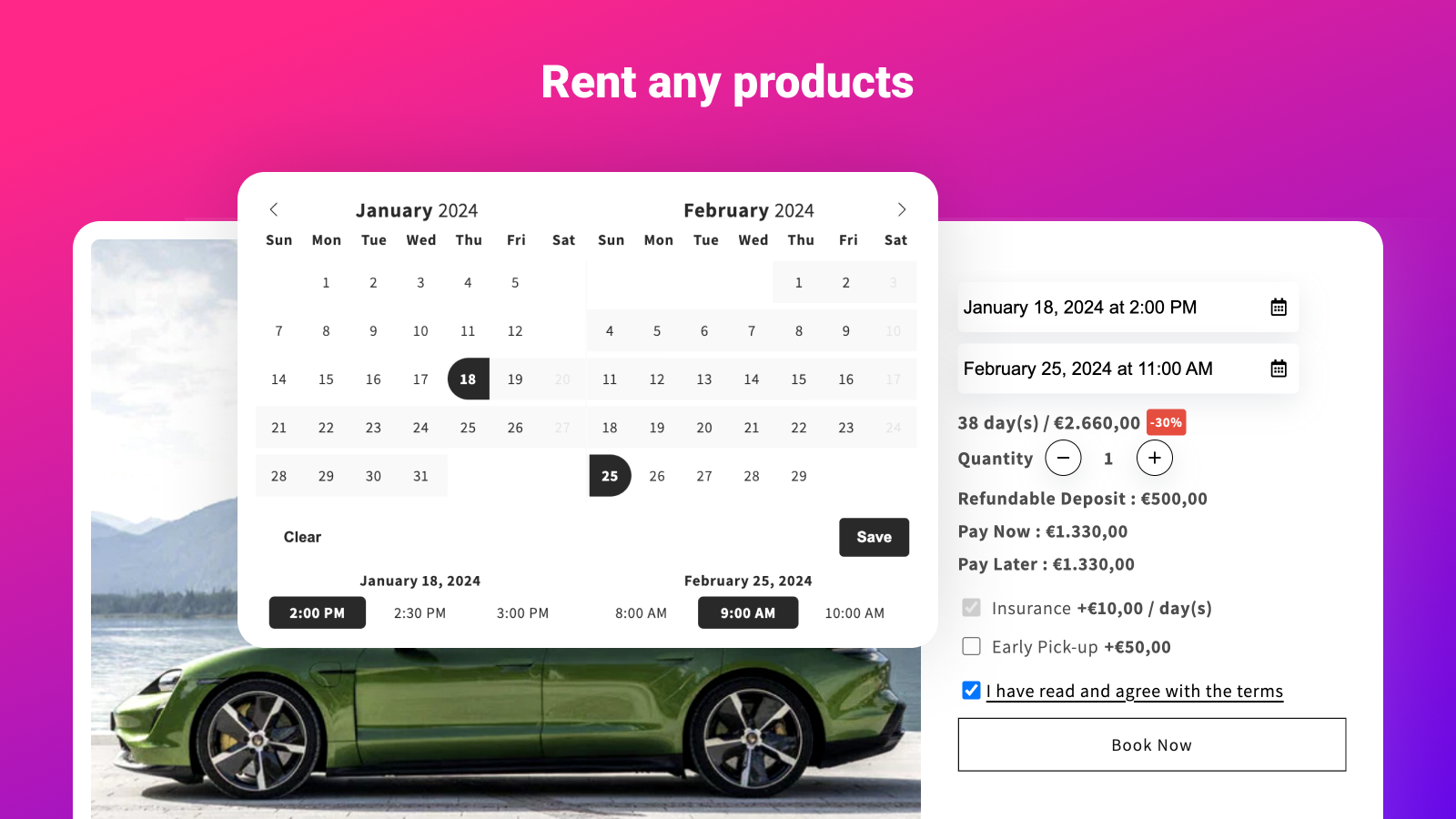
- Auto-block dates and create manual bookings
- Deposit options and pay-later workflows
- Discount pricing for selected periods
- Add-ons and booking notes for extra customer detail
- Syncs with Google, iCloud, Outlook, Airbnb, and iCal tools
- Works in Shopify admin with modern themes
My take: best for merchants who want broad booking flexibility. If you rent products but also take service bookings, IzyRent is one of the more sensible places to start.
Is BookThatApp worth it for rentals?
BookThatApp is worth considering if your rental business is closely tied to appointments, classes, tours, or scheduled sessions. It is one of the more established names in the Shopify booking space.

BookThatApp has been around for years and is trusted by thousands of merchants. That matters, because long-standing booking apps have usually had more time to iron out edge cases around scheduling, notifications, and theme compatibility.
It is particularly useful if you need custom booking rules, such as blocking public holidays, allowing group bookings, or collecting custom responses during the booking flow. If your business is part rental and part event or service, that can be a better fit than a product-only rental app.
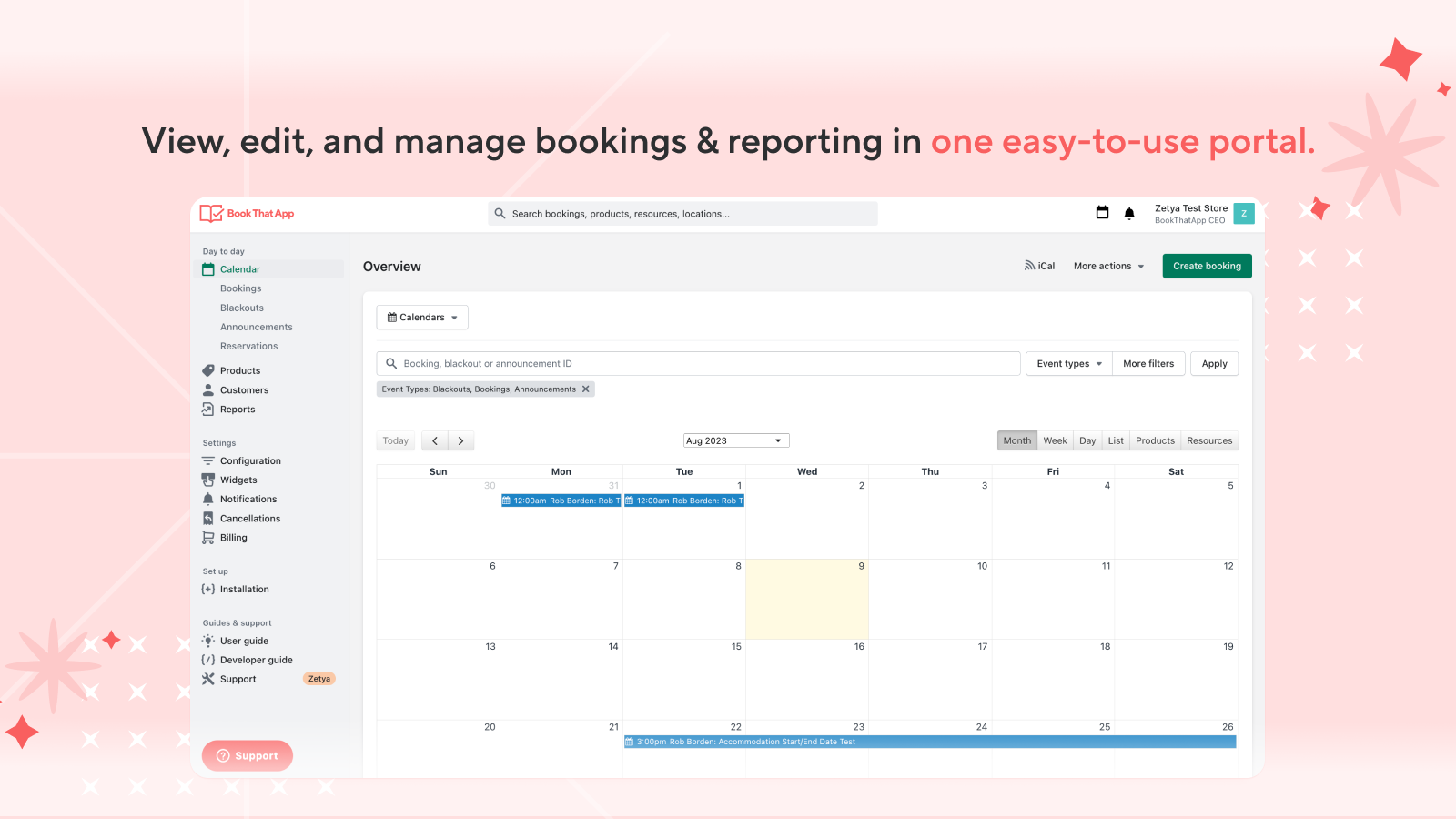
- 24/7 online booking
- Mobile-friendly booking flow
- Custom rules for dates and availability
- Customer updates in real time
- Google Calendar, Apple Calendar, Zoom and other integrations
- Custom questions and automated email or SMS reminders
- Group booking support
My take: best for service-led rental businesses. Think workshops, classes, studio hire, guided tours, or anything where time slots matter as much as the physical inventory.
Is Product Rentals Pro the best option for physical hire businesses?
Product Rentals Pro is one of the most relevant choices if you mainly rent physical products and need practical tools for returns, fulfilment, and buffers. It is more operationally focused than some general booking apps.

Product Rentals Pro is a newer app compared with BookThatApp, but it is clearly aimed at the needs of physical product rental businesses. That is important because a camera rental company, furniture hire business, or dress rental store has very different needs from a simple appointment-based business.
The standout features here are configurable buffer times, fulfilment and return management, insurance upsells, and a rent-or-buy option. In practical terms, that means you can better manage preparation time between bookings and potentially increase revenue per order.
- Booking calendar on product pages
- Admin tools for fulfilments and returns
- Default buffers by delivery method
- Buffer adjustments for specific rentals
- Rent or buy option
- Insurance upsell functionality
My take: best for dedicated physical rental operations. If your biggest headaches are turnaround time, returns, and avoiding scheduling conflicts, this is the one I would shortlist first.
How do I choose the right Shopify rental app?
Choose the app based on your operational model, not just the review score. The best app for an event studio is not always the best app for a dress hire or equipment rental company.
Before installing anything, answer these questions:
- Do you rent physical products, time slots, or both?
- Do you need deposits?
- Do you offer delivery, local pickup, or both?
- Do items need cleaning, inspection, or repair buffers?
- Will you also sell products outright?
- Do you need calendar syncing with external systems?
If you also plan to increase order value with add-ons, bundles, or post-purchase offers, it is worth thinking about that early. Rental stores can still benefit from the same conversion work as retail stores, especially for accessories and protection add-ons. Our guide on how to increase sales quickly on your Shopify store covers several tactics that also apply here.
What should the rental booking experience look like?
A good Shopify rental booking experience should make dates, pricing, deposits, and policies obvious before checkout. Confusion here leads directly to abandoned carts and support tickets.
There are usually two ways to present rentals on Shopify:
- Embedded experience - the booking widget sits directly on the product page
- Standalone booking page - customers click out to a dedicated booking flow
For most stores, I prefer the embedded product page approach because it feels more native and generally converts better. Customers can choose dates, see availability, and understand the hire terms without leaving the product page.
Your product and cart flow should clearly show:
- Pickup date and return date
- Rental duration
- Rental fee
- Damage deposit
- Delivery or collection method
- Lead time requirements
- Late fee policy
If you need a custom note from customers for sizing, event timing, or setup instructions, consider adding a note field. I built NoteDesk for order notes and extra information capture, and this kind of detail can be genuinely useful for rental workflows where logistics matter.
How should deposits, returns, and rental agreements work?
Your rental store should have a clear agreement, visible deposit terms, and a repeatable returns process. This protects both your business and your customers.
One of the biggest mistakes I see is merchants being vague about deposits. If a customer sees an unexpected second charge or does not understand when a deposit is returned, trust drops immediately. Be explicit at every stage.
Your rental agreement should cover:
- Rental period definition
- Cancellation and refund policy
- Damage and loss policy
- Late return fees
- Cleaning or condition requirements
- Liability limitations
I strongly recommend making agreement acceptance a required checkbox before checkout if your app supports it. That single step can prevent a lot of disputes later.
How do I inform customers about my rental policy in Shopify?
The simplest way is to create a dedicated Shopify page for your rental policy and link to it from product pages, the footer, and checkout-related messaging. Customers should not have to hunt for your terms.
The original article covered the basic page creation process, and that is still relevant. In Shopify admin, go to Online Store, then Pages, and create a page that explains your rental rules clearly.
- Go to Online Store and then Pages.
- Select Add page.
- Add a clear title such as Rental Policy or Hire Terms.
- Write your rules covering deposits, returns, damage, cancellations, and late fees.
- Under Visibility, choose whether to publish immediately or on a set date.
- Click Save.
I would go a step further and create a small policy hub with separate pages for delivery and collection, damage and deposit terms, and FAQs if your catalogue is large. This is better for both usability and SEO.
What pages should every Shopify rental store have?
Every Shopify rental business should have more than just product pages. The highest-converting stores usually make the process feel predictable and low-risk.
- Rental policy page
- Delivery and collection page
- Damage deposit policy
- Returns and late fees page
- FAQ page
- Contact page with fast support options
If your products are date-sensitive or seasonal, urgency messaging can help too. For physical rental and fulfilment-heavy stores, clear shipping expectations matter a lot, which is why our guide on adding a new shipping carrier in Shopify can be useful if you are building a more advanced delivery setup.
What are the most common mistakes when running a rental business on Shopify?
The most common mistakes are choosing the wrong app, hiding important policies, and underestimating operational complexity. Most rental problems are process problems before they become technical problems.
Here are the issues I would watch for:
- Using a basic booking app for a complex physical rental business
- Not setting buffer periods for cleaning, repairs, or transport
- Unclear deposit wording
- No lead time rules for delivery or prep
- Poor product descriptions with missing dimensions or included items
- No test orders before launch
- No backup operational workflow if an item is returned damaged or late
In my experience, the stores that struggle are often the ones that focus only on the storefront and ignore fulfilment reality. A rental business is part ecommerce and part logistics operation. If your internal process is messy, no app will fully save it.
How can I grow a Shopify rental business after launch?
Growth usually comes from improving trust, increasing utilisation of inventory, and lifting average order value. The fundamentals are slightly different from standard retail, but the conversion principles are similar.
Once your booking flow is stable, focus on:
- Upselling accessories such as insurance, setup, cleaning, or consumables
- Cross-selling related products that complement the rental
- Collecting reviews to build trust
- Publishing SEO pages for rental categories and local intent
- Email reminders for repeat bookings and seasonal demand
If you sell add-ons or optional extras, you can borrow ideas from standard ecommerce upselling. We cover that in more detail in our posts on build a box in Shopify and creating custom gift sets in your Shopify store, both of which overlap with configurable bundles and add-on logic.
Is Shopify the best platform for a hire rental business?
Shopify is one of the best platforms for a hire rental business if you want strong ecommerce features and are willing to use a rental app. It is especially good for brands that need marketing flexibility, modern design, and the option to mix rentals with direct sales.
If you want a pure rental operating system with everything built in, a specialist platform may be worth comparing. But if you want a polished storefront, broad app support, strong SEO potential, and a familiar admin, Shopify is still a very practical choice.
I would put it this way: Shopify is not natively built for rentals, but it is very capable with the right app stack. For many merchants, that is more than enough.
Final thoughts on how to setup and run a hire rental business through Shopify
The best way to run a rental business on Shopify is to treat Shopify as your storefront and a rental app as your booking engine. That gives you the flexibility to market and scale without trying to force native Shopify features to do a job they were not designed for.
The original recommendations still hold up. IzyRent, BookThatApp, and Product Rentals Pro are all credible starting points depending on your model. If I were advising a merchant today, I would choose based on whether the business is primarily service-led, event-led, or physical inventory-led.
Most importantly, do not stop at app installation. Build clear product pages, test your booking flow thoroughly, publish strong policies, and think through the real-world logistics of returns and damage handling. That is what turns a Shopify rental store from a nice-looking site into an actual business.