
If you are searching for a free ai chatbot for shopify, you are probably trying to solve two problems at once. First, you want to convert more visitors into buyers. Second, you want to reduce repetitive support work without hiring a bigger team or staying glued to live chat all day.
That is exactly where an AI chatbot can help. In my experience building Shopify apps, merchants lose sales every day because shoppers cannot quickly find the right product, confirm compatibility, understand shipping times, or get confidence before checkout. On the support side, store owners get buried in the same questions about order status, returns, sizing, and product details. A good chatbot handles both sides of that workload on autopilot, even while you sleep.
Chatkit stands out here because it offers a genuinely useful free plan, not just a token demo. You get 150 messages per month, support for up to 250 products, a branded widget, order tracking and assistance, plus Engage and Flows. For many small Shopify stores, that is enough to start seeing real value before paying anything.
What is the best free AI chatbot for Shopify?
The best free ai chatbot for shopify for many small and growing stores is Chatkit. It gives merchants enough free usage to handle real product questions, customer support, and shopper guidance without needing an immediate upgrade.
I like free plans that are practical, not frustrating. A lot of tools say they are free, but the limits are so tight that you cannot learn whether the bot will actually help your store. Chatkit's free tier is generous for an early-stage Shopify brand because it covers the core jobs merchants care about most: product discovery, support automation, and order assistance.
Here is what the free plan includes:
- 150 messages per month
- Up to 250 products
- Branded widget
- Order tracking and assistance
- Engage and Flows

That matters because most merchants do not need an enterprise AI stack on day one. They need something that can answer questions accurately, point shoppers to the right products, reduce support tickets, and help recover conversions that would otherwise disappear.
Why do Shopify merchants need an AI chatbot in the first place?
Shopify merchants need an AI chatbot because shoppers expect instant answers, while most stores cannot provide 24/7 human support. A chatbot fills that gap by helping customers buy faster and get support without waiting.
In practice, I see the same pain points over and over. Visitors land on a product page and wonder if the item fits their use case, works with their model, ships in time, or comes in the right variation. If the answer is not obvious within seconds, many leave. That is not a traffic problem. It is a decision friction problem.
Support is the second big issue. Merchants spend hours answering repetitive questions like:
- Where is my order?
- What size should I choose?
- Will this fit my device, car, or model?
- What is your return policy?
- Do you ship internationally?
- Which product is best for my needs?
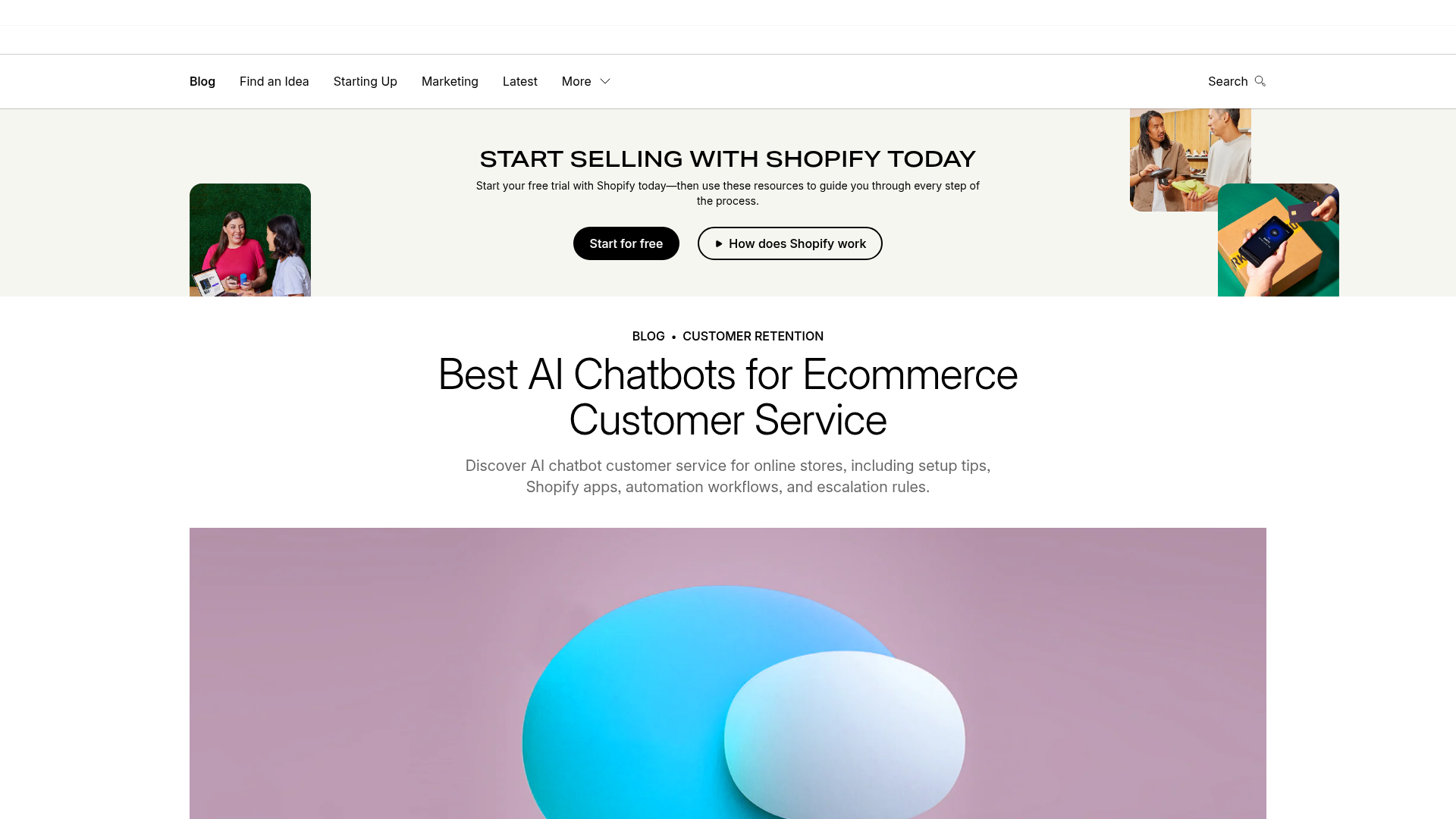
According to Shopify's own coverage of ecommerce AI support, AI chatbots can respond instantly and take on repetitive service work at scale. Shopify also cites Salesforce research showing that 30% of service cases are already handled by AI, with that figure projected to reach 50% by 2027. Those numbers line up with what I have seen across ecommerce. The repetitive questions are exactly the ones AI is best at handling well.
There is also a conversion angle that many merchants underestimate. Shoppers often want a quick recommendation, not a long browse session. If your chatbot can ask one or two smart questions and guide them to the right product, it behaves more like a digital sales assistant than a support widget.
How can Chatkit help convert shoppers on autopilot?
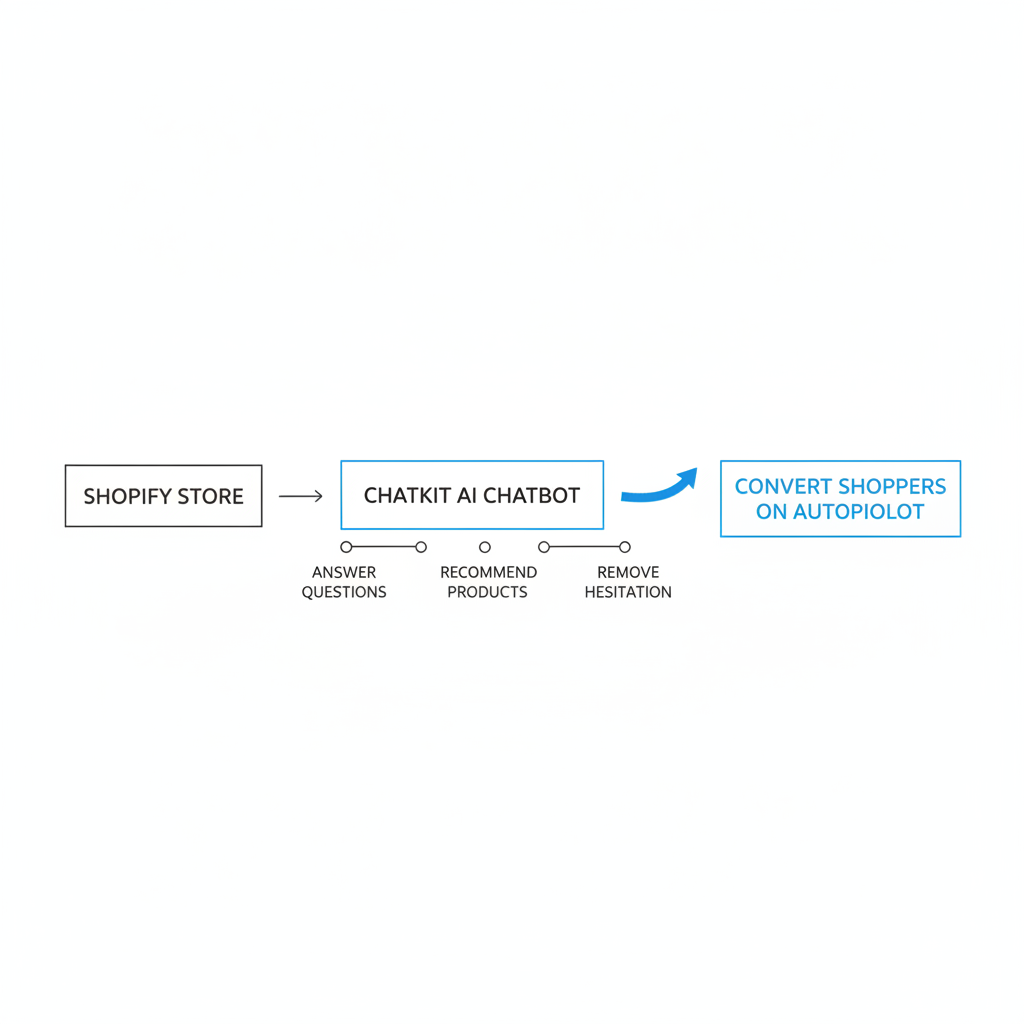
Chatkit can convert shoppers by answering buying questions instantly, recommending relevant products, and removing the hesitation that stops people from checking out. It acts like a sales assistant that is available all day, every day.
That is a big deal for Shopify stores because many purchases are lost in the final moments before checkout. A customer might be ready to buy, but they still need reassurance about compatibility, shipping, use cases, or differences between two products. If nobody answers, the sale often disappears. With Chatkit, those questions can be handled on the spot.
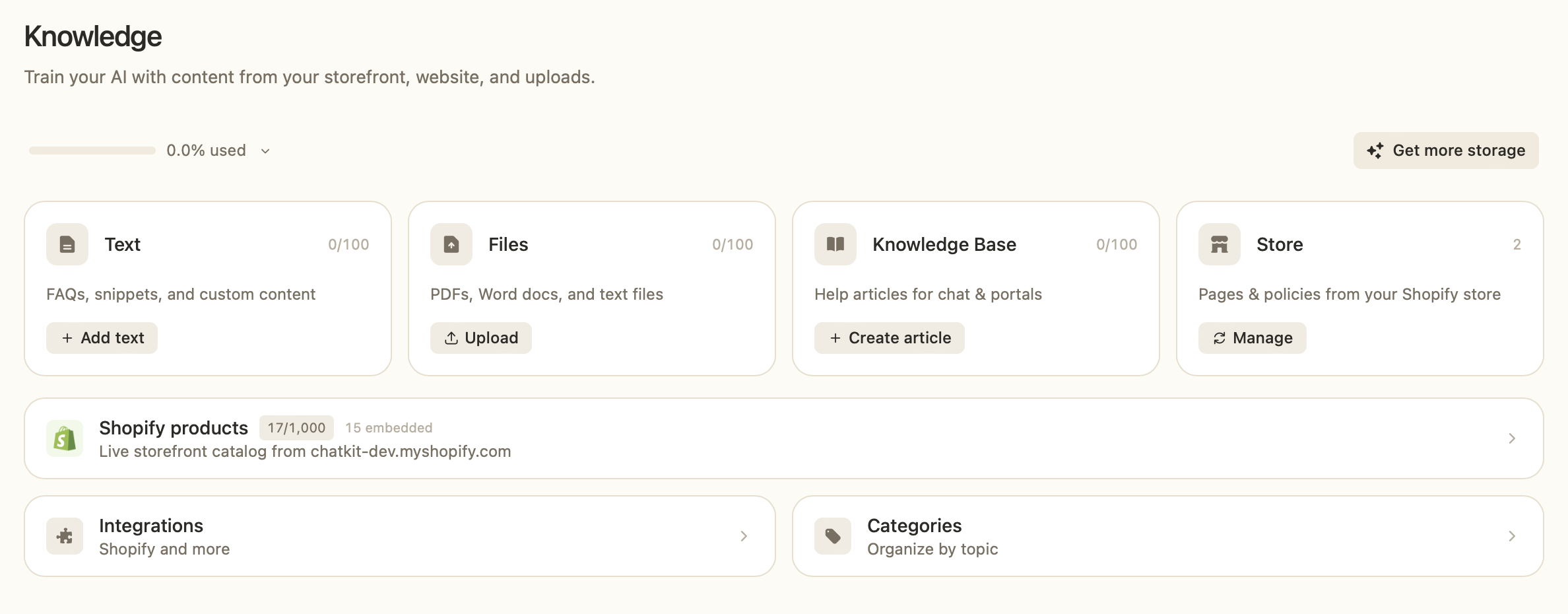
One feature I especially like is the ability to shape responses across your entire store, your catalog, and even for specific customers using Knowledge and Rules. That is important because a generic AI bot is only moderately helpful. A store-aware bot that understands your products, policies, collections, and customer context is far more useful.
For example, you can use chatbot knowledge and rules to:
- Recommend the right product based on a shopper's needs
- Answer model-specific or compatibility questions
- Clarify shipping, returns, and store policies
- Guide shoppers toward bestsellers or higher-converting products
- Reduce confusion between similar items
- Support different response styles for different customer situations
That last point matters more than it sounds. Stores with large catalogs, technical products, or multiple variants often struggle because customers are not sure which item to choose. When the chatbot can steer them toward the right fit, you get fewer abandoned sessions, fewer wrong purchases, and often a better conversion rate.
How do Engage messages improve conversion?
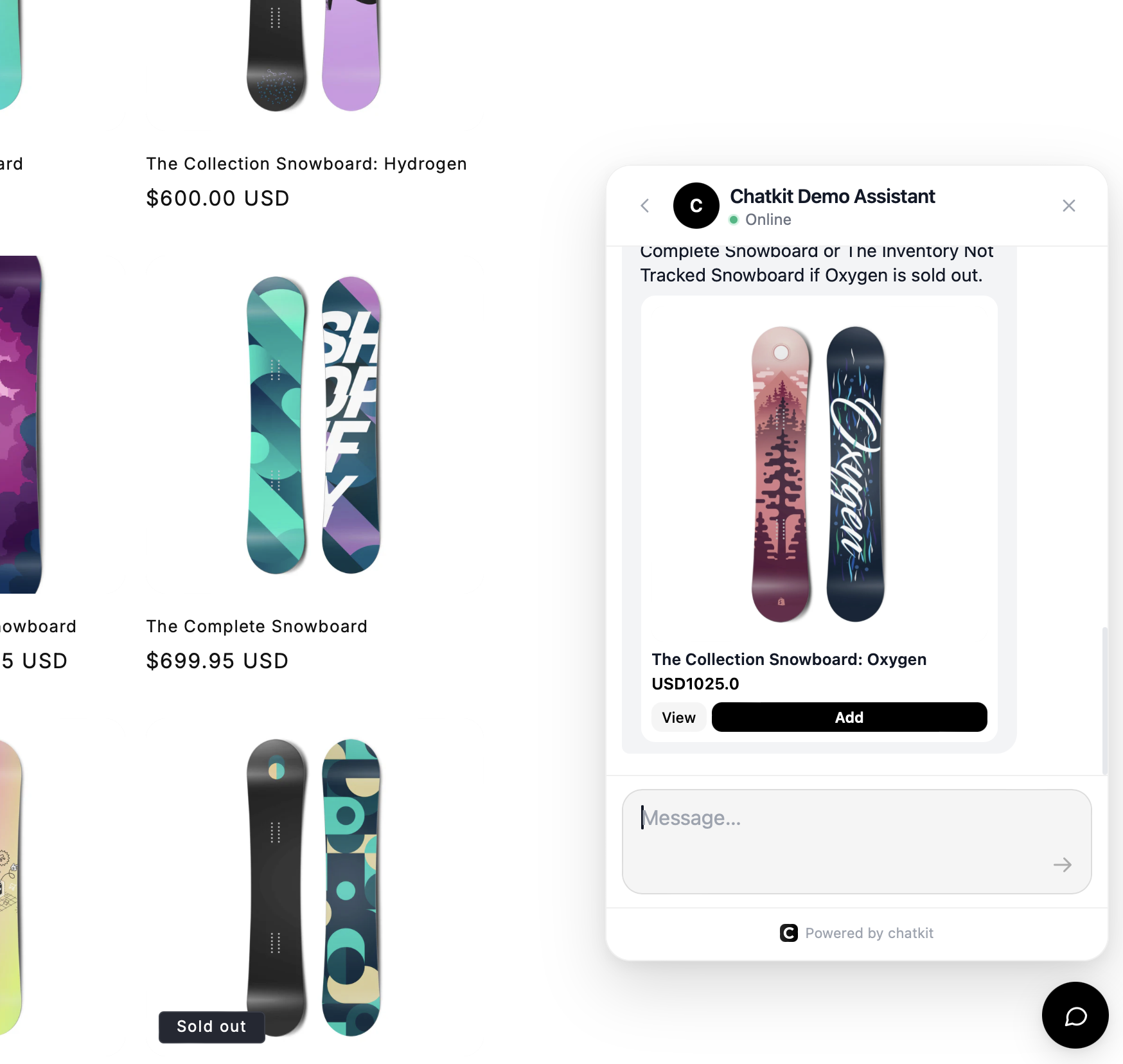
Engage messages improve conversion by proactively starting useful conversations with visitors before they leave. Instead of waiting for a customer to click chat, you can prompt them at the right moment with a question or suggestion.
This is one of the smartest uses of AI chat on Shopify. Many visitors do not ask for help, even when they need it. They just bounce. A well-timed Engage message can ask if they need help finding the right product, checking compatibility, or understanding delivery timing.
In practical terms, Engage messages can help visitors:
- Find the products that match their needs
- Find model-specific information
- Reduce incorrectly bought items
- Increase conversions
- Get answers before they abandon the page
That is especially useful for stores selling electronics accessories, auto parts, supplements, beauty products, or anything with a selection step. If a customer buys the wrong item, you do not just lose margin on returns. You also damage trust. A chatbot that prevents bad-fit purchases can pay for itself very quickly.
How does Chatkit help with customer support?
Chatkit helps with customer support by automating common questions like order tracking, product information, and store policies. It reduces repetitive tickets and gives customers faster answers without needing a human agent online at all times.
The free plan already includes order tracking and assistance, which is one of the highest-volume support categories for ecommerce. If you have run a Shopify store, you already know how much time goes into answering "Where is my order?" and related follow-ups. Automating that alone can save hours every week.
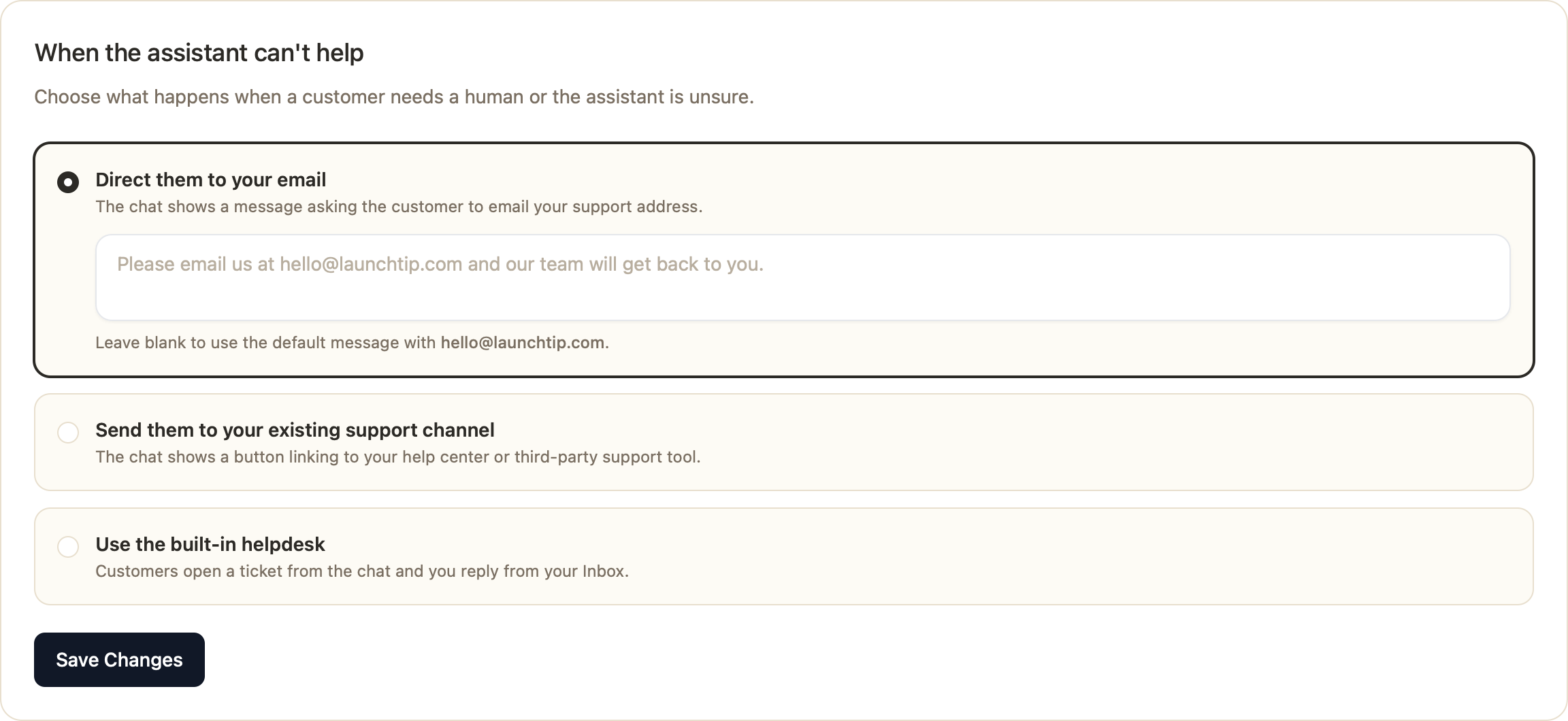
There is also a customer experience benefit. Fast answers feel professional. Slow answers create uncertainty. When customers get immediate help with tracking, returns, or product details, they are more likely to trust your brand and buy again.
In my experience, support automation works best when it covers:
- Order status and tracking
- Shipping estimates
- Returns and exchange policies
- Product usage questions
- Compatibility and sizing guidance
- Basic pre-sales and post-purchase help
If support is a major focus for your store, you may also want to read Top 7 Shopify Chatbot Apps for 24/7 Customer Support in 2026 and Shopify Chatbot Human Handoff: Hybrid Support Strategies That Actually Work. Those posts cover the broader strategy side, but for merchants specifically searching for a free ai chatbot for shopify, Chatkit is a very practical place to start.
What makes Chatkit different from a basic chat widget?
Chatkit is more than a simple chat box because it can use store knowledge, rules, and automation to shape responses intelligently. A basic chat widget just opens a conversation. An AI chatbot should help move the customer toward an outcome.
This distinction matters. Lots of merchants install chat and then wonder why it does not improve revenue or reduce workload. The answer is usually that the tool is passive. It waits for a question and gives limited help. The better approach is a chatbot that understands your store, can proactively engage visitors, and can guide them toward a product or support resolution.
With Knowledge and Rules, you can make responses more accurate and more aligned with how you want your brand to communicate. That means you are not relying on vague AI output. You are giving the system boundaries and context.
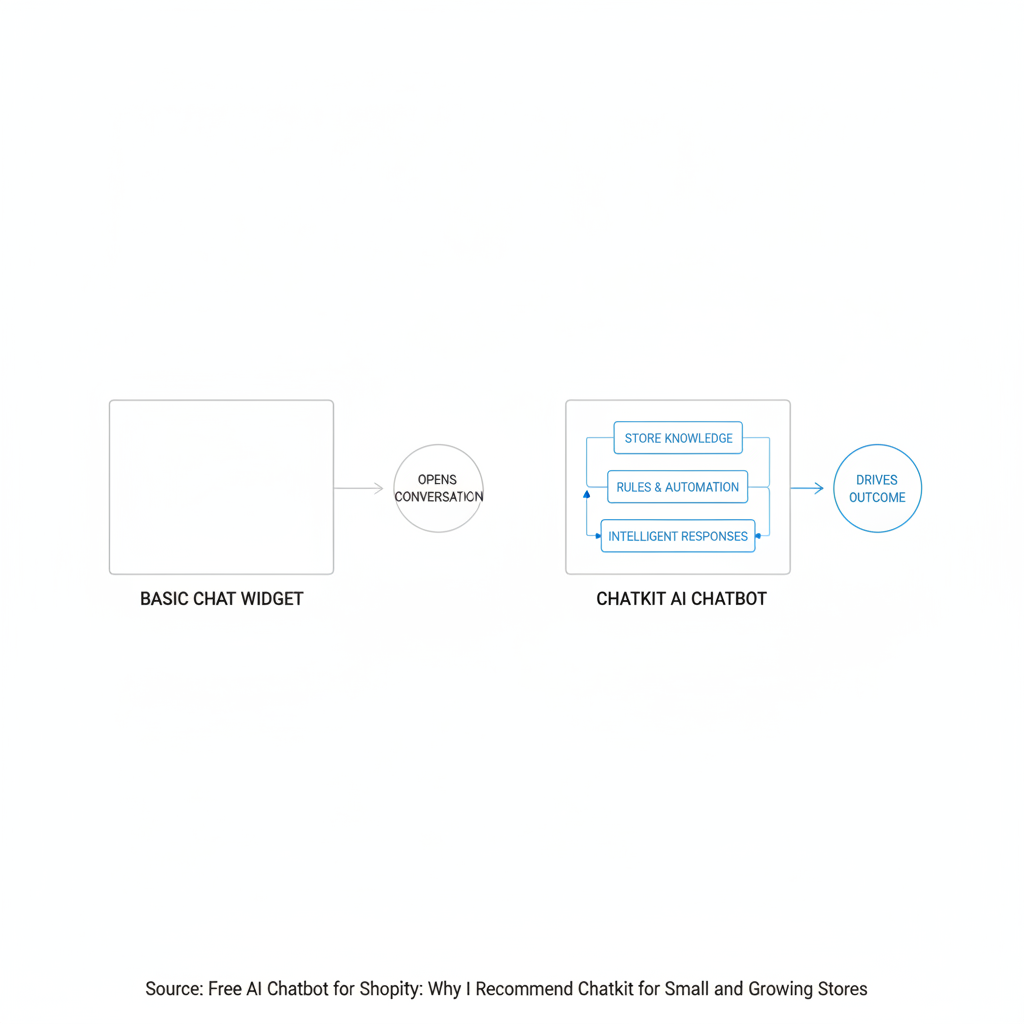
I think of it like this:
| Feature | Basic Chat Widget | Chatkit |
|---|---|---|
| Live conversation box | Yes | Yes |
| Store-aware AI responses | Limited | Yes |
| Product guidance | Minimal | Yes |
| Order tracking help | Usually manual | Yes |
| Knowledge and Rules | No | Yes |
| Proactive Engage messages | No | Yes |
| Free plan for testing real use | Varies | 150 messages/month |
That is why I see Chatkit as a better fit for merchants who want the chatbot to do real work. It is not just there to collect messages. It is there to improve conversion and reduce support load.
Is Chatkit's free plan enough for a small Shopify store?
Yes, Chatkit's free plan is enough for many small Shopify stores, especially if you are in the early stages of testing AI chat or have a modest product catalog. The limits are high enough to learn what works and start automating meaningful conversations.
For a lot of merchants, 150 messages per month is enough to cover the highest-value interactions. The 250-product limit also suits many niche stores, single-product brands, and curated catalogs. You do not need thousands of SKUs to benefit from AI. In fact, stores with a tighter catalog often get value faster because the recommendations and answers are easier to tune.
Here is how I would think about the free plan:
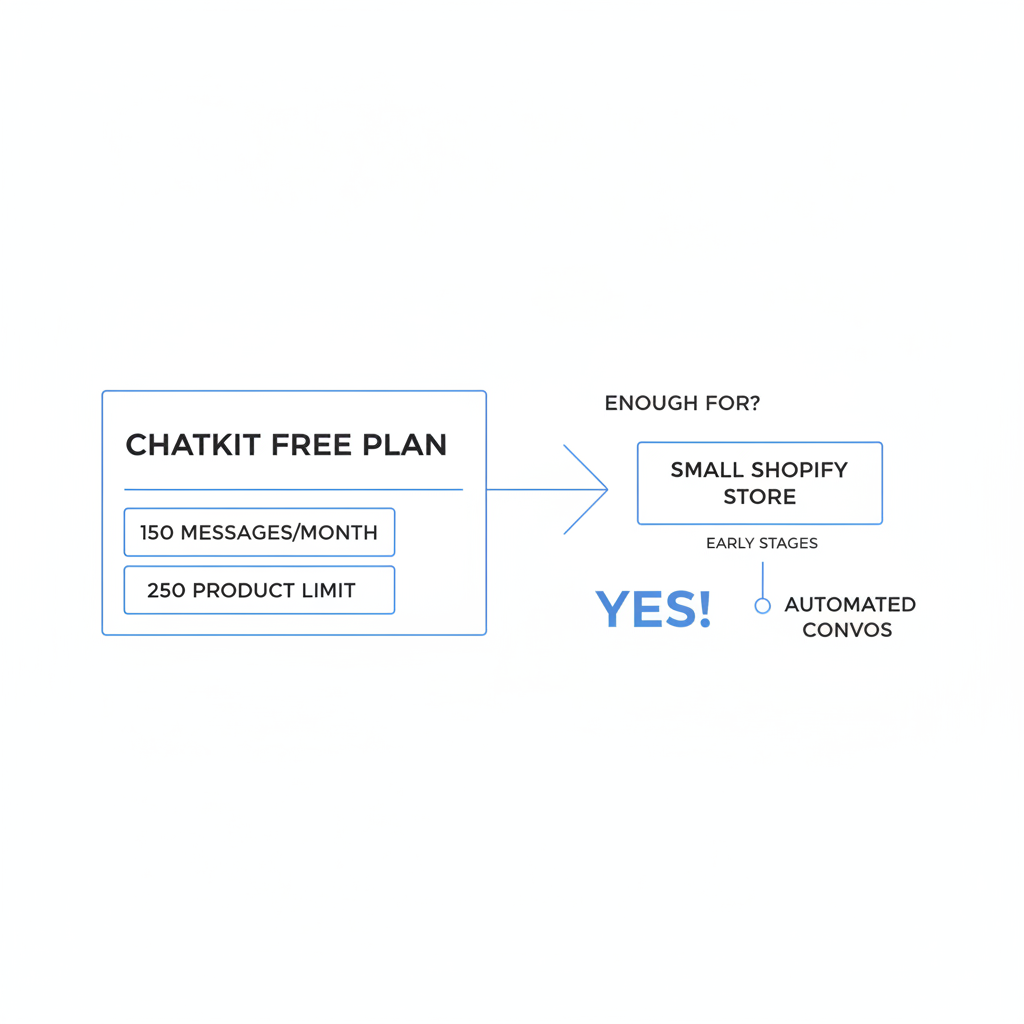
| Store type | Is the free plan a good fit? | Why |
|---|---|---|
| New Shopify store | Yes | Low-risk way to add AI chat from day one |
| Niche catalog under 250 products | Yes | Full catalog can be covered on the free tier |
| Low to moderate traffic store | Yes | 150 monthly messages can go a long way |
| High-volume support store | Maybe | Good starting point, but may outgrow the free cap |
| Large catalog brand | Maybe | Useful for testing, though likely needs a paid plan later |
The important thing is that the free plan is not just a teaser. It is enough to test real customer questions, real support flows, and real sales conversations.
How do I set up Chatkit on Shopify?
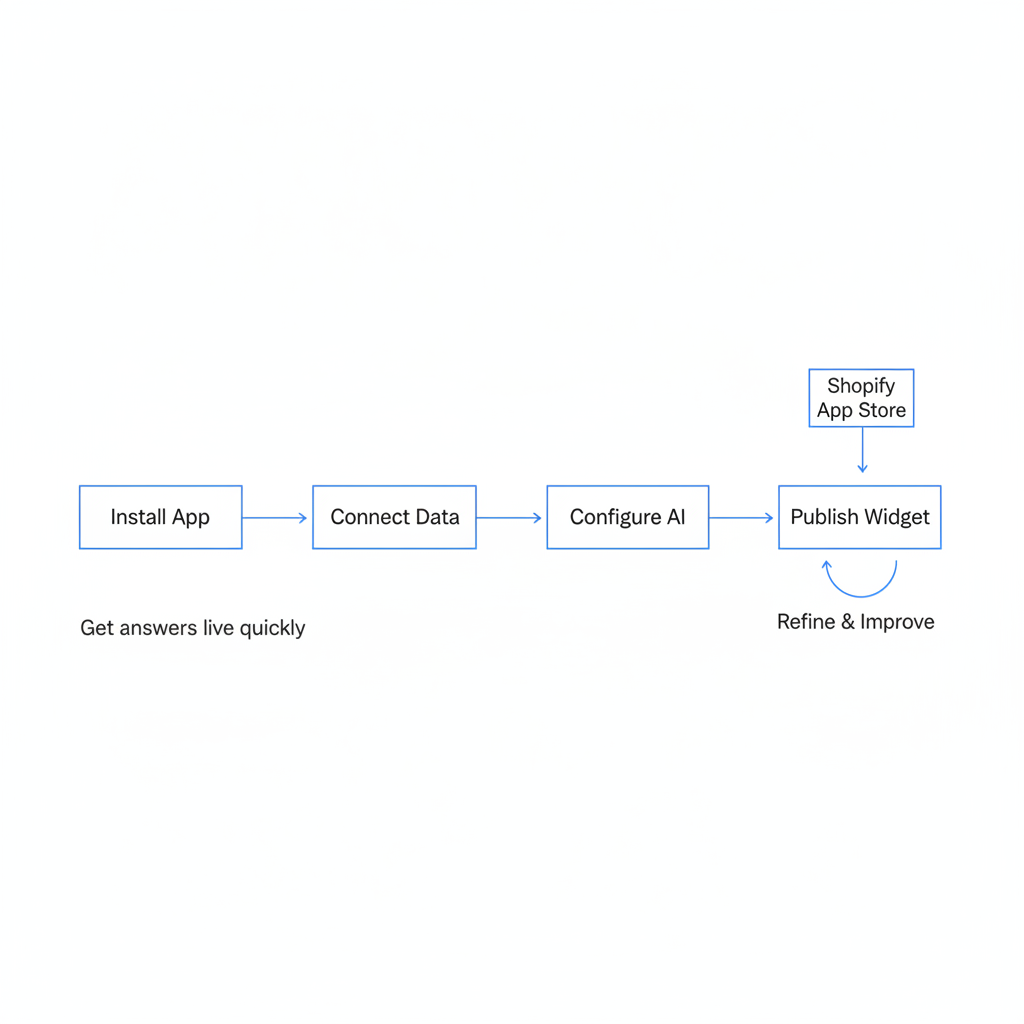
Setting up Chatkit on Shopify should be straightforward: install the app, connect it to your store data, configure your knowledge and rules, and publish the widget. The goal is to get useful answers live quickly, then refine based on actual customer conversations.
You can install Chatkit from the Shopify App Store listing. Once it is in your store, I recommend taking a practical rollout approach instead of trying to perfect everything before launch.
- Install Chatkit from the Shopify App Store.
- Connect your store catalog so the bot can answer product questions.
- Add your key knowledge such as shipping, returns, sizing, compatibility, and FAQs.
- Create rules for how you want responses handled across the store and for specific customer situations.
- Enable order tracking and assistance so post-purchase questions are covered.
- Set up Engage messages on high-intent pages like product pages, cart, or key collections.
- Review conversations weekly and improve weak answers or missing knowledge.
If you want a broader implementation guide, see How to Integrate a Chatbot With Your Shopify Store in 2026 and How to Set Up AI Chatbots on Shopify for Instant Query Resolution in 2026. Those are useful if you are planning a more complete AI support setup.
What should I add to Chatkit Knowledge and Rules first?
Start with the questions that directly affect sales conversion and support volume. Those usually produce the fastest ROI.
I would prioritize these first:
- Shipping times and delivery expectations
- Return and exchange policy
- Compatibility details for model-specific products
- Sizing guidance and fit recommendations
- Top product comparisons
- Order tracking instructions
- Common objections like materials, quality, ingredients, or warranty
This is one area where merchants can get a lot of leverage. If you shape responses well, the chatbot becomes much more than a generic AI assistant. It becomes a store-trained sales and support layer.
Can a free AI chatbot really increase Shopify sales?
Yes, a free ai chatbot for shopify can increase sales if it reduces friction in the buying journey. The biggest gains usually come from faster answers, better product matching, and fewer abandoned shoppers.
I would not frame it as magic. A chatbot will not fix weak products, poor traffic, or bad pricing. But it can absolutely improve the conversion rate of existing traffic by helping people make decisions faster. That is especially true if your store has lots of questions before purchase.
There is strong logic behind this. According to widely cited ecommerce behavior studies, shoppers are much more likely to convert when they get immediate answers and personalized help. AI chat supports both. It shortens the time between interest and confidence.
Chatkit is well positioned for that because it can:
- Recommend relevant products
- Answer objections in real time
- Guide uncertain shoppers
- Prompt visitors with Engage messages
- Reduce wrong-item purchases
That last point is underrated. Reducing incorrect purchases does not just lower returns. It also improves margin, satisfaction, and repeat purchase potential.
If conversion optimization is your main goal, you might also like How to upsell on Shopify leveraging AI and AI-powered upsells: the future of ecommerce conversion. AI chat and AI upsells often work well together because both remove friction and improve average order value.
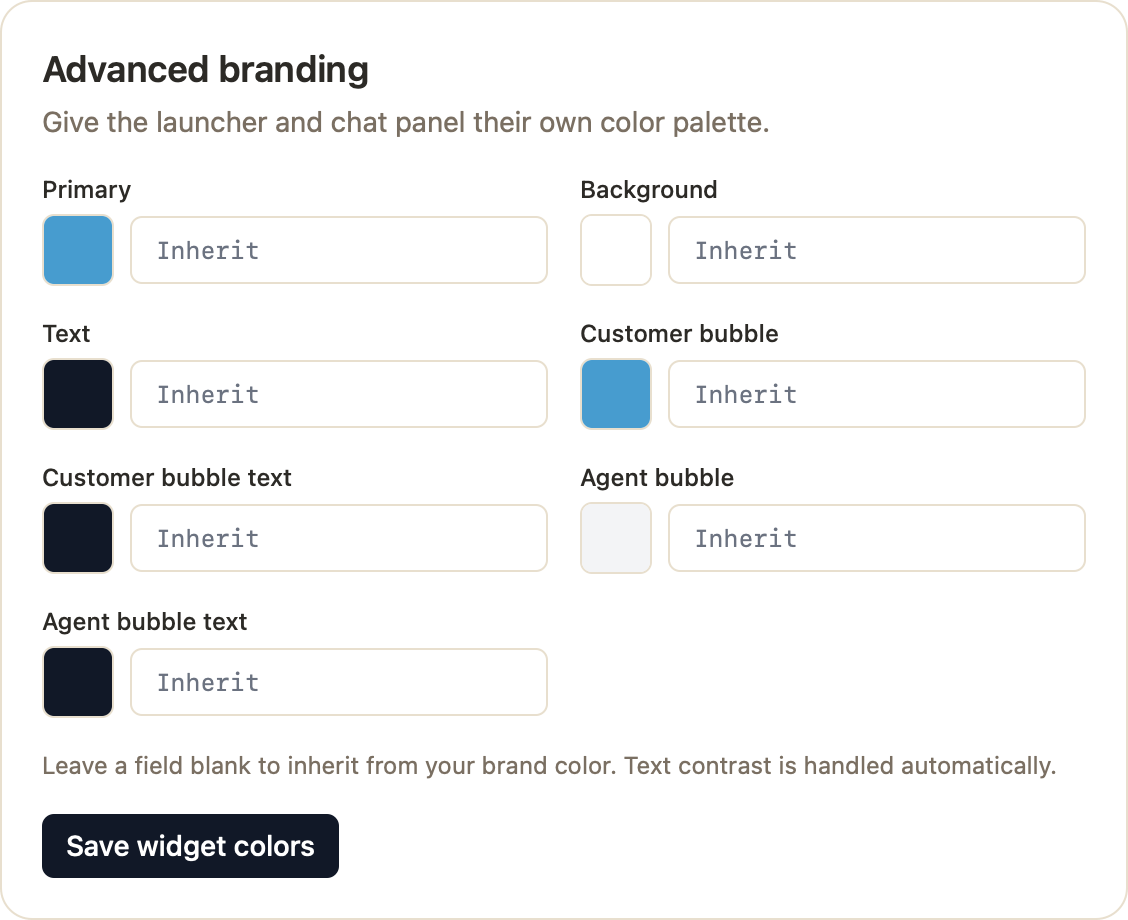
What should merchants watch out for when choosing a free AI chatbot for Shopify?
Merchants should watch for free plans that are too limited, bots that give vague answers, and tools that are hard to control. A chatbot only helps if it is accurate, store-aware, and easy to shape around your business.
This is where I think many stores make a mistake. They install a chatbot because AI sounds useful, but they do not train it well or set clear rules. Then the answers feel generic, and the widget becomes easy to ignore. The real value comes from good knowledge setup, clear response rules, and ongoing refinement.
When I evaluate a free AI chatbot for Shopify, I look for:
- Enough free usage to test real demand
- Catalog awareness
- Support automation
- Proactive messaging
- Control over responses
- Easy setup inside Shopify
That is why Chatkit makes sense for this keyword and this use case. Its free plan is substantial enough to matter, and the features are aligned with what merchants actually need day to day.
Should you try Chatkit for your Shopify store?
Yes, if you want a free ai chatbot for shopify that can help with both sales conversion and customer support, Chatkit is absolutely worth trying. It offers a practical free plan and useful features that go beyond basic live chat.
What I like most is that it addresses the real-world problems merchants face. It can answer product questions, guide shoppers to the right item, support order tracking, and proactively engage visitors before they leave. With Knowledge and Rules, you can shape how it responds across your store and for specific customer situations, which makes it far more useful than a generic chatbot.
If you want to test it yourself, start with the Chatkit Shopify App Store listing. For many small stores, the 150 messages/month and 250-product free plan will be enough to prove whether AI chat can reduce support load and lift conversions on autopilot.
And if your broader goal is getting your store ready for AI-driven shopping, I also recommend reading How to Optimize Your Shopify Store for AI Shopping Agents and How to Get Your Shopify Store into ChatGPT: Step-By-Step Guide for 2026. Those complement chatbot strategy nicely, especially as AI becomes a bigger part of ecommerce discovery and buying behavior.