
Augmenter le chiffre d’affaires de votre boutique Shopify ne consiste pas seulement à attirer de nouveaux clients — il s’agit de tirer le meilleur parti de chaque vente. C’est là que l’upsell entre en jeu. En suggérant des options pertinentes ou des produits de gamme supérieure tout au long du parcours d’achat, vous pouvez augmenter votre panier moyen sans dépenses marketing supplémentaires.
L’IA change la donne pour l’upsell sur Shopify. Grâce à des recommandations produits intelligentes et à l’analyse des données en temps réel, vous pouvez proposer des suggestions personnalisées qui convertissent vraiment. En effet, des recommandations produits intelligentes alimentées par l’IA peuvent tripler les revenus, plus que doubler les taux de conversion et augmenter la valeur des commandes de moitié. Alors que 51 % des entreprises e-commerce utilisent déjà l’IA pour créer des expériences d’achat personnalisées, exploiter l’IA pour l’upsell pourrait bien être votre décision la plus judicieuse à ce jour.
Qu’est-ce que l’upsell sur Shopify ?
Faire de l’upsell sur Shopify consiste à proposer aux clients une version améliorée ou une fonctionnalité supplémentaire du produit qu’ils envisagent. Cette approche implique souvent de suggérer des améliorations pertinentes, des packs ou des produits complémentaires pendant le parcours d’achat. Les systèmes d’upsell pilotés par l’IA présentent ces offres là où les acheteurs ont le plus de chances de convertir — par exemple sur les pages produit, dans le panier et au moment du checkout.
Vous pouvez utiliser l’upsell pour augmenter à la fois le panier moyen (AOV) et le chiffre d’affaires total de la boutique, avec des recommandations produits pilotées par l’IA qui devraient augmenter les ventes e-commerce de 59 %. Lorsque vous exploitez l’IA, vos offres d’upsell deviennent plus opportunes et plus pertinentes, car le logiciel analyse en temps réel le comportement d’achat, l’historique des achats et les préférences. Résultat : ces incitations alimentées par l’IA réduisent l’effort manuel nécessaire et améliorent les performances commerciales.
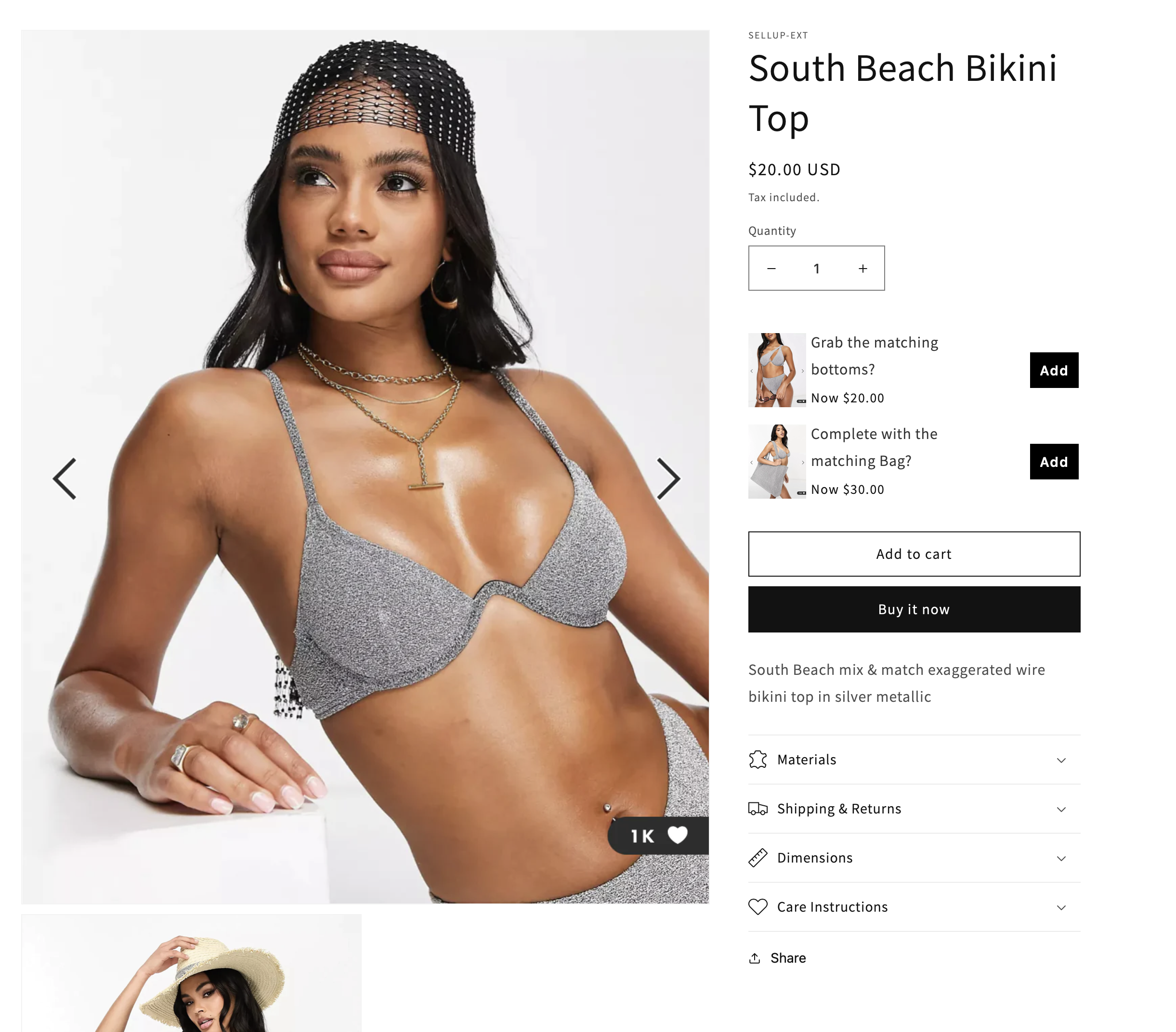
Les marchands Shopify mettent fréquemment en place l’upsell via des widgets intégrés, des pop-ups ou des ajouts dans le panier. Ces solutions alignent les recommandations sur le parcours de chaque client. Des boutiques de toutes tailles, notamment dans la mode, la joaillerie et l’électronique, utilisent cette stratégie pour promouvoir des articles à plus forte valeur ou des ajouts pratiques — par exemple des extensions de garantie, des accessoires de style et des produits assortis.
Les analyses de performance et les intégrations fluides optimisent davantage vos campagnes d’upsell en suivant les résultats et en maintenant une expérience d’achat en ligne cohérente. Les marchands qui s’appuient sur des solutions d’upsell soutenues par l’IA constatent régulièrement des taux de conversion plus élevés et une meilleure satisfaction client, par rapport aux boutiques qui utilisent des recommandations statiques.
Les avantages d’exploiter l’IA pour l’upsell
L’upsell alimenté par l’IA sur Shopify augmente le chiffre d’affaires et l’efficacité de votre boutique en proposant des offres ciblées, à forte conversion, à chaque étape du parcours client. Les marchands qui utilisent l’IA obtiennent une croissance scalable en personnalisant leurs stratégies d’upsell et en les optimisant grâce à une analyse continue des données.
Personnalisation et engagement client
Les recommandations d’upsell personnalisées renforcent l’engagement client en analysant l’historique de navigation, les commandes passées et les données démographiques de chaque acheteur. Les algorithmes d’IA détectent les préférences à partir de points de données tels que les produits consultés et achetés. Votre boutique exploite ces informations pour présenter des améliorations pertinentes ou des articles complémentaires — par exemple, recommander un accessoire assorti après qu’un client a ajouté des chaussures à son panier. Les recommandations personnalisées pilotées par l’IA contribuent à une hausse de 15 à 20 % des taux de conversion, et ces suggestions personnalisées donnent à vos clients le sentiment d’être compris, ce qui améliore l’engagement et favorise la fidélité des acheteurs récurrents.
Recommandations produits dynamiques
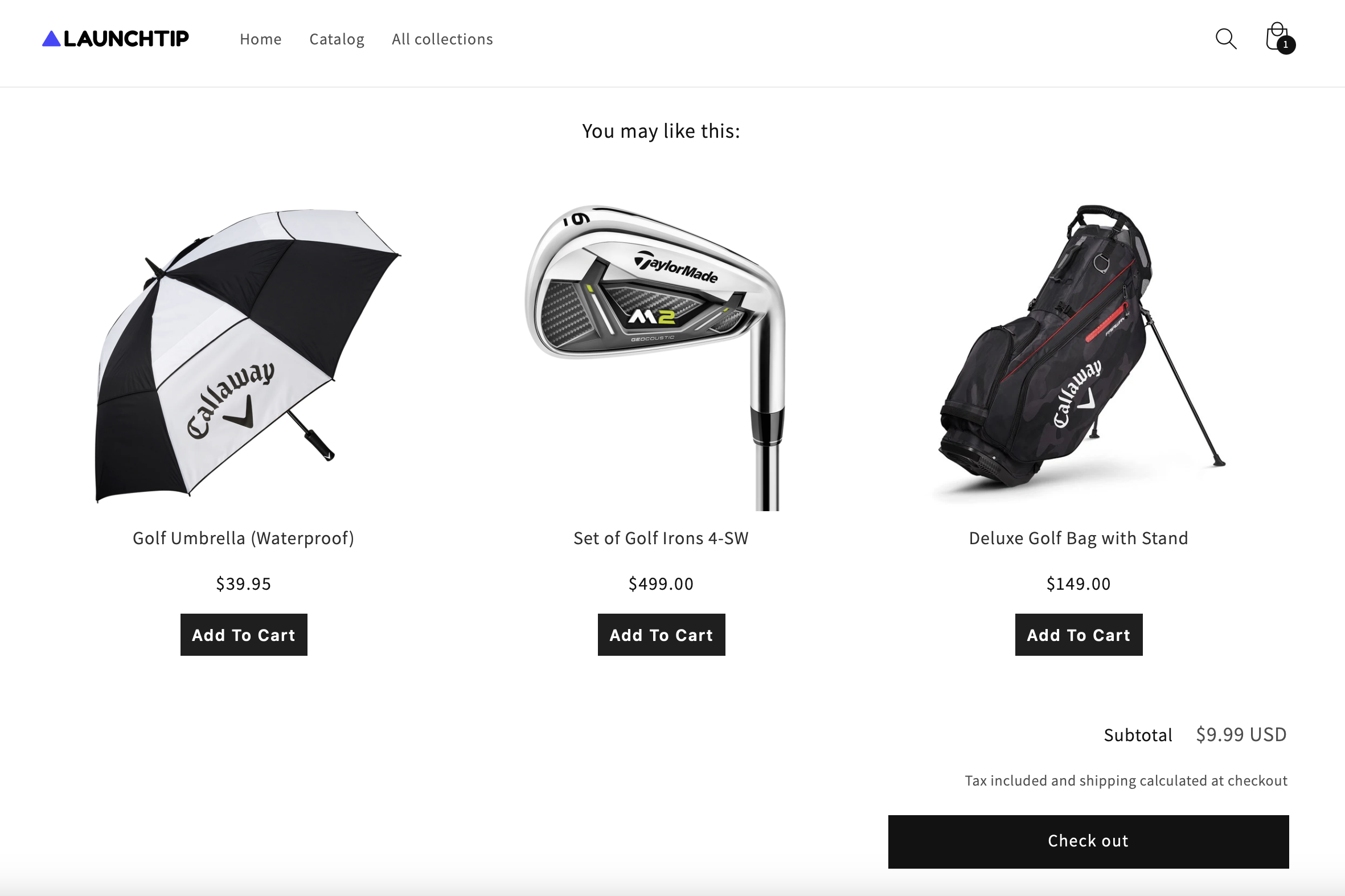
Les recommandations dynamiques se mettent à jour en temps réel au fur et à mesure que les clients interagissent avec votre boutique. Les systèmes d’IA surveillent les actions et les préférences, puis ajustent instantanément les offres d’upsell pour chaque session. Vous pouvez mettre en avant des offres à durée limitée ou des packs sur la page produit, dans le panier ou pendant le checkout, en fonction du comportement en direct.
Par exemple, lorsqu’un client s’attarde sur certains articles ou options, l’IA déclenche des suggestions contextuellement pertinentes qui renforcent l’urgence et maximisent l’AOV.
Prise de décision basée sur les données
La prise de décision basée sur les données améliore vos performances d’upsell en s’appuyant sur des indicateurs clés. L’IA suit les taux de conversion, l’AOV et les données d’engagement, vous fournissant des insights actionnables pour une amélioration continue.
Les marchands surveillent les analyses en temps réel pour tester différents emplacements d’upsell, affiner les critères de ciblage et optimiser la gestion des stocks. Vos stratégies d’upsell restent efficaces et alignées sur les tendances clients, ce qui soutient des revenus plus élevés et une meilleure expérience d’achat.
| Avantage | Comment l’IA apporte de la valeur | Exemple de cas d’usage |
|---|---|---|
| Personnalisation | Analyse le comportement et les données démographiques pour des offres sur mesure | Suggérer des accessoires en fonction du panier |
| Recommandations dynamiques | Met à jour les offres en temps réel grâce à l’activité live de la boutique | Packs déclenchés au checkout |
| Optimisation basée sur les données | Ajuste les upsells selon les analyses et les KPI | Tests A/B des emplacements d’upsell |
Stratégies pour un upsell efficace alimenté par l’IA
Les stratégies d’upsell alimentées par l’IA sur Shopify optimisent chaque point de contact client. Les boutiques performantes s’appuient sur les données et l’intention d’achat pour proposer des offres qui augmentent le panier moyen (AOV) et améliorent le taux de conversion global.
Upsell sur la page produit (le plus efficace)
Présenter des offres d’upsell sur les pages produit capte les acheteurs à forte intention. L’IA analyse les habitudes de navigation et l’historique d’achat pour suggérer des améliorations pertinentes, des packs ou des add-ons. Par exemple, si des clients consultent des baskets, le système recommande des semelles amortissantes ou des sprays imperméabilisants en fonction des achats passés.
Les sections dynamiques « Souvent achetés ensemble » et les offres en un clic génèrent un engagement rapide. Les upsells directement sur la page produit enregistrent généralement la plus forte hausse d’AOV, car les acheteurs interagissent avec des recommandations ciblées au moment de prendre leur décision d’achat.
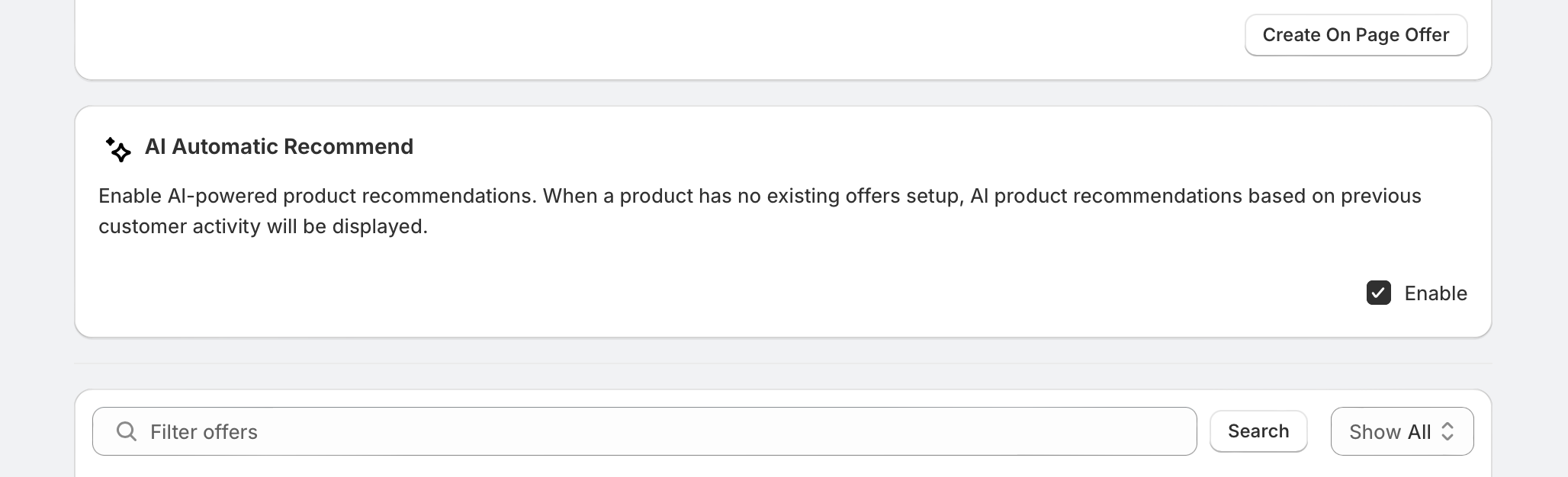
Par exemple, avec SellUp, vous pouvez activer les On Page AI recommendations en 1 clic. L’IA optimisera ensuite en temps réel les meilleurs produits à afficher dans toute votre boutique pour les visiteurs et les clients.
Upsell dans le panier et au checkout
Le panier et le checkout sont des moments clés pour encourager une hausse de dernière minute. L’IA introduit des remises à durée limitée sur des produits associés ou des packs, en s’appuyant sur l’urgence pour inciter aux ajouts.
Les one-check upsells permettent aux clients d’accepter des offres — comme une option de livraison premium ou des accessoires complémentaires — sans quitter le processus de checkout. Cette approche réduit les frictions et maximise les conversions juste avant le paiement, entraînant souvent une hausse mesurable de la valeur du panier par commande.
Offres post-achat
Les upsells post-achat pilotés par l’IA se déclenchent après le checkout, souvent via les pages de remerciement ou des emails de suivi. Ces offres utilisent les données d’achat récentes pour recommander des produits à fort potentiel de cross-sell. Par exemple, après l’achat d’un appareil photo, vous pouvez suggérer une housse de transport ou une carte mémoire avec une remise. Les recommandations post-achat personnalisées augmentent la valeur vie client et encouragent les achats répétés, renforçant la fidélité et les revenus dans le temps.
| Point de contact d’upsell | Exemple de stratégie | Rôle de l’IA | Impact sur les résultats |
|---|---|---|---|
| Page produit | Incitations à l’upgrade, packs | Offres pertinentes en temps réel | Plus forte hausse d’AOV |
| Panier et checkout | Add-ons en un clic, packs à durée limitée | Offres personnalisées basées sur l’urgence | Hausse des conversions |
| Post-achat | Offres par email, suggestions sur la page de remerciement | Cross-sells basés sur les données | Valeur client plus élevée |
Points clés à considérer pour choisir un outil d’upsell IA
Le choix d’un outil d’upsell IA sur Shopify dépend de sa compatibilité avec votre boutique et de son impact sur votre workflow de vente. Évaluer l’intégration, les capacités d’automatisation et l’adaptabilité des recommandations en temps réel permet de s’assurer que la solution correspond à vos objectifs de croissance.
Fonctionnalités à rechercher
Les recommandations alimentées par l’IA identifient et suggèrent des améliorations pertinentes, des packs ou des add-ons en analysant les données client en temps réel et l’historique des transactions.
Une intégration fluide garantit la compatibilité avec votre thème Shopify et vos canaux marketing. Des apps comme SellUp fonctionnent sur les pages clés de la boutique — produit, panier, checkout et page de remerciement — assurant une visibilité d’upsell cohérente.
L’automatisation et les analyses simplifient le déploiement des campagnes et le suivi des résultats.
Mesurer le succès de l’upsell alimenté par l’IA
Mesurer l’impact de l’upsell alimenté par l’IA sur Shopify repose sur des indicateurs de performance clairs et quantifiables. L’analyse de ces données soutient l’amélioration continue et garantit que vos stratégies d’upsell restent à la fois efficaces et pertinentes.
Suivre les métriques et les KPI
Le suivi des métriques pour l’upsell alimenté par l’IA se concentre sur la conversion, la valeur, la satisfaction et la rentabilité.
- Taux de conversion : Le taux de conversion mesure le pourcentage de clients qui acceptent les offres d’upsell. Les recommandations produits pilotées par l’IA peuvent augmenter les conversions de 20 % et accroître les achats répétés de 15 %, surpassant nettement les méthodes manuelles.
- Panier moyen (AOV) : Le panier moyen quantifie les gains de revenus liés à l’upsell. Les acheteurs qui interagissent avec un chat IA dépensent 25 % de plus que ceux qui ne le font pas, et les recommandations personnalisées peuvent augmenter l’AOV jusqu’à 50 %.
- Satisfaction client : La satisfaction client s’évalue via les retours post-achat, la pertinence des suggestions produits influençant les achats répétés et la fidélité.
- Retour sur investissement (ROI) : Le ROI compare les revenus générés par les upsells pilotés par l’IA aux coûts de déploiement ; l’analyse de rentabilité justifie un investissement continu dans l’optimisation par l’IA.
| Métrique | Définition | Impact avec l’intégration de l’IA |
|---|---|---|
| Taux de conversion | % d’offres d’upsell acceptées | Hausse de 15 à 20 % avec des recommandations pilotées par l’IA |
| Panier moyen | Revenu total par commande | Jusqu’à 50 % d’augmentation avec des suggestions pilotées par l’IA |
| Satisfaction client | Retours positifs et achats répétés | Améliorée grâce à la pertinence des recommandations |
| Retour sur investissement | Amélioration des revenus moins les coûts | Plus élevé avec un upsell automatisé et ciblé |
Optimiser les campagnes à partir des données
L’optimisation de vos campagnes repose sur des insights actionnables issus des données de performance et du comportement client.
- Analyse des données : L’analyse des données identifie les offres d’upsell les plus performantes et les segments de clients les plus réceptifs, ce qui permet d’ajuster le ciblage des campagnes.
- Ajustements des algorithmes : Le perfectionnement des algorithmes s’appuie sur les tendances de performance et met à jour les suggestions produits à mesure que de nouvelles données deviennent disponibles. Par exemple, les modèles s’ajustent selon les combinaisons de cross-sell ou d’upsell qui obtiennent les meilleurs taux d’acceptation sur des produits spécifiques.
- Optimisation de la présentation : L’optimisation de la présentation teste les emplacements et les formats (pop-ups, add-ons dans le panier, offres sur la page de remerciement) pour les upsells. Affiner ces variables aide à maximiser la visibilité et l’urgence, améliorant encore la conversion et les revenus.
Une revue régulière de ces analyses vous permet de réagir rapidement aux évolutions du comportement client, aux tendances du marché ou aux niveaux de stock, afin de maintenir une stratégie d’upsell performante.
Conclusion
Adopter l’upsell piloté par l’IA sur Shopify place votre boutique à l’avant-garde de l’innovation e-commerce. Avec des recommandations plus intelligentes et des analyses en temps réel, vous ne faites pas qu’augmenter vos ventes : vous construisez des relations client plus solides et stimulez une croissance durable.
Restez proactif dans vos stratégies d’upsell et laissez l’IA faire le gros du travail. Les bons outils et des insights basés sur les données peuvent débloquer de nouvelles sources de revenus et inciter vos clients à revenir encore et encore.