
Shopify voice search commerce is no longer a fringe topic in 2026. It is a practical channel for product discovery, reorders, local intent queries, and AI-assisted shopping flows across Alexa, Siri, Google Assistant, and LLM-powered assistants.
In my experience building Shopify apps, the biggest mistake merchants make is assuming voice commerce means building a full custom Alexa skill. For most stores, the real opportunity is simpler: make your catalog understandable to AI assistants, improve on-site voice search, and remove friction from mobile and repeat purchases. If your store is already getting traffic from AI search, chat assistants, and mobile shoppers, voice optimization is the next logical step.
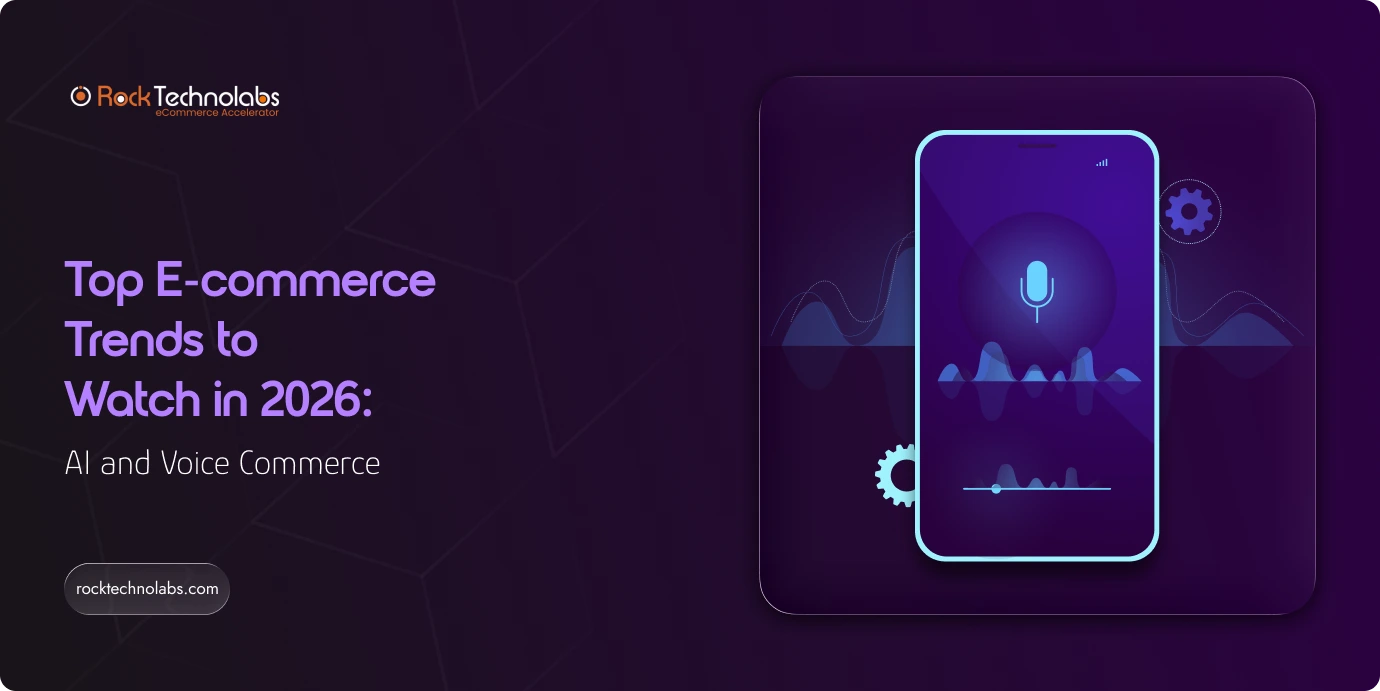
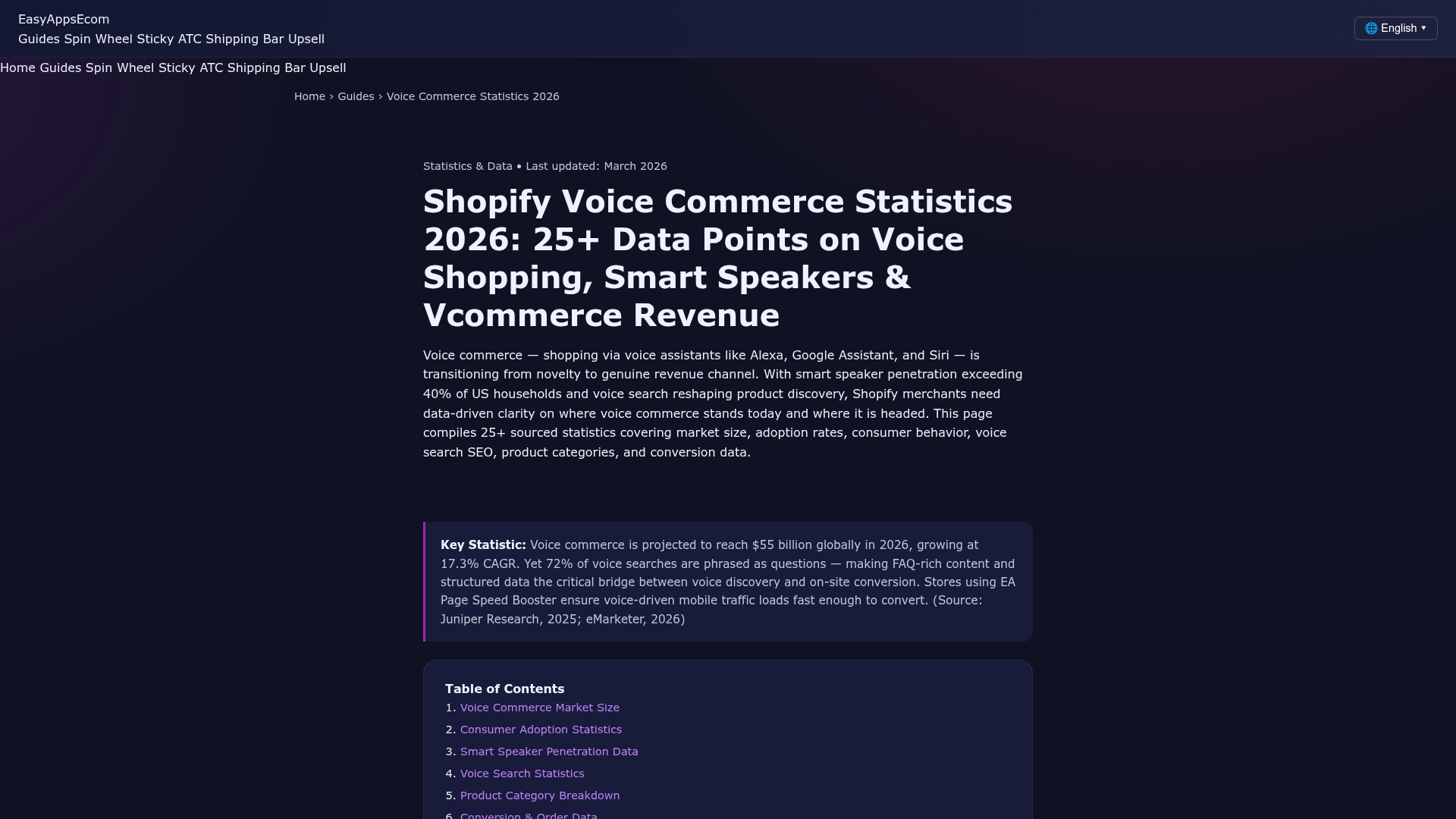
The data is moving in the same direction. Recent research points to 8.4 billion global voice commerce transactions in 2026, a voice-only purchase rate of 2.8%, and a much stronger 14.2% voice-to-screen conversion rate when shoppers continue on a device with a display. That matches what I see across Shopify: voice rarely replaces screens completely, but it increasingly starts the buying journey.
If you want your store to show up when someone says, “What are the best wireless earbuds under $100?” or “Reorder my dog supplements,” this guide will show you how to prepare your Shopify store for that behavior.
What is Shopify voice search commerce?
Shopify voice search commerce is the process of making a Shopify store discoverable and usable through voice assistants and AI-powered interfaces. It includes voice search SEO, structured product data, fast mobile performance, and on-site voice-enabled search tools.
There are really two layers here. The first is off-site voice discovery, where assistants like Siri, Alexa, Google Assistant, or AI agents find your products based on your content and structured data. The second is on-site voice interaction, where a shopper uses a microphone-enabled search bar or AI shopping assistant on your storefront to find products faster.
In 2026, those two layers are starting to blend together. A customer may ask an assistant for a product recommendation, land on your store, then use voice again on-site to refine the search. That is why voice commerce is not just an SEO topic and not just an app topic. It sits across both.
Why should Shopify merchants care about voice commerce in 2026?
Shopify merchants should care because voice is now a meaningful discovery layer for AI assistants, mobile users, cars, smart speakers, and multimodal search. Even if most purchases still finish on-screen, voice often influences the first click.
The most useful stat for merchants is not just market size. It is behavior. Research shows that voice-only conversion is limited, but voice-to-screen conversion performs far better. That means your store does not need to support a fully voice-only checkout to benefit. It needs to answer spoken questions well and hand off smoothly to a product page.
Another pattern I pay attention to is repeat purchase behavior. Voice is especially strong for reorders, subscriptions, replenishment products, and simple catalog queries. If you sell supplements, pet products, coffee, beauty refills, household goods, or anything people buy repeatedly, voice commerce is more relevant than it is for highly considered luxury purchases.
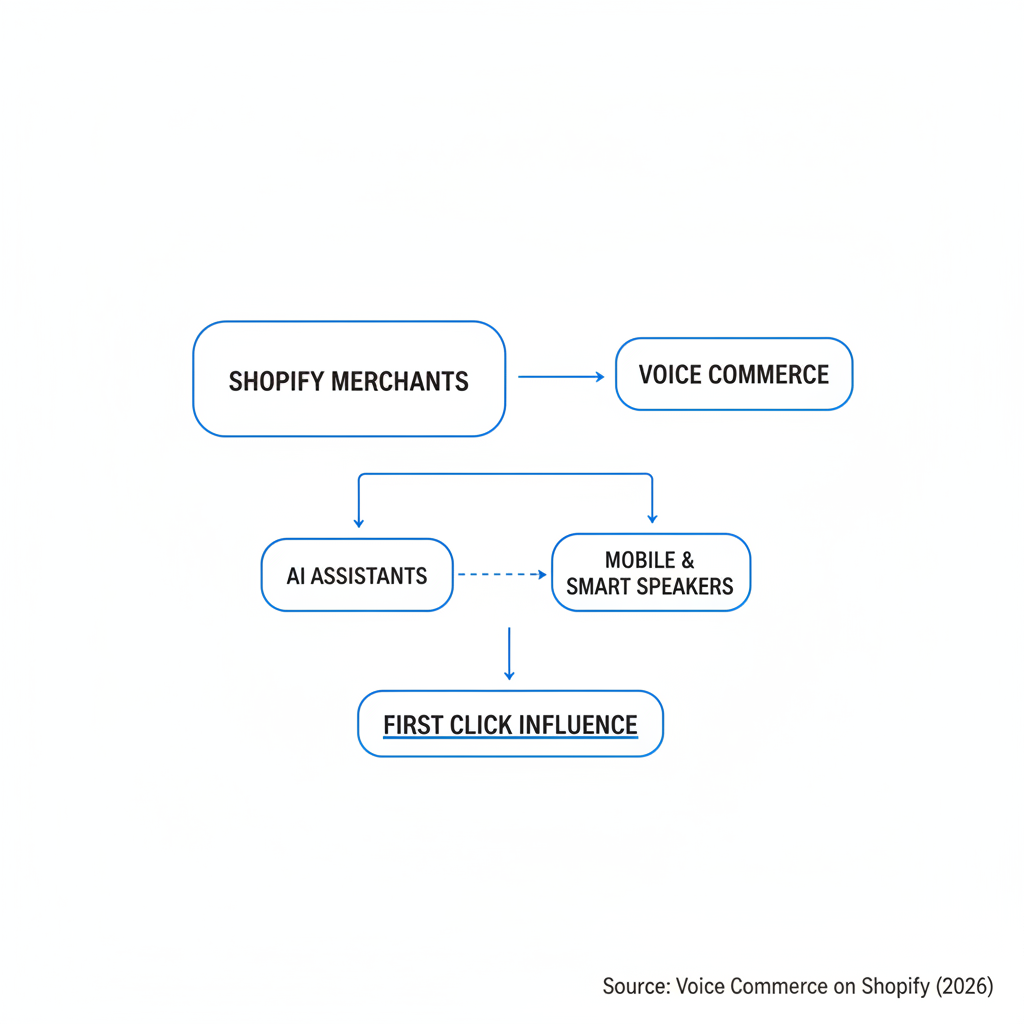
There is also a speed angle. Research suggests voice-driven traffic expects 52% faster page loads. That makes sense. Voice users are often on mobile, multitasking, or in a hurry. If your page drags, the session dies quickly.
Voice commerce in 2026 is less about replacing ecommerce UX and more about shortening the path from spoken intent to product page.
How do AI assistants actually find Shopify products?
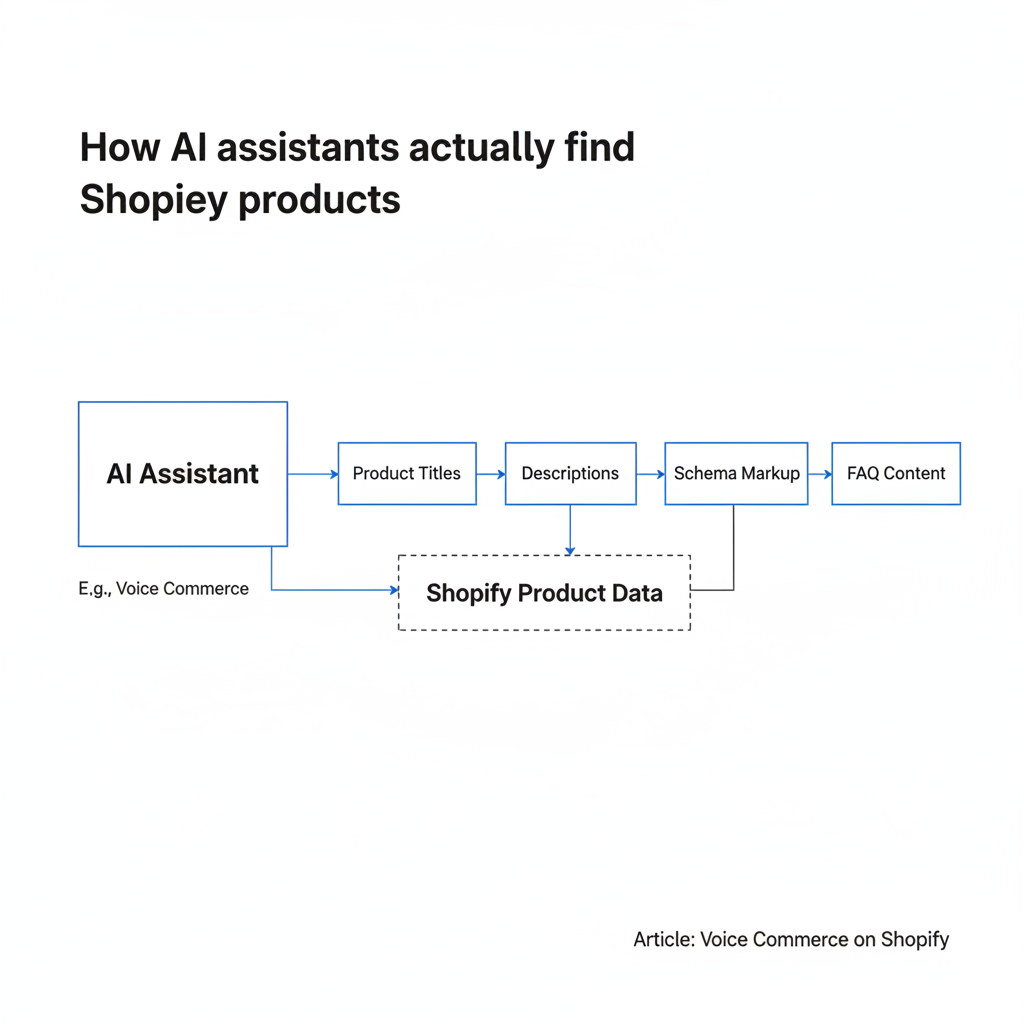
AI assistants find Shopify products through structured data, indexable content, merchant profile data, and clear product page context. They do not understand weak product pages nearly as well as merchants assume.
When I test stores for AI visibility, I usually look at four things first: product titles, product descriptions, schema markup, and FAQ content. If those are vague, duplicated, or missing, voice and AI assistants have very little to work with. A title like “Premium Set” means nothing to an assistant. A title like “Organic Dog Calming Chews - Chicken Flavor - 90 Count” is far easier to match to spoken intent.
For local and service-adjacent merchants, your Google Business Profile matters too. Queries like “Where can I buy vegan protein near me?” often rely on business listings, hours, reviews, and location signals before they ever touch your site.
If you are also thinking about broader AI discovery, I recommend reading How to Get Your Shopify Store into ChatGPT: Step-By-Step Guide for 2026. Voice commerce and AI search optimization overlap heavily, especially around structured content and machine-readable product data.
What content formats work best for voice assistants?
The best content formats for voice assistants are question-and-answer content, clear product specs, concise summaries, and schema-backed FAQs. Spoken queries tend to be longer and more conversational than typed searches.
For example, a typed query might be “best running shoes women.” A spoken query is more likely to be “What are the best women’s running shoes for flat feet under $150?” Your content needs to match that natural language. This is one reason FAQ sections outperform generic marketing copy for voice discovery.
I also like adding direct-answer copy near the top of product collections and guides. One or two short sentences that clearly answer a buyer question can do more for voice visibility than a long brand paragraph full of fluff.
What are the best ways to optimize a Shopify store for voice search commerce?
The best ways to optimize a Shopify store for voice search commerce are improving conversational SEO, adding structured data, speeding up mobile pages, using voice-enabled search apps, and simplifying product discovery for repeat purchases.
Below is the framework I would use if I were optimizing a store from scratch in 2026.
1. Use conversational keywords, not just short SEO terms
Voice queries are usually full questions or natural phrases. Optimize for how people speak, not just how they type.
That means building content around phrases like “What is the best collagen powder for sensitive stomachs?” or “Which standing desk fits a small apartment?” instead of only chasing short-tail keywords. Collection descriptions, FAQs, blog posts, and product pages all help here.
If your content strategy is weak, this is where AI can help. I covered this in How to Generate Powerful Shopify Product Descriptions Using AI in 2026, especially around writing product copy that sounds natural while still being structured enough for search systems.
2. Add product, review, and FAQ schema
Schema markup helps AI assistants identify what your products are, how much they cost, whether they are in stock, and what buyers think of them. This is foundational for voice commerce.
At minimum, I would make sure your store exposes Product schema, Review schema, and FAQ schema where relevant. Many Shopify themes handle some of this, but not always cleanly. Test your pages using Google's Rich Results Test.
Reviews matter more than many merchants realize here. Voice assistants often need confidence signals to surface products. If you use a review app, make sure the markup is output correctly and the review content is indexable.
3. Make product titles and descriptions machine-readable
AI assistants need specificity. A good product page clearly states product type, use case, key attributes, size, material, and compatibility.
In my experience, merchants often write for branding first and retrieval second. That hurts voice discovery. Your product title should still sound good, but it also needs to answer the assistant’s implicit question: what exactly is this item?
For example, “CloudFlex” is a poor standalone title. “CloudFlex Women’s Lightweight Running Shoes - Blue” is much better. The second title gives search systems actual context.
4. Improve mobile speed aggressively
Fast pages are critical for voice commerce because many voice sessions continue on mobile screens. A slow handoff kills momentum.
I would prioritize image compression, app bloat reduction, font cleanup, and theme script auditing. If you want the broader conversion angle, my guide on How to Optimize Your Conversion Rate on Shopify: 2026 Guide covers the same performance issues that usually hurt voice-assisted sessions too.
Remember the context: someone may be using voice while cooking, driving, walking, or multitasking. Their patience is lower than the average desktop shopper.
5. Add an on-site voice search app
If your catalog is medium or large, an on-site voice search app can meaningfully improve product discovery. This is especially useful for mobile shoppers and accessibility.
Based on current market options mentioned in research, these are the main categories to look at:
| Tool | Best for | Voice feature | Notes |
|---|---|---|---|
| Searchanise | Mid to large catalogs | Voice input support | Strong merchandising and filtering |
| Doofinder | Relevance and personalization | Natural-language search support | Good fit for stores that need smarter search logic |
| Voice Search - Speaky | Small stores | Microphone-enabled search bar | Lower complexity and simple setup |
| Magecurious Voice Search | Accessibility-focused stores | Desktop and mobile voice search | Useful if you want a theme-level voice search layer |
My advice is simple: do not install a voice search app just because it sounds futuristic. Install one if your current search is underperforming, your catalog is hard to navigate, or your shoppers often know what they want but do not want to type it.
6. Optimize for reorders and repeat purchases
Voice commerce performs best for known-item purchases. Reorders are one of the strongest use cases.
If you sell consumables or replenishable products, make repeat buying frictionless. Use clear SKU naming, subscription options, reorder links, and account history prompts. The easier it is for an assistant or shopper to identify the exact prior product, the more likely voice becomes useful.
This is also where upsells matter. If a customer reorders coffee pods by voice, a relevant add-on can lift AOV without adding much friction. I have written a lot about this on LaunchTip, including How to Upsell on Shopify in 2026: Complete Guide to Boost Average Order Value and AI-powered upsells: the future of ecommerce conversion.
Which Shopify apps can help with voice commerce?
The best Shopify apps for voice commerce usually fall into three groups: search apps, AI sales assistants, and review or FAQ tools that improve machine-readable content. There is no single magic app that solves everything.
Here is how I would think about the stack.
Search and voice input apps
These apps help shoppers speak product queries directly on your storefront. They are most useful when your catalog is broad or your search UX is weak.
- Searchanise - strong for filtering, merchandising, and larger catalogs.
- Doofinder - useful if you want more intelligent search relevance and personalization.
- Voice Search - Speaky - a lightweight option for adding microphone-based search.
- Magecurious Voice Search - worth looking at for straightforward voice search and accessibility use cases.
AI voice and conversational selling tools
These tools focus more on conversational product discovery than classic search bars. They can be useful if you want a guided shopping experience.
- Nowutalk AI Voice Sales Agent - positioned around voice-led product discovery on-site.
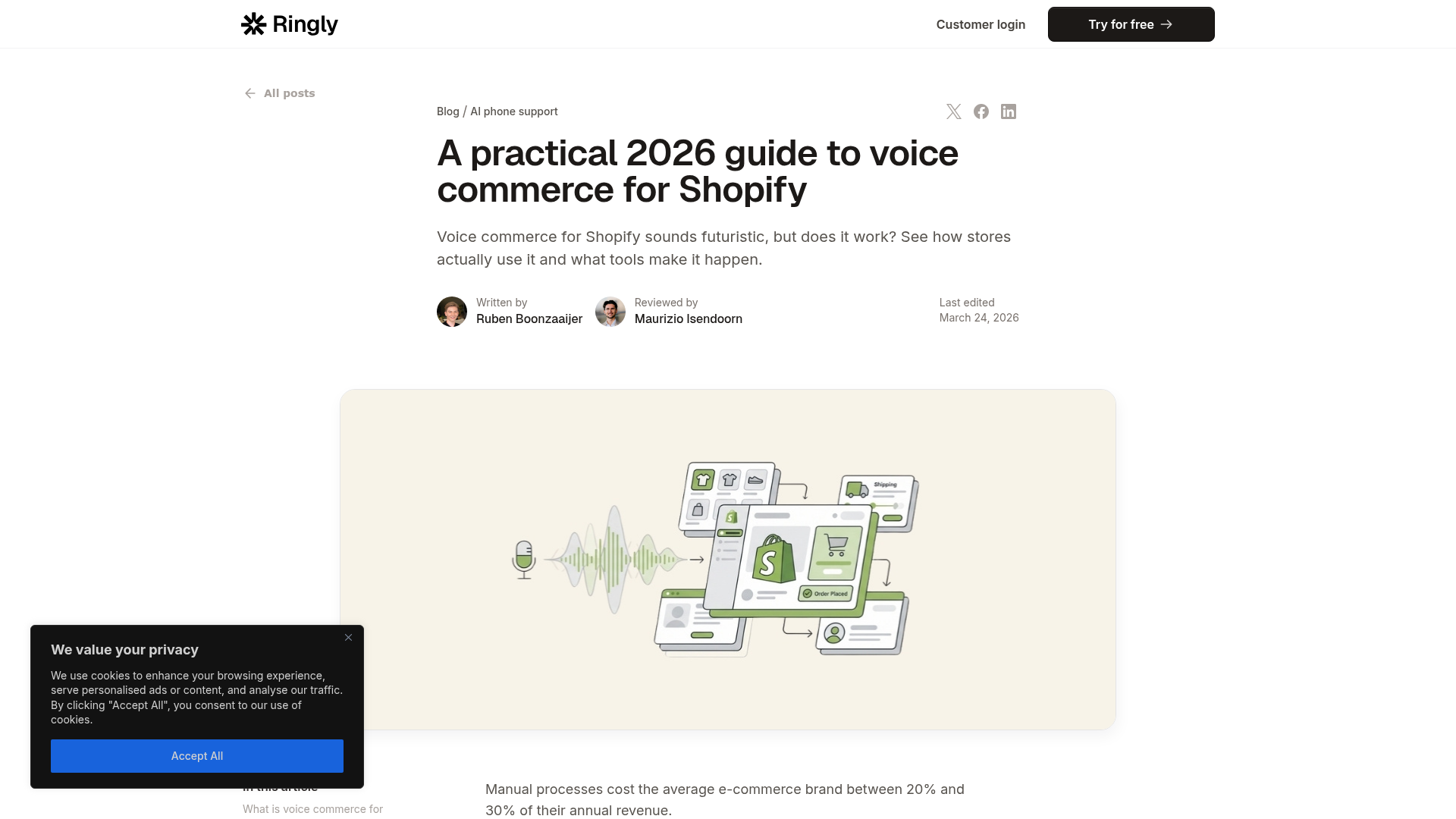
- Seth by Ringly.io - more focused on call automation and support workflows than storefront search.
Support apps that improve voice readiness
Voice optimization is not only about voice apps. It is also about making your store easier for AI systems to interpret.
If you need stronger product reviews, I built Lumo Reviews to help merchants collect and display review content that creates trust and richer product context. If you need to answer pre-purchase questions more clearly, NoteDesk can help surface important product or order messaging right where shoppers need it.
And if your strategy includes improving cart value after voice-led discovery, my app SellUp is built for upsells and cross-sells that feel native to the buying flow.
| App | App Store URL | How it helps voice commerce |
|---|---|---|
| Lumo Reviews | Shopify App Store | Improves review content and trust signals for AI interpretation |
| NoteDesk | Shopify App Store | Adds contextual information that can reduce ambiguity on product pages |
| SellUp | Shopify App Store | Monetizes voice-led sessions with relevant upsells and post-add-to-cart offers |
If you are wondering why I include non-voice apps here, it is because voice commerce is a systems problem. Better search helps discovery. Better reviews help retrieval and trust. Better upsells help monetization. Better product messaging helps assistants interpret the page.
How do I create content that ranks for spoken shopping queries?
To rank for spoken shopping queries, create content that mirrors the way customers ask questions out loud. The best format is usually short-answer copy followed by deeper detail.
This is one reason I like AEO-style formatting for Shopify content. Start with the direct answer, then expand. Use headings that match real questions. Add FAQ sections on product pages and collections. Include concise definitions and comparisons.
For example, if you sell standing desks, create content around questions like:
- What is the best standing desk for a small apartment?
- Which standing desk supports dual monitors?
- Is a 48-inch standing desk big enough for remote work?
- What standing desk is easiest to assemble?
Those are not just blog ideas. They are voice query patterns.
If SEO is part of your acquisition mix, my posts on Boost Your Shopify Store's SEO: Essential Tips for Getting Found on Google in 2025 and Keyword Research SEO Techniques for Shopify Stores are still very relevant. The same research process applies, but for voice you should bias toward longer, more natural phrases.
What types of Shopify stores benefit most from voice commerce?
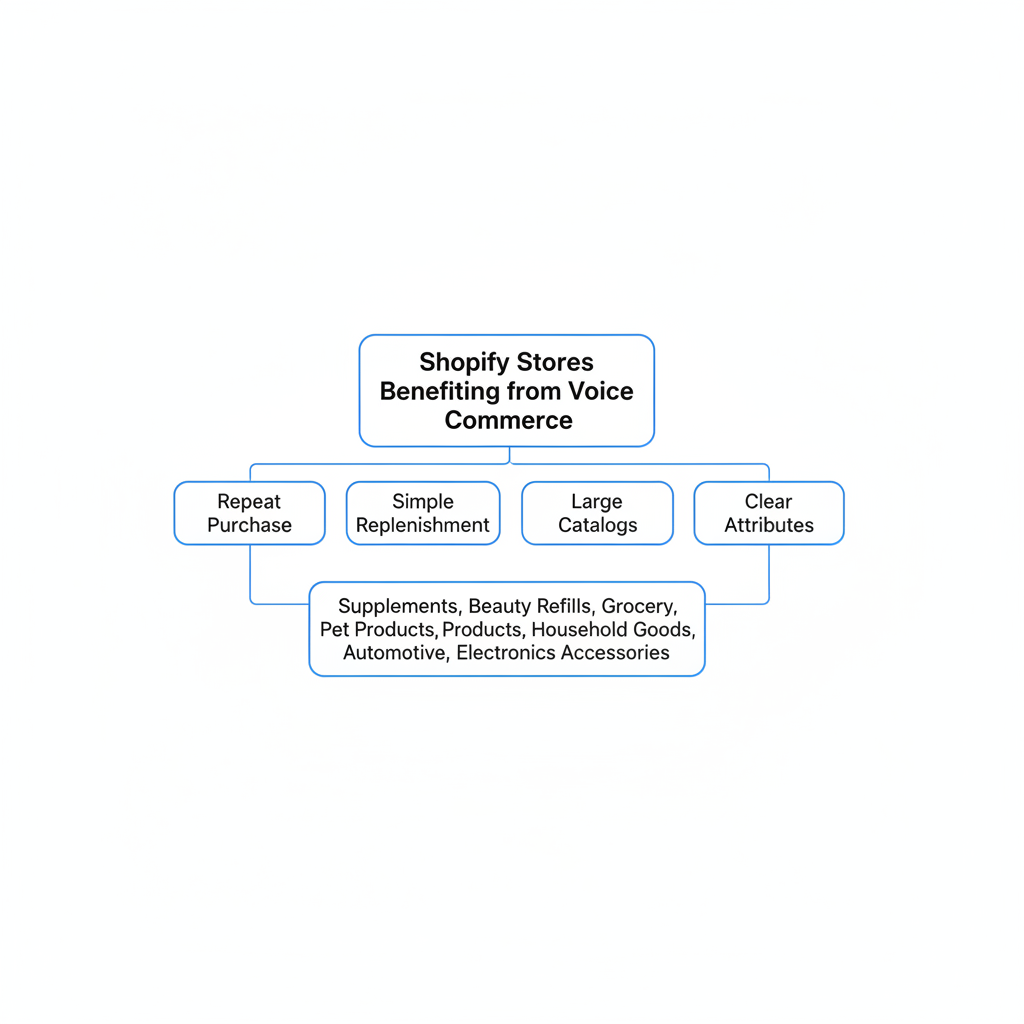
The Shopify stores that benefit most from voice commerce are those selling repeat-purchase products, simple replenishment items, large searchable catalogs, and products with clear attributes. Voice is strongest when intent is specific.
In my opinion, the best fits are supplements, beauty refills, grocery, pet products, household goods, automotive accessories, and electronics accessories. These categories often involve either reorders or attribute-based searches like size, compatibility, flavor, or color.
Voice can still help fashion, furniture, or gifting stores, but usually more at the discovery stage than the checkout stage. The more nuanced or visual the decision, the more likely voice will act as an assistant rather than the full buying interface.
| Store type | Voice commerce fit | Why |
|---|---|---|
| Supplements and wellness | High | Strong reorder behavior and clear product intent |
| Pet supplies | High | Repeat purchases and easy spoken product names |
| Beauty and skincare | Medium to high | Good for reorders, mixed for first-time discovery |
| Electronics accessories | Medium to high | Works well when compatibility data is clear |
| Fashion | Medium | Useful for search refinement, less so for final decision |
| Luxury or highly visual products | Low to medium | Voice assists discovery but visuals drive conversion |
What mistakes should merchants avoid?
The biggest mistakes are treating voice as a gimmick, ignoring structured data, using vague product naming, and adding tools without measuring results. Voice commerce is practical, but only if you approach it like a conversion project.
I would avoid building a custom voice experience before fixing the basics. If your site search is poor, your product data is messy, and your mobile speed is slow, a microphone icon will not save you. You will just create a shinier broken experience.
I would also avoid assuming all voice traffic wants a voice-only checkout. Most do not. In 2026, the better model is often voice-assisted discovery plus screen-based decision-making.
Finally, do not forget analytics. Track search usage, zero-result searches, mobile conversion from search users, repeat order behavior, and landing page performance for question-based content. Voice optimization should show up in measurable store metrics.
How do I get started with Shopify voice search commerce this week?
You can get started with Shopify voice search commerce this week by auditing your store for content clarity, schema coverage, mobile speed, and search UX. Most stores do not need a massive rebuild.
- Audit your top 20 product pages. Rewrite vague titles and add clearer specs.
- Add or validate Product, Review, and FAQ schema. Test with Google's Rich Results tool.
- Create 10 to 20 FAQ-style queries based on how customers actually speak.
- Improve mobile performance. Remove unnecessary apps and compress heavy assets.
- Test a voice-enabled search app if your catalog is broad or mobile search is weak.
- Prioritize reorder journeys for consumables and subscription-friendly products.
- Measure outcomes like search usage, conversion rate, and repeat purchase lift.
If you are already thinking beyond traditional SEO, pair this work with broader AI discoverability. My post on How to Optimize Your Shopify Store for AI Shopping Agents (Not Just Google) is a good companion because the same machine-readable foundations help both voice assistants and shopping agents.
Is voice commerce on Shopify worth it in 2026?
Yes, voice commerce on Shopify is worth it in 2026 if you treat it as part of a broader AI-assisted shopping strategy. It is not worth it unless you are willing to improve product data, content structure, and mobile performance first.
In my experience, the merchants who win here are not the ones chasing novelty. They are the ones making their stores easier for machines to understand and easier for humans to use. Voice just happens to reward both.
That is why I see shopify voice search commerce as a practical optimization layer, not a standalone trend. If your store can answer spoken questions clearly, load fast, surface the right products, and support repeat purchases, you are already most of the way there.
And in 2026, that is exactly where ecommerce is heading.