

Apparel returns are expensive, predictable, and often preventable. The best way to reduce apparel returns on Shopify is to answer size and fit questions before the customer buys, not after they ask for a refund.
In my experience building Shopify apps, fashion merchants usually do not have a returns problem first. They have a fit confidence problem. When shoppers cannot tell whether a dress runs small, whether denim stretches after one wear, or whether a hoodie is meant to be oversized, they either abandon the purchase or buy multiple sizes and plan to send one back.
That is why a plain Shopify size chart is rarely enough on its own. A static chart can show measurements, but it usually cannot explain brand-specific fit notes, answer personal questions in real time, or stop bracketing behavior before checkout.
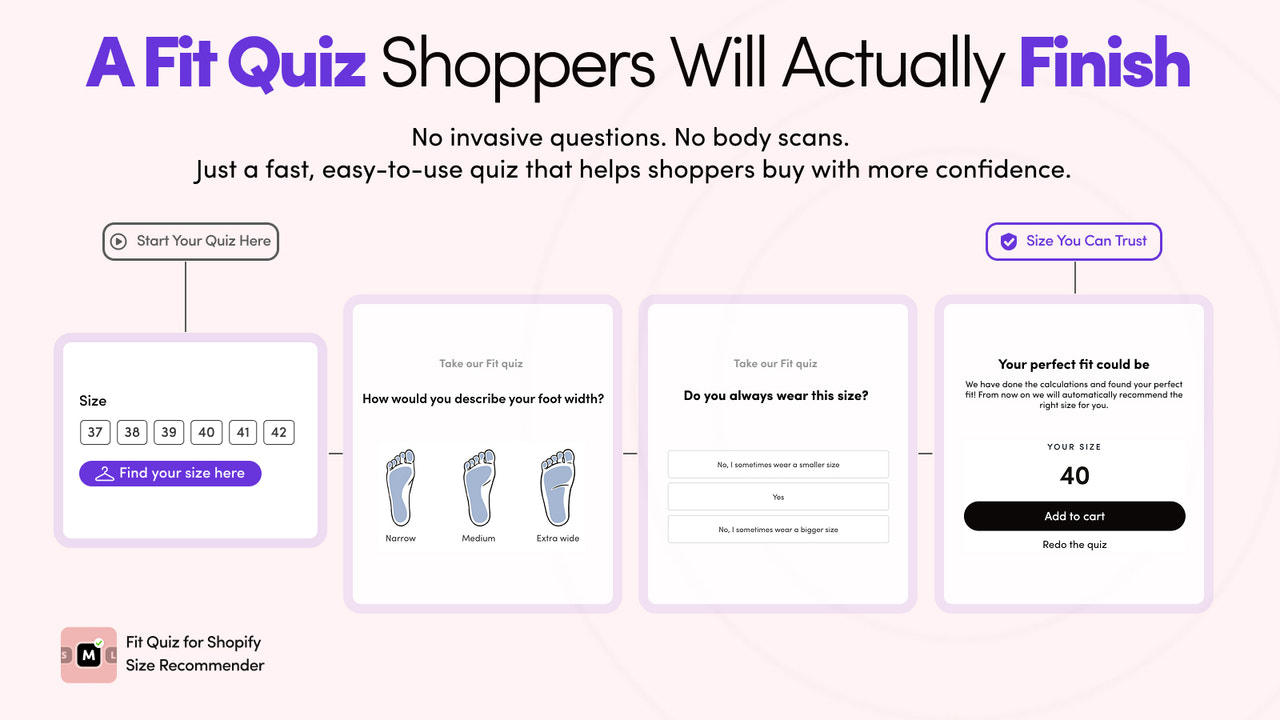
In this guide, I will show you how to reduce apparel returns with better product-page fit guidance, a stronger Shopify size chart setup, and a chat agent that answers "will this fit me?" using your actual brand fit notes. I will also show you how to automate rules like suggesting the size guide when someone asks about fit on a product page.
Why are apparel return rates so high on Shopify?
Apparel return rates are high because customers buy without trying items on, and sizing varies wildly across brands, fabrics, and cuts. Fashion return rates commonly sit around 20% to 40%, with fit and sizing among the biggest reasons.
That range matches what I keep seeing across the Shopify ecosystem. Some stores with clear fit content stay closer to the low end, while trend-driven fashion brands, occasionwear, and stores with inconsistent supplier sizing can push much higher. When margins are already tight, even a few points of extra returns can wipe out a lot of profit.
There is also a hidden cost beyond the refund itself. Returns create support load, reverse shipping costs, restocking labor, inventory distortion, and slower cash flow. If an item comes back worn, damaged, or out of season, the real loss can be much bigger than the original shipping label.
Shopify merchants discussing fashion returns often point to the same root issue: uncertainty before purchase. If the customer is not confident about fit, they make a defensive buying decision.
What causes clothing returns most often?
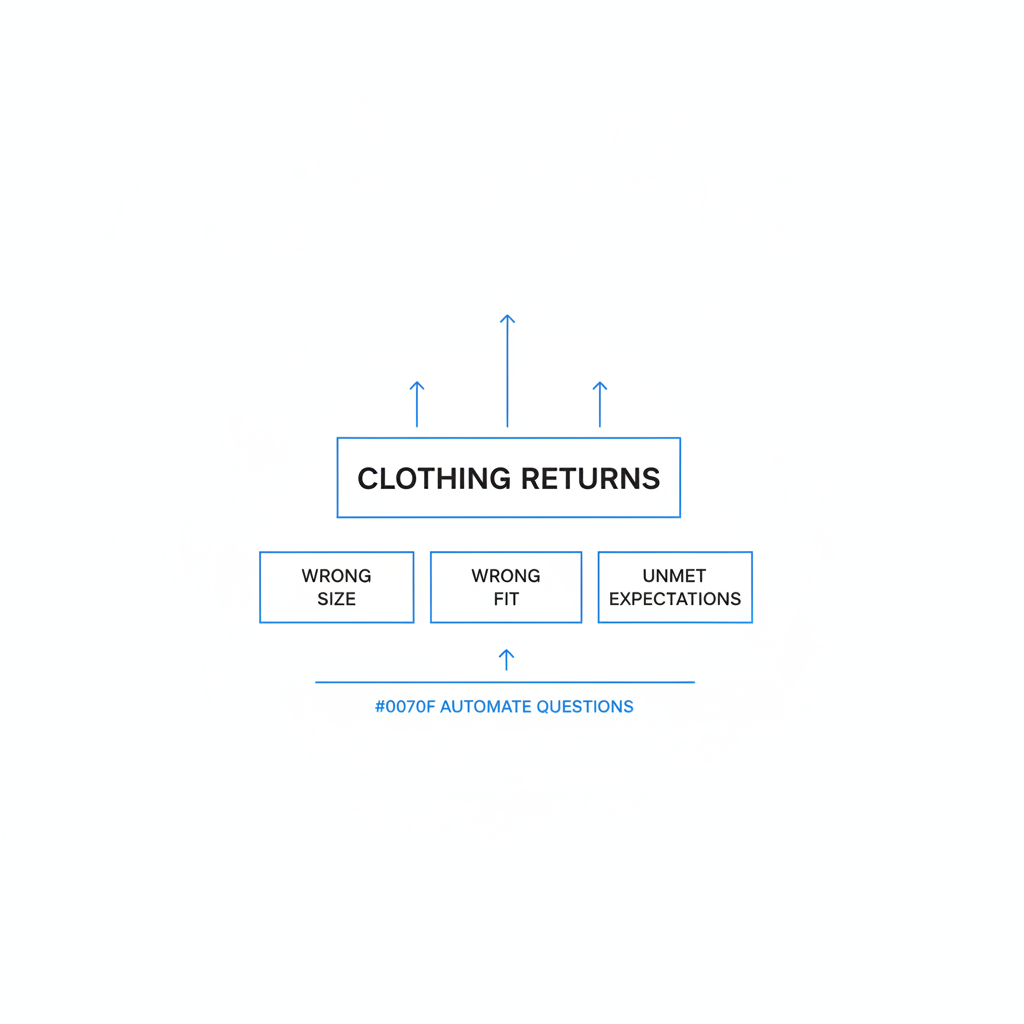
The biggest cause of clothing returns is usually wrong fit, wrong size, or unmet fit expectations. Customers return items not only because they are technically the wrong size, but because the garment does not fit the way they imagined.
That distinction matters. A shopper might receive a medium that matches your chart exactly, but still return it because they expected a relaxed fit and got a slim fit. Or they may buy a dress in their usual size, only to find the fabric has no stretch and the waist runs tight.
- Brand inconsistency - a size 8 in one label is not a size 8 in another
- Style-specific variation - cropped, oversized, bodycon, slim, and relaxed cuts all fit differently
- Fabric behavior - stretch denim, rigid cotton, knits, and satin do not wear the same way
- Poor product-page guidance - generic charts without model info or fit notes
- Mobile friction - size charts that are hard to open or impossible to read on phones
- Bracketing - customers intentionally ordering two sizes intending to return one
In my experience, merchants often underestimate how much language clarity affects returns. Phrases like "true to size" are too vague unless you explain what that means for your audience. "Runs small in the shoulders" or "size up if you prefer a looser fit" is much more useful.
What is bracketing, and why does it increase apparel returns?
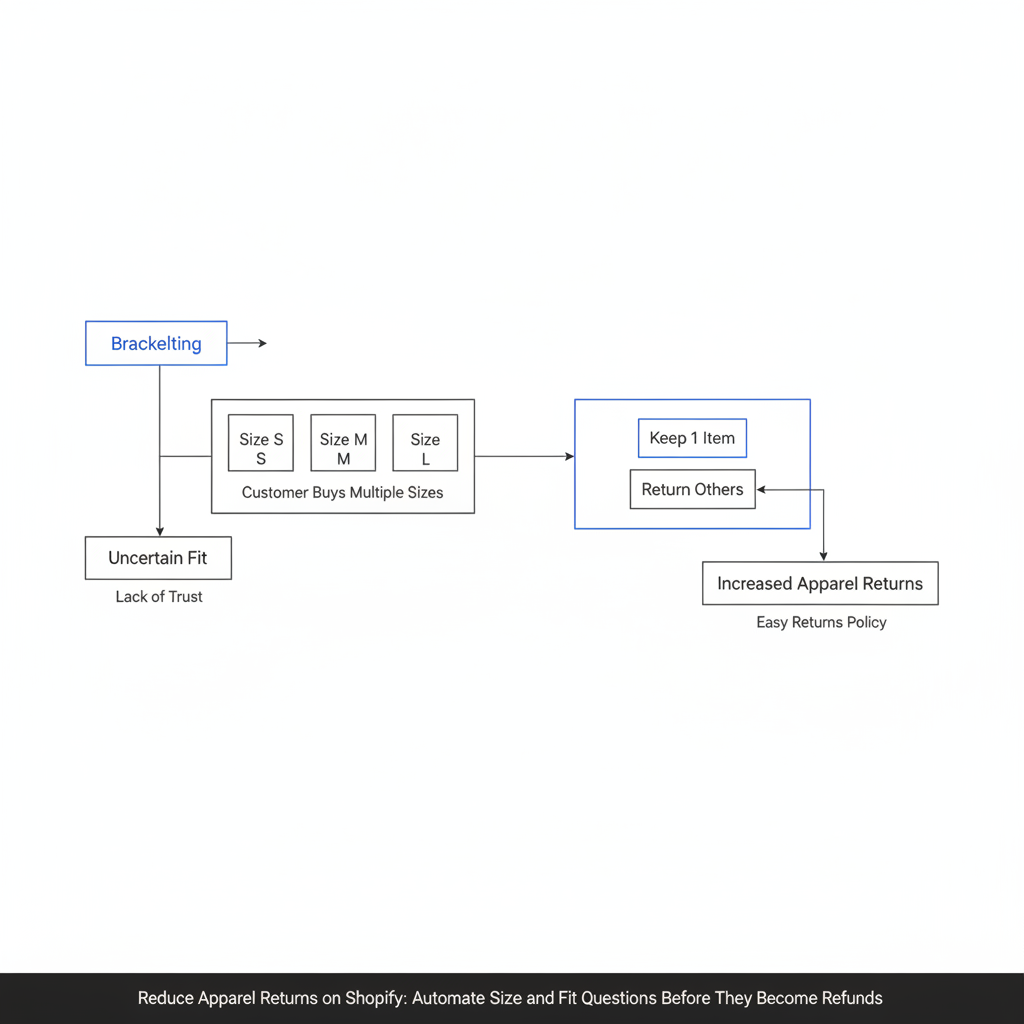
Bracketing is when a customer buys multiple sizes of the same item with the intention of keeping one and returning the rest. Bracketing is common in fashion because shoppers use their cart as a fitting room.
This behavior makes sense from the shopper's perspective. They do not trust the sizing enough to risk one choice, so they hedge. If your store offers easy returns but weak pre-purchase fit guidance, you are effectively encouraging that behavior.
Bracketing is especially common with denim, dresses, tailored pieces, and first-time purchases from unfamiliar brands. It also shows up more during sale periods, influencer spikes, and gift-heavy seasons when shoppers feel time pressure.
The fix is not necessarily a stricter return policy. The better fix is reducing uncertainty before checkout. If the customer gets a confident recommendation with a reason, such as "this style runs small at the waist, choose M instead of S," you reduce the need for a backup size.
Why is a static Shopify size chart not enough?
A Shopify size chart is necessary, but it is rarely sufficient by itself. Static size charts show data, but they do not interpret it for the shopper.
Most stores still use a generic popup or image-based size guide. That is better than nothing, but it has obvious limits. It cannot answer whether the garment stretches, whether the cut is intentionally oversized, or whether a customer who is between sizes should optimize for comfort or a more fitted silhouette.
It also cannot adapt to context. A customer asking "I am 5'6 and usually between a small and medium, will this fit?" needs more than a chart. They need a recommendation based on height, weight, usual size, fit preference, and style-specific notes.
| Approach | What it does well | Main limitation |
|---|---|---|
| Static size chart | Shows measurements and basic conversions | Does not personalize or explain fit nuance |
| Product fit notes | Explains runs small, oversized, or stretch details | Still requires the shopper to self-interpret |
| Fit quiz | Collects body details and recommends a size | Needs setup and accurate data inputs |
| Chat agent trained on fit notes | Answers real questions in real time with context | Needs clear knowledge sources and rules |
If you already have a size guide, keep it. But think of it as the foundation, not the full solution. The better stack is size chart + fit notes + model info + interactive recommendation + chat support.
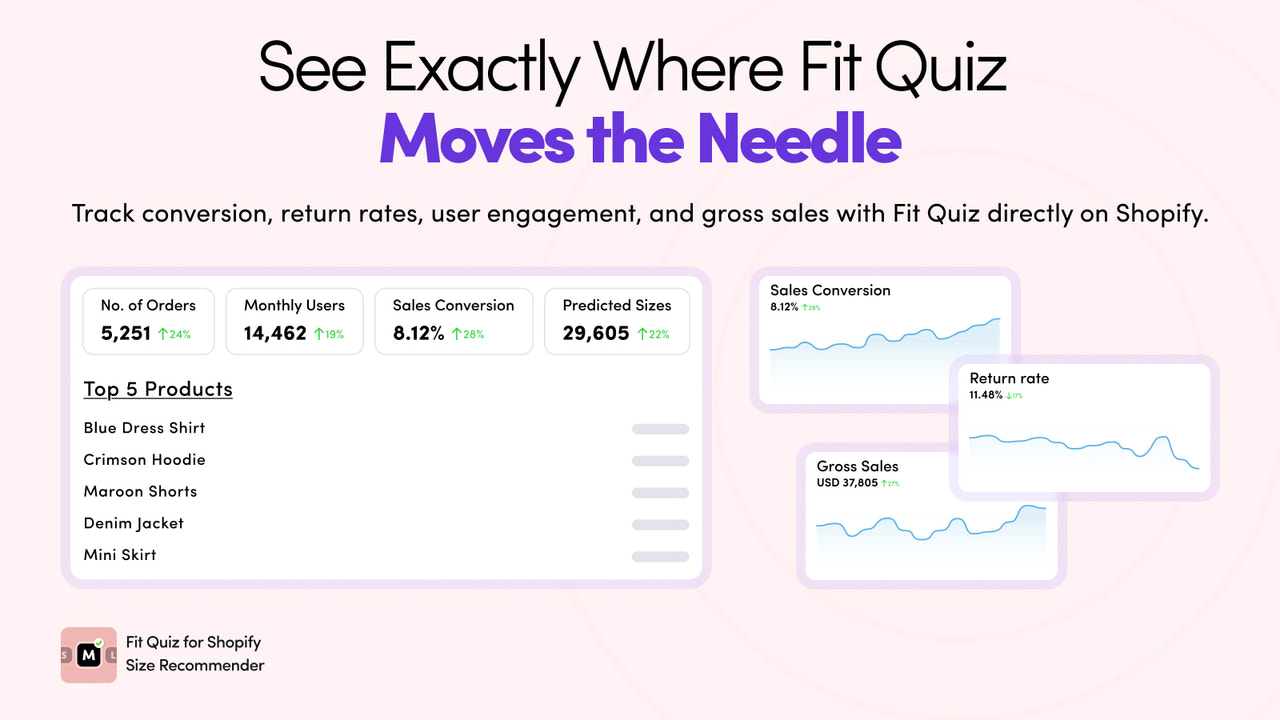
How do I set up a better Shopify size chart for apparel?
The best Shopify size chart for apparel combines body measurements, garment measurements, fit notes, and model references. A good size chart reduces ambiguity instead of just listing S, M, and L.
I recommend separating what the customer's body measures from what the garment measures. A lot of returns happen because shoppers do not realize they are looking at a garment width instead of a body measurement target. Labeling this clearly helps immediately.
What should a fashion size guide include?
A fashion size guide should include exact measurements, fit language, and context for how the item is meant to wear. The more specific your guide is, the fewer assumptions the shopper has to make.
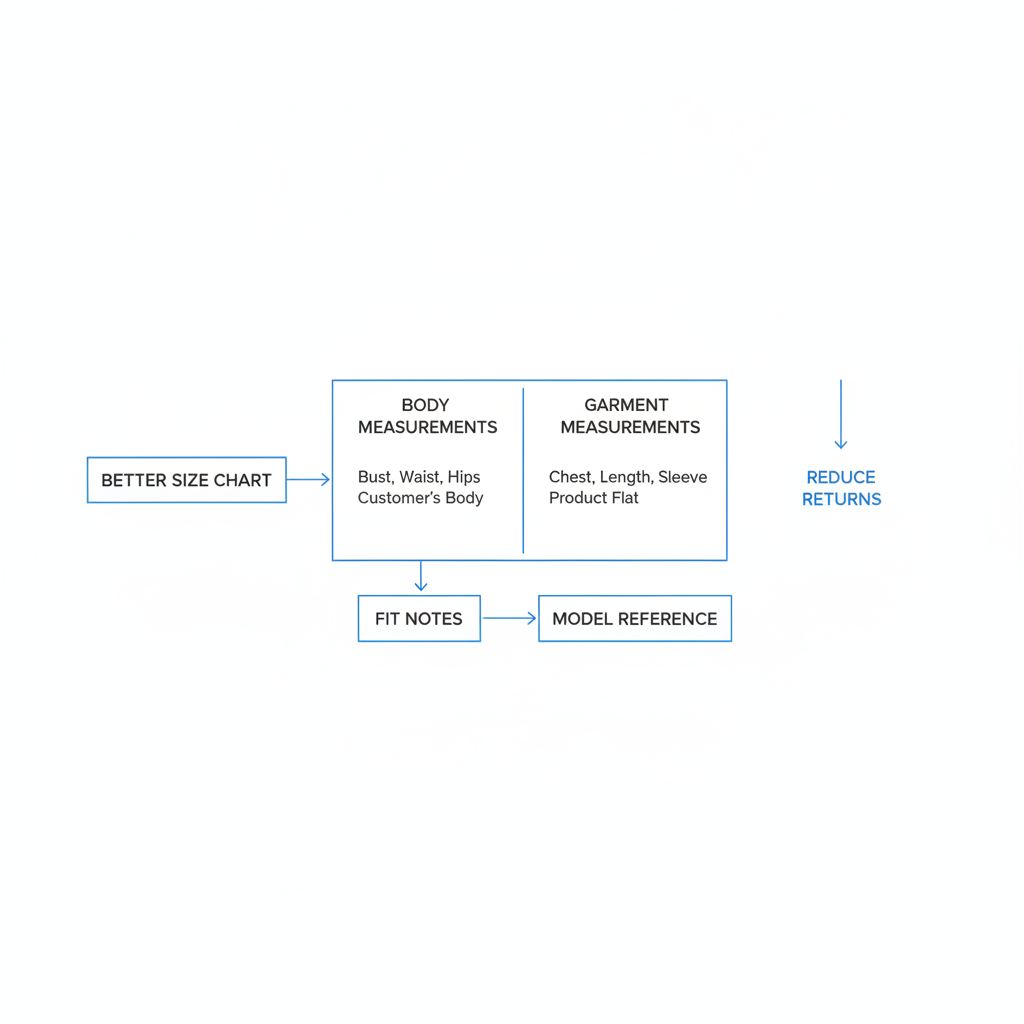
- Body measurements - bust, waist, hips, inseam, chest, shoulder, sleeve where relevant
- Garment measurements - especially for tailored, oversized, or cropped pieces
- Fit note - slim, regular, relaxed, oversized, bodycon, boxy, cropped
- Stretch note - no stretch, slight stretch, high stretch
- Model info - model height, usual size, and size worn in photos
- Between-sizes guidance - size up or down depending on fit preference
If you want a simple win, stop using a single storewide chart for everything. Denim, knitwear, dresses, outerwear, and activewear all need different guidance. Category-level or even product-level size guidance usually performs better.
For merchants improving product-page UX, Shopify's own guidance on accurate descriptions, dimensions, and expectation setting is worth following. You can also pair this with stronger post-purchase messaging, like in our guide on how to customize confirmation emails based on products ordered in Shopify.
How can a chat agent reduce apparel returns before checkout?
A chat agent reduces apparel returns by answering fit questions in real time using your actual product and brand fit knowledge. It turns passive sizing content into an active recommendation engine.
This is where I think many fashion stores still leave money on the table. They already have fit knowledge buried in customer support macros, supplier notes, merchandiser docs, and team Slack messages. The problem is that the customer never sees that knowledge at the moment they need it.
A chat agent can surface answers like:
- "This style runs small through the hips, so if you are between sizes, choose the larger one."
- "The fabric has minimal stretch, so it will feel more fitted than our ribbed collection."
- "If you like an oversized look, stay with your usual size. If you want a neater fit, size down."
- "Customers similar to your measurements usually choose size M in this product."
That is more helpful than a generic support widget saying "Contact us with any questions." In practice, shoppers want a fast answer to one thing: will this fit me?
One app worth looking at here is Chatkit. If you are building a support layer around pre-purchase questions, that kind of real-time chat experience can help you answer fit objections before they become refunds.

What should the chat agent be trained on?
The best fit-focused chat agent is trained on your brand's real fit notes, not just generic size tables. Brand-specific knowledge is what makes the answers trustworthy.
Useful training sources include product descriptions, size guides, return reasons, support tickets, supplier specs, and merchandising notes. If your team already says things like "this blazer runs tight in the shoulders" or "this knit relaxes after one wear," that should be part of the agent's knowledge base.
In my experience building Shopify apps, this is the difference between a chatbot that feels scripted and one that actually helps. The good version does not just repeat the size chart. It interprets the chart using your store's own fit history.
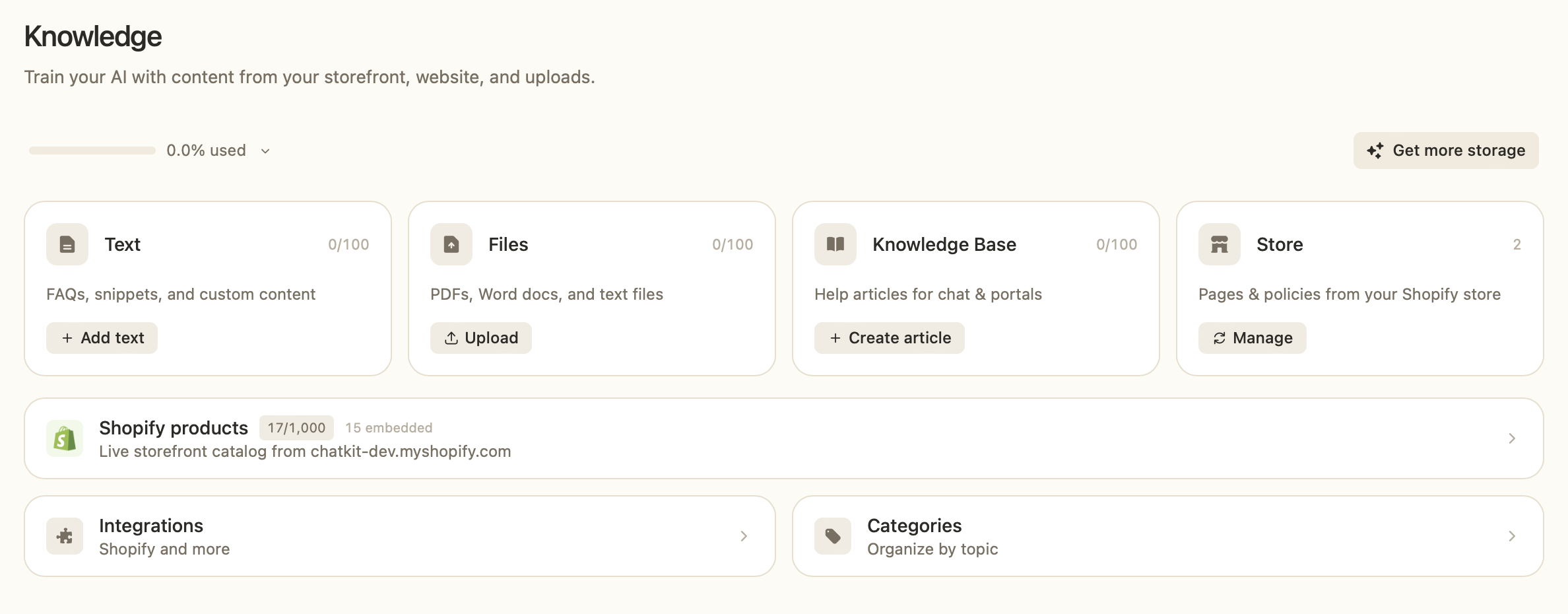
How do I automate size and fit questions on Shopify?
You can automate size and fit questions on Shopify with product-page rules, triggered chat prompts, and guided recommendation flows. The goal is to surface help exactly when uncertainty appears.
The most effective automation is contextual. Do not make every shopper go through a long quiz if they already know their size. Instead, trigger help when behavior suggests hesitation or when the shopper explicitly asks about fit.
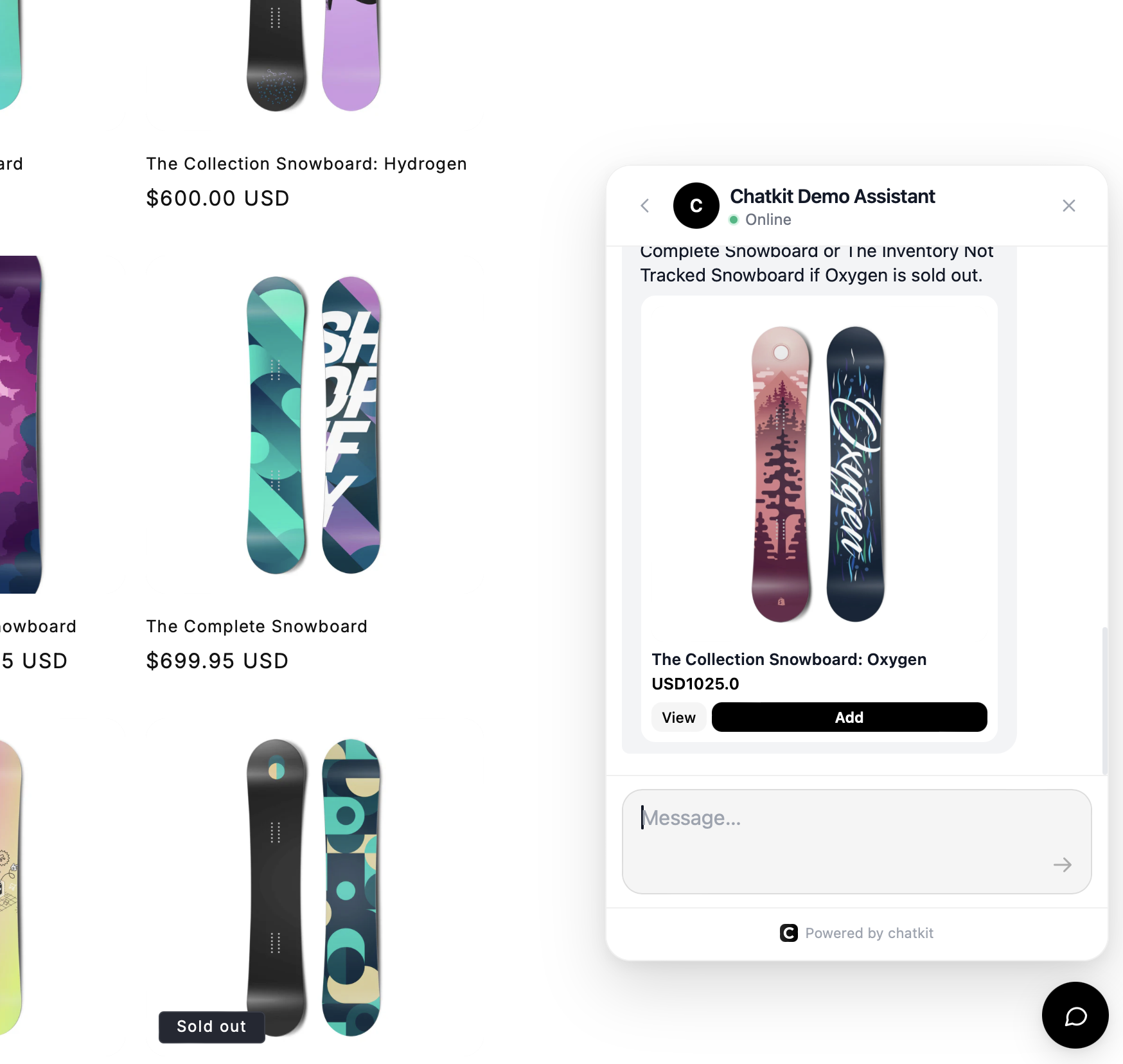
Rules example: auto-suggest the size guide when someone asks about fit on a product page
A simple rule can detect fit-related intent and respond with the right help. This is one of the easiest automations to implement.
Rule: If visitor is on a product page and message contains "fit", "size", "runs small", "runs large", "true to size", "which size", or "will this fit me", then show:
1. A direct answer using the product's fit note
2. A link or modal for the product-specific size guide
3. A follow-up question such as "What size do you usually wear and do you prefer a fitted or relaxed look?"
That single rule can deflect a lot of uncertainty. It also feels natural to the shopper because the response is tied to the product they are viewing, not a generic sitewide FAQ.
Other useful automation rules for fashion stores
Good automation rules catch common return-risk moments before checkout. You are trying to intercept doubt, not just react to it.
- On high-return SKUs - auto-open a fit helper after 20-30 seconds on page
- On size variant hover or tap - show a short fit note like "runs small, consider sizing up"
- On repeated size switching - prompt with "Need help choosing between S and M?"
- On cart with duplicate sizes of same item - offer a size recommendation before checkout to reduce bracketing
- After purchase for risky items - send a confirmation prompt that makes exchanges easier than refunds
If you are already working on support automation, our guide on how to leverage a chat agent for Shopify B2C personal shopping assistants covers the broader strategy behind this approach.
What is the best pre-purchase fit flow for fashion stores?
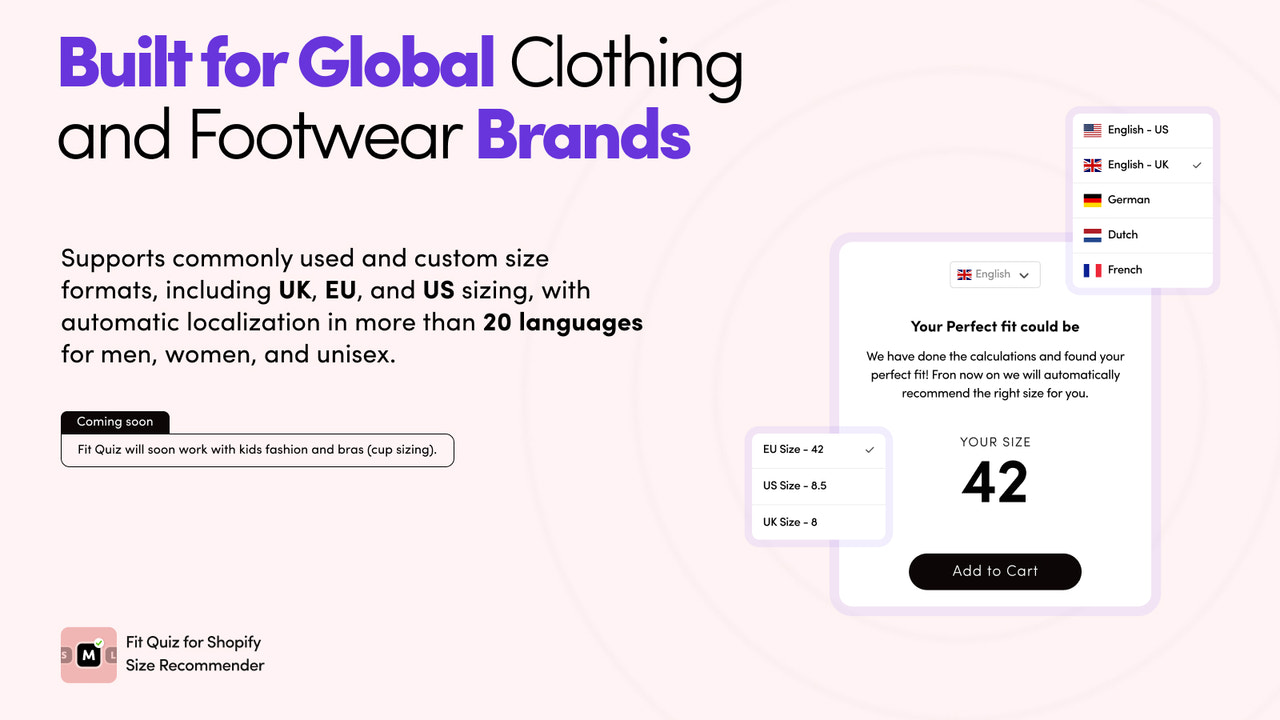
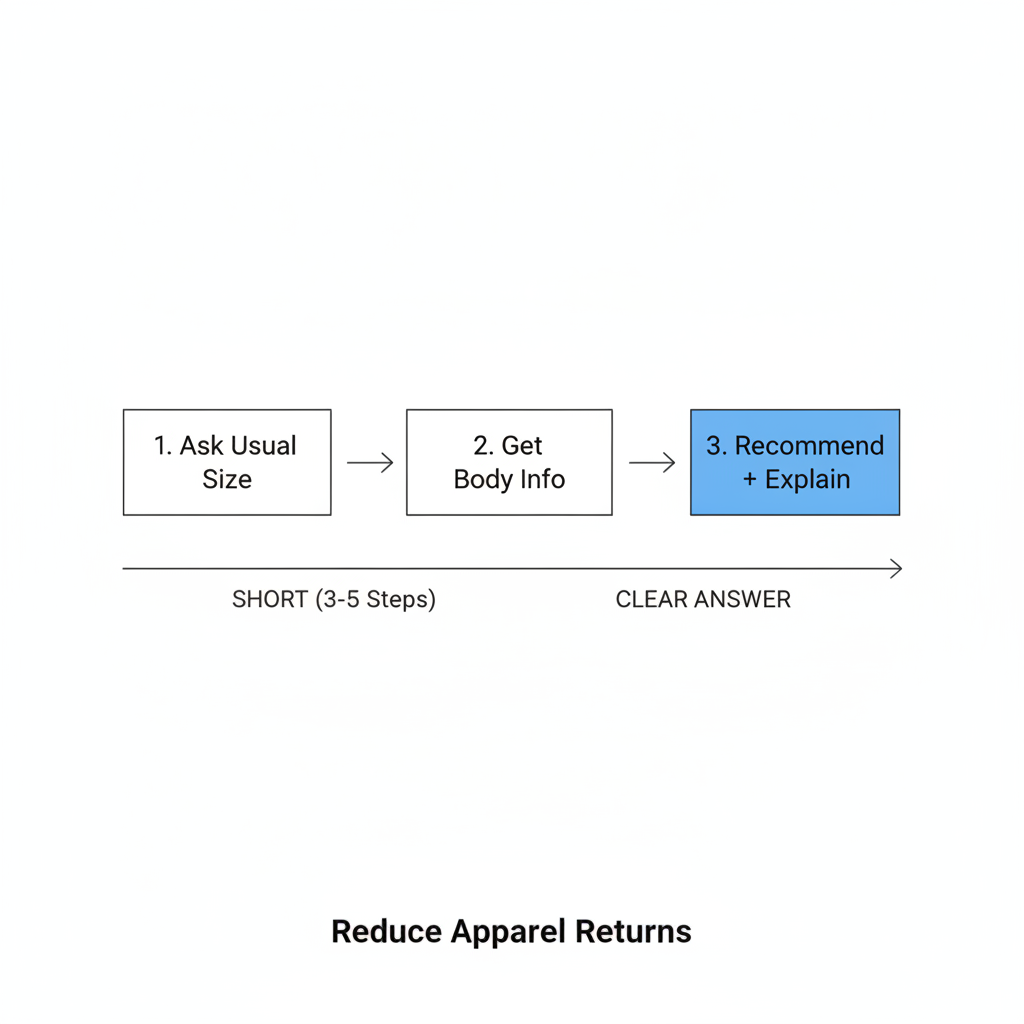
The best pre-purchase fit flow is short, product-aware, and explains the recommendation. A 3 to 5 question flow is usually enough for most apparel stores.
When I test these flows, the best-performing version is usually not the most complex one. It asks only what is needed to reduce uncertainty, then gives a clear answer with a reason. Too many questions can hurt conversion.
- Ask for usual size in similar brands or categories
- Ask for body context such as height, weight, or key measurements
- Ask fit preference - fitted, regular, relaxed, oversized
- Check product-specific risk - for example, broad shoulders, larger bust, athletic thighs
- Recommend a size with explanation - "Choose M because this style runs small in the waist and has no stretch"
That last part matters. A recommendation without a reason can feel random. An explained recommendation increases trust and helps reduce second-guessing.
For stores exploring fit quiz tools, the Shopify App Store has examples like fit recommender interfaces and size guidance tools that show how this can work visually. You can browse apps and implementation ideas directly in the ecosystem, including Chatkit for conversational support layers.
How do I use return data to improve fit recommendations?
The best return reduction systems learn from return reasons over time. If customers keep returning one SKU for the same fit issue, your product page and recommendations should change.
This is one of the most overlooked parts of the process. Many stores collect return reasons, but they never feed that data back into merchandising or support automation. If 18 customers say "too small in the bust" on the same dress, that is not noise. That is product intelligence.
| Return signal | What it likely means | What to change |
|---|---|---|
| Too small | Chart is inaccurate or fit runs tight | Add size-up note and review garment measurements |
| Too large | Cut is roomier than expected | Add size-down guidance and fit photos |
| Not as expected | Description or imagery is misleading | Improve copy, model info, and fabric detail |
| Ordered multiple sizes | Customer lacked confidence | Add pre-cart fit recommendation and chat prompt |
If returns are already eating margin, it is also worth reviewing your operational setup. Our post on the best returns management apps for Shopify covers the post-purchase side, but for apparel I still think pre-purchase fit prevention gives the best ROI first.
What should a fashion store implement first to reduce apparel returns?
If you want the fastest win, start with better product-page fit clarity and a product-specific size guide. If you want the biggest long-term win, add a fit-aware chat agent and feed return data back into it.
Here is the rollout order I would use for most Shopify apparel stores:
- Fix the basics - product-specific size charts, model info, fabric notes, fit language
- Add fit notes to every risky SKU - especially dresses, denim, tailoring, and occasionwear
- Launch chat automation - answer fit questions instantly on product pages
- Detect bracketing behavior - multiple sizes in cart should trigger help
- Track return reasons by SKU - update guidance every month
If your store also struggles with cart hesitation, you may want to pair fit clarity with broader conversion improvements. Two useful related reads are how to reduce abandoned carts in Shopify and continuous A/B testing frameworks for Shopify.
Which tools and sources should I use when building this workflow?
The best workflow combines Shopify-native product content, app-based automation, and real merchant data. You do not need a huge stack, but you do need connected inputs.
Useful sources and tools include:
- Chatkit for chat-based support automation
- Shopify Help Center for product-page and store setup guidance
- Shopify return policy resources for policy communication
- Shopify Community discussion on sizing returns for merchant pain points
- Fit and size app roundups for implementation ideas
- Return reduction research and benchmarks for return reason framing
I would not overcomplicate the first version. Start with the questions your support team already gets every day. If shoppers keep asking "does this run small?" and "which size should I get?" then automate those answers first.
Is a stricter return policy the best way to reduce apparel returns?
No, a stricter return policy is usually not the best first move for fashion stores. The better return reduction strategy is to improve fit prediction before the purchase happens.
Restrictive policies can reduce abuse, but they can also hurt conversion and trust if used too early. For apparel, most preventable returns come from uncertainty, not bad intent. If you solve the uncertainty, you often reduce both refunds and support friction without making the shopping experience feel hostile.
That is why I see the best results from stores that treat fit guidance as a conversion asset, not just a support afterthought. A better Shopify size chart, stronger fit notes, and a chat agent trained on real brand knowledge can make a measurable difference.
If I were implementing this on a fashion store today, I would focus on one question: how quickly can we answer "will this fit me?" with confidence? The faster and more accurately you answer that, the fewer apparel returns you will have to process later.