
Upsell statistics in e-commerce for 2026 show a clear pattern: the right offer at the right moment can materially lift average order value, customer lifetime value, and total store revenue. In my experience building Shopify apps and analysing merchant performance, upselling works best when it feels helpful rather than pushy.
This updated guide brings together the most useful 2026 upsell data points, including acceptance rates by placement, AI personalisation trends, AOV benchmarks, and what these numbers actually mean for Shopify merchants. I have also added practical context from what I have seen across product page offers, cart upsells, and post-purchase funnels.
What are the most important upsell statistics in e-commerce for 2026?
The most important upsell statistics for 2026 are that upselling and recommendations drive 10-30% of e-commerce revenue, post-purchase upsells convert at 15-25%, and order bumps can reach 37.8%. These numbers matter because they show upselling is not a small optimisation - it is often one of the highest-margin revenue levers available.
Here are the headline figures worth knowing before you optimise anything:
- Upselling and product recommendations drive 10-30% of e-commerce revenue.
- Effective upselling increases revenue by 10-30% on average.
- Customer lifetime value can increase by 20-40% when upsell strategies are implemented well.
- Product page upsells convert at 5-12%.
- Cart upsells convert at 8-18%.
- Post-purchase upsells convert at 15-25%.
- Order bumps can convert at 37.8%, making them one of the strongest formats for AOV growth.
- BFCM upsell acceptance can reach 42.1% during high-intent periods.
- 80% of customers prefer personalised recommendations.
- It costs 5-25x more to acquire a new customer than to sell more to an existing one.
| Statistic | 2026 benchmark | Why it matters |
|---|---|---|
| Revenue influenced by recommendations | 10-30% | Shows upsells are a major revenue channel, not a minor add-on |
| Average revenue lift from upselling | 10-30% | Useful benchmark for forecasting impact |
| LTV increase | 20-40% | Upselling improves long-term customer value |
| Post-purchase acceptance rate | 15-25% | One of the best placements for frictionless offers |
| Order bump conversion rate | 37.8% | Top performer for simple add-ons |
| Cost difference: acquisition vs upsell | 5-25x | Makes retention and monetisation more efficient than paid acquisition |
If you want the practical setup side as well as the numbers, I have covered that in How to upsell on Shopify in 2026 and How to Upsell on Your Shopify Store: 6 Methods.
How much revenue does upselling add in e-commerce?
Upselling typically adds 10-30% in revenue when executed well. For many stores, that is a bigger gain than squeezing another small reduction in ad CPA or redesigning a product page for the fifth time.
Several datasets point in the same direction here. Research cited across industry sources including Accenture, Forrester and VWO consistently places the revenue impact of recommendations and upsells in the 10-30% range. That range is broad because execution quality varies massively.
In my experience building SellUp, the biggest difference is not whether a merchant has an upsell app installed. It is whether the offer is contextual, priced sensibly, and shown at a moment where the buyer is already saying yes.
A practical benchmark I use is this: if your upsell offer is contributing less than 5% of incremental revenue, the issue is usually poor relevance, weak placement, or too many competing offers. If it is contributing above 10%, you are generally in healthy territory for a Shopify store without a highly customised funnel.
What are the average upsell conversion rates by placement?
The best upsell conversion rate depends on where the offer appears. Post-purchase upsells and order bumps usually outperform product page offers because the customer has already committed to buying.
Here are the latest benchmark ranges by placement:
| Upsell placement | Typical acceptance rate | Best use case |
|---|---|---|
| Product page | 5-12% | Premium versions, upgrades, better bundles |
| Cart page or cart drawer | 8-18% | Complementary add-ons and accessories |
| Post-purchase thank you page | 15-25% | Consumables, subscriptions, easy add-ons |
| Order bump | 37.8% | Low-friction, low-cost extras |
| Email upsell | 2-5% | Replenishment and reorder campaigns |
| BFCM period | 42.1% | High-intent promotional windows |
These figures line up with what I have seen across Shopify stores. Product page upsells are great for education and premium positioning, but they still compete with the buyer's main decision. Post-purchase offers work better because the original sale is already complete.
That is one reason apps like ReConvert remain popular. They let merchants monetise the thank-you page and confirmation flow without adding friction to checkout. For stores with repeat purchase potential, post-purchase is often the fastest win.
If you are comparing placements, my advice is simple: start with one product page upsell and one post-purchase offer, then measure the incremental revenue from each. You can also read my deeper guides on product page upsells and cart upsells in Shopify.
Why do post-purchase upsells perform so well?
Post-purchase upsells perform well because they appear after the buyer has already committed to the main purchase. That removes much of the friction and decision anxiety that hurts pre-purchase conversion.
Once payment is complete, the customer is in a high-trust state. They are not asking, "Should I buy?" anymore. They are asking, "What else would make this purchase better?" That shift is why 15-25% acceptance rates are realistic for relevant post-purchase offers.
In my own testing with merchants, post-purchase offers work best when the upsell is either consumable, complementary, or an obvious upgrade. A skincare brand can offer a matching serum. A pet brand can offer a subscription refill. A jewellery store can offer gift packaging or an extended care add-on.
Single-offer formats also tend to outperform cluttered thank-you pages. The latest data suggests single-offer upsells beat multi-offer layouts by 30-40%. That fits what I see in the real world: one clear next step converts better than a mini catalogue.
How much can upselling increase AOV and customer lifetime value?
Upselling can increase average order value by 10-40% and customer lifetime value by 20-40%. The AOV gain shows up quickly, while the LTV gain appears over repeat purchases and stronger retention.
Merchants often focus on the immediate extra pounds per order, which is fair because that is the easiest metric to see. But the bigger story is what happens when a customer buys a better-fit product, adds a recurring item, or discovers a broader product range on their first order. That is where LTV growth comes from.
In my experience, the stores that get the best long-term results do not treat upselling as a one-off pop-up. They treat it as part of the customer journey. Product page recommendations, cart add-ons, post-purchase offers, and follow-up email replenishment all work together.
If you want a real example of how AOV improvements compound, have a look at this Shopify upsell case study with a 27% increase in average order value. It is a good reminder that even modest uplifts become meaningful at scale.
What role does AI play in upsell performance in 2026?
AI plays a major role in upsell performance in 2026 because it improves relevance, timing, and personalisation. The latest benchmarks suggest AI systems can boost conversions by 20-30%, while advanced personalisation can push gains as high as 60% in some contexts.
AI matters because most merchants are not short on upsell ideas. They are short on certainty about which offer to show, to whom, and when. That is exactly where machine learning and behavioural targeting help.
Current research also shows that 80% of customers prefer personalised recommendations. That preference is not just a nice-to-have. It translates into stronger conversion, retention, and customer satisfaction when the recommendation genuinely matches intent.
Some of the more interesting 2026 numbers are especially relevant for Shopify merchants:
- AI-powered recommendations increase AOV-related conversions by 20-30%.
- AI discounting can lift upsell conversions by 30%.
- Chat-based selling can deliver 4x conversion gains, with examples of 12.3% vs 3.1%.
- Businesses using AI upselling see an average 15% revenue increase within the first year.
- AI chatbots can add 15-25% in cross-sell revenue.
I have written more about this trend in AI-powered upsells: the future of ecommerce conversion and how to upsell on Shopify leveraging AI. If you are selling a broad catalogue or have enough traffic to support testing, AI-led recommendations are increasingly worth the effort.
What is the difference between upselling and cross-selling in the data?
Upselling encourages a customer to buy a better or more premium version of what they already want. Cross-selling suggests related products. In performance terms, both can be strong, but they tend to work best in different placements.
Upsells usually perform best on the product page and immediately after checkout, where an upgrade or premium alternative feels natural. Cross-sells often shine in the cart, drawer, and post-purchase flow, where accessories or complementary items make sense.
Many statistics articles lump the two together, which is understandable because platforms often report them as one revenue bucket. But from a merchant perspective, the distinction matters. If you are selling mattresses, an upgraded mattress is an upsell. Pillows and mattress protectors are cross-sells.
If you want a clearer breakdown, I covered this in Upselling vs Cross-Selling: The Key Differences, Examples and When to Use Each. It is useful if you are trying to diagnose why one type of offer is underperforming.
Which upsell formats work best for Shopify stores?
The best upsell format for Shopify depends on your product type, margin structure, and purchase cycle. For most stores, the strongest starting mix is product page upsells, cart add-ons, and post-purchase one-click offers.
Here is how I think about the main formats after years of building in the Shopify ecosystem:
How effective are product page upsells?
Product page upsells are effective for upgrades and premium positioning, with typical acceptance rates of 5-12%. They work best when the higher-value option is clearly better, not just more expensive.
This is where SellUp is designed to help. Merchants can place a relevant offer directly on the product page, which is often ideal for bundles, upgraded variants, or add-on accessories.

How effective are cart upsells and order bumps?
Cart upsells and order bumps are among the best formats for quick AOV gains. Cart offers convert at 8-18%, while order bumps can reach 37.8%.
The reason is simple: the customer already intends to buy. A low-cost add-on such as gift wrap, insurance, batteries, refills, or a matching accessory feels easy to accept. The strongest order bumps are usually priced at 25-60% of the original product value, according to the latest data.
How effective are post-purchase upsells?
Post-purchase upsells are often the highest-performing mainstream format, with 15-25% acceptance. They are especially strong for replenishable products, subscriptions, and easy add-ons.
This is the area where ReConvert is commonly used by Shopify merchants. It focuses on thank-you page and post-purchase monetisation, which is one of the easiest places to add extra revenue without risking checkout conversion.
| Format | Typical result | Best for | Shopify app example |
|---|---|---|---|
| Product page upsell | 5-12% acceptance | Upgrades, premium versions | SellUp |
| Cart upsell | 8-18% acceptance | Add-ons, accessories | Cart and drawer tools |
| Order bump | 37.8% conversion | Simple low-friction extras | Checkout-adjacent offer tools |
| Post-purchase upsell | 15-25% acceptance | Subscriptions, replenishment, add-ons | ReConvert |
What do real brand examples tell us about upsell strategy?
Real brand examples show that the best upsell strategies are relevant, simple, and well timed. The common thread is not aggressive selling. It is contextual merchandising.
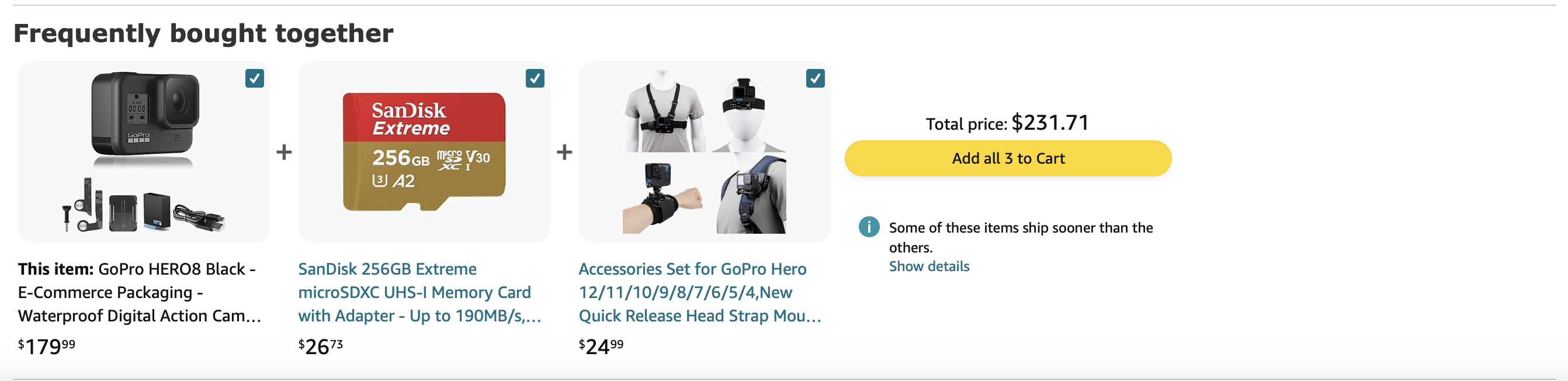
Amazon is still the obvious benchmark in this space. Multiple sources credit Amazon's recommendation engine with driving around 35% of revenue, which is why nearly every serious ecommerce team studies recommendation placement, bundle logic, and behavioural targeting.
On Shopify, I have seen strong examples from brands that use upsells in a way that feels native to the product journey. Accessories, bundles, gift options, refills, and subscriptions all tend to work because they solve a real need rather than interrupting the sale.
- Amazon popularised the modern recommendation model with related items and frequently bought together logic.
- Tesla Shop uses complementary accessories to extend the value of a core purchase.
- Spigen is a classic example of accessory-led upselling, pairing cases with screen protection and charging extras.
- Tushy has been widely referenced for using post-purchase upsells to extend order value after checkout.
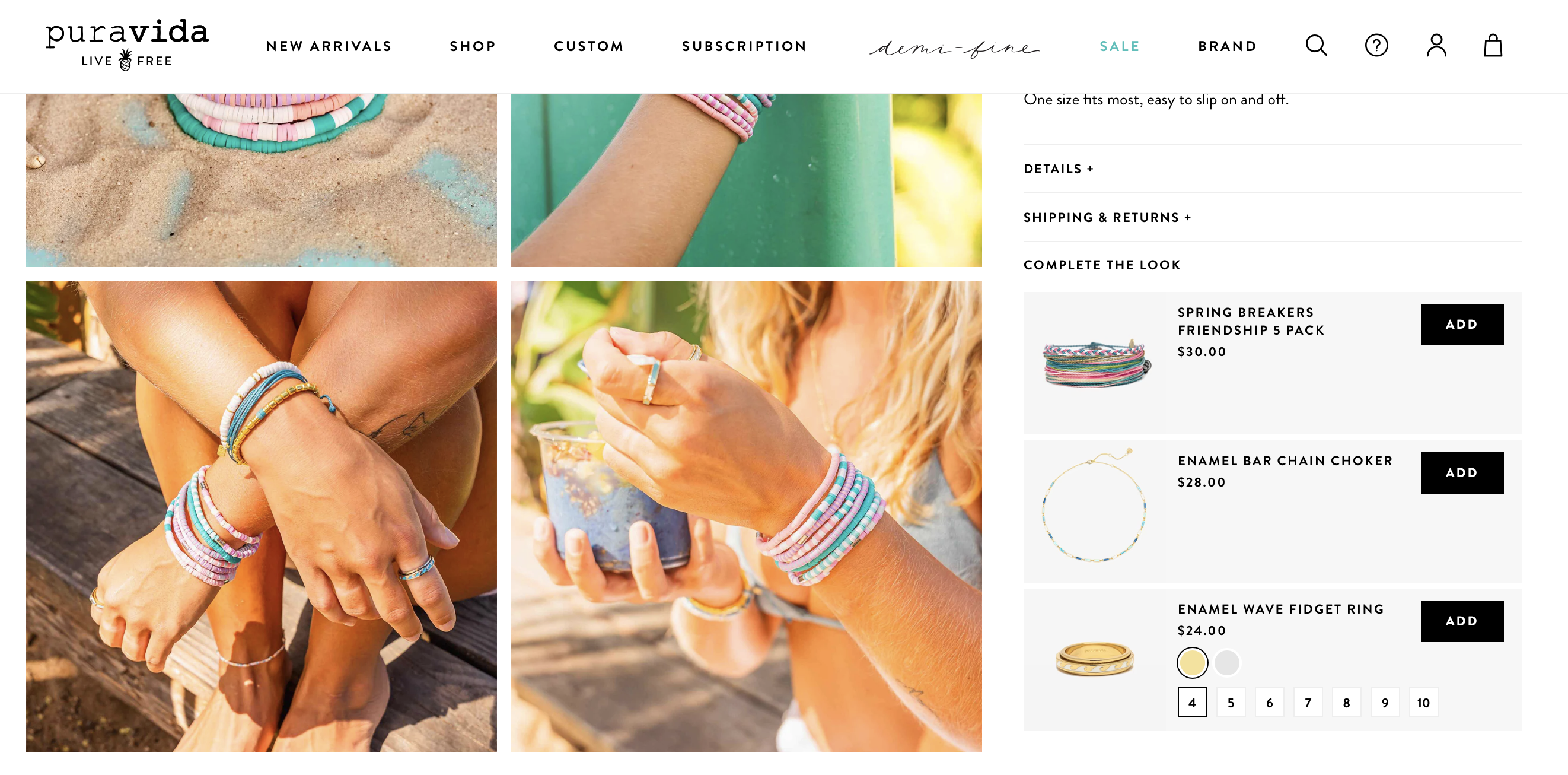
- Pura Vida demonstrates how on-page offers can support merchandising and AOV growth.
What upsell statistics matter most during Black Friday and Cyber Monday?
BFCM is one of the strongest periods for upsells because buyer intent is unusually high. The latest benchmark shows upsell acceptance can reach 42.1% during peak promotional periods.
This does not mean every store should flood the customer with offers in November. In fact, the opposite is usually true. During BFCM, the best-performing upsells are typically simple, highly relevant, and quick to understand.
When I review merchant funnels before BFCM, I usually recommend tightening the offer set rather than expanding it. One strong cart add-on, one strong post-purchase offer, and a clean message will usually outperform a messy funnel with five competing pitches.
How should Shopify merchants use these upsell statistics in practice?
Shopify merchants should use upsell statistics as benchmarks, not promises. The goal is to compare your current performance against realistic ranges and then improve the offer, placement, and relevance.
Here is the framework I would use if I were optimising a store today:
- Start with one placement. Product page or post-purchase is usually easiest to test cleanly.
- Use a single relevant offer. One offer often beats multiple options by a wide margin.
- Keep the upsell value at 25-60% of the original item. That range tends to convert best.
- Measure incremental revenue, not just clicks. A high CTR with low acceptance is not success.
- Segment by product type. Consumables, gifts, subscriptions, and accessories all behave differently.
- Personalise where possible. Even basic logic based on cart contents can improve results.
- Review by device. Mobile cart drawers and thank-you pages often behave differently from desktop.
If you are early in the process, I would also recommend reading 12 Best Upsell Apps for Your Shopify Store in 2026 and The 3 Best One-Click Upsell Apps for Shopify in 2026. Choosing the right implementation method matters almost as much as the offer itself.
What are the biggest mistakes merchants make with upsells?
The biggest upsell mistakes are poor timing, weak relevance, and too many offers. Most underperforming funnels fail because they add friction instead of adding value.
I see the same problems repeatedly when merchants install an app and expect the numbers to magically appear:
- Showing unrelated products just because they have high margin.
- Presenting too many choices, which lowers acceptance.
- Using the same upsell everywhere instead of matching the stage of the journey.
- Ignoring mobile UX, especially cramped cart drawers and thank-you pages.
- Not tracking incremental AOV and attributing all revenue to the app.
- Offering upgrades with unclear value, where the premium option looks arbitrary.
In my experience, the best upsells are almost boring. They are obvious, useful, and easy to accept. That is exactly why they work.
Which sources support these 2026 upsell statistics?
The strongest upsell statistics in this article are supported by a mix of industry research, platform data, and widely cited ecommerce benchmarks. Where possible, I prefer figures that align across multiple sources rather than relying on a single vendor claim.
Useful reference points include Accenture, Forrester, VWO, McKinsey, and current 2025-2026 ecommerce benchmark roundups such as Wiser's upselling and cross-selling statistics and Envive's AI-powered upsell statistics. For broader ecommerce context, Coursera's ecommerce trends overview is also useful.
As always, treat industry stats as directional. Your own store data should be the final decision-maker. But as benchmarks for what good looks like in 2026, these figures are strong enough to guide strategy.
Are upsells still worth focusing on in 2026?
Yes, upsells are still worth focusing on in 2026 because they improve revenue efficiency without requiring more ad spend. In a market where acquisition costs remain volatile, monetising existing purchase intent is one of the smartest moves a merchant can make.
The strongest case is simple: it costs 5-25x more to acquire a new customer than to sell more to an existing one. If your store already has traffic and orders, then improving AOV and LTV is often faster, cheaper, and more controllable than chasing more top-of-funnel volume.
That is why I keep coming back to upsells when working on Shopify growth. They are measurable, testable, and usually much easier to improve than most merchants expect.