Shopify agentic storefronts A/B testing is quickly becoming one of the most practical ways to improve how your products perform inside AI chats like ChatGPT. Instead of only optimizing landing pages for human visitors, you now need to optimize product data, offers, messaging, and feed quality for AI agents that compare, shortlist, and recommend products on a shopper's behalf.
In my experience building Shopify apps, this is one of the biggest shifts I have seen since the move to Online Store 2.0. The storefront is no longer just your theme. For AI-driven commerce, your catalog becomes the storefront, and that changes what you test, how you measure results, and where conversion wins come from.
What are Shopify agentic storefronts?
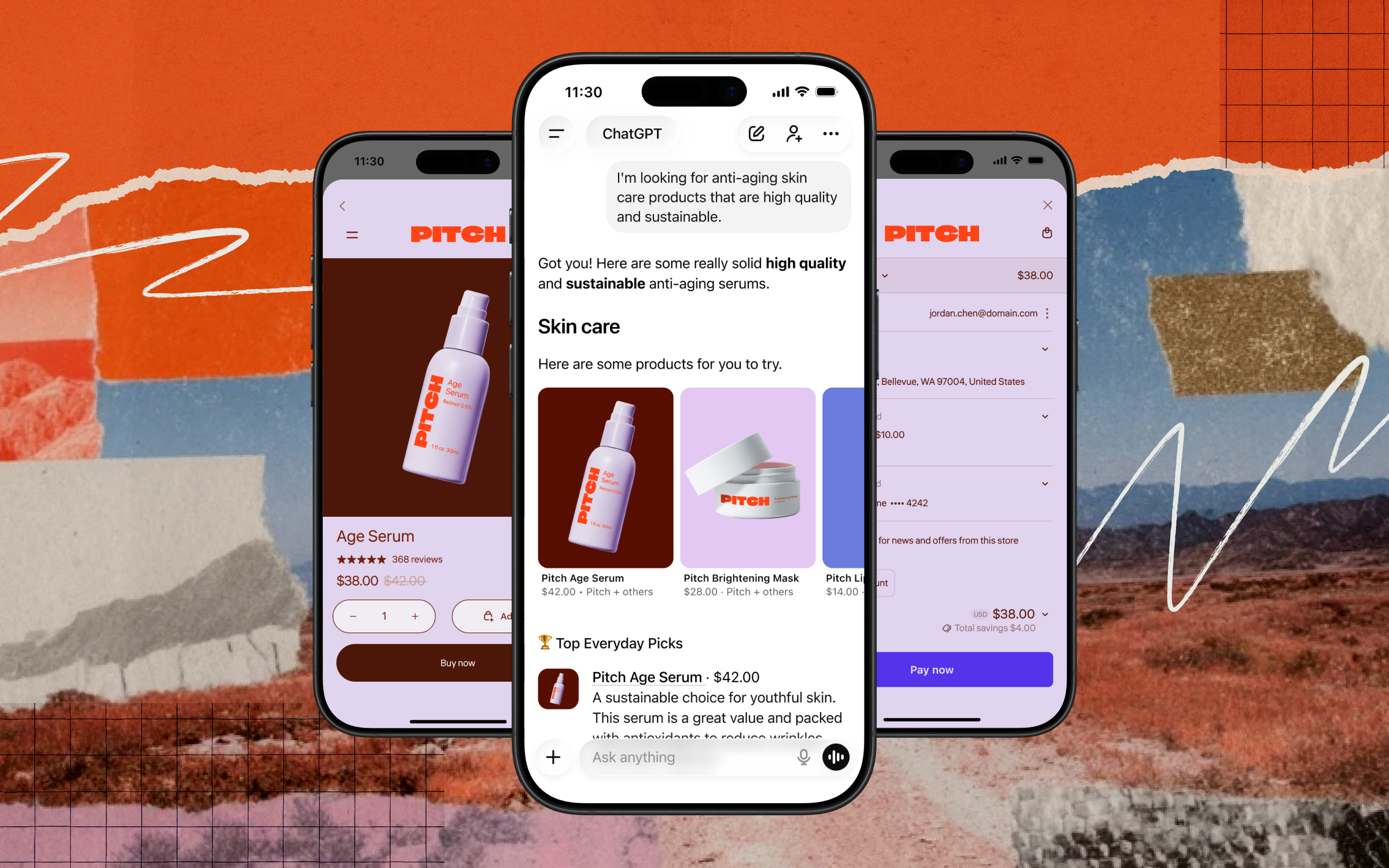
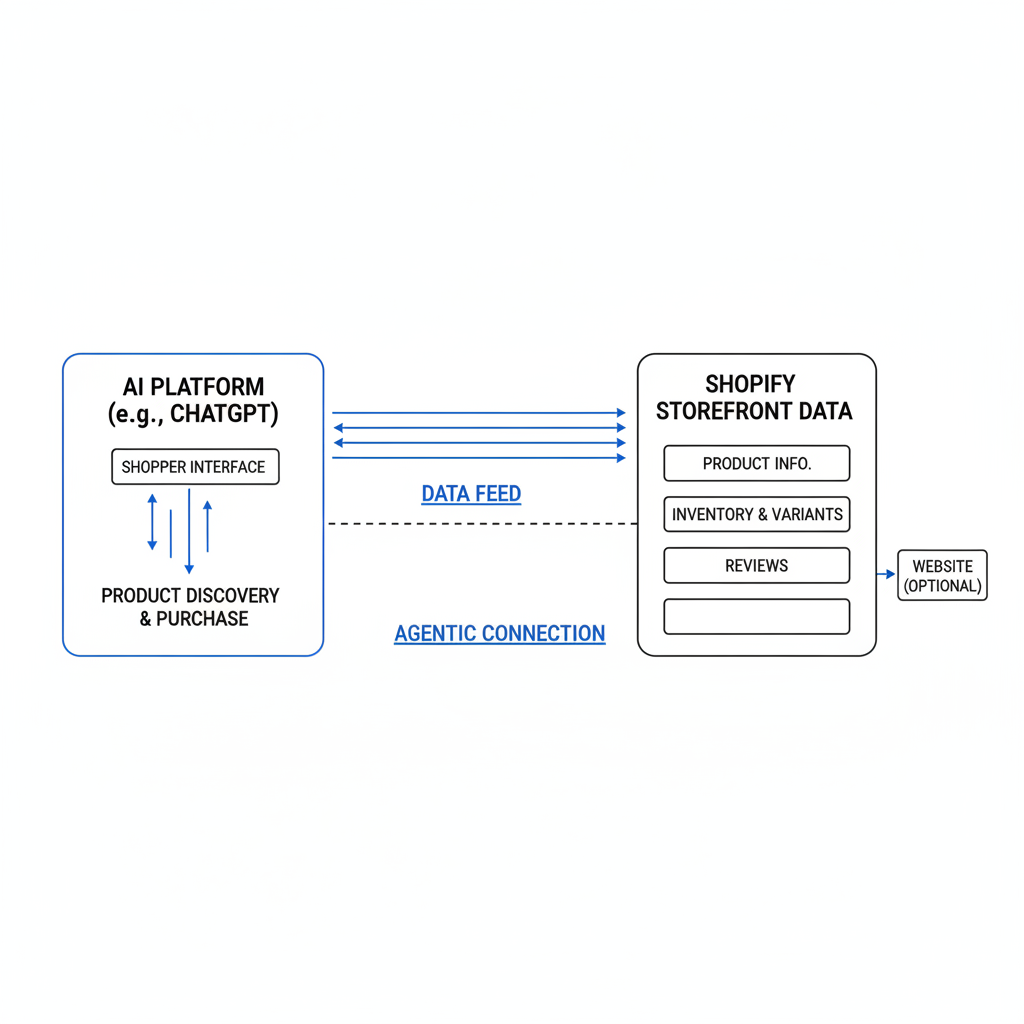
Shopify agentic storefronts are product experiences that let shoppers discover and buy items directly inside AI platforms like ChatGPT, instead of always visiting your website first. In practice, your product titles, descriptions, attributes, variants, inventory, and reviews become the data layer AI systems use to decide whether to show your products.
Shopify has positioned agentic storefronts as a way for merchants to sell inside AI conversations across platforms like ChatGPT, Gemini, Copilot, and other emerging AI surfaces. That matters because the buyer journey is changing from search-click-browse-buy into ask-compare-decide-buy.
When I test Shopify products and app experiences, the biggest mindset shift is this: beautiful design still matters on-site, but AI channels care far more about structured product clarity. If your feed is vague, inconsistent, or missing attributes, you can lose visibility before the customer ever sees your product page.
Why does A/B testing matter for AI chat sales?
A/B testing matters because AI chat sales are driven by recommendation logic, not just page design. The best way to improve performance is to test controlled variations in product data, pricing, messaging, and offer structure to see what AI systems and buyers respond to best.
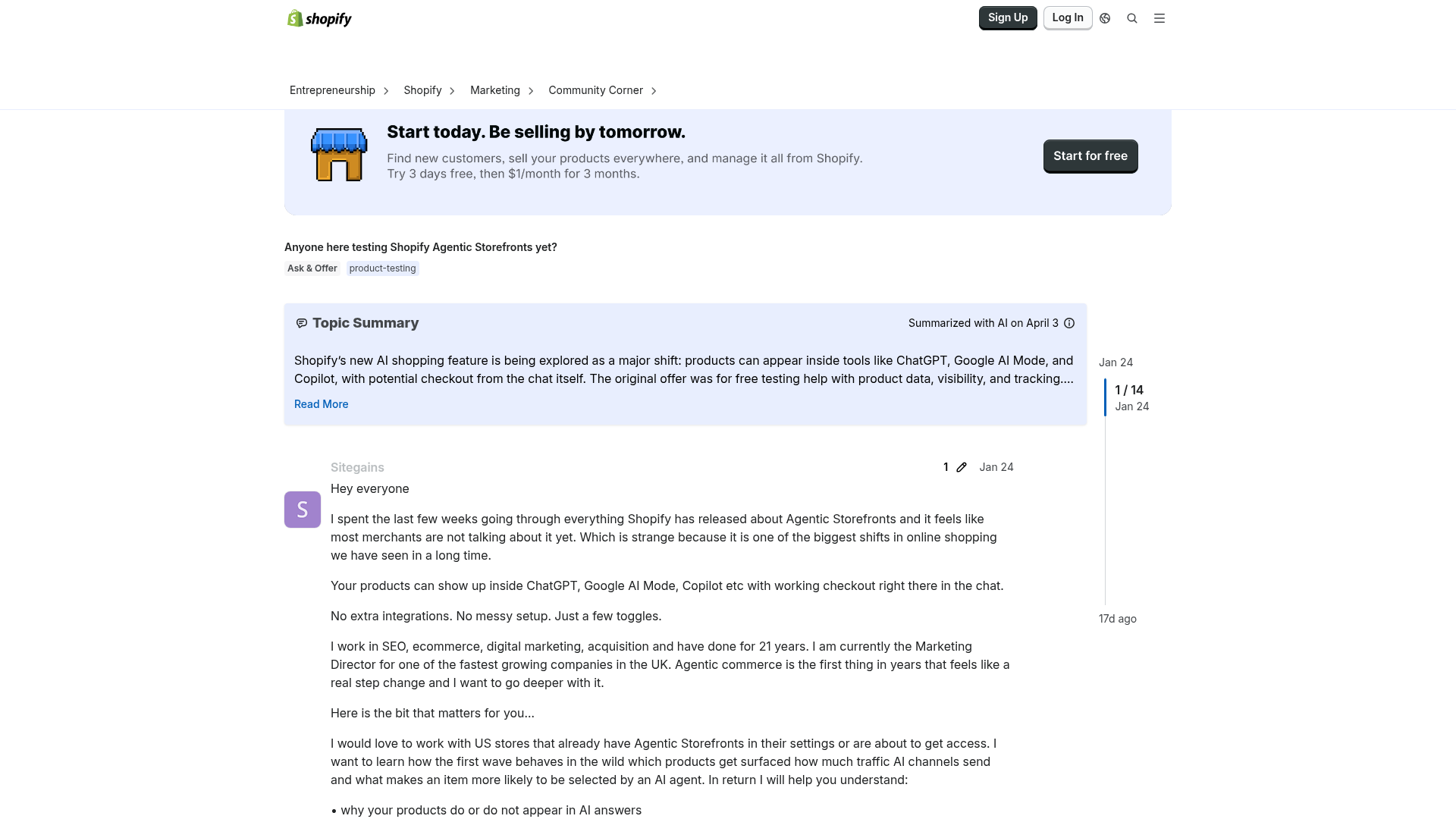
Traditional Shopify CRO often focuses on buttons, layouts, and cart flows. Agentic commerce adds another layer. You now need to test which product title earns more inclusion in AI comparisons, which attribute format improves recommendation quality, and which review or benefit phrasing increases purchase confidence.
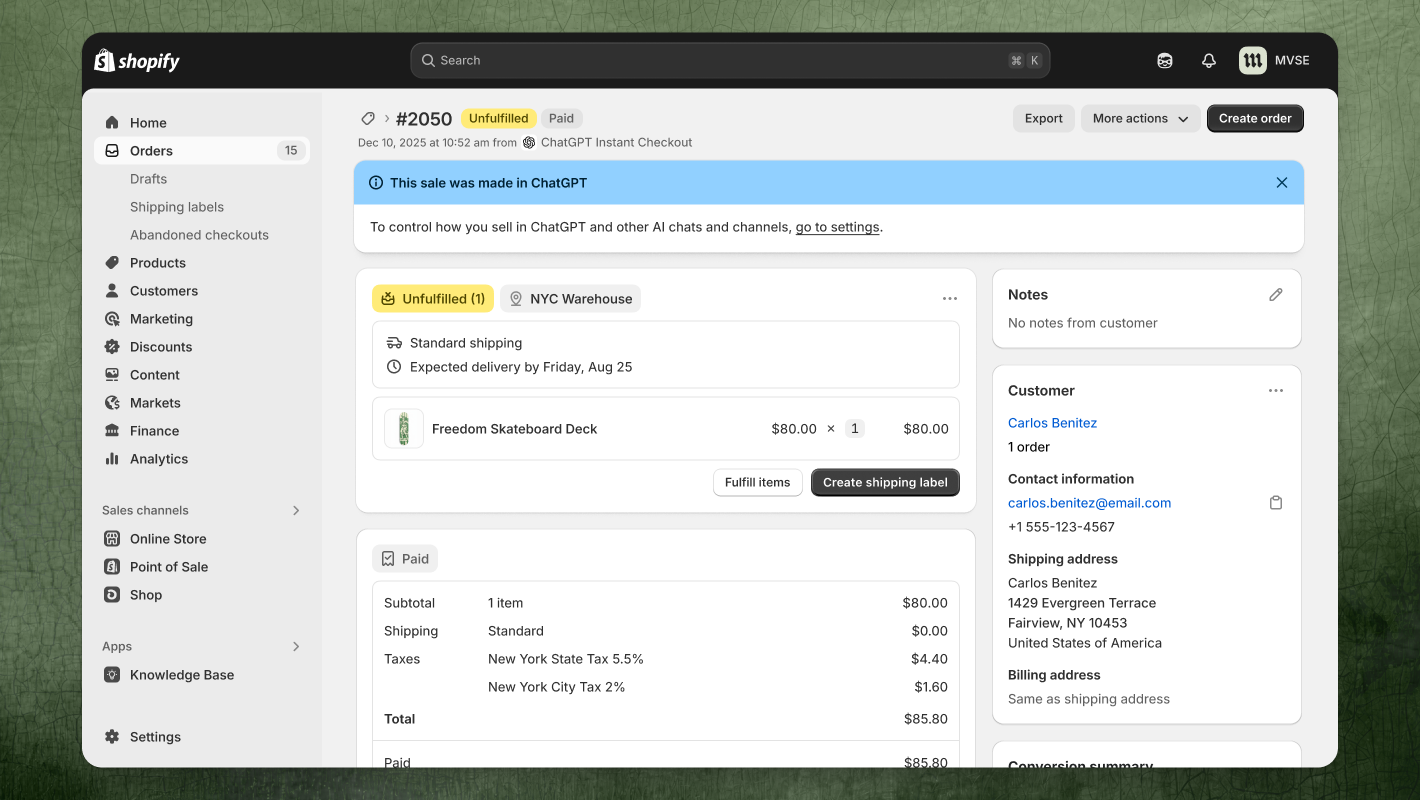
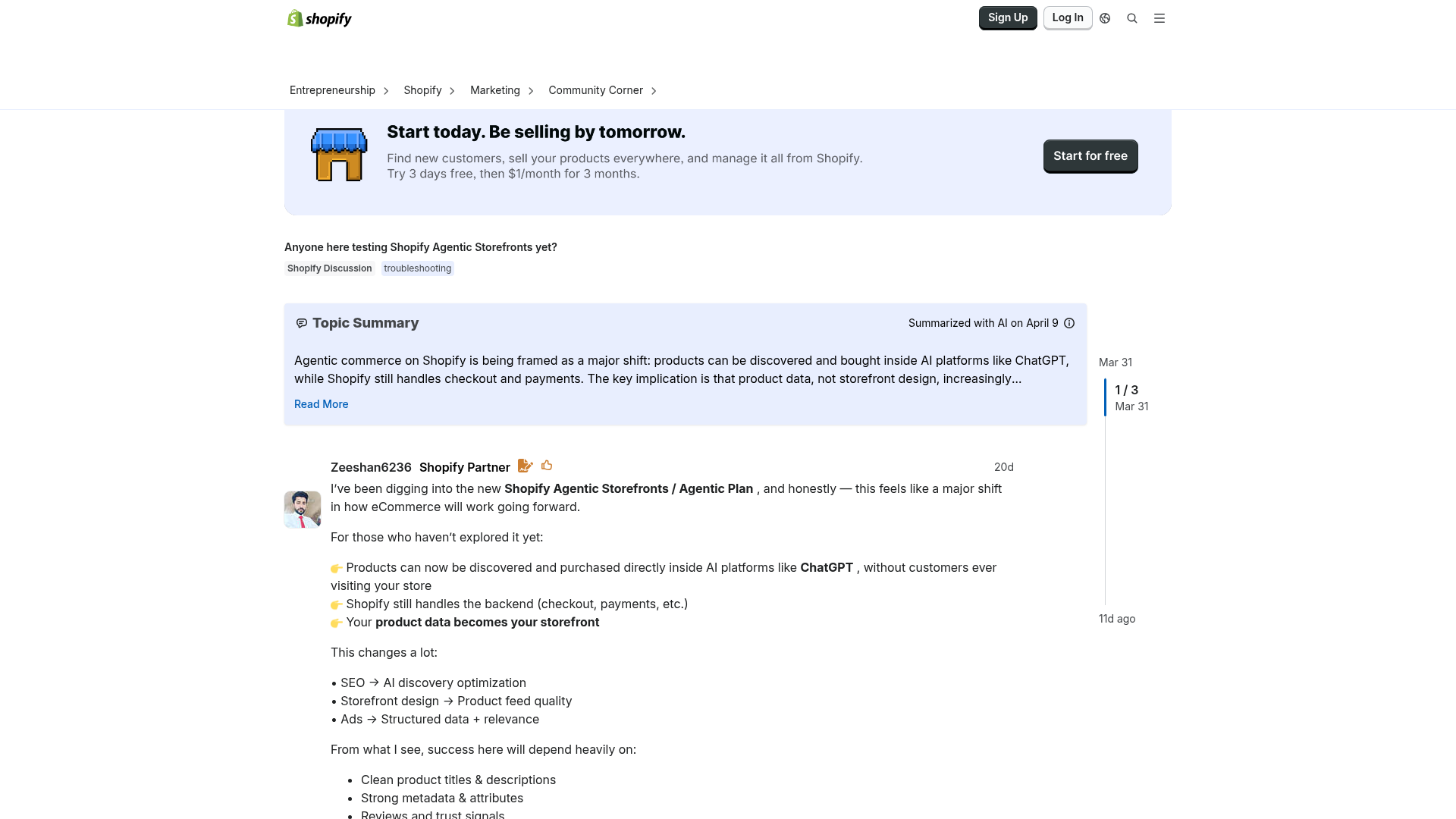
Current industry discussion already points to rapid growth in AI-attributed orders. One community thread reported orders coming from ChatGPT jumping from roughly 10% to 20%+ in a short period, which matches what many merchants are starting to notice in analytics and attribution conversations. See the discussion on the Shopify Community and Shopify's own Agentic Storefronts page.
How is A/B testing for agentic storefronts different from normal Shopify CRO?
A/B testing for agentic storefronts is different because the test subject is often the catalog data itself, not only the visual storefront. You are optimizing for both AI interpretation and buyer conversion.
On a standard Shopify store, I might test a product page layout, a cart drawer upsell, or a checkout incentive. For agentic storefronts, I would also test title structure, attribute depth, review summaries, image ordering, and how clearly a product communicates use case and differentiation.
This is why agentic testing sits somewhere between SEO, merchandising, and CRO. It overlaps with the same structured data work I discuss in How to Optimize Your Shopify Store for AI Shopping Agents (Not Just Google) and the discoverability tactics covered in How to Get Your Shopify Store into ChatGPT: Step-By-Step Guide for 2026.
What should you test first?
The best first tests are the variables most likely to change AI recommendation quality: product titles, key attributes, descriptions, review summaries, pricing presentation, and hero images. Start with changes that improve clarity rather than clever branding language.
In my experience, merchants often overestimate the value of creative copy and underestimate the value of precise product labeling. AI systems tend to reward products that are easy to classify, compare, and match to intent.
- Titles - brand + product type + primary differentiator
- Attributes - size, material, compatibility, audience, color, use case
- Descriptions - concise benefits, not fluffy brand storytelling
- Reviews - highlight specific proof points and common outcomes
- Pricing - test bundles, threshold discounts, and value framing
- Images - test utility-first images versus lifestyle-first images
What are the best methods for Shopify agentic storefronts A/B testing?
The best methods combine simulation testing, native Shopify rollouts, and feed-level experimentation. Which one you use depends on your traffic volume and how much risk you can tolerate.
If you have lower traffic, pre-testing with AI simulations can help you avoid bad live experiments. If you have enough conversion volume, live split testing gives stronger commercial proof. Most established stores should use both.
| Method | Best for | Tools | Main metrics |
|---|---|---|---|
| Simulated AI buyer testing | Low-traffic stores, pre-launch validation | SimGym via Shopify Sidekick upgrade | Add-to-cart rate, checkout completion, buyer feedback |
| Native Shopify rollouts | Theme, offer, and merchandising changes | Shopify Rollouts, Instant | Conversion rate, AOV, sessions by referrer |
| Feed A/B testing | Catalog titles, descriptions, metadata | FERMÀT, Wisepops, AB Convert | Sales by product, AI referrals, variant performance |
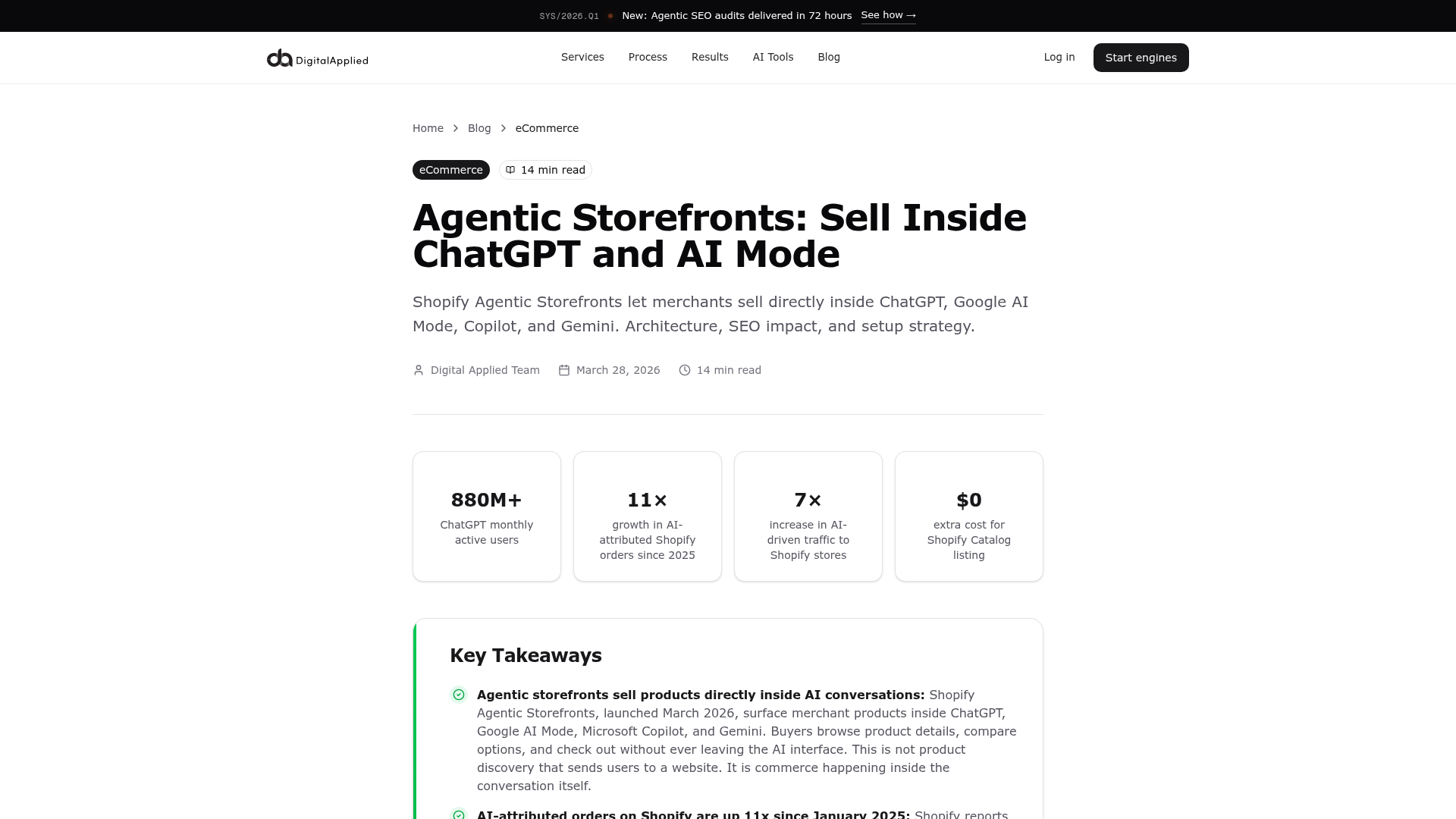
For broader context on agentic commerce, Digital Applied has a useful overview of channel behavior and data quality requirements in its article on Agentic Storefronts and AI commerce.
How does simulation testing help?
Simulation testing helps you model AI buyer behavior before exposing real traffic to a change. This is especially useful when your store does not have enough AI-attributed volume for fast statistical significance.
Research around SimGym suggests it can act like a synthetic focus group for AI shopping scenarios. You can define buyer goals, compare catalog variants, and analyze where the simulated shopper gets stuck or what they prefer. That is valuable when you are testing structured data changes that may take time to surface in live AI channels.
When should you use live split tests?
Use live split tests when you have enough traffic and a clear conversion event to measure. A practical rule is that stores with 10,000+ monthly visitors and meaningful order volume can usually run more reliable tests, especially if they segment traffic by referrer.
For stores already seeing ChatGPT or AI-assistant traffic in analytics, live tests are the best way to validate whether a feed change actually improves revenue, not just visibility. In those cases, track both overall conversion rate and AI-assisted conversion rate.
How do I set up an A/B testing workflow for ChatGPT users on Shopify?
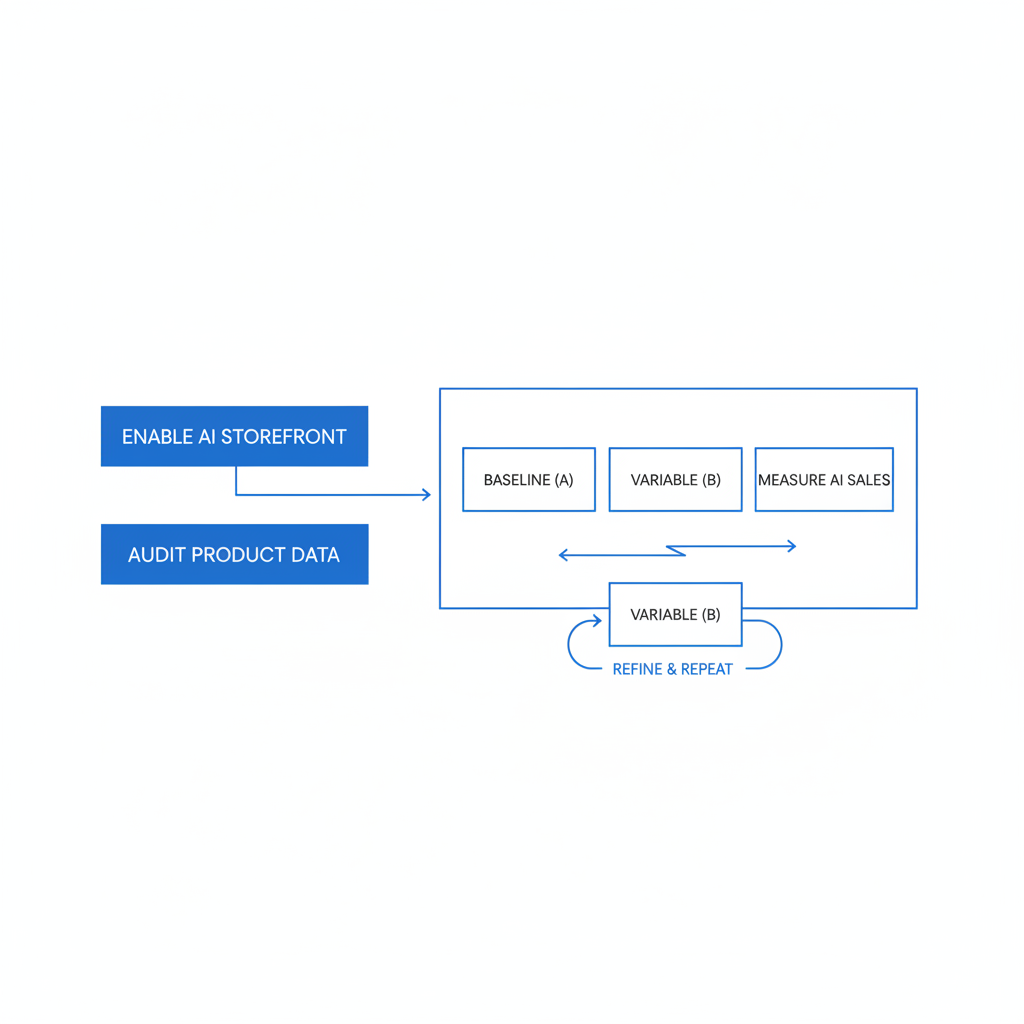
The best workflow is to establish a baseline, isolate one variable, test it in a controlled environment, and measure AI-specific outcomes separately from general store performance. You should not change product titles, pricing, and images all at once if you want clean learning.
- Enable Agentic Storefronts and confirm your catalog is syndicated correctly through Shopify.
- Audit product data for missing attributes, poor titles, weak descriptions, and inconsistent variants.
- Create a baseline in Shopify reports for sales by product, referrer, AOV, and conversion rate.
- Choose one test variable such as title format, image order, or review summary placement.
- Run a simulation test if traffic is low, or a live rollout if traffic is high enough.
- Measure AI-specific patterns such as long-tail product sales, unusual referrers, and high-intent assisted orders.
- Roll out winners gradually and document what changed.
That last step matters more than people think. In app development, I have seen teams get a win and then forget exactly why it happened. Keep a simple test log with date, hypothesis, variation, audience, and result.
What metrics matter most?
The most important metrics are the ones closest to revenue: checkout completion, conversion rate, AOV, and product-level sales by channel. Vanity metrics like impressions are useful, but only if they connect to purchases.
| Metric | Why it matters | What to watch for |
|---|---|---|
| AI-attributed orders | Shows whether AI channels are becoming a real sales source | Month-over-month growth and product concentration |
| Conversion rate | Validates whether recommendation visibility leads to purchases | Lift by test variant and referrer |
| Average order value | AI shoppers often arrive highly qualified | Bundles, add-ons, and premium variant uptake |
| Product inclusion rate | Helps estimate whether your products are surfacing more often | Sales spikes on AI-friendly SKUs |
| Long-tail variant sales | AI often matches specific intent better than search | Growth in niche sizes, colors, or use cases |
What should I test in product feeds for better ChatGPT sales?
The best product feed tests focus on clarity, specificity, and comparability. ChatGPT and similar systems perform better when your data answers obvious buyer questions without needing extra interpretation.
Here are the feed elements I would prioritize first based on what tends to move results fastest.
Should I test product titles?
Yes. Product titles are one of the highest-impact variables because they influence how easily an AI system can classify and compare your product. A title that includes brand, product type, and differentiator will usually outperform a vague branded name.
For example, a title like "LumaFlex Pro" tells an AI almost nothing. "LumaFlex Pro Adjustable Standing Desk Converter for Dual Monitors" is much easier to match to a user query.
Should I test descriptions and attributes?
Yes. Descriptions and attributes help AI systems answer comparison questions and buyer objections. They should be structured, factual, and benefit-led.
In my experience, stores often bury key details in long brand copy. For agentic storefronts, move critical facts up front: materials, dimensions, compatibility, use case, shipping speed, and who the product is for.
Should I test reviews?
Yes. Reviews are powerful because they provide third-party validation that AI systems can summarize. The most useful reviews mention specific outcomes, not generic praise.
If you use a review app, make sure your product pages and structured data expose useful snippets. For example, Lumo Reviews can help merchants collect and display review content in a cleaner way. I am biased because I build Shopify apps myself, but I have seen firsthand how specific review text improves trust and conversion far more than a raw star rating alone.
Which Shopify apps and tools help with agentic storefront testing?
The best tools depend on what you are testing. Use native Shopify features for rollouts, testing apps for experiments, and supporting apps for stronger product data and conversion capture.
Below is a practical comparison of tools worth looking at.
| Tool | Best use case | Notes |
|---|---|---|
| Shopify Sidekick | AI-assisted workflows and SimGym-style simulation testing | Best for pre-testing buyer behavior before live changes |
| AB Convert | A/B testing pricing and merchandising changes | Useful for controlled product and offer tests |
| Wisepops | On-site messaging and capture flows | Helpful for validating offer language after AI-driven visits |
| FERMAT | Landing page and funnel experimentation | Good when AI traffic still lands on custom pages |
| SellUp | Upsells and post-add-to-cart offers | Useful for increasing AOV after agentic discovery |
| NoteDesk | Capturing order notes and buyer context | Helpful when personalized purchase context matters |
If your goal is not just visibility but larger baskets, pair agentic testing with upsell work. I cover that in How to upsell on Shopify leveraging AI and How to Create Shopify Cart Drawer Upsells That Boost AOV in 2026.
How do I measure ChatGPT traffic and AI-assisted sales accurately?
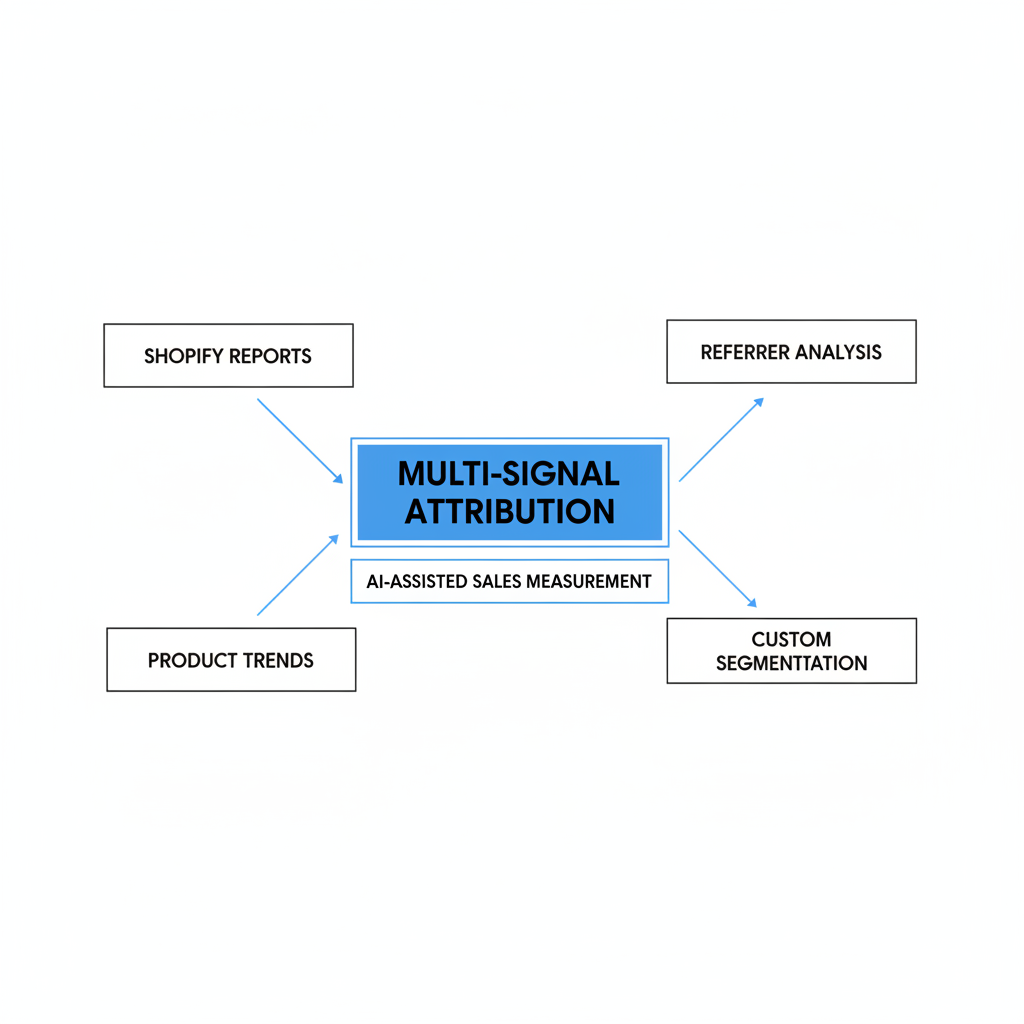
You measure ChatGPT traffic and AI-assisted sales by combining Shopify reports, referrer analysis, product-level sales trends, and custom segmentation. Attribution is still imperfect, so you need a multi-signal approach.
This is one of the biggest current challenges. AI channels do not always behave like traditional traffic sources, and some assisted purchases may look indirect. In practice, I recommend watching for clusters of behavior rather than relying on one perfect report.
- Sessions by referrer - look for ChatGPT and other AI sources where available
- Sales by product - watch for sudden growth in highly specific SKUs
- New vs returning customers - AI often brings high-intent new buyers
- AOV by channel - AI-assisted shoppers may convert at higher basket values
- Query-pattern products - products with descriptive attributes often benefit first
If you are trying to improve AI discoverability across channels, the workflows in Sidekick AI Agents: Activate Agentic Commerce on Shopify in 2026 are also relevant here.
What mistakes should merchants avoid when testing agentic storefronts?
The biggest mistakes are testing too many variables at once, ignoring feed quality, and measuring only general site performance. Agentic commerce requires more disciplined experimentation than most merchants expect.
Here are the common problems I would avoid.
- Changing titles, images, and pricing together - you will not know what caused the result
- Using clever but vague product names - AI systems need clarity
- Leaving attributes incomplete - missing data reduces recommendation confidence
- Ignoring inventory freshness - AI channels need accurate stock signals
- Focusing only on clicks - purchases matter more than visibility
- Not segmenting AI traffic - blended reporting hides useful patterns
Another mistake is assuming agentic storefronts replace on-site optimization. They do not. They change the top of the funnel and the recommendation layer, but once the buyer reaches your checkout or post-purchase flow, classic CRO still matters.
What is a practical A/B testing roadmap for the next 30 days?
A practical 30-day roadmap is to clean your catalog first, run one feed test, validate one offer test, and then expand only after you have a baseline. Start small and learn quickly.
- Week 1 - audit your top 20 products for titles, attributes, images, reviews, and inventory quality.
- Week 2 - test one title format across a small product group and monitor AI-attributed sales signals.
- Week 3 - test one description structure or review-summary format.
- Week 4 - test one monetization lever such as bundle framing, upsell placement, or premium variant emphasis.
If you want a simple rule, optimize in this order: data clarity first, recommendation quality second, basket value third. That sequence usually produces cleaner wins than jumping straight into offer experiments.
Is Shopify agentic storefronts A/B testing worth it right now?
Yes, it is worth it now because early movers can improve visibility and conversion before these channels become crowded. The stores that learn how AI systems interpret product data today will have a strong advantage as agentic commerce matures.
From what I am seeing, this is not a passing trend. Shopify is clearly investing in agentic shopping, testing infrastructure, and merchant tooling. The merchants who treat AI chats as a real sales channel, not just a novelty, will be in a much better position over the next 12 months.
My advice is simple: do not wait for perfect attribution or perfect tooling. Start with your top-selling products, clean up your data, run a few disciplined tests, and build from there. In Shopify, the merchants who win usually are not the ones who guess best. They are the ones who test fastest, learn fastest, and implement fastest.