
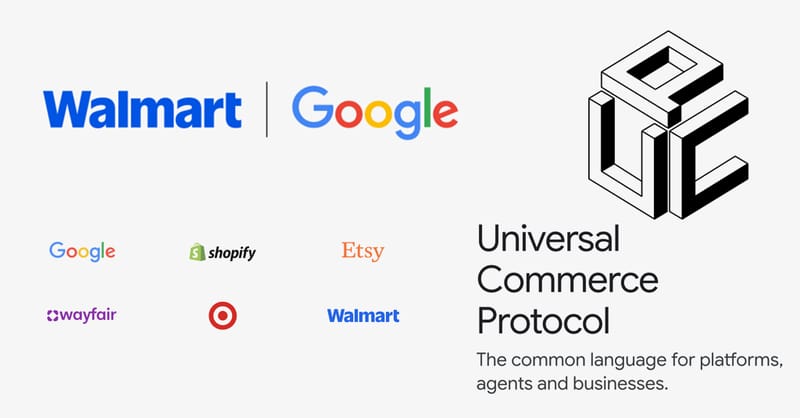
Shopify UCP Google is one of the biggest commerce shifts I have seen in years. In plain English, Universal Commerce Protocol (UCP) is an open standard co-developed by Shopify and Google that lets AI systems understand a merchant's catalog, negotiate supported actions, and complete transactions in a structured way.
As a Shopify app developer, I pay close attention to changes that affect product discovery, checkout flows, and the quality of store data. UCP matters because it moves AI from being a product recommender to becoming a real shopping interface, especially inside Google AI Search and the Gemini app.
Most merchants do not need to build a custom protocol layer from scratch. For many Shopify stores, the important part is understanding what is enabled by default, what data quality still matters, and how to prepare your store so Google AI surfaces can actually trust and present your products correctly.
That is where this guide focuses. I will explain what UCP is, how the Shopify and Google connection works in 2026, what merchants should do now, and where developers may still need to step in.
What is Universal Commerce Protocol and why does it matter for Shopify?
Universal Commerce Protocol is an open commerce standard for AI agents. It matters for Shopify because it gives Google AI Search and other agents a consistent way to discover products, understand merchant capabilities, and initiate transactions.
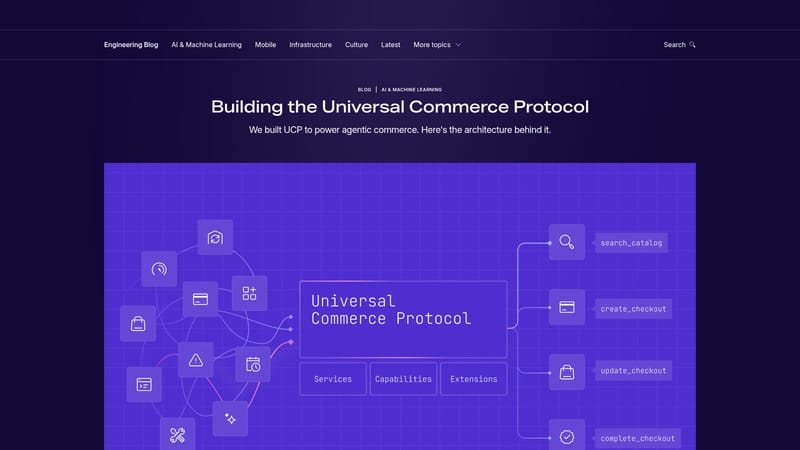
According to Shopify engineering and Google announcements, UCP was built to model the messy reality of commerce. That includes catalog data, checkout sessions, line items, discount logic, fulfillment options, and merchant-specific extensions. Instead of hard-coding one rigid API for every store, UCP uses a layered model with capabilities and extensions.
In my experience building Shopify apps, this is the right direction. Real stores are never as simple as "title, price, buy now." Stores have bundles, subscriptions, local delivery, preorder rules, variant edge cases, and custom notes. A protocol that cannot represent those realities becomes useless fast.
If you want the original technical background, Shopify's engineering post on Building the Universal Commerce Protocol is worth reading, and Shopify's newsroom overview at AI commerce at scale explains the merchant-facing rollout.
How does Shopify UCP Google integration actually work?
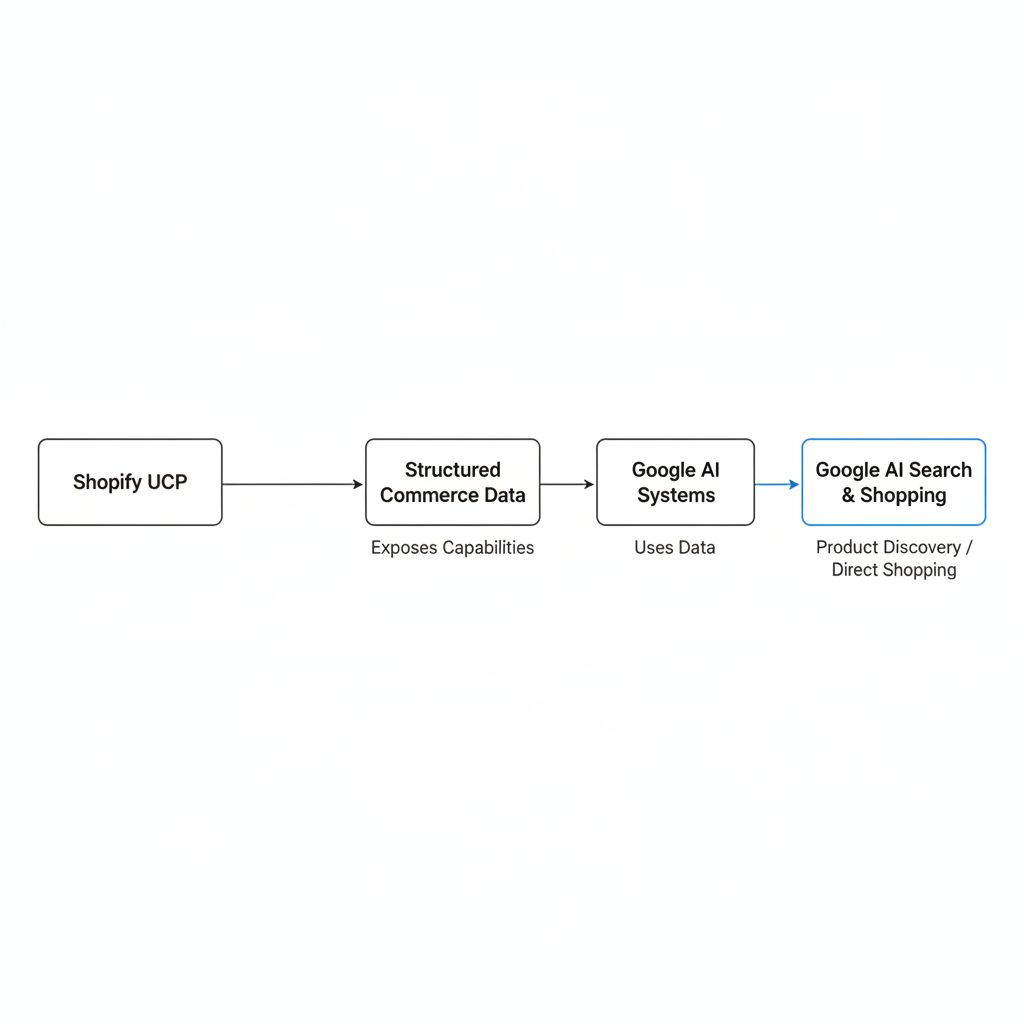
Shopify UCP Google integration works by exposing merchant capabilities and structured commerce data in a machine-readable format that Google AI systems can use. In practice, this enables product discovery and, for eligible experiences, direct shopping flows inside Google AI surfaces.
Google has framed this as part of a broader agentic shopping push. Shopify has framed it as a way for merchants to connect to AI conversations at scale. The practical takeaway is simple: Google AI Search and Gemini can use Shopify-backed commerce data more directly than traditional search snippets ever could.
At a high level, the flow looks like this:
- A shopper asks Google AI Search a product question.
- Google identifies relevant products and merchants.
- UCP-compatible merchant data helps Google understand availability, price, checkout support, and supported actions.
- The shopper gets a richer AI shopping experience, potentially including direct purchase paths.
- Shopify manages the merchant-side infrastructure and capability declarations.
This is why store quality still matters. Even if UCP is enabled by default, bad product titles, weak descriptions, missing GTINs, inconsistent shipping rules, and broken structured data still reduce your chances of being surfaced correctly.
Do Shopify merchants need to manually enable UCP?
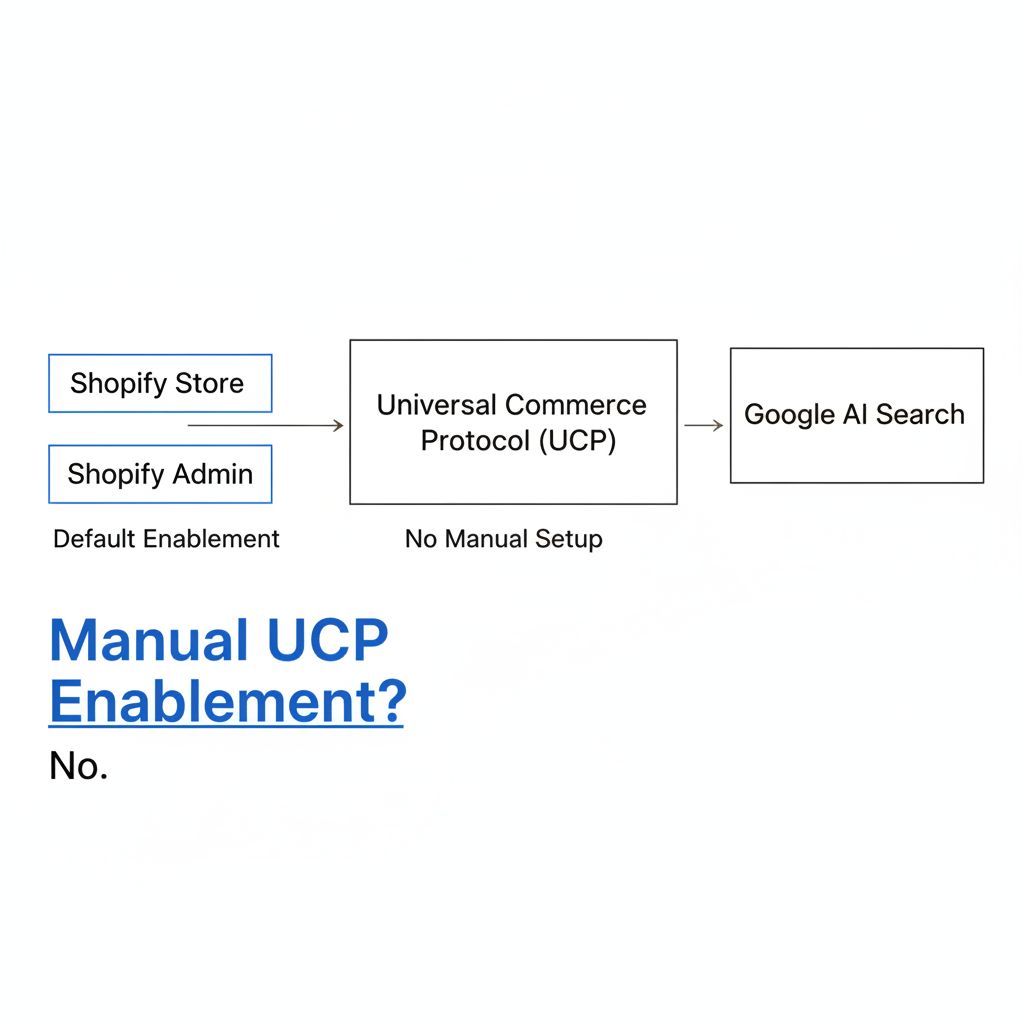
Most Shopify merchants do not need to manually enable UCP. Shopify has stated that stores are UCP-enabled by default for the core rollout, with management centralized through Shopify Admin and Agentic Storefronts.
This is the part many merchants misunderstand. UCP is not like installing a random sales channel app and flipping five settings. Shopify is handling much of the protocol infrastructure, especially for standard merchant use cases tied to Google AI Mode and Gemini.
That said, enabled is not the same as optimized. I have seen the same problem with SEO, Google Shopping, and review syndication. Merchants hear "automatic" and assume "done." In reality, automatic enablement only means the connection exists. Your store still needs clean data and trustworthy merchandising.
If you are already working on AI visibility, my guides on optimizing your Shopify store for AI shopping agents and getting your Shopify store into ChatGPT and AI search engines pair well with this topic.
What does Google AI Search need from your Shopify store?
Google AI Search needs accurate, structured, current commerce data from your Shopify store. The better your product data, pricing, availability, and merchant signals, the easier it is for AI systems to surface and trust your products.
From what Shopify, Google, and technical breakdowns have published, there are a few core inputs that matter most. These are not new ideas, but UCP makes them more important because the AI is not just reading your site. It is trying to reason about products and take actions.
How important is structured product data?
Structured product data is essential for Shopify UCP Google visibility. It helps AI systems interpret products consistently across search, recommendation, and transaction layers.
At minimum, your store should have strong product titles, descriptive product pages, accurate pricing, variant clarity, and complete brand and identifier data where available. If you sell branded goods, GTINs and UPCs matter even more now. If you need help there, I covered that in how to get UPC codes for your Shopify store.
For merchants, this usually means improving:
- Product titles that match how shoppers search
- Descriptions that explain use cases, materials, sizing, and compatibility
- Images that clearly show the product
- Variant labels that are understandable out of context
- Availability and price that stay current
- Brand, GTIN, MPN, and category data where relevant
If your product pages are thin, AI search performance will suffer even if protocol support is technically present. That is one reason I still consider classic SEO work foundational. My posts on Shopify SEO essentials and Shopify product page SEO are still relevant in the UCP era.
Do reviews and trust signals affect AI discovery?
Yes, reviews and trust signals likely affect AI discovery and conversion. AI systems need confidence signals, and shoppers still need reassurance before they buy.
Google has not reduced commerce to raw feed data alone. In my testing across search ecosystems, products with stronger review coverage, clear shipping expectations, and more complete merchant information tend to perform better in both traditional and AI-enhanced search experiences.
If you are improving review coverage, my app Lumo Reviews is designed to help merchants collect and display product reviews without bloated setup. You can also read my guide on collecting Google reviews for Shopify if your goal is broader trust visibility.
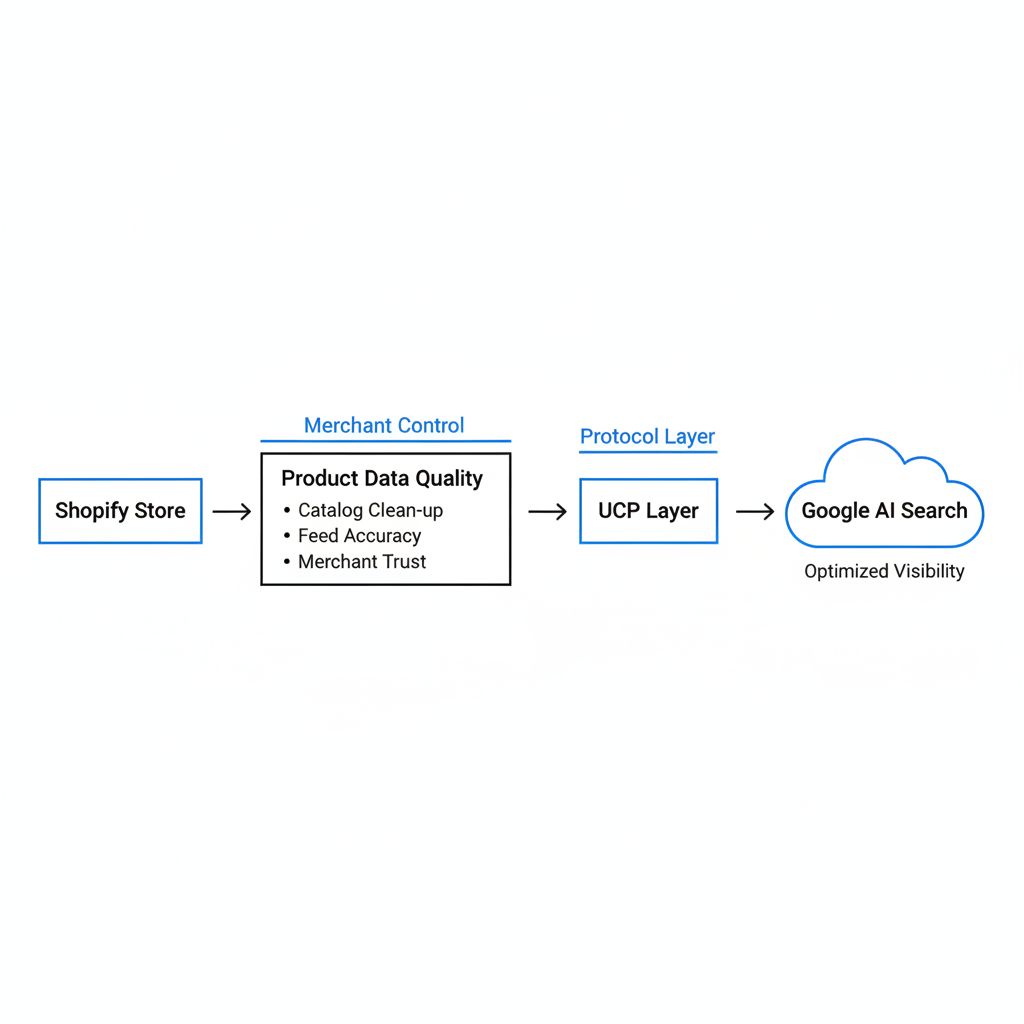
How do I optimize my Shopify store for Google AI Search with UCP?
The best way to optimize for Shopify UCP Google is to improve product data quality, merchant trust, feed accuracy, and checkout clarity. UCP handles the protocol layer, but merchants still control the underlying data quality.
Here is the practical checklist I would follow if I were running a store today.
1. Clean up your product catalog
Your catalog is the foundation of AI shopping visibility. If your titles, descriptions, and variants are messy, Google AI will have a harder time matching your products to intent.
Make sure each product page answers obvious buyer questions. Include materials, dimensions, compatibility, shipping expectations, care instructions, and who the product is for. Avoid generic titles like "Premium Tee" when "Men's Heavyweight Cotton T-Shirt" is far more useful.
2. Verify identifiers and schema-related data
Identifiers help Google connect your products to the broader commerce graph. This is especially important for branded, standardized, or multi-channel products.
Check your GTINs, UPCs, brand names, and product types. If you are using custom products, make sure the product data is still internally consistent. AI systems can work with non-standard goods, but they need better descriptive context when identifiers are missing.
3. Keep pricing and availability accurate
Fresh price and inventory data are critical for agentic commerce. Nothing breaks trust faster than an AI result showing a product that is unavailable or priced incorrectly.
This sounds obvious, but it becomes more important when AI systems may present a product as ready to buy. If your store has frequent inventory changes, double-check how your feeds and product statuses update. I also recommend stress-testing sale logic, discount stacking, and variant availability before major campaigns.
4. Improve your checkout and fulfillment clarity
AI shopping works best when your fulfillment rules are clear and predictable. Merchants with confusing shipping logic will create friction for both AI systems and humans.
Make shipping times, local delivery rules, and pickup options easy to understand. If you use estimated delivery messaging, that can help set expectations earlier. My app Delivery Timer is built for exactly that kind of clarity on Shopify product pages.
5. Strengthen on-site conversion signals
Getting surfaced in Google AI Search is only half the job. Once shoppers land on your store or an embedded buying flow, your product page still needs to convert.
That means better reviews, smarter upsells, stronger FAQs, and cleaner product messaging. For upsells, I built SellUp to help merchants add relevant offers without making the storefront feel spammy. If you want more ideas, my posts on AI-powered upsells and upselling on Shopify with AI are good next reads.
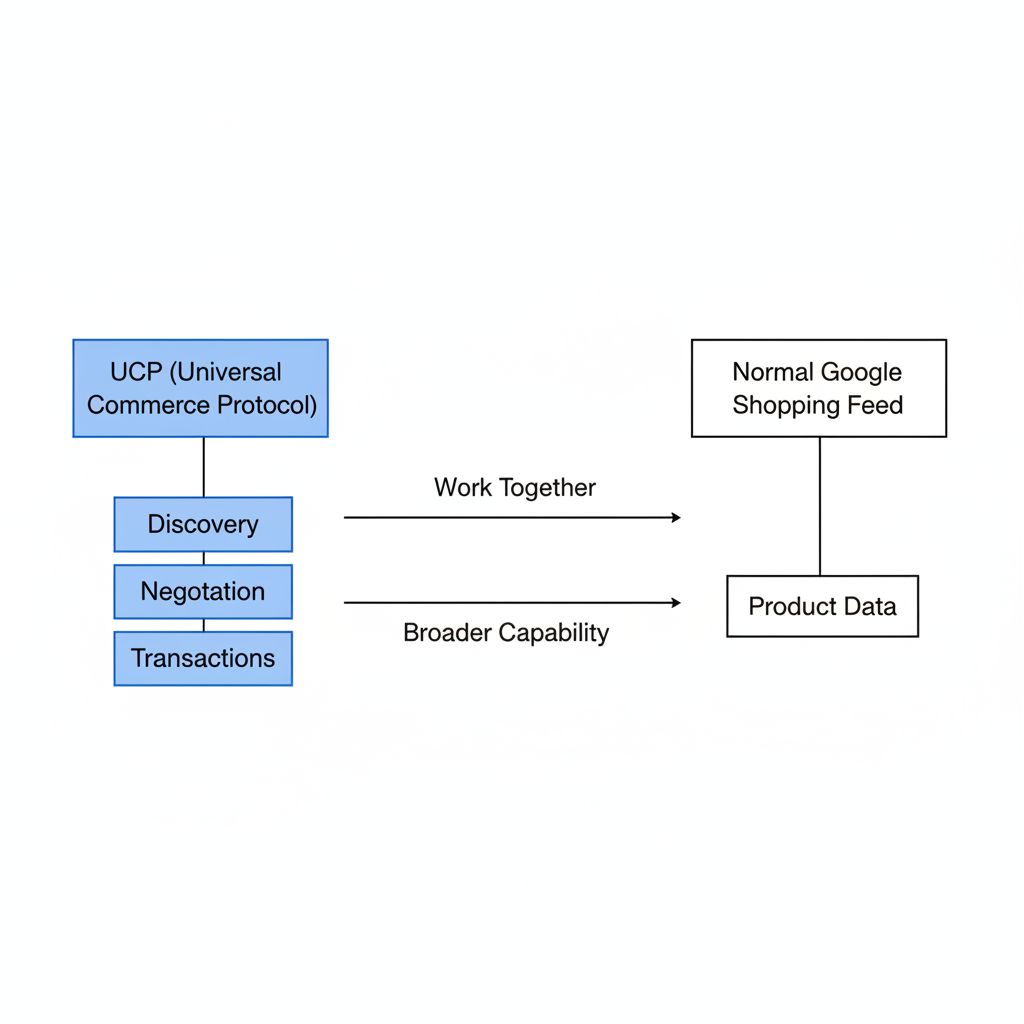
What is the difference between UCP and normal Google Shopping feeds?
UCP is broader than a traditional product feed. Google Shopping feeds primarily publish product data, while UCP is designed to support discovery, capability negotiation, and transactions between AI agents and merchants.
That does not mean feeds are obsolete. In fact, I expect feeds, structured data, Merchant Center attributes, and UCP to work together. But if you are comparing the concepts, this table is the simplest way to think about it:
| Feature | Traditional Google Shopping Feed | UCP for Shopify and Google AI |
|---|---|---|
| Primary purpose | Product listing and ad eligibility | AI-readable commerce interaction and transactions |
| Data scope | Catalog-focused | Catalog, checkout, orders, capabilities, extensions |
| Used by | Merchant Center, Shopping ads, free listings | Google AI Search, Gemini, agentic commerce systems |
| Actionability | Mainly discovery | Discovery plus negotiation and purchase flows |
| Customization | Feed attributes and supplemental feeds | Capabilities and merchant-specific extensions |
| Merchant setup | Usually manual configuration and optimization | Core Shopify support is largely automatic |
In other words, feeds tell Google what you sell. UCP helps Google understand how it can interact with your store as a commerce system.
When do developers need custom UCP work?
Developers need custom UCP work when a merchant has specialized commerce logic that standard Shopify support does not fully express. Most merchants will not need this immediately, but larger or more complex stores may.
Examples include custom fulfillment rules, subscription scheduling, B2B pricing logic, bundles with conditional components, or internal systems that need to expose more structured semantics to AI systems. Shopify's engineering writeup makes it clear that extensions are part of the design, not an afterthought.
In my own work, I would watch for stores that have a lot of business logic hidden in theme code, cart scripts, or disconnected apps. Those stores often look fine to humans, but they are hard for machines to interpret cleanly. UCP exposes that problem faster.
If you are building custom shopper flows or collecting special order context, apps can still play a role. For example, NoteDesk helps merchants collect order notes and custom input in a cleaner way, while Quizive can help structure guided product selection before the shopper reaches checkout.
What should merchants do in Shopify Admin right now?
Merchants should audit their product data, sales channels, and AI readiness inside Shopify Admin right now. You probably do not need to code anything, but you do need to make sure your store is clean, complete, and trustworthy.
Here is the checklist I would use:
- Review product titles and descriptions for clarity and search intent match
- Check variant naming so options make sense outside your storefront design
- Verify inventory accuracy across top-selling products
- Audit pricing and compare-at pricing for errors
- Ensure shipping and delivery messaging are consistent
- Improve review coverage on your most important SKUs
- Confirm Google-related channel setup and Merchant Center health where applicable
- Watch Shopify Admin updates related to Agentic Storefronts and AI commerce surfaces
I would also monitor product pages that underperform in organic search today. Those pages often underperform in AI search tomorrow for the same reasons: thin copy, weak trust signals, and poor product framing.
What are the biggest mistakes to avoid with Shopify UCP Google?
The biggest mistakes are assuming UCP replaces SEO, assuming automatic means optimized, and ignoring conversion quality. Merchants who treat UCP as magic will miss the real opportunity.
Here are the most common mistakes I expect to see in 2026:
- Relying on default product data with no merchandising cleanup
- Using vague titles that do not map to buyer intent
- Ignoring product identifiers for cataloged goods
- Having weak or missing reviews on key products
- Showing inconsistent shipping promises across pages and checkout
- Forgetting mobile conversion basics because AI discovery feels new
- Overcomplicating the stack before validating the basics
In my experience, stores usually get more upside from a catalog cleanup and trust signal upgrade than from chasing speculative technical tweaks. The protocol matters, but clean commerce data matters more.
Is Shopify UCP Google worth paying attention to for small stores?
Yes, small stores should pay attention to Shopify UCP Google now. Even if the earliest benefits are strongest for larger brands and high-volume categories, small merchants can gain visibility by being easier for AI systems to understand.
This is especially true if you sell products with clear use cases, strong differentiation, or recurring search demand. Smaller stores often move faster than enterprise brands when it comes to improving product pages, adding reviews, and cleaning up catalog structure. That agility matters.
I would not panic or rebuild your theme because of UCP. But I would absolutely treat it as a signal that AI-readable commerce data is now part of the growth stack, right alongside SEO, feed management, and conversion optimization.
Where can I learn more about UCP and Google's rollout?
The best sources are Shopify's engineering and newsroom posts, plus Google's commerce announcements. These are the most reliable references for understanding what is live, what is rolling out, and what remains experimental.
Here are the sources I recommend reading directly:
- Shopify Engineering: Building the Universal Commerce Protocol
- Shopify Newsroom: AI commerce at scale
- Google: New tech and tools for retailers to succeed in an agentic shopping era
- Shopify Blog: Google AI shopping features
- Monocle: Shopify's Universal Commerce Protocol Explained
If you are a merchant, the practical next step is simple. Treat shopify UCP Google as a visibility and conversion project, not just a protocol story. Clean up your catalog, strengthen your trust signals, and make sure your store is ready for AI systems that do more than rank pages.
That is the real shift in 2026. Search is becoming transactional, and Shopify merchants who prepare early should have an advantage.