
The best AI chatbot for Shopify in 2026 depends on whether you need support automation, product recommendations, or a full helpdesk. After building Shopify apps for years and testing how merchants actually use on-site AI, I keep seeing the same pattern: stores do not fail because they lack chat, they fail because their chatbot gives weak answers, cannot access store context, or creates more support tickets than it resolves.
For this roundup, I focused on 4 Shopify chatbot apps that represent the main use cases I see in real stores: AI-first support, hybrid live chat plus AI, enterprise-grade helpdesk automation, and AI sales assistance. I also looked at practical pain points like setup time, pricing clarity, handoff to humans, product recommendation quality, and edge cases such as returns-heavy stores, catalog-heavy stores, and brands with seasonal spikes.
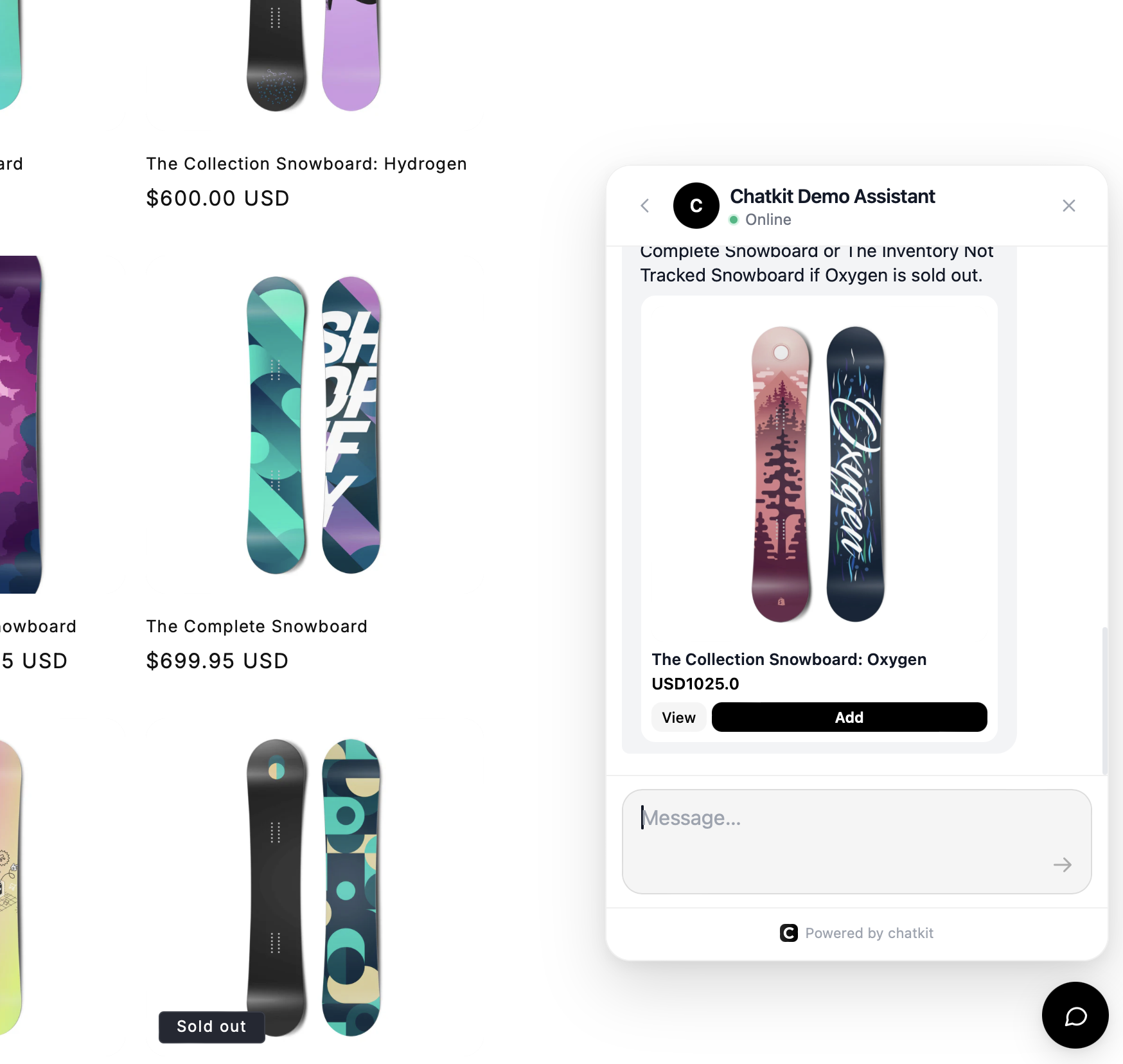
One important note before we start: merchants often search for the Best AI Chatbot when what they really want is one of three outcomes - fewer repetitive tickets, higher conversion rate, or better after-hours support. The right app depends on which of those matters most to your store.
Also, if you are planning a broader AI support stack, I recommend pairing this article with my guides on top Shopify chatbot apps for 24-7 customer support and how to integrate a chatbot with your Shopify store. Those go deeper on implementation and team workflows.
How did I choose the best AI chatbot apps for Shopify in 2026?
I chose these apps based on Shopify relevance, AI usefulness, merchant fit, pricing model, and real-world operational value. I did not just pick the biggest names. I picked the apps that cover the most common merchant scenarios I see as a Shopify app developer.
In my experience building Shopify apps, the biggest chatbot mistake is optimizing for flashy AI demos instead of actual ecommerce outcomes. A good Shopify chatbot should answer product questions correctly, understand shipping and returns policies, reduce repetitive support load, and hand off to a human when confidence is low. If it cannot do those basics, it is not helping your store.
Here is what I prioritized when evaluating each app:
- Native Shopify integration with access to products, orders, and store data
- Useful AI automation for FAQs, order status, returns, and recommendations
- Clear merchant fit for small stores, scaling brands, or Plus merchants
- Pricing logic that does not become painful as volume grows
- Human handoff options for edge cases and high-intent shoppers
- Sales impact through product discovery, upsells, or cart recovery
If your main goal is conversion rather than support, you should also read my posts on AI-powered upsells and how to upsell on Shopify leveraging AI. Chatbots and upsells overlap more than most merchants expect.
Chatkit AI Chatbot

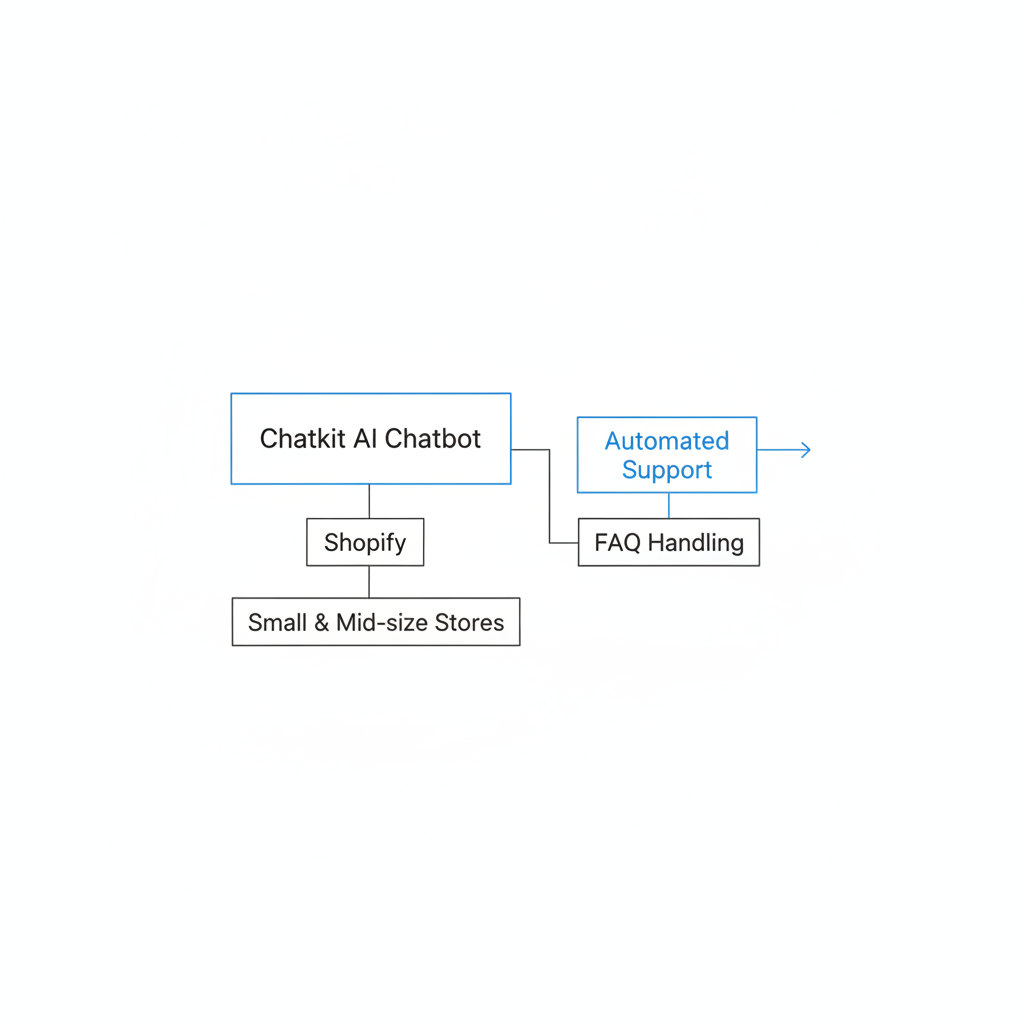
Chatkit AI Chatbot is my first pick for merchants who want an AI-first Shopify chatbot without enterprise helpdesk complexity. It is best for small and mid-size stores that need fast setup, strong FAQ handling, and a cleaner path to automated support.
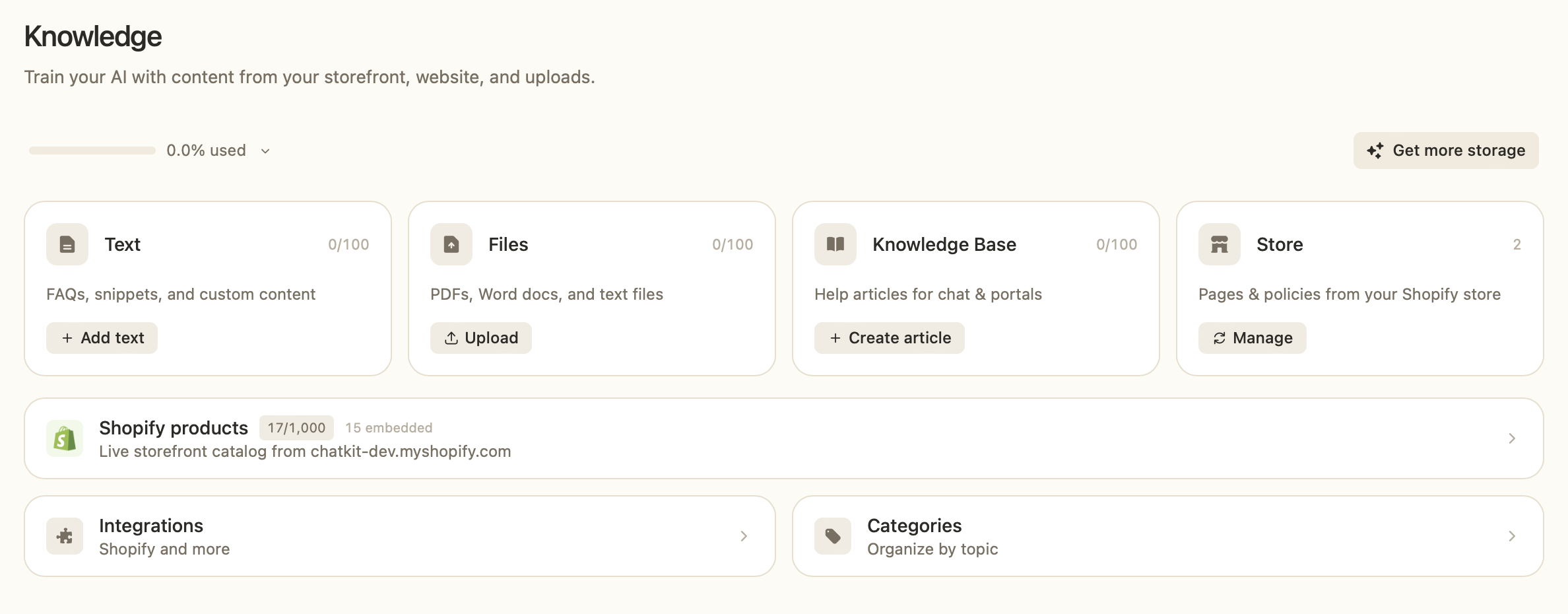
I am putting Chatkit first because that is the closest fit to what many Shopify merchants actually ask me for: "I want a bot that can answer questions, recommend products, and reduce support load without turning my store into a customer service software project." In practice, that means the chatbot needs to be easy to train on store content, capable of handling repetitive shopper questions, and simple enough that a founder can manage it without a support ops team.
Even though many merchants search for the Best AI Chatbot as if there is one universal winner, Chatkit-style AI-first tools usually win for lean teams because they avoid the bloat of bigger helpdesk platforms. That matters if you are doing a few hundred to a few thousand orders per month and just need something that works.
- AI trained on store content such as products, FAQs, and policies
- Automated answers for shipping, returns, product info, and common pre-sale questions
- Product recommendation potential for shoppers who need help choosing
- Storefront chat widget with minimal setup friction
- Strong fit for after-hours support when your team is offline
What is Chatkit best for?
Chatkit is best for founder-led stores, lean support teams, and growing DTC brands that want to automate repetitive conversations fast. It is especially useful when your inbox is full of the same 10 questions every day.
The biggest pain point this type of app solves is repetitive support drain. Questions like "Where is my order?", "Do you ship internationally?", "What size should I buy?", and "How do returns work?" do not need a human every time. A good AI chatbot should absorb that workload and free your team for the messy cases.
What are the edge cases to watch with Chatkit?
AI-first chatbots work best when your content is structured and current. They struggle when your store has vague policies, inconsistent product data, or unusual workflows.
For example, if you run a made-to-order store, a preorder-heavy catalog, or products with complex compatibility rules, you need to test the bot carefully. In my experience, chatbot quality often depends less on the model and more on whether the underlying store data is clean. If your FAQ is thin and your product pages are weak, the bot will reflect that.
Pricing and value
Pricing varies by app and plan structure, but AI-first Shopify chatbots usually appeal because they offer simpler pricing than enterprise helpdesks. That makes them worth it for smaller stores that want predictable costs.
My tip as a developer: before installing any AI chatbot, write out your top 25 customer questions and test whether the bot answers them well. That gives you a better signal than any sales page.
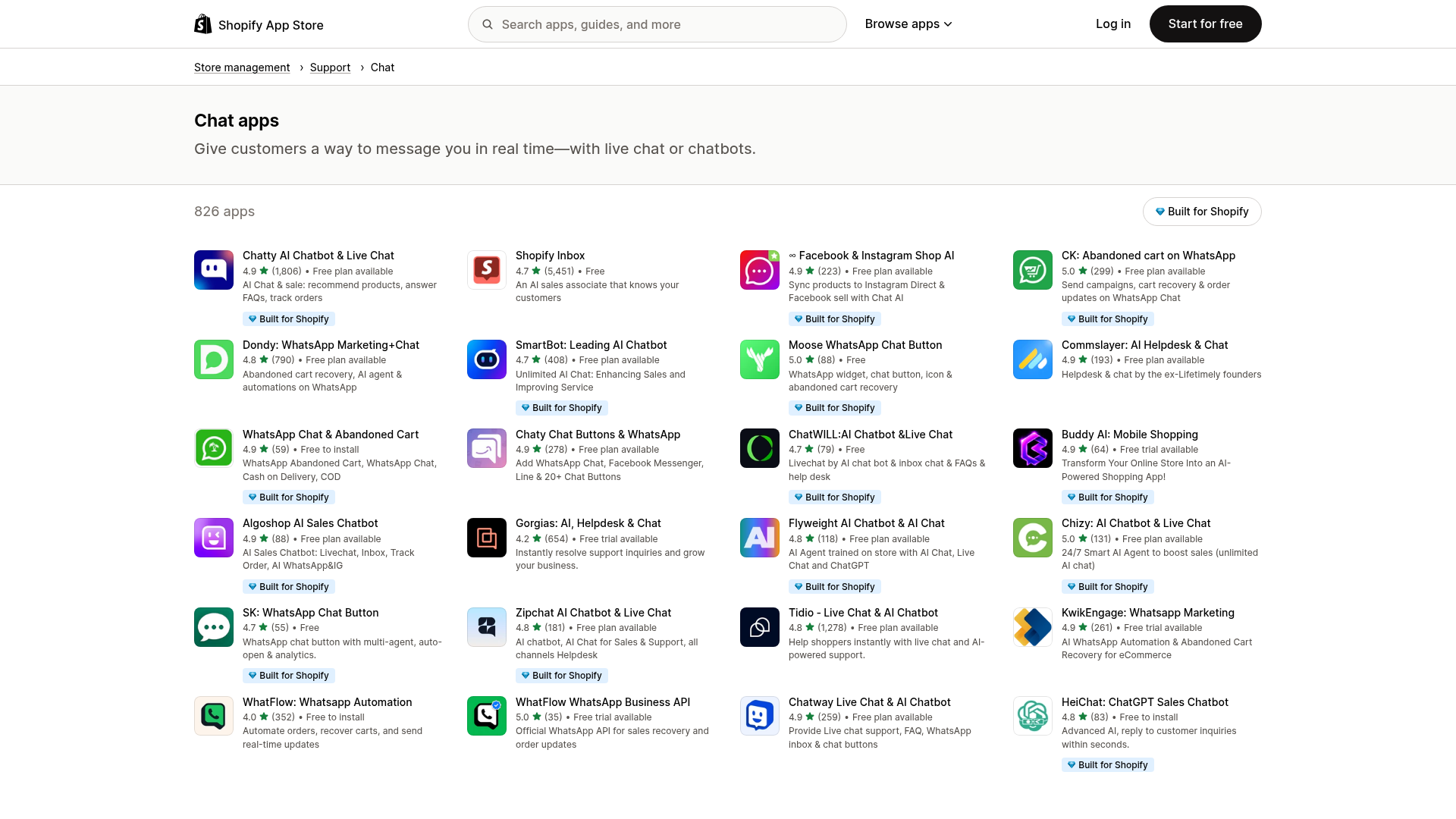
View Chatkit-style AI chatbot options on the Shopify App Store
SmartBot: Leading AI Chatbot
SmartBot is one of the strongest AI-first support chatbot options on Shopify in 2026. It is best for merchants who want unlimited-style AI chat positioning and do not want a ticket-heavy support stack.
SmartBot: Leading AI Chatbot stands out because it is built around the idea of handling high conversation volume with less billing friction. That positioning matters for stores that get a lot of repetitive traffic from ads, seasonal campaigns, or international shoppers asking the same questions in different ways.
When I tested apps in this category, one thing became obvious: merchants hate pricing that punishes success. If your AI bill spikes every time a campaign works, you stop trusting the tool. SmartBot's unlimited AI chat positioning is attractive because it feels more aligned with ecommerce reality.
- AI-driven support trained on products, FAQs, and policy pages
- Order status and shipping question automation
- Returns and product question handling
- Storefront widget designed specifically for Shopify
- Sales-support blend with product recommendation potential
- Free plan available
What is SmartBot best for?
SmartBot is best for small to mid-size stores that want a dedicated AI chatbot instead of a full support suite. It is a strong fit for brands that care more about quick automation than advanced internal support workflows.
I especially like this type of app for stores with moderate catalog complexity and lots of pre-sale questions. Beauty, apparel, gifts, supplements, and home goods stores often fit that profile well. Those merchants usually need product guidance and policy answers more than enterprise SLA dashboards.
What pain points does SmartBot solve?
SmartBot helps with slow first response times, support overload, and lost sales from unanswered pre-purchase questions. It also helps stores that want 24-7 coverage without hiring around the clock.
A common use case is ad-driven traffic landing on product pages after business hours. If a shopper asks about ingredients, sizing, shipping windows, or return terms and gets an instant answer, conversion odds improve. If they get silence, they bounce.
What edge cases should merchants consider?
SmartBot may not be enough on its own if your support process relies on multiple human agents, social channels, and strict escalation rules. It is not the best fit for large support teams that need a full omnichannel helpdesk.
Also, if your products require very nuanced advice, such as medical disclaimers, legal restrictions, or compatibility across dozens of variants, you should review every AI answer path carefully. No AI chatbot should be left unsupervised in high-risk categories.
Pricing
SmartBot offers a free plan available and paid tiers that can change over time. Its positioning is more about flat-fee AI support than convoluted usage billing.
My opinion: SmartBot is best for merchants who want AI support without helpdesk bloat. If your store is growing and you want something more AI-native than legacy live chat, it is one of the first apps I would test.
Tidio - Live Chat & AI Chatbot
Tidio is the best Shopify AI chatbot for merchants who want live chat plus AI in one platform. It is best for small and mid-size stores that still want humans to step in easily.

Tidio - Live Chat & AI Chatbot has been around long enough to feel mature, and that matters. In 2026, it is still one of the safest recommendations for merchants who want AI automation but do not want to lose the live chat experience customers expect.
Independent comparisons consistently place Tidio around 4.8 out of 5 stars with 1,300+ reviews. That review depth matters because it tells me the app has been tested across many store types, not just early adopters.
- Live chat + AI chatbot in one interface
- Lyro AI agent for FAQ and support automation
- Shopify-native integration with customer and order context
- Visual automation builder for workflows
- Cart recovery and lead capture options
- Free plan available
What is Tidio best for?
Tidio is best for stores that need a hybrid support model. The AI handles routine questions, and a human takes over when the conversation gets nuanced.
This is the setup I recommend most often because it matches how real ecommerce support works. Bots are great at repetitive tasks. Humans are better at exceptions, upset customers, custom requests, and high-value sales conversations. If you want more on that workflow, read my guide to Shopify chatbot human handoff strategies.
What pain points does Tidio solve?
Tidio solves the awkward gap between basic live chat and full AI automation. Many stores start with live chat only, then realize staff cannot cover evenings, weekends, or traffic spikes.
It also helps merchants who want to automate cart-related conversations without building custom flows from scratch. In my experience, the visual builder is useful for non-technical teams who still want some control over logic and routing.
What edge cases should merchants consider?
Tidio can become less ideal if your support operation is highly complex or if you need deep helpdesk reporting across many channels. It is powerful, but it is still optimized more for SMB ecommerce than enterprise support operations.
Another edge case is multilingual support with very niche product vocabulary. AI can handle a lot, but if your catalog has technical terminology or region-specific compliance language, you need to test the bot in each language separately.
Pricing
Tidio offers a free plan, with paid plans around $30/month for Basic and $60/month for Growth based on current comparisons. AI access and limits can vary by plan.
My opinion: Tidio is best for small stores that want flexibility. If you want one app that covers live chat, AI, and basic automation without overcomplicating your stack, it is hard to argue against.
Gorgias - AI, Helpdesk & Chat
Gorgias is the best AI chatbot for Shopify stores that need a full ecommerce helpdesk with AI built in. It is best for large brands, high-volume stores, and Shopify Plus merchants.
Gorgias - AI, Helpdesk & Chat is less about adding a chatbot widget and more about building a serious support operation. That distinction matters. If your store has multiple agents, social channels, returns workflows, and service-level expectations, a simple chatbot app will not be enough.
In my experience, Gorgias becomes compelling once support itself is a real department. At that point, AI is not just there to answer FAQs. It needs to classify tickets, draft responses, surface order data, and reduce agent workload at scale.
- Omnichannel helpdesk for email, chat, social, and SMS
- Deep Shopify integration with order and customer context
- AI Agent and AI Shopping Assistant capabilities
- Macros, rules, and workflow automation
- Reporting on resolution time, volume, and CSAT
- Starter pricing from about $10/month for low ticket volume
What is Gorgias best for?
Gorgias is best for support-heavy brands where chat is only one part of the customer service stack. It is ideal when you need coordination across agents and channels.
For example, if you are handling subscription issues, return exceptions, shipping delays, loyalty questions, and influencer order requests all in the same week, you need more than a storefront bot. You need structure. That is where Gorgias earns its reputation.
What pain points does Gorgias solve?
Gorgias solves support fragmentation, agent inefficiency, and lack of visibility across channels. It also helps larger brands avoid the common problem where the chatbot and helpdesk are disconnected systems.
That integration gap is a real issue. I have seen merchants install a chatbot that answers basic questions but cannot pass context into the actual support team. Customers hate repeating themselves. Gorgias is much better positioned to prevent that.
What edge cases should merchants consider?
Gorgias is probably not worth it unless you genuinely need helpdesk depth. Smaller stores can end up paying for complexity they never use.
It is also important to model cost against ticket volume. If your support volume is low and your team is tiny, a simpler chatbot tool may generate a better return. But if you are scaling fast, starting with the right system early can save a painful migration later.
Pricing
Gorgias starts from around $10/month for roughly 50 tickets, with pricing scaling by volume and additional AI capabilities. That makes it accessible at entry level, but the real value is for larger operations.
My opinion: Gorgias is best for serious support teams. I would not recommend it to every store, but for high-volume brands it is one of the strongest Shopify-native choices available.
What edge cases should merchants consider?
This app may be less suitable if your biggest issue is post-purchase support rather than product selection. A sales-first bot is not automatically a strong support desk.
You also need to watch recommendation quality. If your catalog tagging is messy or your product data lacks clear attributes, the AI's suggestions may feel generic. As with most Shopify AI tools, garbage in, garbage out still applies.
Pricing
Chatkit is commonly listed with a free plan or free core use, though merchants should confirm the latest pricing on the App Store.
My opinion: Chatkit is best for conversion-focused stores. If your goal is increasing product discovery and AOV instead of managing a full support queue, it is a smart app to test.
What is the best AI chatbot for Shopify in 2026?
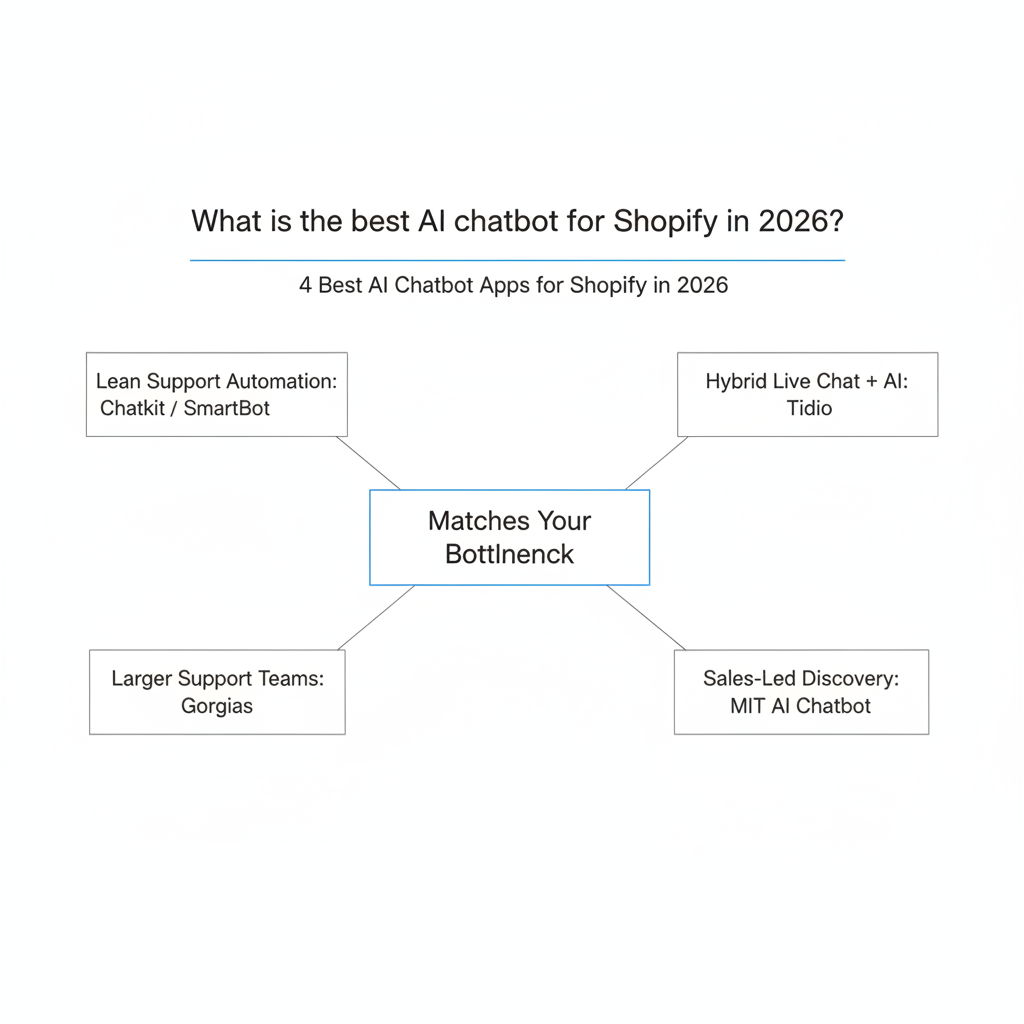
The best AI chatbot for Shopify in 2026 is the one that matches your store's actual bottleneck. For lean support automation, I would start with Chatkit-style AI-first tools or SmartBot. For hybrid live chat plus AI, Tidio is the safest all-around choice. For larger support teams, Gorgias is the strongest operational pick. For sales-led product discovery, Chatkit is the most interesting option here.
That is the honest answer. There is no single best app for every merchant. A beauty brand with 200 SKUs, a supplement store with compliance concerns, and a Plus merchant handling 5,000 monthly tickets should not use the same chatbot strategy.
How do these Shopify AI chatbot apps compare?
This quick comparison table shows the biggest differences between the four apps. Use it to narrow your shortlist before testing.
| App | Best For | Core Strength | Pricing | My Verdict |
|---|---|---|---|---|
| Chatkit AI Chatbot | Small to mid-size stores | AI-first support automation and Sales | Free plan available | Best starting point for lean teams and growing stores |
| SmartBot | Small to mid-size stores | Unlimited-style AI support positioning | Free plan available | Best for simple AI support without bloat |
| Tidio | SMBs wanting AI + live chat | Hybrid human and AI support | Free plan, paid from about $30/month | Best all-around option for most growing stores |
| Gorgias | Large and Plus merchants | Helpdesk and omnichannel support | From about $10/month for starter volume | Best for serious support operations |
How should you choose the right Shopify AI chatbot?
The right Shopify AI chatbot depends on whether your main goal is support deflection, sales assistance, or hybrid customer service. Start with the problem, not the app.
- If you get repetitive support tickets, start with Chatkit-style tools or SmartBot.
- If you want AI plus human takeover, start with Tidio.
- If you run a larger support team, shortlist Gorgias.
- If shoppers struggle to find the right products, test Chatkit first.
My final tip is simple: install one app, test it with real customer questions, and measure outcomes for 2 to 4 weeks. Track chat resolution rate, conversion impact, support ticket reduction, and whether customers still ask for a human. That tells you far more than feature lists do.
If you want to go further with AI visibility beyond on-site chat, read my guides on optimizing your Shopify store for AI shopping agents and getting your Shopify store into ChatGPT and AI search engines. In 2026, the merchants who win with AI are the ones who treat it as part of the whole storefront experience, not just a floating chat bubble.