
Selling gift cards on Shopify in 2026 is one of the simplest ways to add high-margin revenue without extra inventory, shipping, or fulfilment complexity. In my experience building Shopify apps and working with merchants across different niches, gift cards are still massively underused even though they are built into Shopify and can become a meaningful revenue channel when promoted properly.
The big opportunity is not just enabling gift cards. It is turning them into a visible, well-positioned product with strong design, clear denominations, seasonal campaigns, and smart on-site promotion. Current data suggests that fewer than 30% of Shopify stores actively sell or promote gift cards, while stores that do it well can generate 5-15% of annual revenue from gift cards alone.
In this guide, I will show you how I would approach gift cards on a Shopify store in 2026, from setup and design through to promotion, accounting considerations, and conversion optimisation.
Why should you sell gift cards on your Shopify store in 2026?
You should sell gift cards on Shopify because they create immediate cash flow, bring in new customers, and usually increase final order value when redeemed. They are one of the few products with no inventory risk and no shipping cost if you sell them digitally.
That combination is hard to beat. A customer buys a £50 or $50 gift card today, you receive the cash now, and the recipient often comes back later and spends more than the face value. Research cited across current 2026 gift card guides points to recipients spending around 40% more than the card value on average, which means a gift card can be worth more than its sticker price in actual revenue.
There is also a customer acquisition angle that many merchants miss. When someone gives your gift card to a friend, partner, colleague, or family member, you effectively gain a new shopper without paying for ads. That is one reason I see gift cards as part revenue play, part retention tool, and part low-cost acquisition channel.
Can you sell gift cards on Shopify without an app?
Yes, Shopify has native gift card functionality built in, and most stores can start without installing an app. You can create a gift card product directly in your Shopify admin and begin selling digital or physical gift cards.
To set it up, go to Products > Gift cards > Add gift card product in Shopify admin. Shopify’s own gift card documentation covers the basics, and it is worth reviewing if you are setting this up for the first time: Shopify gift card product help.
For most merchants, the native feature is enough to get started. You only need extra apps if you want more advanced personalisation, stronger merchandising, or promotional layers around the core gift card product.
How do I set up a high-converting gift card product page?
The best gift card product pages look and behave like strong product pages, not like a forgotten utility page. Your goal is to make buying a gift card feel easy, trustworthy, and suitable for gifting.
I have seen too many stores enable gift cards and then hide them behind a generic page with weak imagery and vague wording. That rarely works. In 2026, shoppers expect clear denominations, instant delivery messaging, and a polished visual presentation that matches the rest of your storefront.
What should your gift card product title and copy say?
Your title and copy should explain exactly what the customer is buying and how the recipient receives it. Keep it simple, direct, and reassuring.
A title like Digital Gift Card, Store Gift Card, or Email Gift Card usually works better than something overly creative. In the product description, explain that the card is delivered by email, can be redeemed at checkout, and can usually be used across multiple orders until the balance is exhausted.
If your region has expiry rules or legal requirements, state them clearly. This is also where you should mention any standout benefits such as instant delivery, ideal last-minute gift, and lets the recipient choose exactly what they want.
What denominations should you offer?
The best denomination mix usually covers entry-level, mid-range, and premium budgets without overwhelming the buyer. Most stores do well with 4-6 options.
A good starting point is something like £10, £25, £50, £100 or the equivalent in your store currency. If your average order value is higher, you can push that range upward. If your products are lower priced, include a smaller entry point so customers do not feel forced into spending too much.
In my experience, denomination choice should reflect your catalogue. If your average order value is £68, a £50 gift card makes sense as a popular middle option. If your average order value is £18, offering only £50 and £100 cards will suppress conversions.
Should you use buttons or dropdowns for denominations?
Use clickable denomination buttons where possible because they are faster to scan and usually convert better than dropdowns. Shoppers should understand the available values immediately.
This sounds minor, but small UX changes matter. A visible set of denomination buttons reduces friction and makes the page feel more like a polished gifting product. It also helps mobile users, where dropdowns can feel slower and less obvious.
How important are product images and design?
Design matters a lot because gift cards are emotional purchases. If your gift card looks generic, it feels generic.
Use branded imagery that fits your store’s style, colours, and audience. A jewellery brand should not use the same visual language as a pet accessories store. If you need inspiration, we have a separate guide on free gift card design templates for Shopify that can help you get a stronger starting point.
Also make sure your images are crisp and square enough to look good across devices. Accessibility matters too, so use descriptive alt text and avoid text-heavy images that are hard to read on mobile.
How do I create eye-catching gift card designs that actually sell?
The best gift card designs feel like part of your brand and make the purchase feel more thoughtful. A strong design increases perceived value even though the product itself is digital.
When I test storefronts, I often find that merchants treat gift cards as a technical feature rather than a merchandised product. That is a mistake. The design is what turns a practical item into something gift-worthy.
How should your gift card design match your brand?
Your gift card should look like it belongs in your store. Use your brand colours, typography, tone, and imagery so the page feels consistent.
This consistency builds trust. If the rest of your store looks premium and your gift card image looks like a stock template, customers notice. Brand alignment is one of the easiest ways to make the product feel more polished.
Should you create seasonal gift card designs?
Yes, seasonal and occasion-based designs are one of the easiest ways to increase relevance and conversion. They help shoppers buy faster because the card already feels suitable for the moment.
Create versions for occasions like birthdays, Christmas, Valentine’s Day, Mother’s Day, graduations, and thank-you gifts. If you sell heavily during Q4, this becomes even more important. Seasonal creativity can also support broader campaigns, especially if you already run holiday offers. If that is relevant to your store, see our guide to Christmas Shopify apps for ideas around seasonal merchandising.
Should you offer personalised gift cards?
Personalisation can increase conversion because it makes the gift feel less generic. Even a simple gift message option can improve the experience.
Letting customers add a recipient name or short message is often enough. You do not always need a complex custom builder. The main goal is to help the buyer feel they are giving something thoughtful rather than just sending store credit.
What is the best way to promote gift cards on a Shopify store?
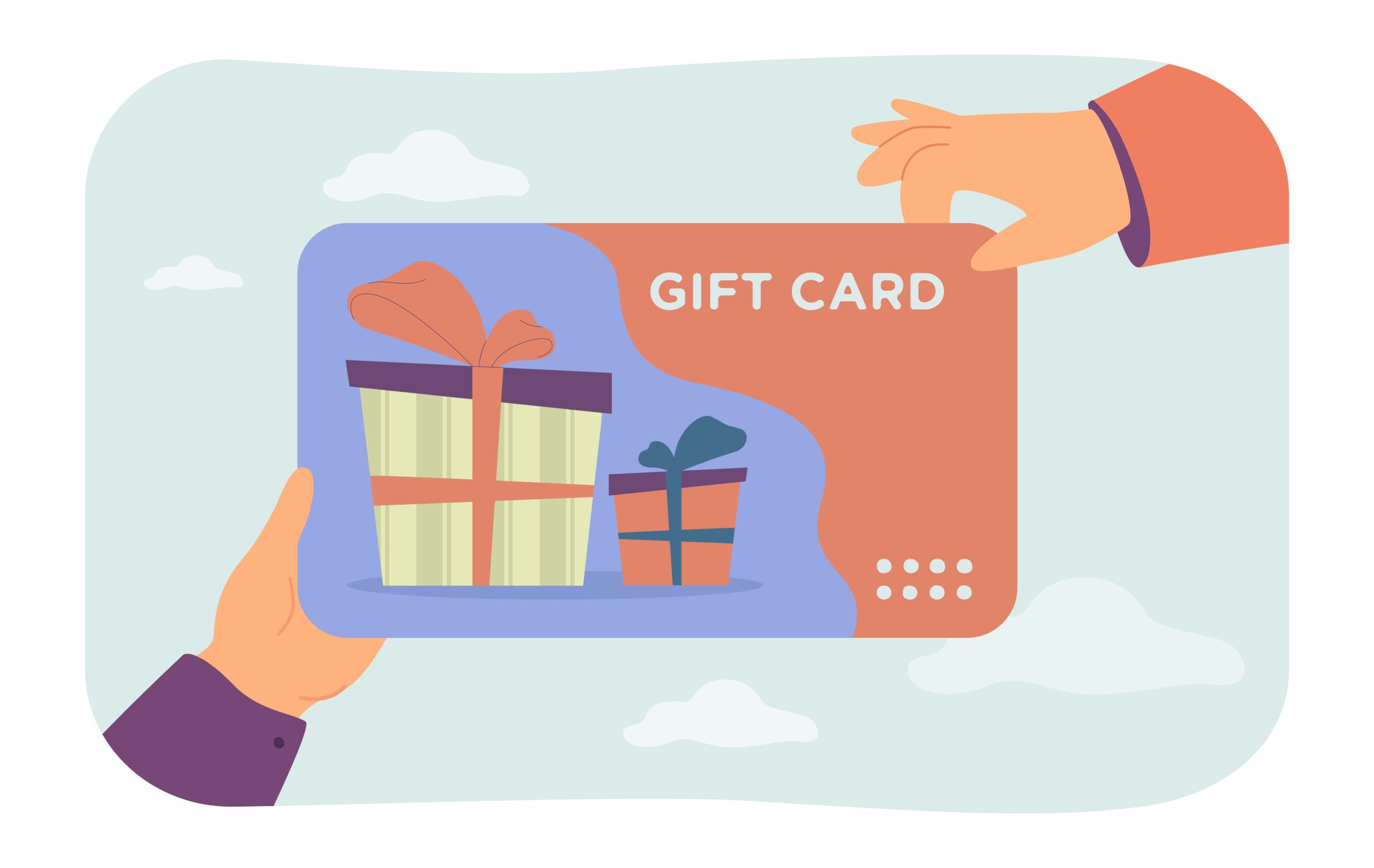
The best way to promote gift cards is to make them visible across your storefront, not just on a hidden product page. Stores using at least three promotion methods reportedly see 3-5x higher gift card sales than stores that simply enable the feature and leave it there.
This matches what I have seen in practice. Visibility is the real difference between stores that sell the occasional gift card and stores that build a reliable revenue stream from them.
Should gift cards be in your main navigation?
Yes, adding a gift card link to your main navigation is one of the simplest and most effective changes you can make. It signals that gift cards are a core product, not an afterthought.
If you only place gift cards in the footer, most customers will never see them. A main navigation link works especially well before major gifting periods. It also helps mobile users who are actively looking for a quick gift option.
Should you promote gift cards on the homepage?
Yes, your homepage is prime real estate for gift card promotion, especially during gifting seasons. A homepage banner or featured tile can drive a lot more clicks than a buried menu link.
This is still one of the most underused tactics I see on Shopify stores. If gift cards matter to your business, they should appear on the homepage during key periods like Christmas, Valentine’s Day, Mother’s Day, Father’s Day, graduation season, and Black Friday gifting campaigns.
Use concise copy such as Give the gift of choice, Instant email delivery, or Perfect last-minute gift. Keep the message benefit-led rather than technical.
Do announcement bars help sell gift cards?
Yes, announcement bars work well because they keep gift cards visible site-wide. They are particularly effective for seasonal urgency and bonus value offers.
I like announcement bars because they are lightweight and hard to miss. You can rotate messages such as Buy a £50 gift card, get £10 extra or Need a last-minute gift? Send a gift card instantly. The top-ranking 2026 content is right to emphasise this tactic because it consistently works.
Should you use pop-ups and cart upsells?
Yes, but use them carefully. Pop-ups and cart placements can lift gift card sales when the message is relevant and not too intrusive.
A cart drawer mention like Add a gift card for someone else while you shop can work well. So can exit-intent pop-ups during gifting periods. If you are already working on cart optimisation, our guide on how to upsell on Shopify covers broader tactics that pair nicely with gift card promotions too.
Which gift card promotions work best in 2026?
The best gift card promotions in 2026 are bonus value offers, BOGO-style campaigns, and seasonal urgency promotions. Bonus value offers are especially strong because they are easy to understand and often outperform standard percentage discounts.
According to the research you provided, bonus value promotions like buy $50, get $60 outperform percentage discounts by 40% in conversion rate and drive more than 50% of holiday gift card sales. That lines up with what I would recommend to merchants because the value is obvious at a glance.
What are the best promotional formats?
Use promotions that feel like a gift enhancement, not a clearance tactic. Gift card buyers respond well to simple, concrete offers.
- Bonus value: Buy £50, get £60
- Tiered bonus: Buy £100, get £15 extra
- BOGO: Buy one gift card for someone else, get a smaller one for yourself
- Seasonal urgency: Available this week only for Mother’s Day
- Corporate gifting bundles: Bulk gift card purchases for teams or clients
I would avoid overcomplicated mechanics. If a customer needs to read the offer twice, it is probably too complicated for a homepage banner or announcement bar.
When should you promote gift cards most heavily?
Gift cards sell best around major gifting occasions and last-minute shopping windows. Q4 is huge, but it is not the only opportunity.
Key periods include Christmas, Valentine’s Day, Mother’s Day, Father’s Day, graduation season, wedding season, and the final shipping cut-off before major holidays. Gift cards become especially attractive when physical delivery deadlines have passed. That is why messaging like Instant email delivery can convert extremely well in the final days before an event.
What is the difference between digital and physical gift cards on Shopify?
Digital gift cards are faster to deliver and easier to manage, while physical gift cards can feel more premium for certain brands. Most Shopify stores should start with digital gift cards first.
Digital gift cards have the obvious advantages: zero shipping cost, instant fulfilment, and no stock handling. For many DTC brands, that is enough. Physical gift cards can still work well if your audience values presentation, gifting rituals, or in-store redemption.
| Format | Best for | Advantages | Drawbacks |
|---|---|---|---|
| Digital gift cards | Most online-first Shopify stores | Instant delivery, no shipping, no inventory, easy to scale | Can feel less tangible if design and messaging are weak |
| Physical gift cards | Premium brands, retail stores, gifting-heavy sectors | More tangible, stronger presentation, useful in-store | Requires fulfilment, packaging, shipping, and stock management |
If you are unsure, launch digital first and validate demand. You can always add physical cards later if customers ask for them or if your brand positioning supports it.
How do gift cards increase revenue beyond the face value?
Gift cards increase revenue because recipients often spend more than the balance, and some balances are never fully redeemed. That makes them financially attractive even before you factor in customer acquisition.
The headline number many merchants remember is the 40% average overspend when a gift card is redeemed. If someone receives a £50 card and spends £70, your store captures an extra £20 that might not have happened otherwise. This makes gift cards useful not just as prepaid credit, but as a conversion trigger for larger baskets.
There is also the issue of breakage, which refers to unredeemed balances. Different markets and legal frameworks vary, so you should not build your strategy purely around this, but it is one reason gift cards can be commercially attractive. If you want accounting-specific guidance, this article from Amaka on Shopify gift cards and accounting is a useful starting point.
How should you measure gift card performance?
You should track gift card sales like a proper revenue channel, not a side feature. The key metrics are sales volume, redemption rate, overspend, and repeat purchase behaviour.
In practical terms, I would monitor the following every month:
- Total gift card revenue
- Number of gift cards sold
- Top-performing denominations
- Redemption rate
- Average order value on redemption
- Overspend beyond face value
- New customer rate from gift card redemptions
- Repeat purchase rate after redemption
This is where gift cards become more strategic. The first sale matters, but the real upside is whether recipients turn into repeat buyers. If they do, your gift card programme is doing more than generating cash flow. It is feeding your retention engine.
What mistakes stop Shopify gift cards from selling?
The biggest mistakes are poor visibility, generic design, weak copy, and no promotional strategy. Most stores do not fail because gift cards are a bad fit. They fail because customers barely notice them.
Here are the most common issues I see:
- No main navigation link
- No homepage promotion
- Only one or two denomination options
- Generic or low-quality imagery
- No seasonal campaigns
- Vague product descriptions
- No mention of instant delivery
- No testing of bonus value offers
Another mistake is treating gift cards as something you only mention at Christmas. They are useful year-round. Birthdays, thank-you gifts, staff rewards, and last-minute gifting all create demand outside Q4.
Do you need apps to improve gift card sales on Shopify?
No, but apps can help if you want stronger merchandising, upselling, or on-site visibility. Native Shopify gets you started, while apps can improve how often customers actually see and buy gift cards.
For example, if you want to promote gift cards through cart upsells or post-add-to-cart offers, an upsell app can help. My own app SellUp is designed around upsells and product recommendations, and while it is not a dedicated gift card app, this kind of placement can support gift card visibility in the right context.
If your strategy includes urgency messaging around gifting deadlines, a timer app can also help. My app Delivery Timer is more focused on delivery messaging, but stores often use deadline-based urgency and on-site messaging together during gift-heavy periods.
For social proof around gifting products, reviews can also help. A reviews app like Lumo Reviews can reinforce trust if you collect positive feedback on the gift card experience itself.
What is my recommended gift card strategy for most Shopify stores?
The best gift card strategy for most Shopify stores is simple: enable gift cards, optimise the product page, make them visible site-wide, and run bonus value campaigns around key gifting dates. You do not need a complicated funnel to start seeing results.
If I were setting this up from scratch for a typical DTC store, this is the checklist I would follow:
- Create a polished digital gift card product in Shopify admin
- Use branded imagery and benefit-led copy
- Offer 4-6 sensible denominations based on your average order value
- Add gift cards to main navigation
- Feature them on the homepage during gifting periods
- Use an announcement bar with rotating gift card messages
- Test bonus value promotions such as buy £50, get £60
- Promote heavily near shipping cut-off dates
- Track redemption and overspend monthly
- Review seasonal performance and repeat what worked
That approach is practical, measurable, and aligns well with what is ranking in 2026 while still being realistic for smaller merchants.
Are gift cards worth it for small Shopify stores?
Yes, gift cards are especially worth it for small Shopify stores because they are low-risk, easy to launch, and can create revenue without adding operational burden. In many cases, they are one of the easiest new products a small merchant can introduce.
Small stores often assume gift cards are only for big brands, but I think the opposite is often true. If your team is small and your margins matter, a zero-inventory, zero-shipping digital product is extremely attractive. It is also a useful fallback product for last-minute shoppers who may not trust shipping timelines close to a holiday.
If your store already sells products that work well as gifts, gift cards are an obvious extension. If you also sell bundles or curated sets, you may want to pair this strategy with our guide to creating custom gift sets in your Shopify store.
Final thoughts on selling gift cards on Shopify in 2026
Gift cards are not just a convenience feature. They are a real revenue lever. The stores that do best with them in 2026 are the ones that merchandise them properly, promote them consistently, and treat them as part of a broader retention and acquisition strategy.
In my experience, the biggest wins usually come from a few straightforward changes rather than anything technically complex. Better design, stronger visibility, smarter promotions, and more deliberate seasonal timing can turn gift cards from a hidden admin feature into a meaningful part of your Shopify growth strategy.
If you have not reviewed your gift card setup recently, now is a good time. Shopify gives you the foundation. The upside comes from how well you market it.