The Power of Intent Based Product Titles for Shopify Stores

· Updated
15 min read
The Power of Intent Based Product Titles for Shopify Stores
Table of Contents

TL;DR

Intent based product titles help Shopify stores rank and convert by matching the real language shoppers use when they are close to buying. The best titles combine the product type with a strong modifier such as audience, problem, material, or occasion, then use Shopify’s SEO title field to improve search visibility without hurting on-page branding. Start with your top products, use Search Console and autocomplete for research, and measure changes in CTR, conversion rate, and revenue.

Intent based product titles help Shopify stores rank for the searches that actually lead to sales. When your titles match what shoppers mean, not just what they type, you usually get better click-through rates, more qualified traffic, and higher conversion rates.

In my experience building Shopify apps and working with merchants across product pages, upsells, reviews, and merchandising, product titles are one of the most underused SEO levers in ecommerce. Most stores either keep titles too vague for Google, or stuff them with keywords until they look robotic. The sweet spot sits in the middle: clear, commercially relevant, human-readable titles that reflect real buying intent.

This guide explains what intent based product titles are, why they matter more in 2026, how to write them properly in Shopify, and how to test whether they are improving traffic and revenue.

What are intent based product titles?

Intent based product titles are product titles written to match the reason a shopper is searching. Instead of naming a product too broadly, they reflect the problem, use case, audience, attribute, or purchase context behind the query.

A generic title like “Face Cream” tells Google and shoppers almost nothing. A title like “Hydrating Hyaluronic Acid Face Cream for Dry Skin” signals what the product is, who it is for, and why someone might buy it. That is the core idea.

Search intent usually falls into a few buckets. For Shopify product pages, the most important are commercial intent and transactional intent. These are the searches from people comparing options, narrowing choices, or getting ready to buy.

  • Informational intent - “how to clean suede trainers”
  • Commercial intent - “best suede trainers for winter”
  • Transactional intent - “buy waterproof suede trainers men”
  • Navigational intent - “Nike Air Max official store”

For product titles, you are usually optimising for the middle two. That is where purchase intent is strongest.

Why do intent based product titles matter for Shopify SEO?

Intent based titles matter because Google ranks pages that satisfy the search, not pages that simply repeat keywords. On Shopify stores, the product title often influences the page title, internal search relevance, collection page context, and how the result appears in search.

Google has become much better at understanding meaning, modifiers, and product-specific language. That means a product page with a title aligned to a shopper's need has a stronger chance of earning clicks than a vague or over-branded title. In practical terms, matching intent improves relevance, and relevance is what gets you shown.

It matters on Shopify itself too. Many themes, filters, predictive search features, and search apps use product title text heavily. So a stronger title can improve both organic search visibility and on-site discovery.

If you are also working on broader store SEO, I covered the research side in Keyword Research SEO Techniques for Shopify Stores. Product titles are where that keyword work becomes commercially useful.

How can intent based product titles increase sales?

Intent based product titles increase sales by bringing in better traffic and reducing hesitation on the product page. They pre-qualify the click by telling shoppers they are in the right place.

That sounds simple, but the effect can be significant. If someone searches for “vegan leather minimalist wallet for women” and lands on a product with that exact positioning in the title, the page feels immediately relevant. If the title just says “Slim Wallet”, the shopper has to do more work to confirm fit, material, and audience.

In my experience, title improvements usually help in three ways:

  1. Higher click-through rate from search results because the listing looks more relevant
  2. Lower bounce rate because the page matches what the shopper expected
  3. Better conversion rate because the product is framed as a solution, not just an item

I have seen this especially on gift stores, skincare, apparel, supplements, and accessories. These are categories where modifiers like for men, for dry skin, gift for her, travel size, or organic cotton change both the search intent and the likelihood of purchase.

When you combine a stronger title with a better product page layout, the gains compound. If that is your next step, read Free Shopify Blueprint for Higher-Converting Product Detail Pages (PDP) and How to Maximize Revenue from Your Shopify Product Pages: The Ultimate Guide.

What is search intent in ecommerce?

Search intent in ecommerce is the reason behind a product-related search. It tells you whether the shopper is researching, comparing, buying for a specific use case, or looking for a gift, feature, or audience fit.

Understanding this is what separates a title that looks descriptive from one that actually performs. A lot of merchants focus only on the noun, like “necklace”, “trainer”, or “planner”. But intent usually sits in the modifiers around the noun.

Gift keywords are high intent e.g “Gifts for her”

For example, these modifiers often reveal intent:

  • Audience - for women, for toddlers, for runners
  • Problem - for dry skin, for back pain, for small spaces
  • Occasion - wedding guest, birthday gift, Mother’s Day
  • Attribute - waterproof, organic, personalised, hypoallergenic
  • Format - travel size, refillable, extra large, bundle
  • Urgency or purchase framing - buy, best, affordable, same day

Google increasingly rewards pages that satisfy the intent quickly and clearly. That applies to titles, descriptions, structured data, and the body copy on the page. It is also relevant for AI search experiences and answer engines, where pages need to be explicit about what the product is for. I wrote more on that here: How to Optimize Your Shopify Store for AI Shopping Agents (Not Just Google).

What is the best format for an intent based product title?

The best format is usually Brand + Primary Product Type + Key Modifier + Use Case or Audience. It gives Google the context it needs while staying readable for shoppers.

There is no universal formula, but this structure works well across most Shopify stores:

Brand + Product + Attribute + Audience/Use Case

Here are a few examples:

  • GlowNaturals Hyaluronic Acid Face Cream for Dry Skin
  • UrbanThread Organic Cotton T-Shirt for Everyday Wear
  • Oak & Ash Personalised Leather Wallet Gift for Him
  • NordTrail Waterproof Hiking Backpack 30L for Day Trips

The important thing is not to force all elements into every title. If your brand is unknown, the product type and modifier may matter more. If your brand is strong, leading with it can still work. The aim is clarity first, completeness second.

Which words signal stronger buyer intent?

Words that narrow the product to a specific need usually signal stronger intent. These include audience terms, problem-solving phrases, material descriptors, fit, size, and occasion-based modifiers.

Examples of useful intent modifiers include:

  • for dry skin
  • for sensitive skin
  • gift for her
  • for small kitchens
  • vegan
  • waterproof
  • extra wide fit
  • travel size
  • personalised

These modifiers often have lower search volume than broad head terms, but they tend to convert better because the shopper is further along in the buying journey.

How do I create intent based product titles in Shopify?

The best way to create intent based product titles in Shopify is to research real search phrases, map them to each product, and then use Shopify’s title and SEO fields strategically. In most cases, you should optimise both the visible product title and the search listing title.

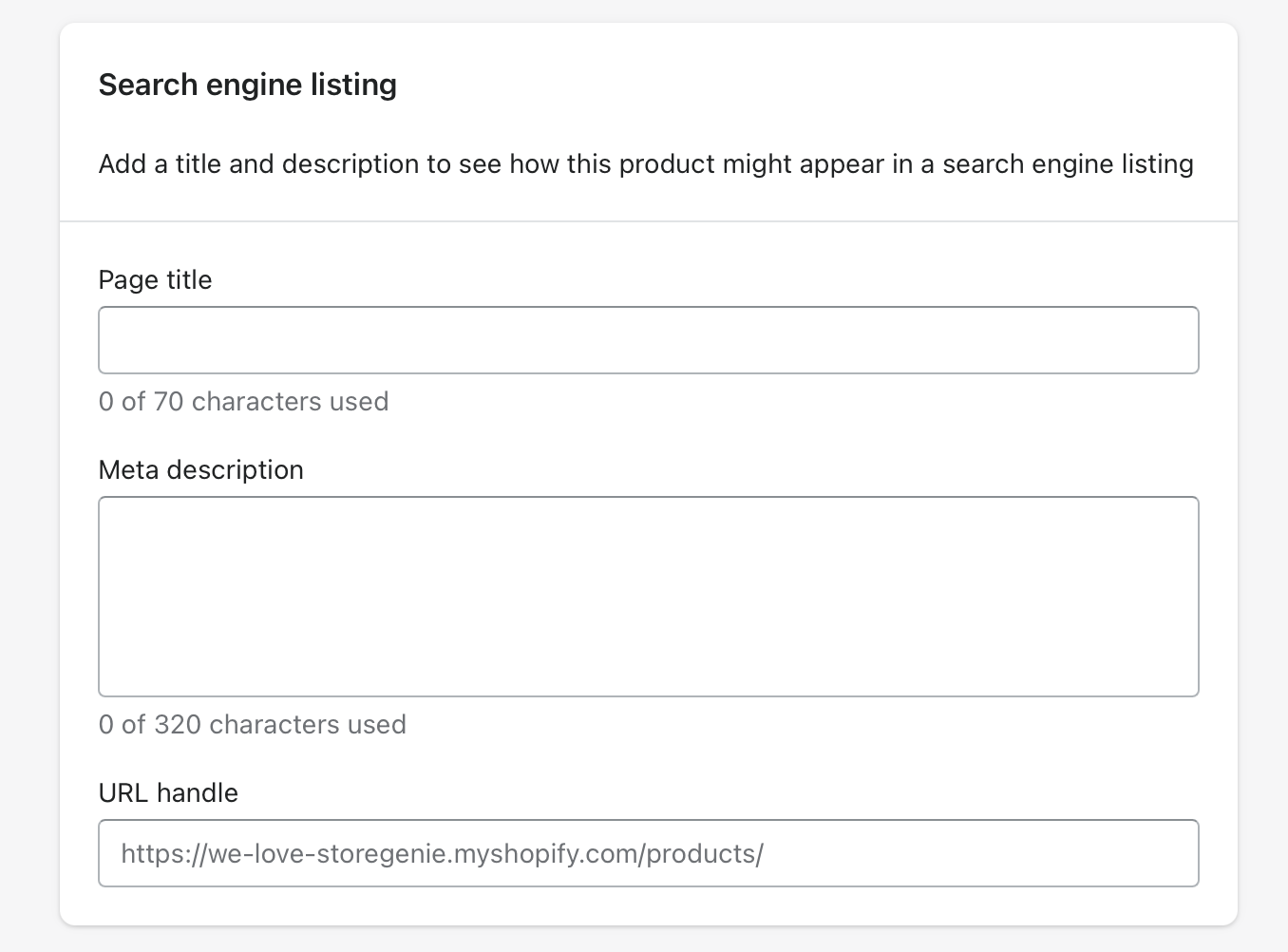
Shopify lets you edit the product title and the search engine listing preview title separately. That gives you flexibility. You can keep the on-page title brand-friendly while making the SEO title slightly more search-oriented.

  1. Start with the product’s core noun - what is it actually?
  2. Add the strongest intent modifier - who is it for, what problem does it solve, or what key attribute matters most?
  3. Check Google autocomplete and related searches for real phrasing
  4. Review Shopify Search Console data if you already have impressions for the product
  5. Edit the product title for clarity and on-page conversion
  6. Edit the SEO title in the search engine listing preview for SERP performance
  7. Keep it readable and avoid cramming in every keyword

Shopify’s own guidance on SEO fields is here: adding keywords to your Shopify store. I also recommend using Google Search Console and Google Keyword Planner for query ideas. If you want more depth, tools like Ahrefs Keywords Explorer can help surface long-tail variants and parent topics.

As a rule of thumb, your SEO title should usually stay around 50-60 characters if you want to avoid truncation in many search results. That is not a hard limit, but it is a useful target.

intent based product titles

Should my Shopify product title and SEO title be different?

Yes, sometimes they should be different. Your visible product title should support conversion and brand presentation, while your SEO title should support search relevance and click-through rate.

This is one of the easiest wins on Shopify because many merchants leave the SEO title untouched. By default, Shopify often uses the product title, but you do not have to accept that if a slightly adjusted SEO title would better match intent.

Field Primary job Best practice Example
Product title On-page clarity and merchandising Readable, branded, useful for shoppers GlowNaturals Hyaluronic Acid Cream
SEO title Search visibility and SERP clicks Lead with the searched phrase and intent modifier Hyaluronic Acid Face Cream for Dry Skin | GlowNaturals

When I test title changes, I usually keep the difference subtle. You do not want the page to feel inconsistent. But using the SEO title field properly can help you target higher-intent search phrasing without harming your on-page branding.

How do I research intent for product titles?

The best intent research comes from combining search data, customer language, and competitor analysis. Do not rely on keyword tools alone. Your customers often reveal better wording in reviews, support tickets, and on-site search data.

Here is the process I recommend:

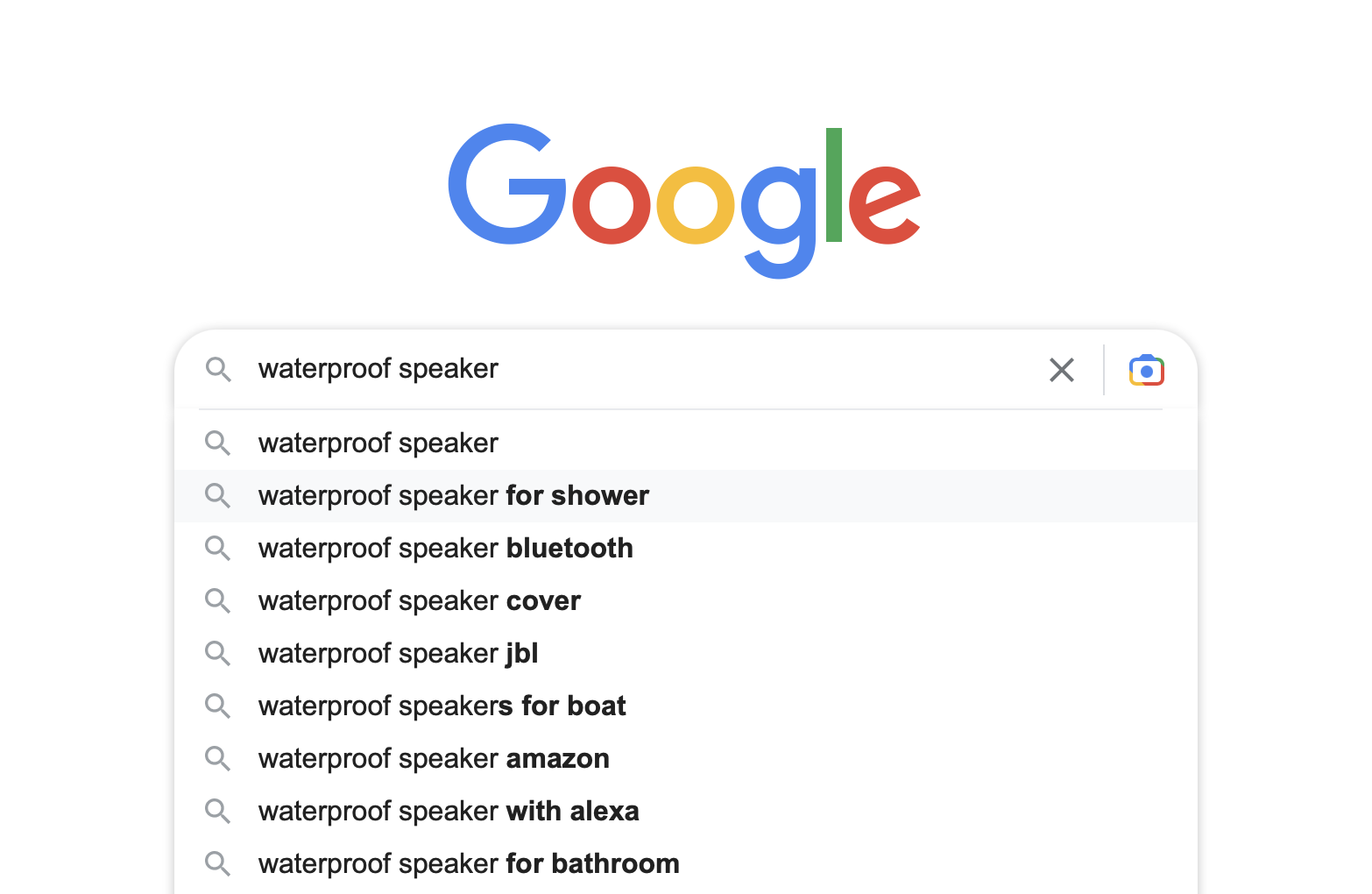
Autocomplete shows how real people refine a product search. It is one of the fastest ways to spot use cases, audience terms, and commercial modifiers.

Type your product category into Google and note the suggestions. Then scroll to related searches and People Also Ask. Even if the PAA questions are broad, they often reveal how shoppers think.

2. Review Search Console queries

Search Console tells you which phrases already trigger impressions. This is often the best source because it reflects your actual site, not a generic database.

If a product page is already getting impressions for a phrase that is not reflected in the title, that is usually a strong optimisation opportunity.

3. Use customer language from reviews and support

Customers describe products in practical terms. They mention fit, comfort, occasion, gifting, skin type, and use cases that merchants often forget to include.

If you collect reviews with Lumo Reviews style prompts or any review app, look for repeated phrases. The same applies to customer support notes. In my own app work, I have seen support conversations reveal better title language than keyword tools do.

4. Analyse competing product pages

Competitor titles can show how the market frames intent, but do not copy them blindly. Look for patterns in modifiers, not exact wording.

For example, if every top-ranking product page in a niche includes “for sensitive skin” or “non-toxic”, that tells you those qualifiers matter commercially and algorithmically.

What are good and bad examples of intent based product titles?

Good titles make the product specific, useful, and easy to understand at a glance. Bad titles are vague, stuffed, or focused on internal naming rather than customer language.

Poor title Better intent based title Why it is better
Face Cream Hyaluronic Acid Face Cream for Dry Skin Adds ingredient, use case, and audience need
Wallet Personalised Leather Wallet Gift for Him Adds material, gifting context, and target buyer
T-Shirt Organic Cotton Unisex T-Shirt for Everyday Wear Adds material, fit context, and use case
Backpack Waterproof 30L Hiking Backpack for Day Trips Adds capacity, feature, and intended use
Silver Necklace Style 14B Sterling Silver Heart Necklace Gift for Her Removes internal naming and adds buying intent

A good test is this: if someone saw only the title in Google, would they know what the product is, who it is for, and why it might fit their need? If not, the title probably needs work.

What mistakes should Shopify stores avoid?

The biggest mistakes are being too generic, overusing keywords, and ignoring how shoppers actually search. A title can be SEO-friendly without sounding unnatural.

These are the most common issues I see:

  • Titles that are too short - “Planner”, “Ring”, “Moisturiser”
  • Keyword stuffing - “Women’s Bag Leather Bag Tote Bag Shoulder Bag Fashion Bag”
  • Internal product codes in titles - useful for operations, bad for search
  • Leading only with brand when the brand has no search demand
  • Ignoring modifiers like size, audience, material, or use case
  • Using the same title pattern for every product without checking intent differences

Google does not reward awkward repetition. It rewards clarity and relevance. If your title reads like it was written for a spreadsheet rather than a human, rewrite it.

How do I test whether intent based titles are working?

You can test intent based titles by tracking impressions, click-through rate, ranking movement, bounce rate, and conversion rate before and after changes. Do not judge title changes only by rankings.

In practice, I recommend changing titles in batches by category so you can compare similar products. Give Google time to recrawl, and then measure:

  • Search impressions in Google Search Console
  • Organic click-through rate
  • Average position for key queries
  • Product page conversion rate
  • Bounce or engagement metrics
  • Revenue per session from organic traffic

If you want to go further, test title changes alongside product page improvements such as reviews, FAQs, and upsells. That gives you a more realistic picture of commercial impact. For that side of the funnel, these may help: Enhancing Your Shopify Product Page Conversion Rate: 6 Effective Strategies and Shopify Upsell on the Product Page: Best Methods, Apps and Setup Tips for 2026.

Do intent based titles help with AI search and shopping agents?

Yes, they do. AI search systems and shopping agents rely on explicit product context, and intent based titles make that context easier to extract.

Large language models, AI overviews, and shopping assistants are better than old search engines at understanding semantics, but they still benefit from structured clarity. A title that states the product type, audience, and use case is easier to classify, cite, and recommend than a vague title full of branding or style names.

This matters even more if your products have multiple variants or niche use cases. Clear titles support structured data, product feeds, and answer engine extraction. In other words, intent based titles are not just good for Google blue links. They are increasingly useful across modern discovery channels.

The best workflow is to group products by category, define title templates, enrich them with intent modifiers, and then review manually before publishing. This keeps things scalable without making titles sound mass-produced.

Here is the workflow I would use on a real store:

  1. Export all products and group them by category
  2. Identify the core noun for each category
  3. List high-intent modifiers by audience, problem, occasion, and attribute
  4. Create 2-3 title templates per category
  5. Apply templates carefully, not blindly
  6. Manually review top sellers and high-margin products first
  7. Update SEO titles where SERP phrasing should differ
  8. Monitor results for 4-8 weeks before wider rollout

If you are using AI to help with this, keep a human in the loop. AI is great for generating variants, but weak prompts often produce bloated or generic titles. If you want help structuring AI-assisted product content, read How to Generate Powerful Shopify Product Descriptions Using AI.

Are intent based product titles worth it for every Shopify store?

Yes, for most stores they are worth it, especially if you rely on organic traffic or have a large catalogue. The biggest wins usually come from stores with generic titles, poor category naming, or products bought for specific use cases.

The stores that benefit most tend to be:

  • Gift stores
  • Beauty and skincare brands
  • Fashion and apparel stores
  • Home and kitchen stores
  • Health and wellness brands
  • Accessory and lifestyle stores

If you only have a tiny catalogue and most of your traffic is branded, the impact may be smaller. But even then, stronger titles improve clarity on the page and in social previews, feeds, and internal search.

My honest view is this: intent based product titles are one of the highest-leverage low-cost SEO improvements on Shopify. They do not require a redesign, a new app, or a huge budget. They just require better thinking about how customers search.

How should you start today?

Start with your top 20 product pages by traffic or revenue and rewrite those titles first. That gives you the fastest feedback and avoids turning this into a giant catalogue project.

For each product, ask:

  • What would a ready-to-buy shopper actually search?
  • What modifier matters most: audience, problem, occasion, material, or size?
  • Does the title clearly describe the product in plain English?
  • Should the SEO title differ slightly from the visible product title?

Then publish, monitor, and refine. Title optimisation is rarely a one-off task. It is an ongoing merchandising and SEO process.

In my experience building for Shopify merchants, the stores that win organic traffic consistently are not always the ones with the biggest budgets. They are the ones that describe products in the language customers already use. That is really the power of intent based product titles.

Share this article

Related Articles