
Showing an estimated delivery date on your Shopify store is one of the simplest ways to reduce hesitation, set clear expectations, and improve conversion rate. In 2026, shoppers expect to know when an order will arrive before they buy, not after they reach checkout.
As someone who builds Shopify apps and spends a lot of time analysing what actually helps merchants convert, I can tell you this is not just a cosmetic tweak. Estimated delivery messaging answers one of the biggest pre-purchase questions immediately, and that often means fewer support tickets, fewer abandoned carts, and more confident buyers.
This guide covers what estimated delivery dates are, why they matter, how Shopify's native delivery expectations work, when to use code versus an app, and how to implement this properly on product pages, cart pages, checkout, and notifications.
What is an estimated delivery date on Shopify?
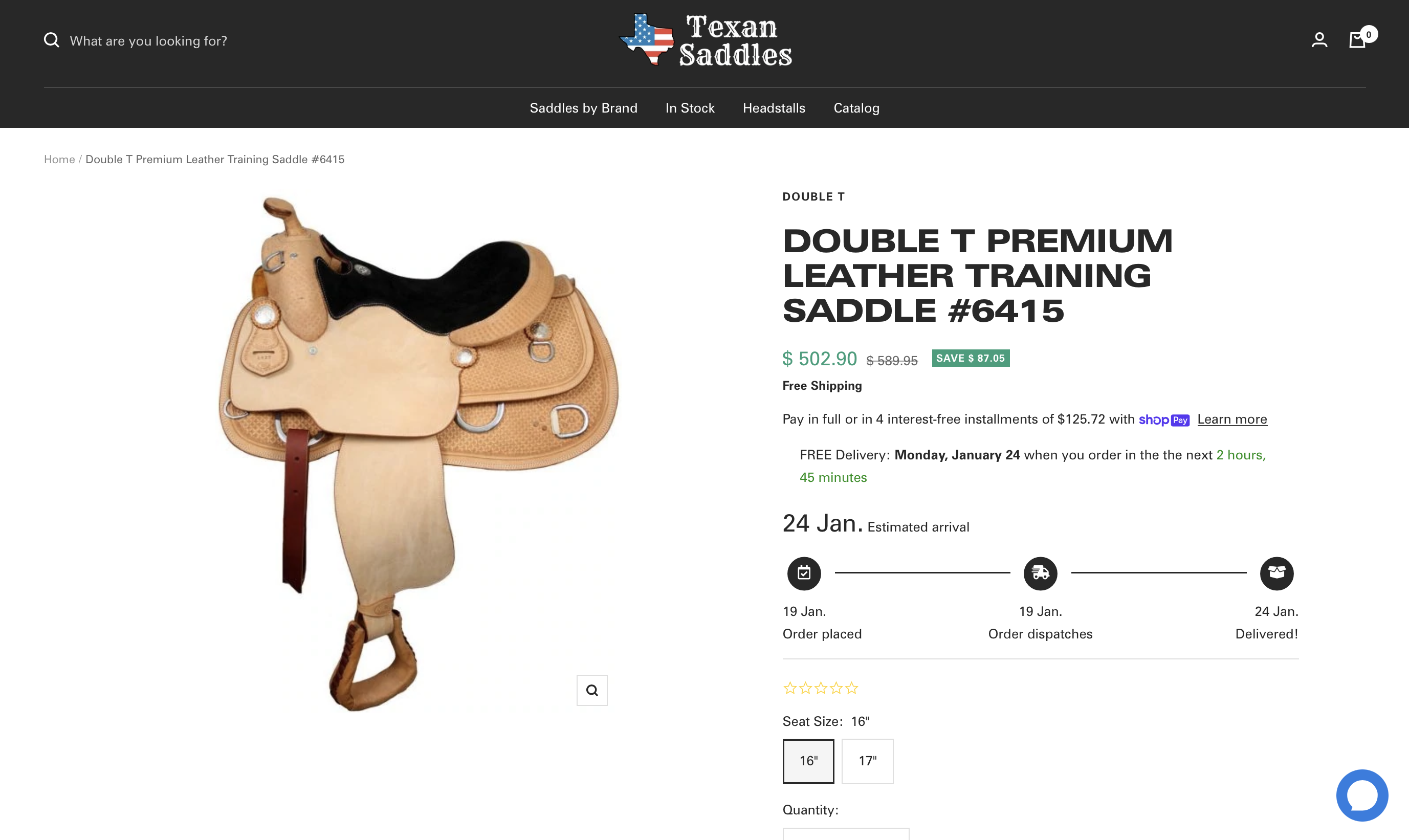
An estimated delivery date is the date or date range a customer can expect to receive their order. On Shopify, this can be shown using Shopify's built-in delivery expectations, custom theme code, or a dedicated app.
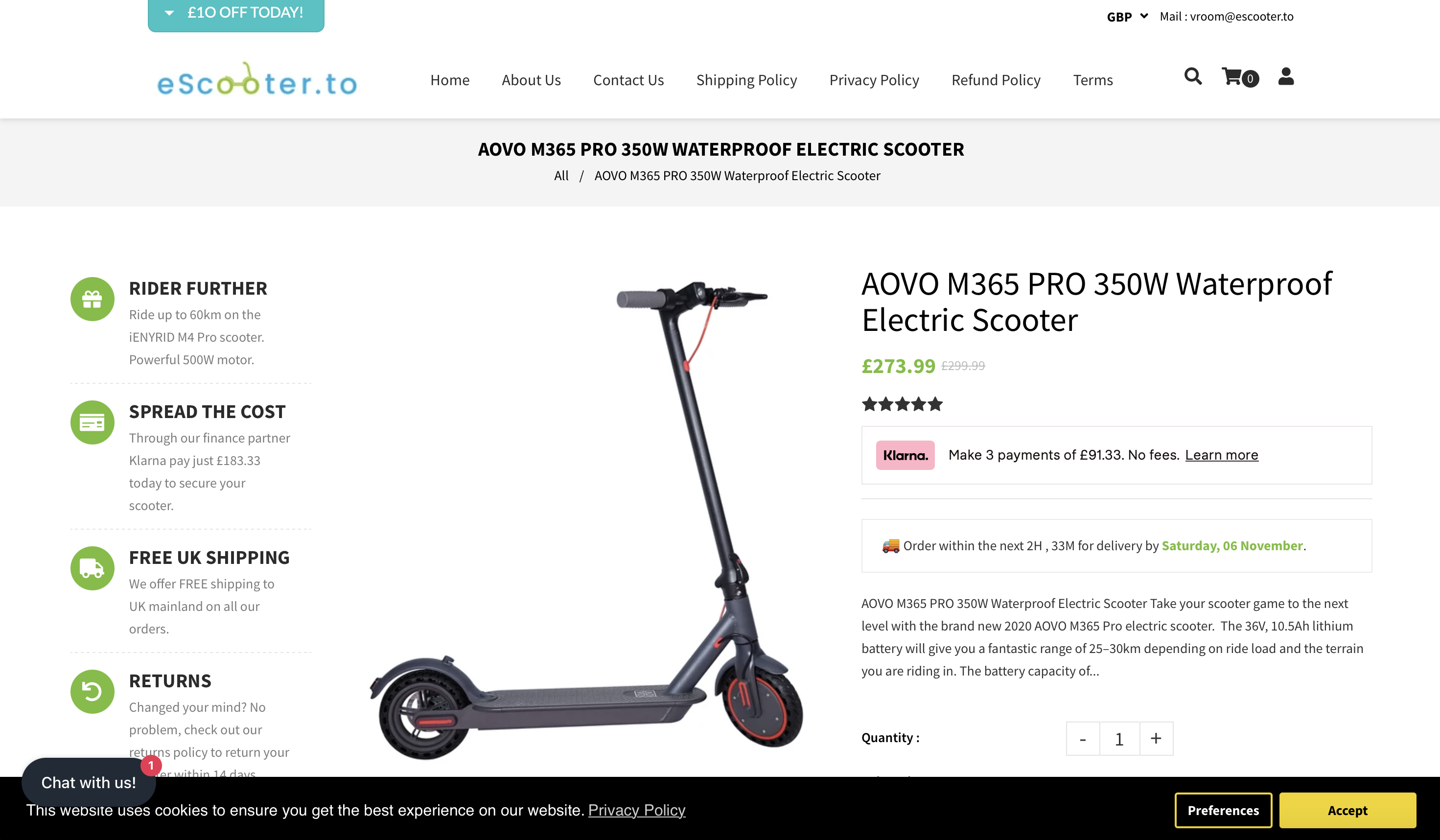
In practical terms, the estimate usually combines processing time and carrier transit time. So if you need 2 business days to pack an order and your shipping service usually takes 3 to 5 days, your customer might see something like Estimated delivery: 12 May - 15 May.
This matters because shoppers do not just compare price any more. They compare certainty, speed, and clarity. If one store tells them exactly when to expect the order and another leaves them guessing, the clearer store often wins.
Why should I show estimated delivery date on my Shopify store?
You should show estimated delivery dates because it helps customers decide faster and with more confidence. Clear delivery information reduces friction and makes your store feel more trustworthy.
The original version of this article was right to point at Amazon. Amazon trained customers to expect delivery clarity, and that expectation now applies to independent Shopify stores too. You do not need Amazon's fulfilment network, but you do need to communicate your timelines clearly.
In my experience building Shopify apps, merchants often focus heavily on product pages, reviews, and upsells while leaving delivery messaging vague. That is a mistake. Delivery confidence is conversion optimisation, especially for gifts, seasonal products, made-to-order items, and any store with longer fulfilment windows.
Shopify itself now leans into this with its own delivery expectations documentation. That tells you a lot about where merchant demand has gone. This is no longer a nice-to-have feature.
What are the benefits of showing estimated delivery dates?
The main benefits are higher conversions, fewer customer support queries, and better expectation management. It also helps reduce post-purchase frustration because customers know what to expect before they buy.
Do estimated delivery dates increase conversions?
Yes, they often do. Showing a realistic delivery estimate removes uncertainty at the exact moment a shopper is deciding whether to add to cart or check out.
The original article mentioned conversion uplift, and that still holds up. More recent ecommerce research continues to show that unclear shipping timelines contribute to abandonment. If a visitor cannot quickly understand when an item will arrive, they are more likely to postpone the purchase or compare another store.
When I have tested product page UX elements across Shopify stores, delivery messaging near the add to cart button consistently performs better than burying shipping details in a separate policy page. It is the same principle I talk about in How to Maximize Revenue from Your Shopify Product Pages. Put the important buying information where the decision happens.
Can estimated delivery dates reduce support tickets?
Yes, especially the classic "Where is my order?" and "When will this ship?" questions. Pre-purchase clarity reduces post-purchase confusion.
This is particularly useful for stores selling personalised goods, handmade products, print on demand items, or anything with a production lead time. If your fulfilment takes 3 to 7 days before dispatch, you need to say that clearly. Otherwise, customers assume Amazon-like dispatch speed and contact support when their assumptions are not met.
If you sell custom products, you should also read How to Track Customized Orders in Shopify and How to Add a Rush Order or Production Option to Your Shopify Store. Those workflows pair really well with estimated delivery messaging.
Does it help manage customer expectations?
Absolutely. Expectation management is the real win, even more than speed itself.
Not every merchant can offer next-day shipping, and most do not need to. What customers really want is honesty. If a necklace is handmade and ships in 5 business days, say that. If a print on demand item takes longer during peak season, show a date range that reflects reality.
That is also why I always recommend merchants avoid overly aggressive promises. A slightly conservative estimate is usually better than a flashy but unreliable one.
How does Shopify's built-in estimated delivery feature work?
Shopify can show delivery dates using its delivery expectations settings. This lets merchants display either automated delivery dates based on shipping performance or manual delivery dates based on fulfilment and transit times.
This is one of the biggest gaps in older articles on this topic. Shopify now has a more mature native approach than it used to, and if your store setup fits the requirements, it is often the best place to start.
According to Shopify's help docs, fulfilment time is the time between order placement and handing the shipment to the carrier. Delivery estimates are then calculated from that plus transit time. You can read the official setup guides here:
In short, Shopify's native tools are best for merchants who want checkout-level accuracy and already have reasonably structured shipping settings. If your shipping setup is messy, or you need more visual control on product pages, an app or custom code may still be better.
What is the difference between automated and manual delivery dates in Shopify?
Automated delivery dates use Shopify's shipping performance data, while manual delivery dates rely on fulfilment and transit times that you define yourself. The best option depends on how predictable your operations are.
| Option | How it works | Best for | Main limitation |
|---|---|---|---|
| Automated delivery dates | Shopify estimates delivery based on shipping performance | Stores with stable carrier performance and standard fulfilment | Less control over exact logic |
| Manual delivery dates | You set fulfilment time and transit time ranges | Stores with known lead times or custom operations | Needs maintenance if timings change |
| Custom Liquid code | Theme snippet calculates a basic date range | Simple stores wanting a free product page solution | Usually static and not location-aware |
| Shopify app | App rules handle location, cut-off, holidays, products, and pages | Merchants needing advanced control and broader display options | Usually subscription-based |
In my experience, manual dates are often better than automated ones for stores with made-to-order products, seasonal backlogs, or supplier variability. If your fulfilment is highly predictable, automated can save time. If not, manual or app-based rules are safer.
How do I show estimated delivery date on Shopify without an app?
You can show a basic estimated delivery date without an app by adding a Liquid snippet to your product template. This is the cheapest option, but it is also the least flexible.
If you just want a simple date range below the add to cart button, this approach works well enough for many small stores. It is especially useful if your products all share similar processing times and shipping windows.
Here is a simple example based on the research data provided:
{% assign processing_time = 2 %}
{% assign shipping_time_min = 3 %}
{% assign shipping_time_max = 5 %}
{% assign min_days = processing_time | plus: shipping_time_min %}
{% assign max_days = processing_time | plus: shipping_time_max %}
{% assign today_date = 'now' | date: '%Y-%m-%d' %}
{% assign min_delivery_date = today_date | date: '%s' | plus: min_days | date: '%b %d' %}
{% assign max_delivery_date = today_date | date: '%s' | plus: max_days | date: '%b %d' %}
<p><strong>Estimated Delivery:</strong> {{ min_delivery_date }} - {{ max_delivery_date }}</p>
To add this, go to Online Store - Themes - Edit code, then place the snippet in your product section where you want the message to appear. Usually that means close to the price, buy buttons, or shipping information block.
Be careful though. This kind of snippet is not truly accurate unless your processing and shipping assumptions are consistent. It usually does not account for weekends, holidays, destination country, postcode, inventory location, or carrier cut-off times.
What are the limitations of the free code method?
The free code method is fine for basic stores, but it becomes weak as soon as your shipping logic gets more complex. Static estimates can create trust issues if they look precise but are actually rough guesses.
- It usually applies the same estimate to every customer
- It does not adapt to location without custom development
- It may ignore non-working days unless you build that logic yourself
- It can break during theme updates if implemented poorly
- It usually only appears on the product page unless you add it elsewhere manually
If you are a small store with one shipping profile and one fulfilment rhythm, that may be acceptable. If not, I would skip the DIY route and use a proper app.
What is the best way to show estimated delivery date on Shopify?
The best method depends on your store complexity. Shopify's native delivery expectations are best for many standard stores, while apps are better for advanced rules and wider storefront coverage.
As a rule of thumb, this is how I would choose:
- Use Shopify native settings if you want checkout delivery dates and your shipping setup is already structured well
- Use custom code if you want a quick, free product page estimate and your logic is simple
- Use an app if you need product-specific rules, location-based estimates, holiday handling, countdown timers, or cart and checkout visibility
This matters because the search intent for this topic is not just "what is an estimated delivery date?" It is also "how do I actually add it to my Shopify store?" The best article has to answer both.
Which Shopify apps are best for estimated delivery dates?
The best Shopify estimated delivery apps are the ones that let you handle cut-off times, shipping zones, product-specific rules, and multiple storefront locations. If your store needs more than a simple date range, an app is usually worth it.
| App | Best for | Key features | Pricing note |
|---|---|---|---|
| Estimated Delivery Date - ETA | Advanced rule-based estimates | ETA by pincode, vendor, warehouse, insights dashboard, checkout support on Plus | Free plan available with paid upgrades |
| Estimated Delivery Date: EOD | Flexible product and location rules | Rules by product, collection, zipcode, countdowns, multi-location support | Free trial available |
| C-EDD: Estimated Delivery Date Plus | Timezone-aware delivery messaging | Local timezone display, per-product customisation, shipping timers | Subscription-based |
| Essential Estimated Delivery Date | Budget-friendly basics | Processing timers, real-time shipping estimates, simple setup | Entry-level pricing |
When I evaluate apps in this category, I look for one thing above all: does the estimate match operational reality? Fancy countdowns are great, but if the app cannot reflect your actual lead times by product or destination, it can do more harm than good.
If you want to improve AOV as well as clarity, combine delivery messaging with smart cart and product page merchandising. We cover that in How to Create Shopify Cart Drawer Upsells That Boost AOV and How to Upsell on Shopify in 2026.
Where should I display estimated delivery dates on my Shopify store?
You should display estimated delivery dates on the product page first, then consider adding them to the cart, checkout, and order communications. The closer the message is to the buying decision, the more useful it is.
Here is the placement order I usually recommend:
- Product page - near the add to cart button
- Cart drawer or cart page - to reinforce expectation before checkout
- Checkout - using Shopify's native delivery expectations where supported
- Order confirmation email - to confirm what the customer should expect next
- Order status page - useful for made-to-order or delayed fulfilment workflows
For most stores, the product page is the highest-impact location. It helps answer the delivery question before the shopper has committed. If you only add it in checkout, you miss a lot of the benefit.
How do I make estimated delivery dates accurate?
To make estimated delivery dates accurate, base them on real fulfilment times, real carrier performance, and known exceptions like weekends, holidays, and product-specific delays. Accuracy matters more than optimism.
This is where many merchants go wrong. They set a generic 3 to 5 day promise because it sounds competitive, but their actual fulfilment process takes 2 days before dispatch even starts. That means the customer receives the order in 5 to 7 days, not 3 to 5.
In my experience, the best approach is to analyse the journey in three parts:
- Processing time - how long you take to pick, pack, make, or source the order
- Carrier transit time - how long delivery usually takes after dispatch
- Exception handling - weekends, bank holidays, seasonal peaks, and stockouts
If you use made-to-order, POD, or hybrid fulfilment, your operations need even more nuance. For that, see From pure POD to in-house printing. Delivery estimates need to evolve when your fulfilment model changes.
Should I show a delivery date or a delivery range?
In most cases, you should show a delivery range rather than a single date. A range is more realistic and reduces the chance of disappointing customers.
A single date works best when your operations are extremely predictable and the carrier performance is stable. For most Shopify stores, especially smaller ones, a range such as Arrives between Tuesday and Thursday is safer.
A range also helps during peak periods like Black Friday, Christmas, Valentine's Day, and Mother's Day. If your fulfilment slows down unexpectedly, a realistic range gives you more breathing room without feeling vague.
How do I show estimated delivery dates for made-to-order or personalised products?
For made-to-order or personalised products, use manual rules or an app with per-product logic. These products often need separate lead times from standard catalogue items.
This is one of the biggest reasons merchants look beyond basic code. If one product ships in 24 hours and another takes 7 business days because it is engraved, embroidered, or printed to order, a single site-wide estimate will be wrong for one of them.
I have seen this especially often with jewellery, gift stores, wedding products, and custom artwork. The best setup is usually:
- Assign longer processing times to custom products
- Show the estimate directly on the product page
- Repeat the timeline in the cart or order confirmation
- Offer a rush production option where operationally possible
If this sounds familiar, adding a rush order option can work brilliantly alongside estimated delivery messaging.
Can I show estimated delivery dates at checkout on Shopify?
Yes, Shopify can show estimated delivery dates at checkout if your store is using the right shipping setup and delivery expectations configuration. Checkout visibility is one of the strongest reasons to use Shopify's native feature.
Shopify has supported showing estimated delivery dates at checkout through its delivery expectations system, including processing time support. If this is your main goal, start with Shopify's own documentation before reaching for an app.
That said, some advanced checkout customisations are limited unless you are on Shopify Plus. If you are growing into more complex checkout logic, it may also be worth reading When to Upgrade Your Store to Shopify Plus.
What mistakes should I avoid when adding estimated delivery dates?
The biggest mistakes are being too optimistic, using one rule for every product, and forgetting seasonal changes. A bad estimate is worse than no estimate at all.
- Do not promise exact dates you cannot consistently meet
- Do not ignore processing time when calculating delivery windows
- Do not apply the same estimate to personalised and ready-to-ship products
- Do not hide delivery info in a shipping policy page only
- Do not forget holidays, weekends, and warehouse closures
- Do not stop testing after setup - review actual dispatch and delivery performance monthly
In my experience, merchants often treat this as a one-time theme tweak. It is not. It is an operational promise, so it should be reviewed whenever your suppliers, carrier performance, or fulfilment model changes.
How do I choose between Shopify native delivery dates, code, and apps?
Choose based on complexity, accuracy needs, and where you want the dates to appear. The right solution is the one that matches your actual business model.
| If you are... | Best option | Why |
|---|---|---|
| A small store with simple shipping rules | Custom Liquid code | Free and fast for basic product page messaging |
| A standard Shopify store wanting checkout estimates | Shopify native delivery expectations | Best built-in option with official support |
| A store with custom products, zones, cut-offs, or multiple warehouses | App | Best for accuracy and flexibility |
| A high-growth store with advanced checkout requirements | Native plus app or custom setup | More control across storefront and operations |
If I were advising a merchant today, I would not default to an app automatically. I would first check whether Shopify's built-in delivery expectations can solve the problem. If not, I would use an app rather than hack together brittle theme logic.
How should estimated delivery dates fit into my wider conversion strategy?
Estimated delivery dates should support your wider conversion strategy by reducing hesitation and reinforcing trust at key buying moments. They work best when combined with strong product pages, reviews, and thoughtful upsells.
This feature sits in the same category as trust badges, review snippets, returns messaging, and stock indicators. It is not flashy, but it removes doubt. That is often what moves a shopper from "maybe later" to "buy now".
If you are improving your store more broadly, these guides will help:
- How to Maximize Revenue from Your Shopify Product Pages
- How to Create Shopify Cart Drawer Upsells That Boost AOV
- How to Manage Shopify Customer Data Without Losing Sales
- How to Optimize Your Shopify Store for AI Shopping Agents
As search and shopping become more AI-assisted, stores that communicate fulfilment clearly will have an advantage. Delivery clarity is not just for human shoppers any more. It is part of making your offer understandable, extractable, and trustworthy.
How do I get started today?
The fastest way to get started is to choose one method and implement it this week. Any clear delivery estimate is usually better than none, as long as it is honest.
- Audit your real processing time over the last 30 days
- Check your average carrier transit times by main shipping zone
- Decide whether Shopify native, code, or an app fits your setup
- Add the estimate to your product page first
- Test the wording on mobile and desktop
- Review support tickets after 2 to 4 weeks to see whether delivery questions drop
If your store is simple, start with code. If you need checkout support or structured shipping logic, start with Shopify's documentation. If your products, locations, or fulfilment rules vary a lot, use an app.
That is the practical answer. Show estimated delivery date on your Shopify store in the way that best matches your operations, not in the way that looks most impressive in a demo.