If you run a handmade or craft-focused Shopify store, inventory mistakes get expensive fast. You are not just managing generic SKUs. You are often juggling limited materials, seasonal demand spikes, made-to-order products, bundles, and slow-moving variants that can quietly eat cash for months.
That is why shopify predictive analytics crafts is such an important topic right now. In my experience building Shopify apps and working with merchants across the ecosystem, the stores that forecast demand well usually protect margin better, restock with more confidence, and avoid the classic craft seller problem of having too much of the wrong inventory.
I picked the four apps in this roundup based on a simple set of criteria: forecasting depth, ease of use for small teams, multi-channel support, and real usefulness for crafts merchants selling handmade products, kits, seasonal collections, or custom variants. These tools are all aimed at helping stores reduce stockouts and over-ordering, and based on app store data and case-study patterns, a 20 to 30 percent inventory optimization improvement is realistic when forecasting is implemented properly.
What is the best predictive inventory app for Shopify crafts stores?
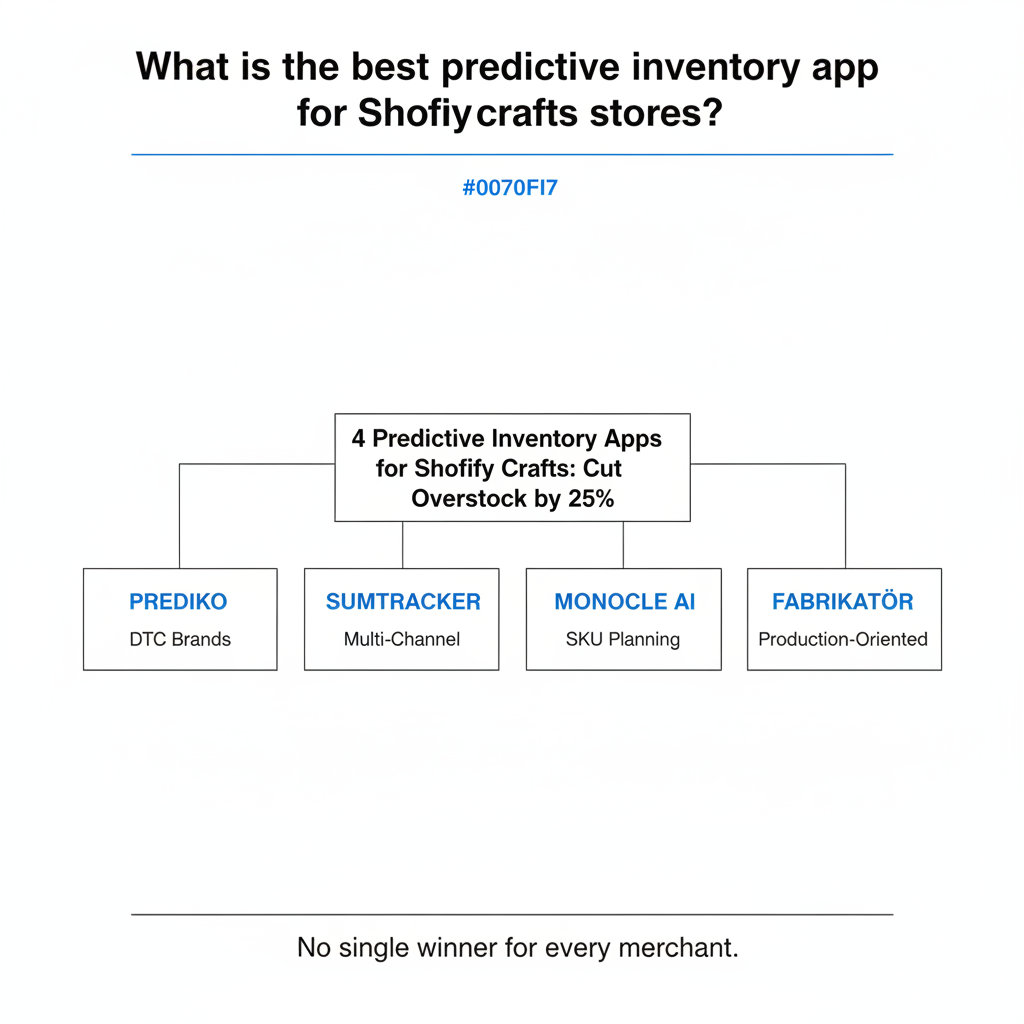
The best predictive inventory app for Shopify crafts stores depends on your catalog complexity and sales channels. Prediko is my top pick for growing DTC brands, Sumtracker is best for multi-channel handmade sellers, Monocle AI is strong for SKU-level planning, and Fabrikatör is best for production-oriented craft businesses.
There is no single winner for every merchant. A candle brand with wholesale and Etsy orders has different forecasting needs than a one-person embroidery shop with 80 seasonal SKUs. If you also sell curated bundles or gift sets, your planning gets even trickier because one stockout can break several listings at once.
Before I get into the individual apps, here is a quick side-by-side comparison.
| App | Best For | Starting Price | Rating | Standout Feature |
|---|---|---|---|---|
| Prediko Inventory Management | Growing crafts DTC brands | Free to install, paid plans from $99/month | 4.9/5 | AI forecasting at SKU and category level |
| Sumtracker | Multi-channel crafts sellers | From $29.99/month | 4.9/5 | Inventory sync plus automated purchase orders |
| Monocle AI - Inventory Forecasts | Small shops needing SKU-level insights | From $47/month | 4.8/5 | ABC and XYZ analysis with visual dashboards |
| Fabrikatör | Makers with production workflows | Free plan available, paid from $99/month | 4.9/5 | Forecasting plus production and preorder planning |
Why do crafts merchants need predictive inventory tools?
Crafts merchants need predictive inventory tools because handmade demand is uneven and materials are often purchased in batches. Forecasting helps you buy earlier, buy less blindly, and protect cash flow.
In a typical craft business, one bestseller can suddenly spike because of TikTok, a holiday fair, or influencer coverage. At the same time, slower color variants or niche designs can sit on shelves for months. Native Shopify reports are useful, but they usually do not give small merchants enough forecasting logic to answer the real question: what should I reorder, when, and how much?
I have seen this pattern repeatedly with Shopify stores in niche categories. The merchant is not failing because the products are weak. They are failing because too much capital is stuck in inventory that looked promising six months ago.
- Seasonality is sharper in crafts than many merchants expect
- Material lead times can be unpredictable for handmade goods
- Bundles and kits complicate stock planning
- Custom variants create long-tail inventory risk
- Multi-channel selling on Etsy, Amazon, fairs, and Shopify makes spreadsheets unreliable
If your store also relies on upsells, accessories, or add-ons, inventory planning has a direct impact on AOV. I have written before about Shopify add-on apps and upsell apps for Shopify, and both become much more effective when your core products stay in stock.
Prediko Inventory Management
Prediko Inventory Management is the best predictive inventory app in this list for growing craft brands that want stronger demand forecasting without jumping straight into a heavy ERP. It is especially good for merchants who need SKU-level and category-level forecasting and want clearer reorder decisions.
Prediko Inventory Management has built a strong reputation in the Shopify ecosystem, and the current app data shows 4.9 stars from 208+ reviews. Pricing starts free to install, with paid plans from $99/month. For stores doing enough volume that inventory mistakes hurt, that price can be justified surprisingly quickly.
What is Prediko best for?
Prediko is best for craft brands that are growing beyond manual planning and need better visibility into future stock needs. It is a strong fit for Etsy plus Shopify sellers, or any DTC store managing seasonal handmade collections.
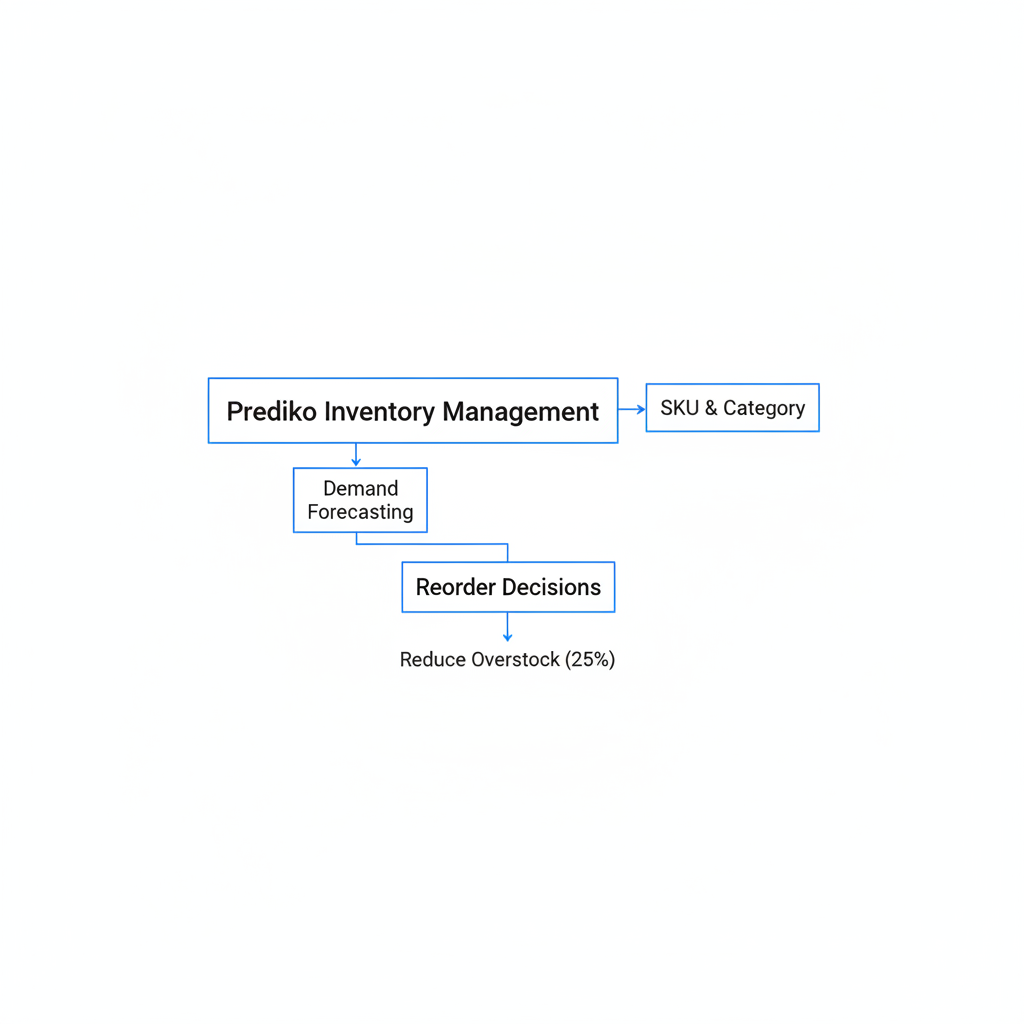
What I like here is that Prediko feels designed for merchants who need planning clarity, not just raw data. A lot of inventory tools throw numbers at you. Prediko appears more focused on turning demand signals into usable reorder suggestions.
- AI sales forecasting at SKU and category level
- Smart reorder quantities based on projected demand
- Stockout predictions to flag risk before it becomes urgent
- Multi-channel sync for merchants selling in more than one place
- Cash flow optimization support through better inventory timing
How much does Prediko cost?
Prediko is free to install, with paid plans starting from $99/month. That puts it in the premium tier for smaller merchants, but still far below the cost of over-ordering a few weak product lines.
For a crafts store, the right question is not whether $99 feels expensive. The better question is whether one poor seasonal buy, one delayed reorder, or one stockout on your bestseller costs more than that. In many cases, it absolutely does.
My opinion as a Shopify app developer
In my experience building Shopify apps, the best forecasting tools reduce decision fatigue. That is where Prediko seems strongest. If you are the kind of merchant who is currently checking last year’s sales, your current stock, and a spreadsheet every Monday, this is the type of app that can actually change your workflow.
My tip for crafts merchants is to use category-level forecasts first, not just SKU-level forecasts. Handmade stores often have noisy product-level data, especially when designs rotate often. Starting with category trends can give you a cleaner signal for candles, yarn kits, jewelry sets, or holiday items before you fine-tune specific SKUs.
Sumtracker
Sumtracker is the best option here for multi-channel crafts merchants who need forecasting plus inventory sync. It is particularly useful if you sell on Shopify, Etsy, Amazon, or through bundles and kits.
Sumtracker starts from $29.99/month after a free install or trial period, making it one of the more accessible tools in this roundup. The app is widely recommended in the Shopify community and is listed with a strong 4.9/5 rating.
What is Sumtracker best for?
Sumtracker is best for handmade sellers who need one inventory view across multiple channels. It is especially useful for merchants selling bundles, kits, or component-based products.
This matters for crafts because one product listing often pulls from shared raw materials or common stock units. If you sell a knitting kit, yarn set, and gift bundle that all use the same inventory pool, your forecasting is only as good as your stock sync. That is where Sumtracker has a practical edge.
- Sales-based demand projections
- Low-stock alerts and reorder visibility
- Multi-channel inventory visibility across Shopify, Amazon, Etsy, and more
- Automated purchase orders
- Bundle and kit support for more complex handmade catalogs
How much does Sumtracker cost?
Sumtracker starts at $29.99/month, which makes it the best value for smaller crafts stores in this list. It is much easier to justify if you are still early in your Shopify journey but already feeling the pain of manual stock tracking.
That lower entry price also makes it a smart first step if you are moving away from spreadsheets. Not every merchant needs a premium forecasting stack on day one. Sometimes the best move is to get cleaner inventory data first, then upgrade forecasting depth later.
My opinion as a Shopify app developer
If I were advising a craft merchant selling in two or three places, Sumtracker would be one of my first recommendations. Forecasting is important, but bad inventory sync can ruin forecasting accuracy before you even start.
My practical tip is to audit your bundle logic before installing any forecasting app. If your bundle inventory is messy, your predictions will be messy too. This is also relevant if you run a one-product store with accessories or add-ons, which I covered in this guide to one-product Shopify store apps.
Monocle AI - Inventory Forecasts
Monocle AI - Inventory Forecasts is best for smaller craft shops that want clearer SKU-level planning and visual forecasting dashboards. It is a good fit when you need actionable insights without enterprise complexity.
Monocle AI - Inventory Forecasts starts from $47/month and carries a reported 4.8/5 rating. That puts it in a nice middle ground between budget tools and more premium inventory planning platforms.
What is Monocle AI best for?
Monocle AI is best for merchants who want to understand which SKUs deserve attention and which ones are quietly draining capital. Its ABC and XYZ analysis is especially useful for seasonal crafts catalogs.
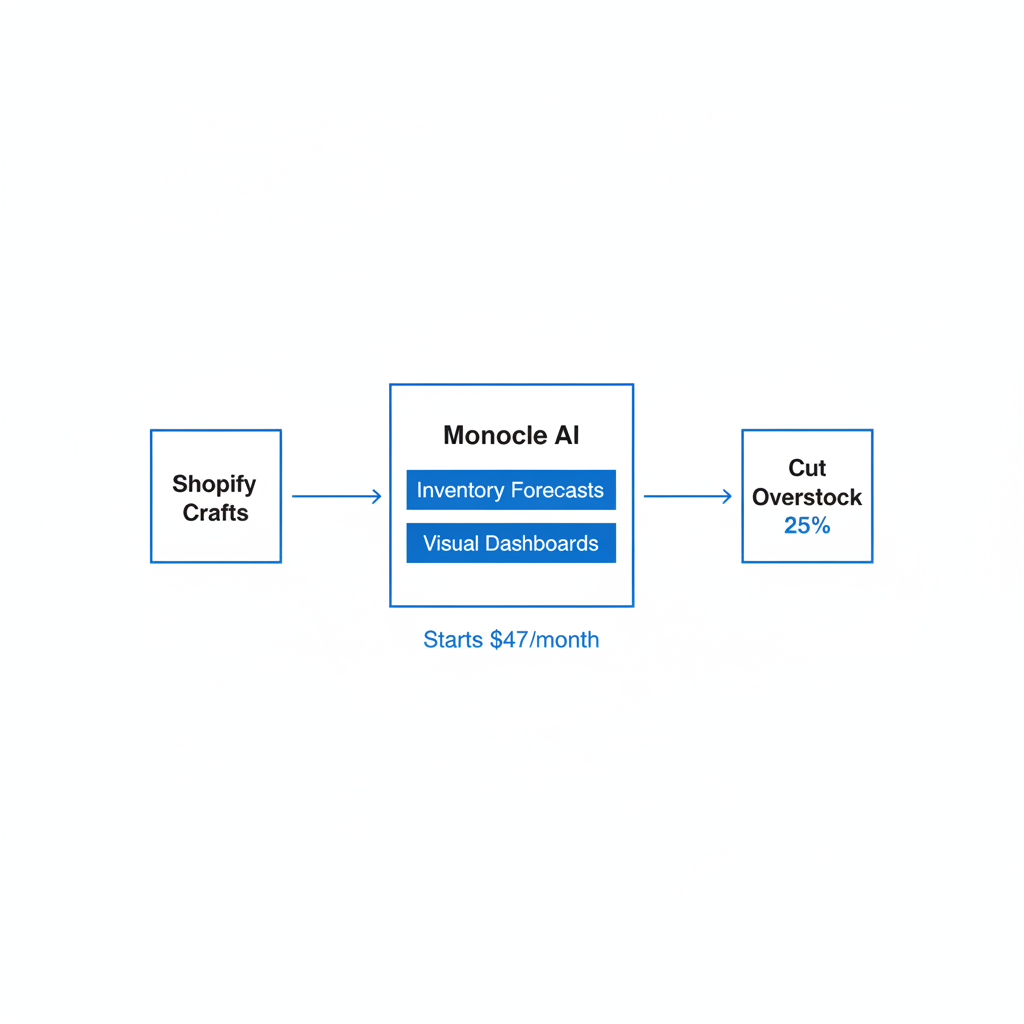
For example, if you sell personalized ornaments, handmade soap scents, or rotating art prints, not every SKU should be treated equally. Some items are stable volume drivers, some are unpredictable spikes, and some are emotional favorites that do not actually sell enough to justify large restocks. Monocle seems built to help you separate those groups.
- AI demand forecasting
- SKU insights for better item-level planning
- ABC and XYZ analysis to prioritize inventory decisions
- Visual dashboards for trend monitoring
- Seasonal overstock prevention through clearer planning signals
How much does Monocle AI cost?
Monocle AI starts at $47/month, which feels reasonable for merchants who want stronger analytics without paying top-tier pricing. It is a sensible mid-market option for stores that have outgrown basic low-stock alerts.
That price point is also attractive if you are still validating product lines. A lot of craft businesses are not huge, but they still need better forecasting than Shopify’s default reporting can offer. Monocle fits that gap well on paper.
My opinion as a Shopify app developer
I generally like tools that help merchants prioritize, because not every inventory problem deserves equal attention. ABC and XYZ analysis is underrated for small Shopify stores. It helps you stop treating every SKU like a hero product.
My tip here is to use Monocle's analysis to trim dead variants aggressively. Crafts merchants often keep too many sentimental or experimental products live. If a SKU is hard to source, low velocity, and highly unpredictable, the best forecast may be to stop restocking it.
If reviews and social proof influence your demand swings, it is also worth looking at how review collection affects forecasting. I have seen this firsthand with product launches, and it is one reason merchants often pair planning tools with review apps like Lumo Reviews or category-specific recommendation content such as these jewelry Shopify apps.
Fabrikatör
Fabrikatör is the best predictive inventory app here for makers who also manage production. If your craft business involves manufacturing, assembly, preorders, or multi-location stock, Fabrikatör is the most operations-focused option in this roundup.

Fabrikatör offers a free plan available and paid plans from $99/month. It has a strong 4.9/5 rating from 50+ reviews, and its feature set goes beyond simple demand forecasting.
What is Fabrikatör best for?
Fabrikatör is best for production-oriented craft merchants who need forecasting tied to purchasing and manufacturing workflows. It is a strong fit for studios, workshops, and small craft manufacturers.
This is important because many craft businesses are not pure resellers. They buy components, make products in batches, and need to account for production lead times, landed costs, and backorders. A forecasting app that ignores those realities can look smart in a dashboard but still fail in daily operations.
- AI demand predictions
- Purchase order creation with landed cost support
- Multi-location inventory views
- Preorder sync for future demand planning
- Production planning support for makers and manufacturers
How much does Fabrikatör cost?
Fabrikatör has a free plan and paid plans from $99/month. For production-heavy stores, that can be good value because it combines several operational needs into one system.
If you are only trying to get basic low-stock alerts, this may be more than you need. But if your business has work orders, production batches, or preorder demand, the broader workflow support can make the higher price much easier to justify.
My opinion as a Shopify app developer
From a systems perspective, Fabrikatör is the most interesting app in this list because it connects forecasting with execution. That matters more than many merchants realize. A good forecast is only useful if it leads to timely purchase orders and production decisions.
My advice is to choose Fabrikatör if your inventory problem starts before stock hits the shelf. If your real issue is planning raw materials, production runs, or preorder demand, then a pure forecasting dashboard may not be enough. This is also where merchants sometimes benefit from complementary tools like back in stock apps when demand outpaces supply.
How do these predictive inventory apps compare for crafts sellers?
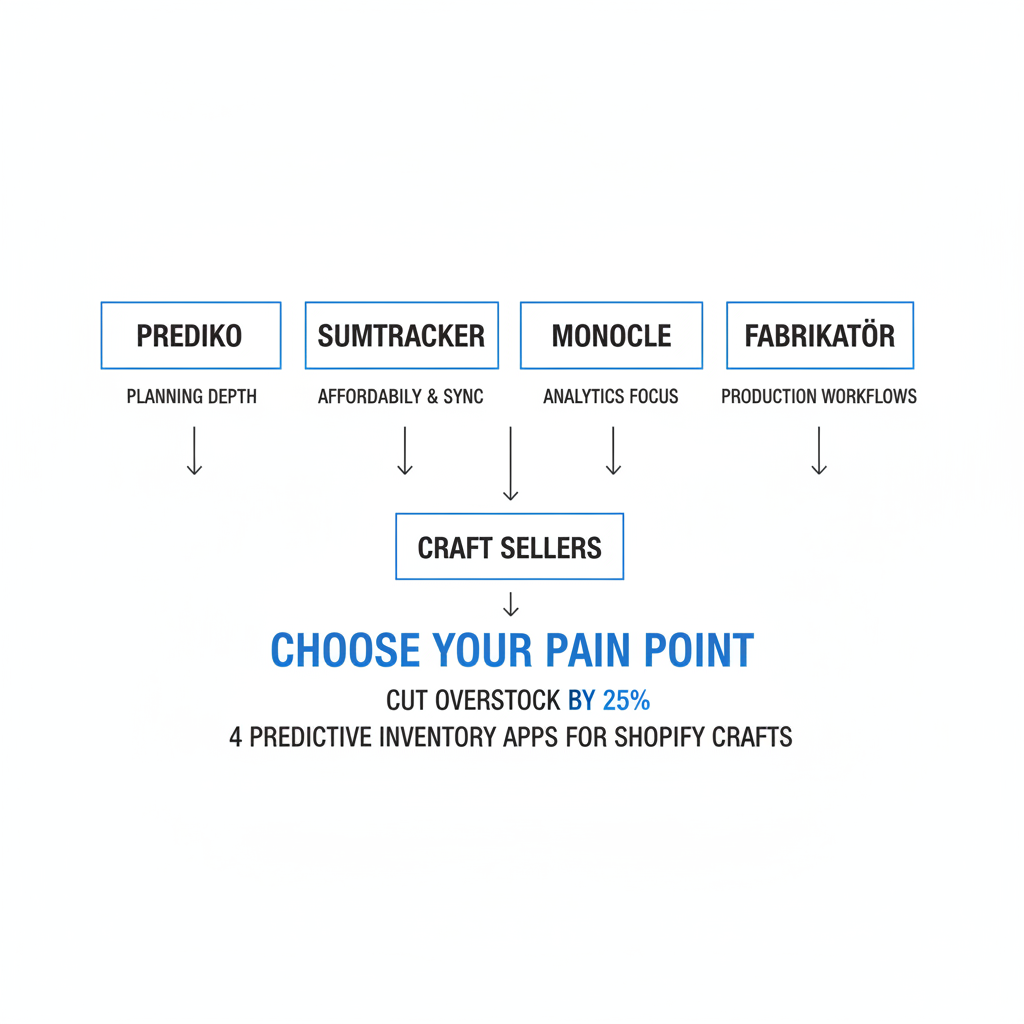
These predictive inventory apps differ mainly in forecasting depth, channel support, and operational complexity. Prediko is best for planning depth, Sumtracker is best for affordability and sync, Monocle is best for analysis, and Fabrikatör is best for production workflows.
If you are choosing between them, use your current pain point as the deciding factor. Do not buy based on feature count alone. The best app is the one that solves the bottleneck you already have.
| App | Pros | Cons | Best Verdict |
|---|---|---|---|
| Prediko | Strong AI forecasting, category and SKU planning, stockout prediction | Higher starting price for small stores | Best for growing crafts DTC brands |
| Sumtracker | Affordable, multi-channel sync, bundle support, automated POs | May be less advanced for deep forecasting than premium tools | Best for small multi-channel handmade stores |
| Monocle AI | Useful dashboards, ABC and XYZ analysis, mid-range pricing | Less operations-focused than Fabrikatör | Best for SKU-level planning and cleanup |
| Fabrikatör | Forecasting plus production planning, landed costs, preorder support | Can be overkill for simple catalogs | Best for makers with production workflows |
How can Shopify predictive analytics cut overstock by 25% for crafts stores?
Shopify predictive analytics can cut overstock by 25% by improving reorder timing, reducing guesswork, and identifying weak SKUs earlier. The biggest gains usually come from buying less of slow movers and replenishing winners sooner.
The 25 percent figure is realistic when a merchant moves from spreadsheets or basic low-stock alerts to actual demand forecasting. Based on app store reviews, case-study patterns, and demand planning tool data, a 20 to 30 percent inventory optimization improvement is achievable when the forecasting setup is clean and the merchant acts on the data consistently.
- Reorder points improve because they are based on sales velocity, not gut feel
- Slow-moving SKUs are exposed earlier, so you stop overbuying them
- Seasonal demand is modeled better, especially around holidays and gift periods
- Stockouts decrease, which protects sales and reduces panic buying from suppliers
- Cash flow improves because less capital is trapped in dead inventory
In my experience, the merchants who get the best results do one thing very well: they review forecasts on a schedule. The app helps, but the process matters too. Even a great forecasting tool will not fix inventory if you only open it when something is already out of stock.
Which app should you choose?
You should choose the app that matches your current operational bottleneck. Prediko is my top overall pick, Sumtracker is the best value, Monocle AI is best for analytical clarity, and Fabrikatör is best for production-led businesses.
If you want the shortest version of my recommendation, here it is.
- Choose Prediko if you want the best overall forecasting tool for scaling crafts brands
- Choose Sumtracker if you sell across channels and want the best budget-friendly option
- Choose Monocle AI if you want better SKU prioritization and visual analysis
- Choose Fabrikatör if your business includes production, preorders, or manufacturing planning
If you are still early-stage, start with the app that gives you the cleanest operational discipline, not the fanciest AI pitch. Good predictive inventory starts with good data. Once that is in place, forecasting gets much more useful.
Quick comparison table
This final table gives you the fastest way to compare the four apps in one place. If you are buying today, this is the shortlist I would work from for a crafts-focused Shopify store.
| App | Starting Price | Rating | Best For | Main Strength |
|---|---|---|---|---|
| Prediko Inventory Management | $99/month | 4.9/5 | Growing DTC craft brands | Deep forecasting and reorder planning |
| Sumtracker | $29.99/month | 4.9/5 | Multi-channel handmade sellers | Inventory sync plus forecasting |
| Monocle AI - Inventory Forecasts | $47/month | 4.8/5 | Small shops with seasonal SKUs | ABC and XYZ inventory analysis |
| Fabrikatör | Free plan / $99 month paid | 4.9/5 | Production-focused craft businesses | Forecasting tied to purchasing and production |
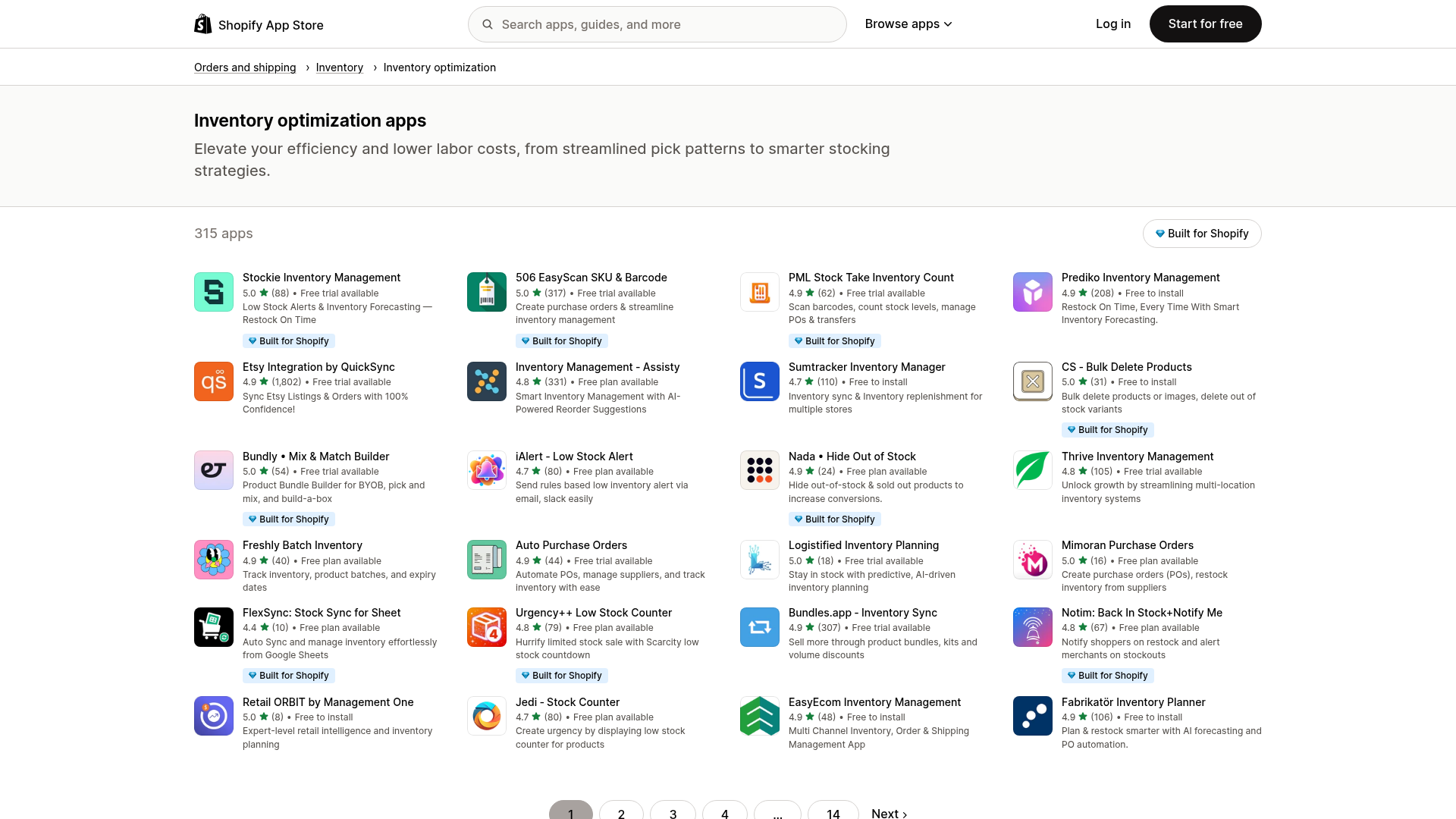
For broader app discovery, you can also browse Shopify's official inventory app category and inventory optimization apps. If your store is also expanding internationally, testing offers by market, or adjusting pricing strategy, you may also want to read our guide to A/B testing apps for Shopify multi-market expansion and our roundup of dynamic pricing apps for Shopify.