The best back in stock apps for Shopify help you recover lost sales, capture demand on sold-out products, and automatically notify shoppers the moment inventory returns. In 2026, the strongest options combine email, SMS, push notifications, variant-level alerts, analytics, and preorder support rather than just a basic waitlist form.
As a Shopify app developer, I have seen this problem from both sides. Merchants hate watching high-intent traffic hit an out-of-stock product page and disappear, while app developers know a well-implemented restock flow can quietly become one of the highest-converting automations in a store. If you sell products that go out of stock even occasionally, a back-in-stock app is usually worth installing.
In this guide, I have updated and expanded the original list to reflect what is actually competitive in the Shopify ecosystem today. I am covering the 10 best back in stock apps for Shopify, what each one is best for, and how I would choose between them depending on store size, channel mix, and whether you also need preorders or wishlists.
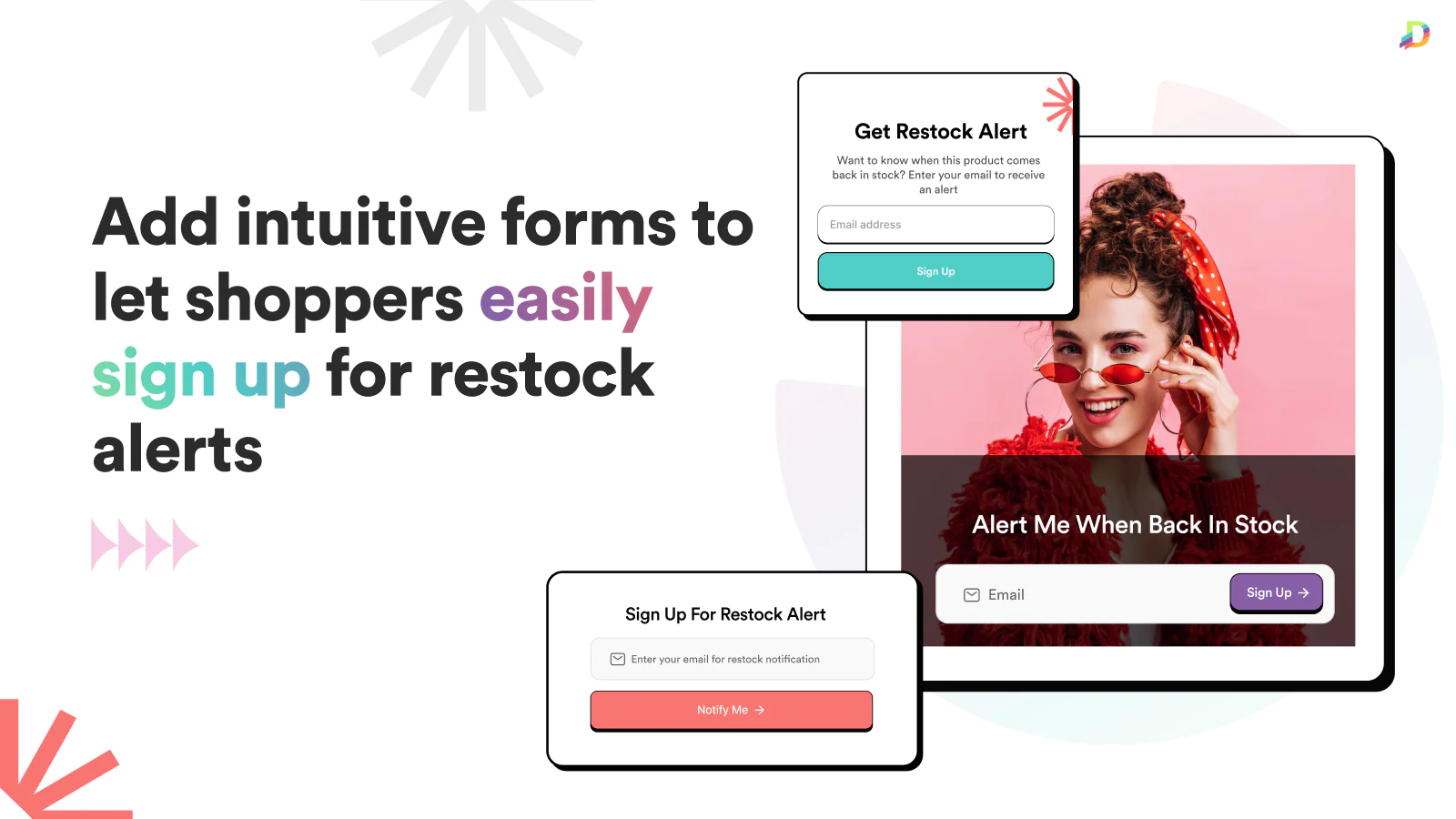
What is the best back in stock app for Shopify?
Notify Me! Back in Stock and Preorder is one of the best all-round choices if you want restock alerts, preorders, and wishlist functionality in one app. Back in Stock: Restock Alerts is another standout if you want a proven, highly rated option with broad merchant trust and polished execution.
The right answer depends on your store. If you already run Klaviyo, want advanced segmentation, or need preorder workflows, your best option may be different from a small catalogue store that only wants a simple email alert button.
Why should Shopify merchants use a back in stock app?
A back in stock app helps you recover otherwise lost demand when products sell out. It gives shoppers a simple way to register interest and then brings them back with an automated alert when the item is available again.
In my experience building Shopify apps, this is one of the easiest wins for stores with popular SKUs. You already paid to acquire the visitor through SEO, ads, email, or social. Letting that visitor vanish because a product is temporarily unavailable is usually a bigger mistake than merchants realise.
- Recover lost sales from high-intent shoppers
- Measure demand before restocking large quantities
- Improve customer experience with a clear next step instead of a dead end
- Support better forecasting by seeing which products and variants attract the most alerts
- Increase conversion rates on product pages that would otherwise underperform
- Build owned audiences through email and sometimes SMS opt-ins
If you are also working on product page performance more broadly, it is worth pairing a restock app with stronger PDP design. We covered that in our guide to the best product detail page apps for Shopify.
How do I choose the best back in stock app for my store?
The best back in stock app is the one that fits your traffic volume, notification channels, theme setup, and marketing stack. Most stores should prioritise reliability, variant-level alerts, and easy customisation before chasing extra features.
When I test Shopify apps, I usually look for five things first: whether the widget installs cleanly, whether alerts trigger accurately, whether the app supports variants and multiple locations, whether the emails look on-brand, and whether reporting is clear enough to act on.
What features matter most?
Email alerts are the baseline. SMS, push notifications, Klaviyo integration, preorder support, and wishlist features are the upgrades that matter if you want more revenue from the same workflow.
- Variant-level alerts so shoppers can request the exact size, colour, or style
- Multi-location inventory support for more complex operations
- Email and SMS notifications with branded templates
- Klaviyo or Shopify Flow integrations for automation
- Analytics dashboards showing subscriptions, sent alerts, opens, clicks, and recovered revenue
- Theme compatibility with Online Store 2.0 and minimal speed impact
- Preorder support if you want to capture sales before stock lands
What should small stores prioritise?
Small stores should prioritise easy setup, fair pricing, and dependable email alerts. You do not need an enterprise-grade stack if you only sell a few dozen products and restock once or twice a month.
For newer merchants, simple tools often perform better because they actually get configured properly. If you are just getting started, our round-up of must-have apps for new Shopify stores is a useful companion read.
Comparison table: which of the 10 best back in stock apps for Shopify is right for you?
This table gives you the quick answer. If you want the best all-rounder, start with Notify Me. If you want a widely trusted specialist, look closely at Back in Stock: Restock Alerts or Appikon.
| App | Best for | Key features | Pricing snapshot |
|---|---|---|---|
| Notify Me! Back in Stock and Preorder | Best all-in-one | Back in stock, preorder, wishlist, low speed impact | 7-day free trial, $0-$99/month |
| Back in Stock: Restock Alerts | Best proven specialist | Email, SMS, push, strong merchant trust | Varies by plan |
| Appikon - Back In Stock | Best for Klaviyo users | Email, SMS, push, variant alerts, Klaviyo integration | Varies by plan |
| WC Wishlist & Back in Stock | Best wishlist combo | Wishlists plus restock alerts | Varies by plan |
| Swym Back in Stock Alerts | Best for mobile and desktop coverage | Email, push, integrations | Varies by plan |
| Zooomy Back in Stock Alerts | Best for design control | Custom forms, drag-and-drop email templates | From $10/month |
| Ordersify: Restocked Alerts | Best for easy setup | Email, SMS, automation, inventory sync | Varies by plan |
| Alert Me! Restock Notifications | Best for small stores | Email-focused, simple setup, responsive design | From $8/month |
| Channelwill Back in Stock | Best budget contender | Restock notification management | Varies by plan |
| Klaviyo with Back-in-Stock Flow | Best for advanced segmentation | Inventory-triggered flows, segmentation, email marketing | Free up to 500 contacts |
1. Why is Notify Me! Back in Stock and Preorder the best all-round app?
Notify Me! Back in Stock and Preorder is one of the strongest all-round options because it combines restock alerts, preorders, and wishlists in one place. That makes it especially useful for stores that want to handle both temporary stockouts and upcoming product launches without stacking multiple apps.
Competitors ranking well for this keyword mention Notify Me heavily, and that makes sense. Merchants increasingly want a single app that can cover notify me buttons, preorder capture, and wishlist demand signals while keeping theme performance stable. The app is also positioned as having minimal impact on store speed, which matters more than ever for conversion and SEO.
For stores with frequent sell-outs, this can be more than a restock tool. It becomes a lightweight demand-capture layer across your catalogue. Pricing starts from $0 and goes up to $99/month, with a 7-day free trial, which makes it accessible for both smaller and scaling merchants.
Who is it best for?
This app is best for merchants who want one app instead of three. If you need back-in-stock alerts today and preorders next quarter, it is a sensible shortlist candidate.
2. Why is Back in Stock: Restock Alerts still one of the safest choices?
Back in Stock: Restock Alerts remains one of the safest choices because it is widely used, highly rated, and focused on doing the core job very well. It is one of the most established names in the category.
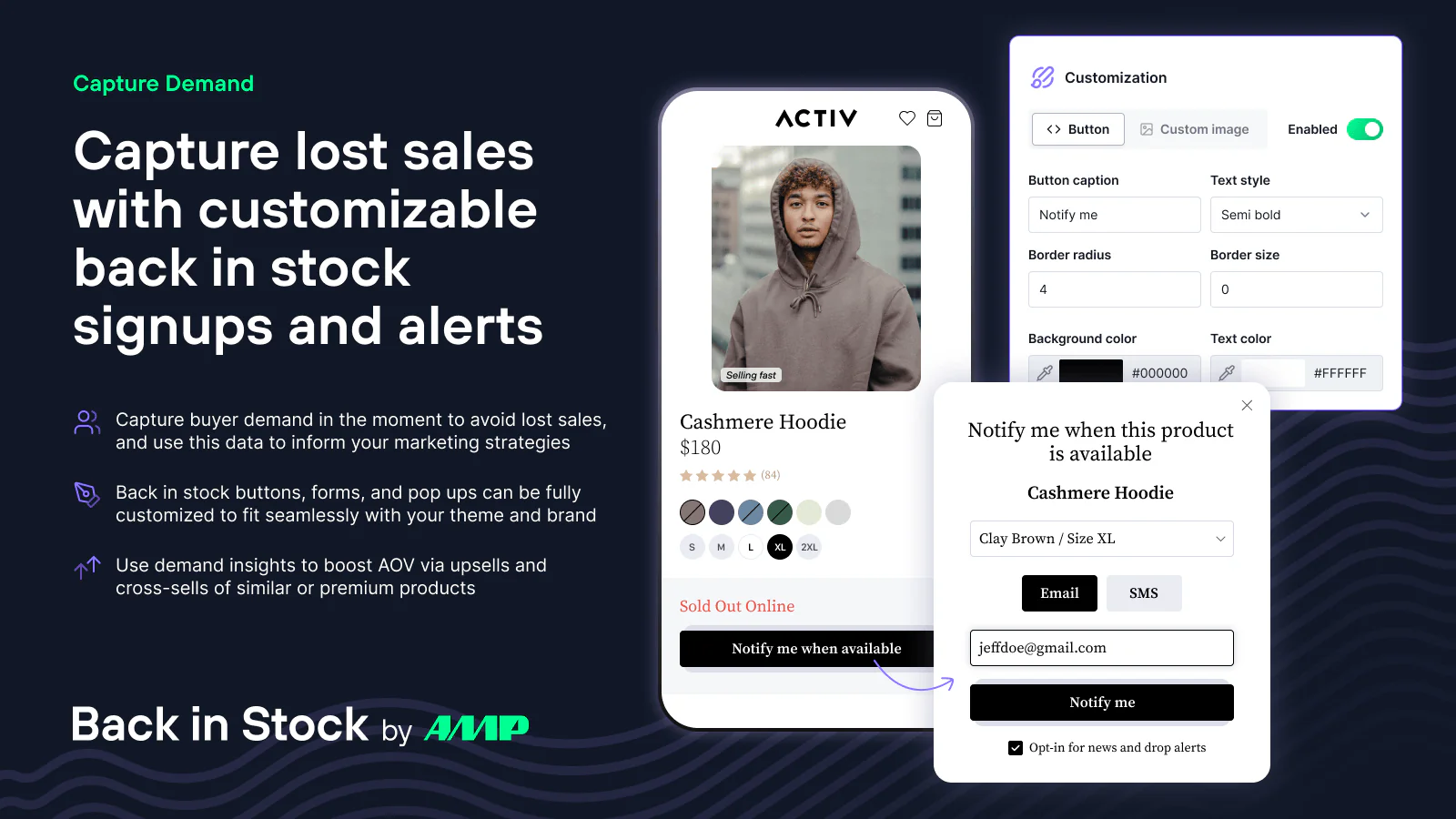

Current marketplace data shows this app is rated 5 stars by 2,600+ merchants and has been recognised as a Shopify Top 25 Built for Shopify app. That is a strong trust signal. In practice, apps with this level of adoption have usually solved the annoying edge cases around theme compatibility, notification timing, and merchant onboarding.
The feature set is what most stores need: email, SMS, and push notifications, a simple customer signup flow, and customisation options for matching your brand. If you want a proven option rather than the newest tool on the market, this is one of the first apps I would test.
Who is it best for?
This app is best for stores that want a specialist with a long track record. If reliability matters more than extra bells and whistles, it is a very strong pick.
3. Is Appikon - Back In Stock the best option for Klaviyo users?
Appikon - Back In Stock is one of the best options for merchants already using Klaviyo because it supports variant-level restock alerts and Klaviyo integration. That gives you more control over segmentation and follow-up automation.
Appikon is frequently recommended in current rankings, and for good reason. Variant-level alerts are especially important in fashion, beauty, and any catalogue where one product can have dozens of size or colour combinations. A shopper waiting for a medium in navy should not receive the same alert as someone wanting a large in black.

It also supports email, SMS, and push notifications, which makes it flexible across channels. If your email marketing already runs through Klaviyo, Appikon can fit neatly into the stack instead of forcing a parallel workflow.
Who is it best for?
This app is best for brands with a more mature email marketing setup. If you care about segments, flows, and attribution, Appikon is worth a close look.
4. What makes WC Wishlist & Back in Stock useful for retention?
WC Wishlist & Back in Stock is useful because it combines two related retention features in one app: wishlists and restock alerts. That means you can capture intent whether an item is in stock or not.
In my experience, this combination works well for stores with considered purchases, gifting, or repeat browsing behaviour. A shopper may not be ready to buy today, but if they save the product and later receive a restock alert, you have created two chances to win the sale instead of one.
It supports email, push, and SMS notifications, which gives it enough flexibility for most stores. If you are already considering wishlist functionality, a bundled app like this can be more efficient than installing separate tools.
Who is it best for?
This app is best for stores that want to combine demand capture and retention. It is particularly relevant for fashion, homeware, and gift-focused brands.
5. Is Swym Back in Stock Alerts a good choice for larger catalogues?
Swym Back in Stock Alerts is a strong choice for larger catalogues because it is built around shopper intent and works across mobile and desktop. It also supports integrations that make it more useful in a broader retention stack.

Swym has long been associated with wishlist and shopping intent products, so its approach to restock alerts tends to suit brands that want more than a basic notification button. If your store gets lots of returning visitors browsing across devices, this kind of continuity can matter.
It is also a sensible option if you want integration flexibility without jumping straight into a very heavy enterprise setup. For growing DTC brands, that middle ground is often the sweet spot.
Who is it best for?
This app is best for growing brands with broader catalogues and repeat visitors. It is especially useful when customers browse on mobile but convert later elsewhere.
6. Why do design-focused stores like Zooomy Back in Stock Alerts?
Zooomy Back in Stock Alerts stands out for design control. It offers fully customisable forms and drag-and-drop email templates, which is ideal if your brand cares a lot about presentation.
One of the most common problems I see with Shopify apps is that the functionality is fine, but the widget looks like an afterthought. On premium-feeling stores, that hurts trust. Zooomy is attractive because it gives merchants more control over how the signup experience and emails actually look.
Pricing starts from $10/month, which is reasonable if design consistency matters to you. If your store has a strong visual identity, this can be a better fit than a more rigid app.
Who is it best for?
This app is best for design-led brands. If you care about polished forms and branded emails, Zooomy deserves a place on your shortlist.
7. Is Ordersify: Restocked Alerts the easiest app to set up?
Ordersify: Restocked Alerts is one of the easiest apps to set up if you want a straightforward restock workflow without much fuss. It is regularly recommended for reliability, automation, and inventory sync.
For many merchants, ease of setup is not a minor detail. It is the difference between an app going live this afternoon and sitting half-configured for three weeks. Ordersify is appealing because it focuses on the essentials: email and SMS alerts, dependable triggering, and simple inventory-linked automation.
If your team is small or you manage the store yourself, that simplicity is valuable. I would much rather see a merchant use a simpler app well than pay for a more advanced one they never fully configure.
Who is it best for?
This app is best for lean teams and merchants who want quick implementation. It is a practical choice when time is limited.
8. Should small stores use Alert Me! Restock Notifications?
Alert Me! Restock Notifications is a good fit for small stores because it keeps things simple and affordable. It focuses on email-only alerts and responsive design rather than trying to be an all-in-one retention platform.

Pricing starts from $8/month, which makes it one of the more accessible options on this list. For smaller shops, especially those without SMS budgets or complex automation needs, that can be enough. You still get the core value of a notify-me button and automatic alerts when stock returns.
If you are a newer merchant, I would seriously consider whether this level of simplicity is all you need for now. You can always upgrade later once your catalogue and traffic grow.
Who is it best for?
This app is best for small stores and beginners. It is not worth overcomplicating your stack if email alerts cover your use case.
9. What should you know about Channelwill Back in Stock?
Channelwill Back in Stock is a solid contender that appears in current top-app rankings for restock notification management. It is worth considering if you want another mainstream option beyond the most heavily discussed names.

Not every merchant needs the category leader. Sometimes a slightly less prominent app offers a better pricing structure, a cleaner interface, or support that suits your team better. That is why I always recommend testing two or three apps in the same category rather than blindly installing the most famous one.
Channelwill belongs in that shortlist tier. It may not be the first name everyone mentions, but it is part of the current conversation around high-performing restock apps.
Who is it best for?
This app is best for merchants comparing value and usability. It is a sensible alternative to the bigger names.
10. Can Klaviyo replace a dedicated back in stock app?
Klaviyo with a back-in-stock flow can replace a dedicated app for some merchants, especially if you already run most of your lifecycle marketing through Klaviyo. It is best for advanced segmentation and automation, not necessarily for the easiest setup.
Klaviyo pricing starts free up to 500 contacts, with paid plans beyond that. The big advantage is centralisation. If your email and SMS programmes already live there, keeping restock alerts in the same ecosystem can simplify reporting, audience management, and follow-up sequences.
The trade-off is that a dedicated Shopify restock app may provide a more polished on-site widget, easier variant handling, or faster implementation. In my experience, Klaviyo works best when you already have someone on the team who is comfortable building flows and maintaining them.
Who is it best for?
This option is best for established brands already invested in Klaviyo. If you want advanced lifecycle marketing more than plug-and-play simplicity, it is a strong option.
What about preorder apps like Timesact and PreOrder Globo?
Preorder apps are not pure back in stock apps, but they can be a smart alternative when you would rather capture revenue now than wait for inventory to arrive. For some stores, preorders outperform restock alerts because they remove the extra step between intent and purchase.
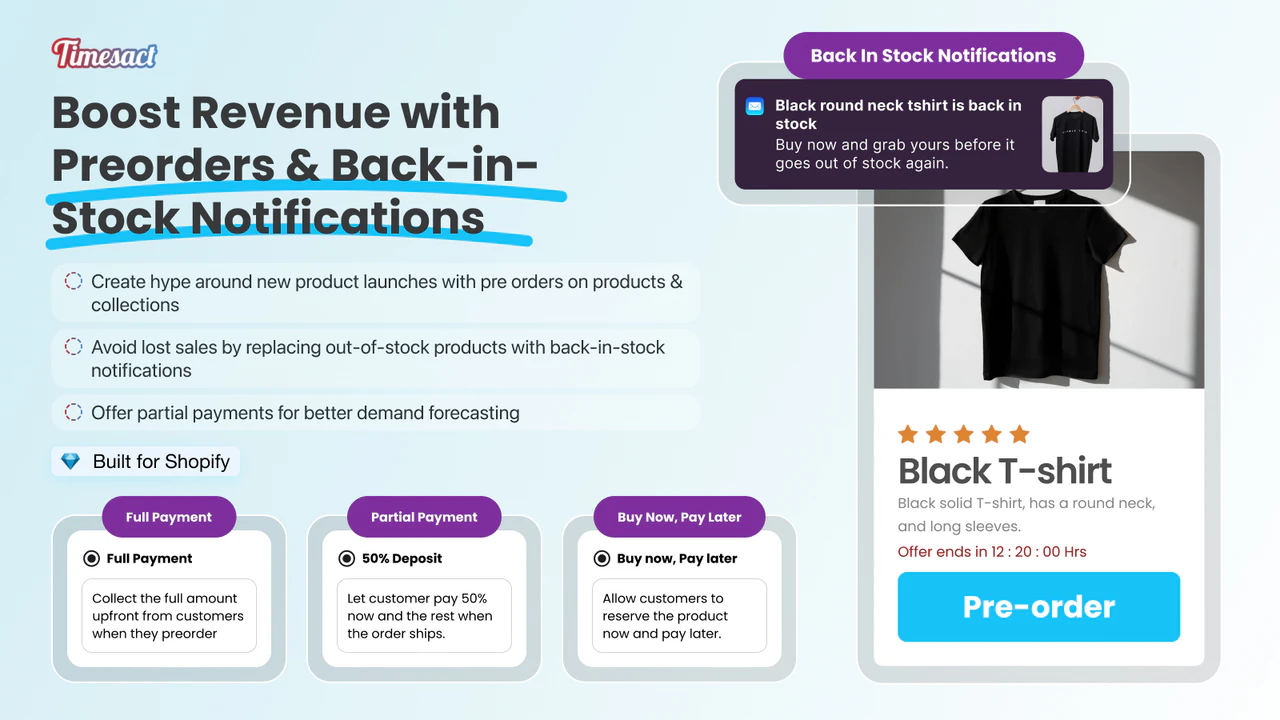

Timesact is a strong example if you want to blend preorder and restock workflows. PreOrder Globo is another relevant option in this broader category.
In practice, I usually recommend restock alerts when replenishment timing is uncertain and preorders when supply is predictable. If preorder strategy is relevant to your store, you may also want to compare it with our guide to apps for one-product Shopify stores, where stock planning often matters a lot.
How do I implement a back in stock app properly?
The best implementation is simple: install the app, add the widget to sold-out product pages, customise the messaging, test the alert, and monitor conversion. The stores that get the most value are the ones that actually optimise the flow after launch.
- Choose one app based on your needs, not just ratings
- Install it on a duplicate theme first if your storefront is sensitive
- Enable variant-level alerts where possible
- Customise button text so it fits your brand voice
- Test email and SMS delivery with a real sold-out product
- Track recovered revenue and top-requested products weekly
- Use demand data for purchasing decisions and merchandising
If you need the practical setup steps, we already published a more specific tutorial on how to notify a customer when an item is back in stock on Shopify.
What mistakes should merchants avoid?
The biggest mistakes are choosing an app with the wrong feature set, ignoring variant-level alerts, and never testing the customer experience. A back in stock app is only useful if the widget appears correctly and the notifications actually send at the right time.
- Installing multiple overlapping apps that conflict on product pages
- Not matching button styling to the rest of the theme
- Sending generic alerts instead of variant-specific ones
- Ignoring analytics that reveal your highest-demand products
- Forgetting SMS costs when forecasting app spend
- Using restock alerts when preorders would be better
I see this a lot with merchants who add app after app to solve adjacent problems. If you are also reviewing your wider upsell and merchandising stack, our guide to the best upsell apps for Shopify can help you avoid unnecessary overlap.
Which back in stock app would I choose?
If I wanted the best all-round feature set, I would start with Notify Me! If I wanted the most proven specialist, I would test Back in Stock: Restock Alerts. If I already relied heavily on Klaviyo, I would compare Appikon with a native Klaviyo-based flow.
That is the honest answer from a builder's perspective. There is no single app that is perfect for every merchant. The best choice depends on whether your store needs simple email alerts, multi-channel notifications, preorder capture, or deep integration with your retention stack.
What matters most is that you do not leave sold-out product pages as dead ends. Even a basic, well-configured restock app can pay for itself quickly if you have products that regularly sell through.