
Chargebacks are one of the fastest ways to lose margin on Shopify. The best Shopify chargeback apps 2026 help you do two things at once: prevent disputes before they happen and recover revenue when they do.
As a Shopify app developer, I have seen merchants obsess over conversion rate while ignoring what happens after payment. That is a mistake. A store can be growing nicely on the front end, but if fraud, friendly fraud, and payment disputes keep climbing, profit gets squeezed fast.
For this roundup, I focused on apps that are actually relevant for merchants comparing tools with commercial intent. I looked at Shopify App Store presence, available pricing details, dispute automation, prevention features, and whether the app is a good fit for small stores, scaling DTC brands, or higher-risk merchants. I also favored tools that make setup realistic for a busy team, because in my experience, the best fraud app is the one you will actually keep configured properly.
If chargebacks are already hurting your store, you should also read my guide on Chargebacks in Shopify: How to Prevent and Manage Them in 2026. It covers the operational side, while this article focuses on the best Shopify apps to solve the problem.
How did I choose the best Shopify chargeback apps for 2026?
I chose apps based on chargeback prevention coverage, dispute recovery automation, pricing transparency, and how practical they are for real Shopify merchants. The best tools reduce manual work, improve win rates, and help protect your payment processor reputation.
I did not just look for “fraud apps” in general. I specifically prioritized apps that address one or more of these jobs: alert-based prevention, AI-generated dispute evidence, order risk screening, and revenue recovery after disputes. Those are the features that actually matter when you are trying to keep dispute ratios under control.
Another thing I considered is store stage. A new store with a few disputes per month needs something very different from a high-volume brand with hundreds of orders per day. Some apps are best for lean teams, while others make more sense once you have more revenue at risk.
What is the best Shopify chargeback app overall in 2026?
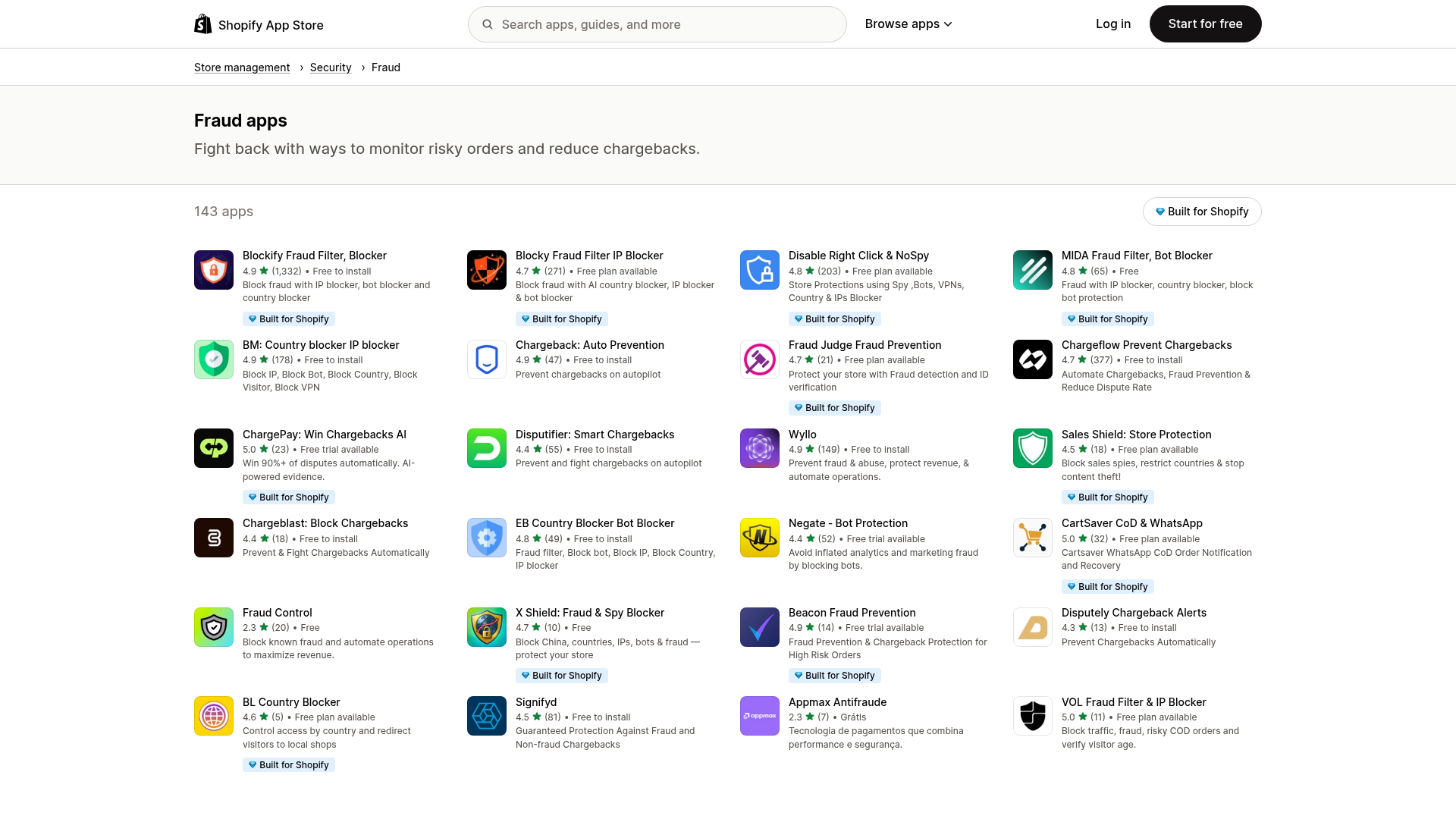
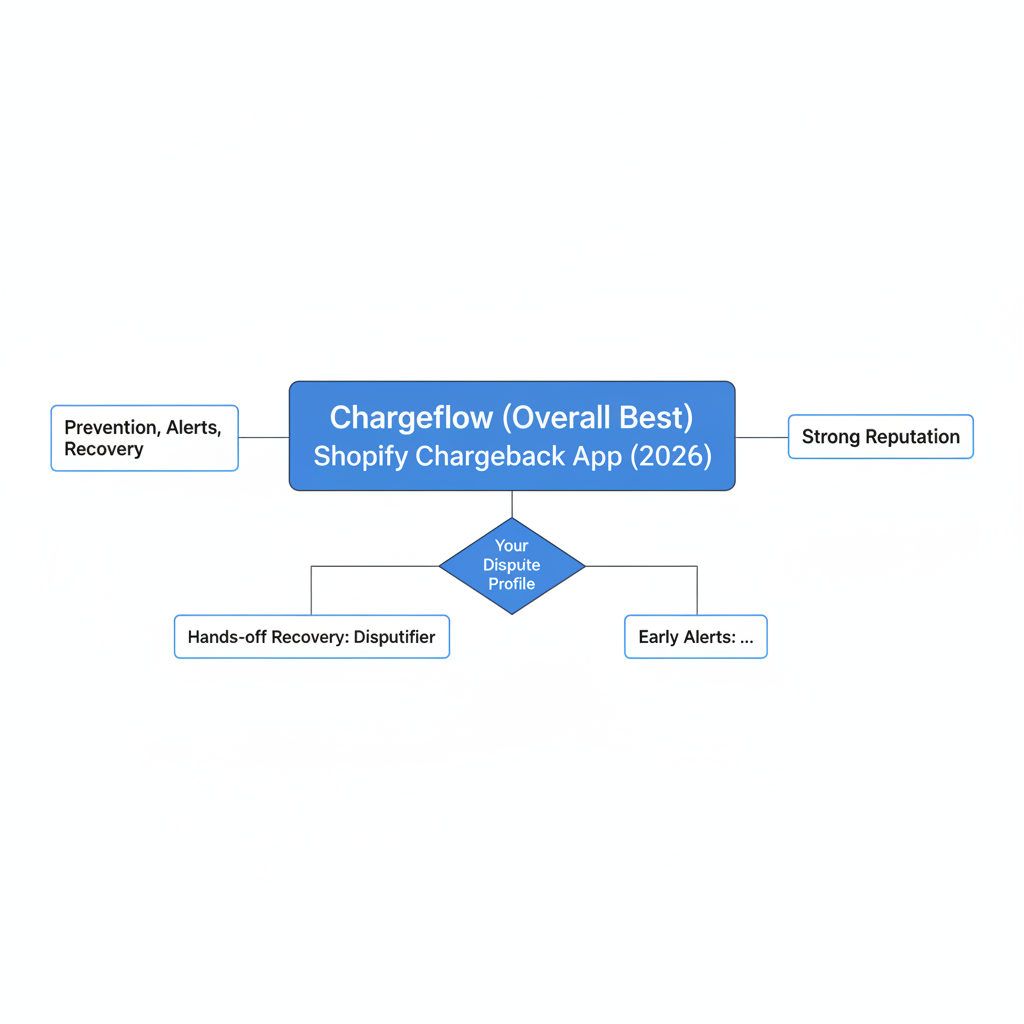
The best overall Shopify chargeback app in 2026 is Chargeflow for most merchants. It combines prevention, alerts, and dispute recovery in one system and has one of the strongest Shopify App Store reputations in this category.
That said, the best app for your store depends on your dispute profile. If you want fully hands-off recovery, Disputifier is compelling. If you mainly need early alerts at a lower barrier to entry, Chargeback: Auto Prevention stands out. If you want broader fraud screening, Wyllo and ChargePay are worth comparing.
| App | Best for | Pricing | Shopify rating | Main strength |
|---|---|---|---|---|
| Chargeflow | Most stores needing all-in-one protection | Contact for pricing | 4.7 stars | Prevention plus automated recovery |
| Disputifier | Done-for-you chargeback management | 20% of recovered revenue + prevention fees | Not publicly specified in research | AI dispute handling with minimal merchant work |
| Chargeback: Auto Prevention | Stores wanting fast alert-based prevention | Free to install, pay per alert | 4.9 stars | Early alerts to reduce incoming disputes |
| Wyllo | Merchants focused on fraud screening | Contact for pricing | Not publicly specified in research | Fraud checks and chargeback protection |
| ChargePay | Stores wanting AI-led dispute recovery | Varies | Not publicly specified in research | AI-assisted chargeback response workflow |
1. Chargeflow Prevent Chargebacks
Chargeflow is the best Shopify chargeback app overall for 2026. It is best for merchants who want one platform for prevention, alerts, and automated dispute recovery.
Chargeflow Prevent Chargebacks has become one of the most visible names in this space, and for good reason. Based on the research, it has a 4.7-star rating from 377 reviews, which is strong social proof in a category where merchants are usually pretty demanding. The pitch is simple: use AI to collect evidence, submit disputes automatically, and reduce the amount of manual work your support or ops team has to do.

What I like here is the scope. Chargeflow is not just a reactive dispute tool. It also offers Chargeflow Prevent, which is aimed at catching risky orders after purchase but before fulfillment. For stores with fulfillment delays or expensive products, that matters a lot because stopping a bad order before it ships is usually more valuable than winning a dispute weeks later.
What are Chargeflow's key features?
Chargeflow's main features are AI-powered evidence collection, automated chargeback submission, and risk detection before fulfillment. It is built for merchants who want less manual admin and more revenue recovery.
- AI-generated dispute evidence pulled together automatically
- Automated submission workflows for chargeback responses
- Post-purchase fraud prevention before orders are fulfilled
- Chargeback alerts and prevention tools in one ecosystem
- Claims of recovering 4x more chargebacks and preventing up to 90% of incoming disputes
How much does Chargeflow cost?
Chargeflow uses custom pricing. You need to contact the company for a quote based on your order volume and chargeback profile.
I do not love vague pricing pages as a merchant, but I understand why apps in this category do it. Fraud and dispute economics vary a lot by vertical, AOV, and processor mix. If your store is doing decent volume, it is still worth getting a quote because a few prevented disputes can justify the cost quickly.
What is my verdict on Chargeflow?
Best overall is my verdict. In my experience building Shopify apps, merchants usually prefer fewer tools with broader coverage, and Chargeflow fits that pattern well.
If you are already getting enough disputes that your team dreads opening the payment disputes tab, this is one of the first apps I would test. It is not the cheapest-looking option, but it is probably the most complete option on this list.
2. Disputifier: Smart Chargebacks
Disputifier is best for merchants who want a done-for-you chargeback recovery service. It focuses heavily on automation and minimizing merchant involvement.
Disputifier: Smart Chargebacks is especially interesting for stores that do not want to build internal processes around disputes. According to the research, it uses AI-generated dispute responses and can work with Ethoca, Verifi, and RDR alerts. That is a solid mix if your goal is both prevention and recovery.

The commercial model is also clearer than some competitors. Disputifier charges 20% of recovered revenue, capped at $250 per win, plus $0.05 per order for fraud prevention and order issue prevention. For merchants who hate fixed retainers, that can feel more aligned with outcomes.
What are Disputifier's key features?
Disputifier's key strengths are hands-off dispute handling, alert network support, and outcome-based pricing. It is designed to reduce the time your team spends on chargebacks.
- AI-generated chargeback responses
- Zero merchant involvement in many dispute workflows
- Support for Ethoca, Verifi, and RDR alerts
- Fraud screening and order issue prevention
- Native Shopify integration with one-click installation
- Reported 230% boost in win rates from merchant case data
How much does Disputifier cost?
Disputifier offers performance-based pricing. The dispute recovery fee is 20% of recovered revenue, capped at $250 per win, and prevention starts at $0.05 per order.
That pricing structure is attractive for stores with inconsistent dispute volume. You are not overcommitting early, and you can usually model expected ROI pretty quickly by looking at monthly dispute losses. If you are comparing apps across a few vendors, I would ask each one to estimate savings using your last 90 days of chargeback data.
What is my verdict on Disputifier?
Best for fully managed recovery is my take. If your team is small and already overloaded with support tickets, this type of app can remove a surprising amount of operational drag.
I would especially look at Disputifier if chargebacks are coming from a mix of fraud and customer confusion. In a lot of stores, not every dispute is “real fraud.” Some are really support failures in disguise. That is also why improving your post-purchase communication matters. If that is a weak point in your store, my guide on how to reduce abandoned carts in Shopify also overlaps with the broader issue of customer trust and expectation setting.
3. Chargeback: Auto Prevention
Chargeback: Auto Prevention is best for merchants who want early dispute alerts without a complicated setup. It is a strong option for digital goods, lower AOV stores, and merchants already near risky dispute thresholds.
Chargeback: Auto Prevention is one of the easiest recommendations on this list for merchants who want a simpler prevention-first tool. The research shows a 4.9-star rating from 47 reviews and a free-to-install model with per-alert pricing. That lower barrier makes it appealing for smaller brands that are not ready for enterprise-style contracts.

The core promise is straightforward: get alerted early enough to prevent disputes from escalating. In practice, that can mean refunding an order, canceling a suspicious transaction, or resolving a customer issue before it becomes a chargeback. That is especially useful if you sell digital products, subscriptions, or other categories where disputes can spike quickly.
What are Chargeback: Auto Prevention's key features?
The app focuses on alert-based prevention rather than broad fraud suite functionality. That makes it easier to understand and often faster to implement.
- Chargeback alerts designed to reduce dispute rates early
- Coverage for multiple chargeback types
- Automated prevention workflows
- Free to install with usage-based pricing
- Well suited to high chargeback rate stores and digital sellers
How much does Chargeback: Auto Prevention cost?
The app is free to install and uses a cost-per-alert model. That makes it one of the more accessible tools on this list for testing.
For merchants with thin margins, I usually like usage-based models when the problem is still being diagnosed. You can validate whether alerts are actually reducing your dispute ratio before committing to a heavier platform. Just make sure you have a process in place to act on alerts quickly, or the value drops.
What is my verdict on Chargeback: Auto Prevention?
Best for budget-conscious prevention is my verdict. It is not trying to be everything, and that is part of the appeal.
If your store is starting to get warning signs from Stripe, Shopify Payments, or another processor, a focused alert tool can be the fastest way to stabilize things. Then later, if you need more automation, you can layer in a broader solution.
4. Wyllo
Wyllo is best for merchants who want fraud screening plus chargeback protection in one app. It is a good fit if your main issue starts before the dispute even happens.
Wyllo appears in the research as a chargeback prevention and protection app with a stronger fraud-screening angle. That matters because, in many stores, the best way to reduce chargebacks is simply to stop bad orders from being accepted in the first place. If you are seeing mismatched billing and shipping, rushed high-ticket orders, or repeat fraud patterns, that kind of screening can save a lot of pain later.

From a developer perspective, I also like fraud tools that let merchants tune risk rules over time. A rigid system often causes false positives, which can hurt conversion. The best setup is one where you can tighten protection without blocking too many legitimate customers.
What are Wyllo's key features?
Wyllo centers on AI-powered fraud screening and chargeback protection. It is more prevention-led than dispute-led.
- Fraud screening on transactions
- Chargeback protection for risky orders
- Automated review workflows
- Customizable fraud decisioning depending on store risk
- Useful for merchants that want to stop fraud before fulfillment
How much does Wyllo cost?
Wyllo uses custom pricing. You will need to contact the provider for current plan details.
This is another case where I would ask for a tailored quote using real store data. If your store has low fraud but high friendly fraud, a prevention-heavy tool may not be enough on its own. If your fraud losses are the bigger issue, though, Wyllo could make a lot of sense.
What is my verdict on Wyllo?
Best for fraud-first merchants is the simplest way to put it. I would shortlist it if your disputes are tied to obviously risky orders rather than customer confusion or buyer's remorse.
For stores with more complex checkout and post-purchase flows, it is also worth reviewing your broader checkout stack. If you are on Plus, my roundup of checkout customization apps for Shopify Plus can help you tighten the customer journey and reduce avoidable disputes.
5. ChargePay: Win Chargebacks AI
ChargePay is best for merchants who want an AI-led chargeback recovery workflow. It is a promising option if your main goal is winning more disputes without building a manual process.
ChargePay: Win Chargebacks AI positions itself around using AI to improve dispute outcomes. In a crowded category, that is not unique on its own, but it can still be valuable if the app is good at assembling evidence, standardizing responses, and helping merchants react faster. Speed and consistency matter a lot in chargeback management.

In my experience, the biggest problem with manual chargeback handling is not just time. It is inconsistency. One team member uploads solid proof, another forgets shipping confirmation, and someone else misses the deadline. AI tools can help normalize that process if they are implemented well.
What are ChargePay's key features?
ChargePay focuses on AI-assisted dispute recovery and workflow automation. It is aimed at merchants who want to improve dispute handling efficiency.
- AI-generated dispute response support
- Chargeback workflow automation
- Tools to improve evidence gathering and submission consistency
- Suitable for merchants looking to recover more lost revenue
- Native Shopify installation
How much does ChargePay cost?
Pricing varies and should be confirmed directly on the app listing or with the provider. As with most chargeback apps, actual cost depends on volume and use case.
If you are evaluating ChargePay, ask specifically how much of the workflow is truly automated versus templated. That distinction matters. Some apps say “AI” when they really mean forms plus copy suggestions. Others genuinely reduce admin time.
What is my verdict on ChargePay?
Best for AI-assisted recovery testing is my view. It is worth considering if you want to compare a newer AI-centered approach against more established players.
I would not choose it blindly over Chargeflow or Disputifier without testing, but I would absolutely include it in a shortlist if your store is actively comparing recovery-first options.
How do I choose the right chargeback app for my Shopify store?
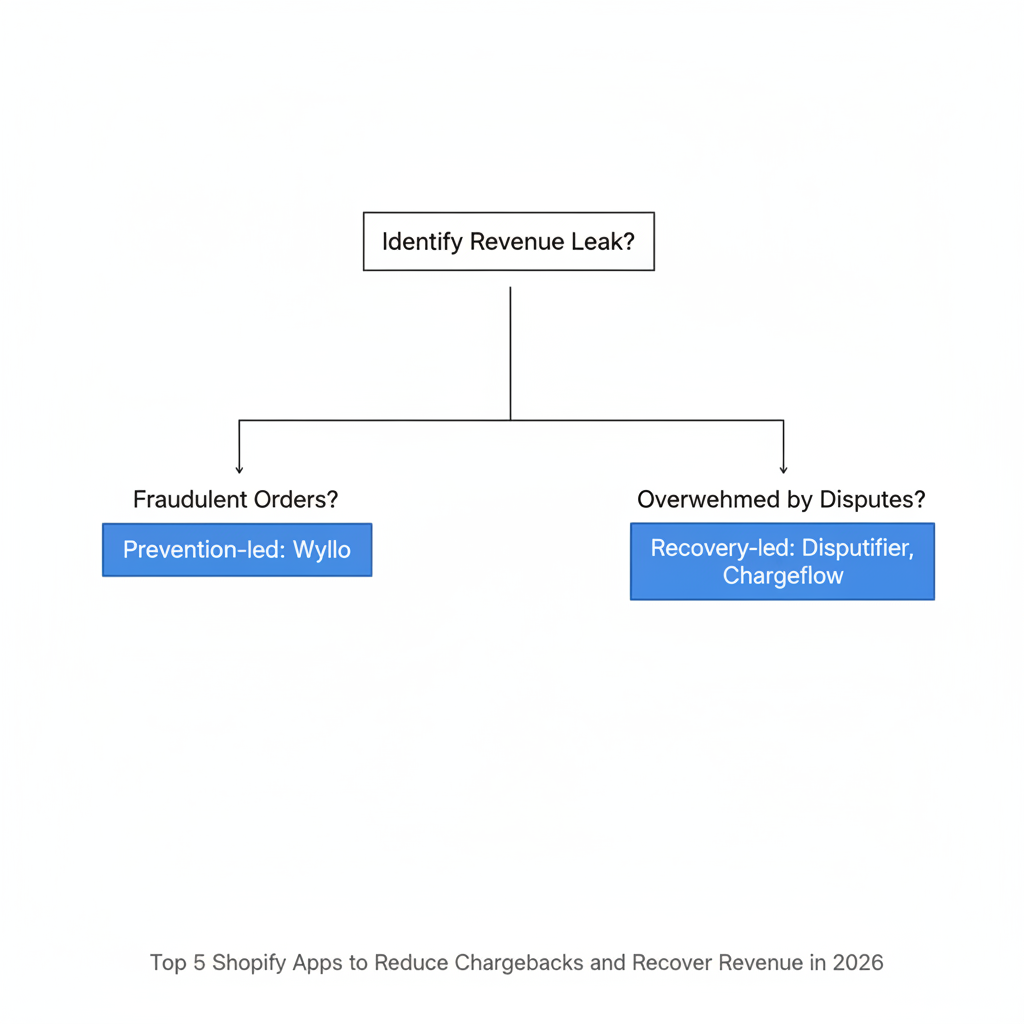
The right chargeback app depends on whether your main problem is fraud prevention, friendly fraud, or manual dispute workload. Most merchants should start by identifying where revenue is leaking first.
If you are getting obviously fraudulent orders, choose a prevention-led tool like Wyllo. If your team is overwhelmed by disputes, choose a recovery-led tool like Disputifier or Chargeflow. If you just need a simple way to reduce disputes before they hit your processor ratio, Chargeback: Auto Prevention is a smart starting point.
I also recommend looking beyond the app itself. Chargebacks often spike because of weak customer communication, confusing billing descriptors, slow support, or fulfillment delays. Apps help a lot, but they work best alongside better store operations. If you sell subscriptions or post-purchase add-ons, you may also want to review your upsell flow and customer expectations. My guides to the best upsell apps for Shopify and returns management apps can help reduce customer frustration that often turns into disputes.
What is the best Shopify chargeback app for your store size?
The best app by store size changes based on order volume, staff time, and dispute exposure. Small stores usually need simplicity, while larger stores need automation and broader coverage.
| Store type | Recommended app | Why |
|---|---|---|
| New or small Shopify store | Chargeback: Auto Prevention | Free to install and easy to test with low commitment |
| Growing DTC brand | Chargeflow | Best all-in-one balance of prevention and recovery |
| Lean team with no ops bandwidth | Disputifier | Done-for-you workflows reduce internal workload |
| Fraud-heavy niche | Wyllo | Fraud screening focus helps stop bad orders earlier |
| Testing AI recovery tools | ChargePay | AI-led dispute workflow is worth comparing in trials |
Which Shopify chargeback app should you pick in 2026?
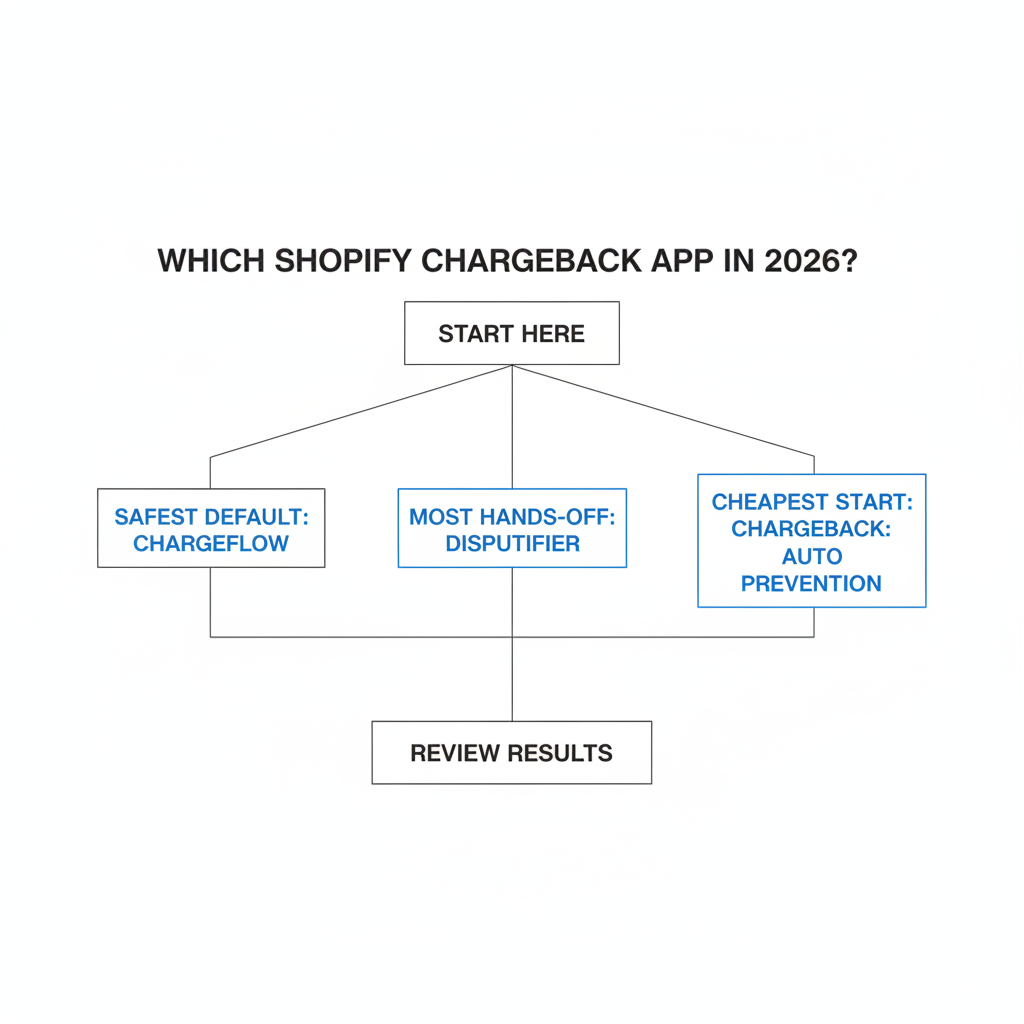
If you want the safest default choice, pick Chargeflow. If you want the most hands-off service, pick Disputifier. If you want the cheapest way to start reducing disputes, pick Chargeback: Auto Prevention.
My honest view is that most merchants should not overcomplicate this. Start with the app that matches your biggest pain point right now. Then review results after 30 to 60 days using clear metrics like dispute rate, recovered revenue, manual hours saved, and false positive order declines.
In my experience building Shopify apps, stores get the best outcomes when they treat chargeback software as part of a broader retention and trust system. The app matters, but so do your shipping updates, support responsiveness, checkout clarity, and refund policies.
| App | Best for | Pricing | Pros | Cons |
|---|---|---|---|---|
| Chargeflow | Most merchants overall | Contact for pricing | All-in-one platform, strong reputation, prevention plus recovery | Pricing is not transparent upfront |
| Disputifier | Hands-off chargeback management | 20% of recovered revenue + $0.05/order prevention | Outcome-based pricing, low admin burden, alert support | Can become expensive at scale depending on recovery volume |
| Chargeback: Auto Prevention | Budget-conscious stores | Free to install, pay per alert | Easy entry point, strong rating, simple prevention focus | Less comprehensive than full-suite tools |
| Wyllo | Fraud-heavy stores | Contact for pricing | Fraud screening focus, prevention before fulfillment | Less clearly positioned for recovery-first needs |
| ChargePay | AI recovery testing | Varies | AI-led workflow, recovery-focused | Needs closer evaluation against established competitors |
For broader research, you can also browse Shopify's official fraud app category, compare vendor claims against independent writeups like Chargeflow's chargeback solutions guide, and review other market comparisons such as this fraud prevention roundup. Just remember that the best app is the one that fits your store's actual dispute pattern, not the one with the most aggressive marketing page.