Shopify craft subscriptions are becoming one of the most attractive recurring revenue models for makers in 2026. If you sell craft supplies, project kits, stickers, sewing patterns, candle-making materials, journaling ephemera, or DIY experiences, a subscription box can turn unpredictable one-off sales into steady monthly revenue with stronger customer retention.
In my experience building Shopify apps and working with merchants across upsells, reviews, and post-purchase flows, craft brands are especially well suited to subscriptions. The reason is simple: crafters buy repeatedly, love themed releases, and respond well to curation, surprise, and community. That combination is hard to beat.
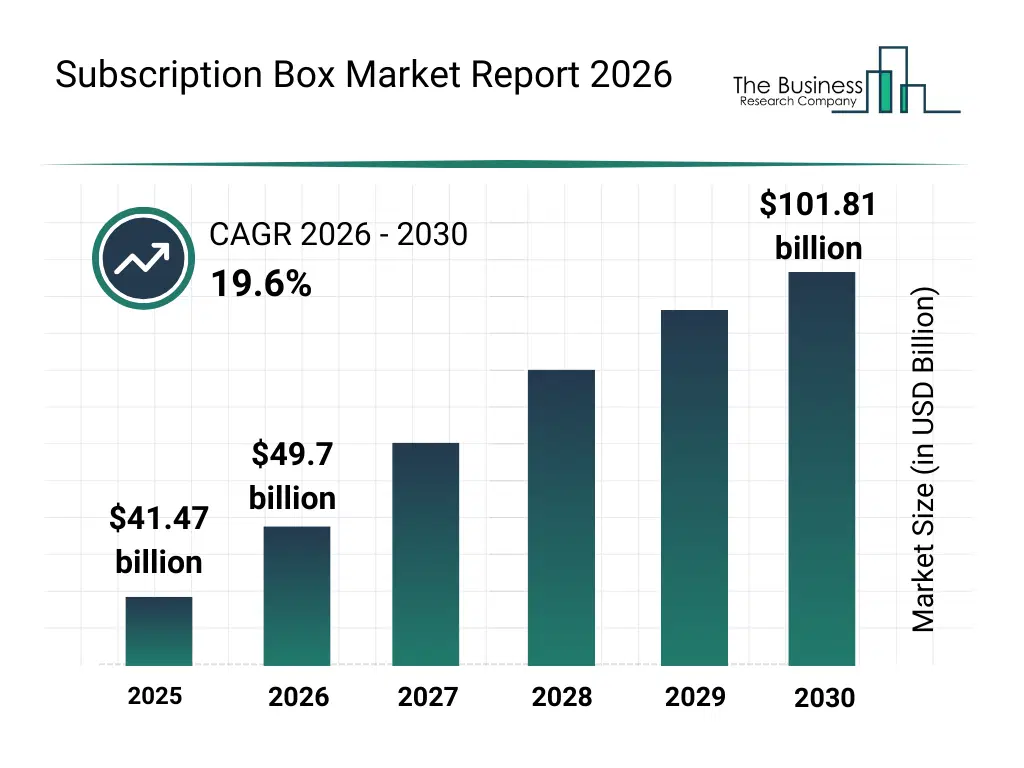
The bigger trend backs this up. Shopify highlighted the global subscription box market reaching $41.47 billion in 2025 and projected to hit $49.7 billion in 2026. For craft merchants, that growth is not just a headline. It is a practical opportunity to build a business with better cash flow, better inventory planning, and higher lifetime value.
What are Shopify craft subscriptions?
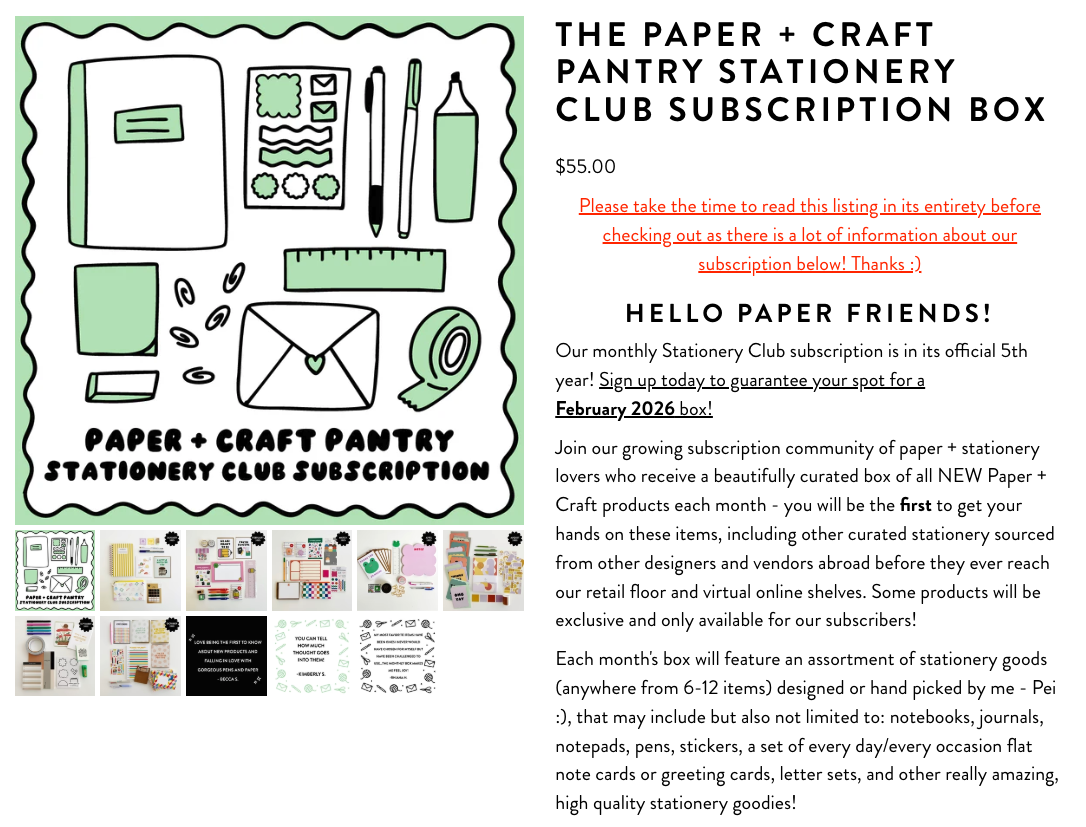
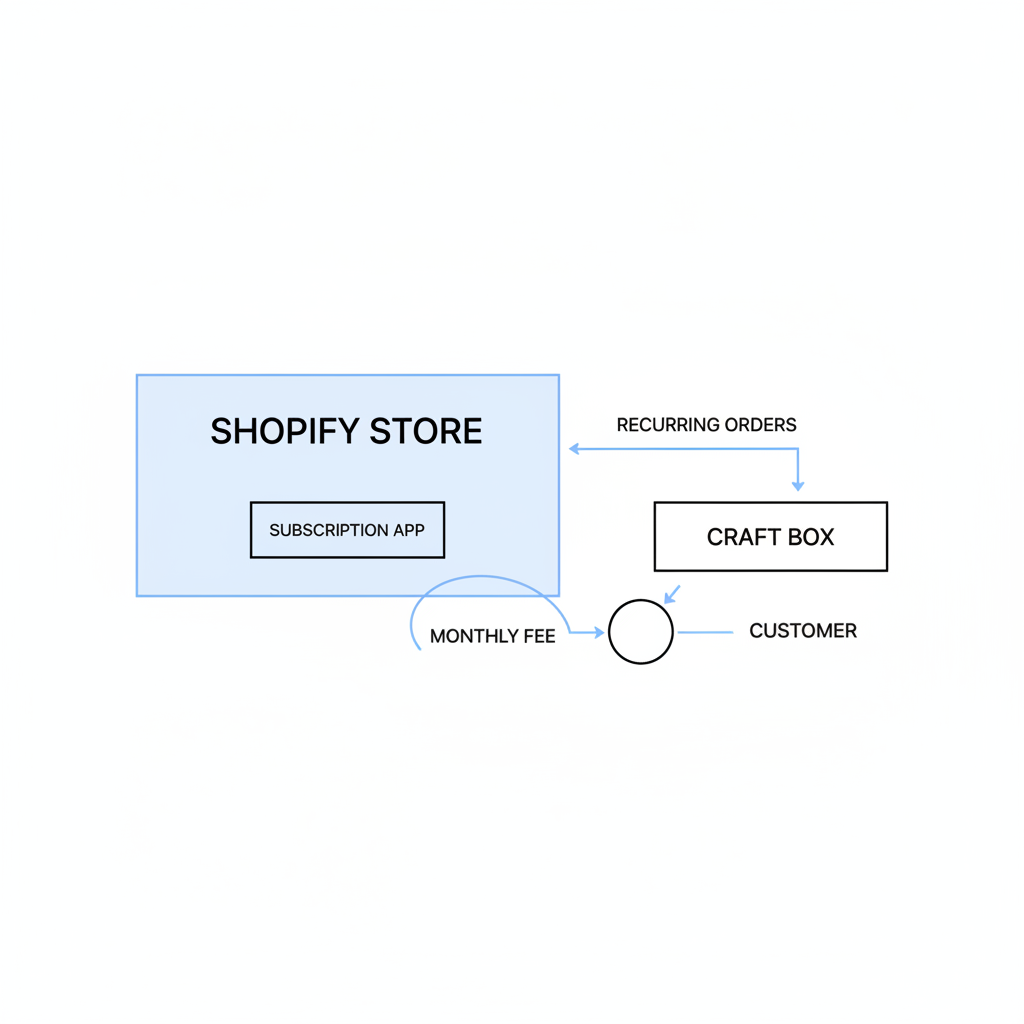
Shopify craft subscriptions are recurring offers sold through a Shopify store where customers receive craft materials, project kits, tools, or themed DIY products on a monthly, quarterly, or bimonthly schedule. They combine Shopify's ecommerce stack with subscription billing apps to automate repeat orders.
At the simplest level, you are selling a box or bundle on a recurring cadence. That box might include scrapbook supplies, embroidery kits, candle-making ingredients, planner stickers, knitting projects, or seasonal kids' crafts. The merchant benefits from recurring revenue, and the customer gets convenience plus novelty.
What makes the craft niche different from other subscription categories is the built-in habit loop. Many beauty and food subscriptions rely on replenishment. Craft subscriptions often rely on identity and anticipation. Customers are not just buying supplies. They are buying the feeling of having their next creative project ready to go.
Why are craft subscription boxes exploding in 2026?
Craft subscription boxes are growing fast in 2026 because they fit both consumer behavior and Shopify's tooling. Customers want convenient, curated hobbies, and merchants want more predictable revenue.
The strongest driver I keep seeing is that craft boxes solve a real friction point. A lot of customers want to make something, but they do not want to source ten separate supplies, compare brands, or wonder whether they forgot a key tool. A well-built box removes that friction and creates a guided buying experience.
There is also a major trend overlap with cottagecore, nostalgia, journaling, personalized gifting, and offline hobbies. Those aesthetics translate perfectly into subscription packaging and themed monthly drops. Vintage ephemera, washi tape, wax seals, mini sewing kits, crochet projects, and candle-making sets all lend themselves to repeatable monthly concepts.
From a business perspective, subscriptions smooth out demand. Instead of hoping each product launch performs, you can start each month with a base of committed revenue. That matters a lot if you are a solo founder or small team trying to plan purchasing and production.
What types of craft subscription models work best on Shopify?
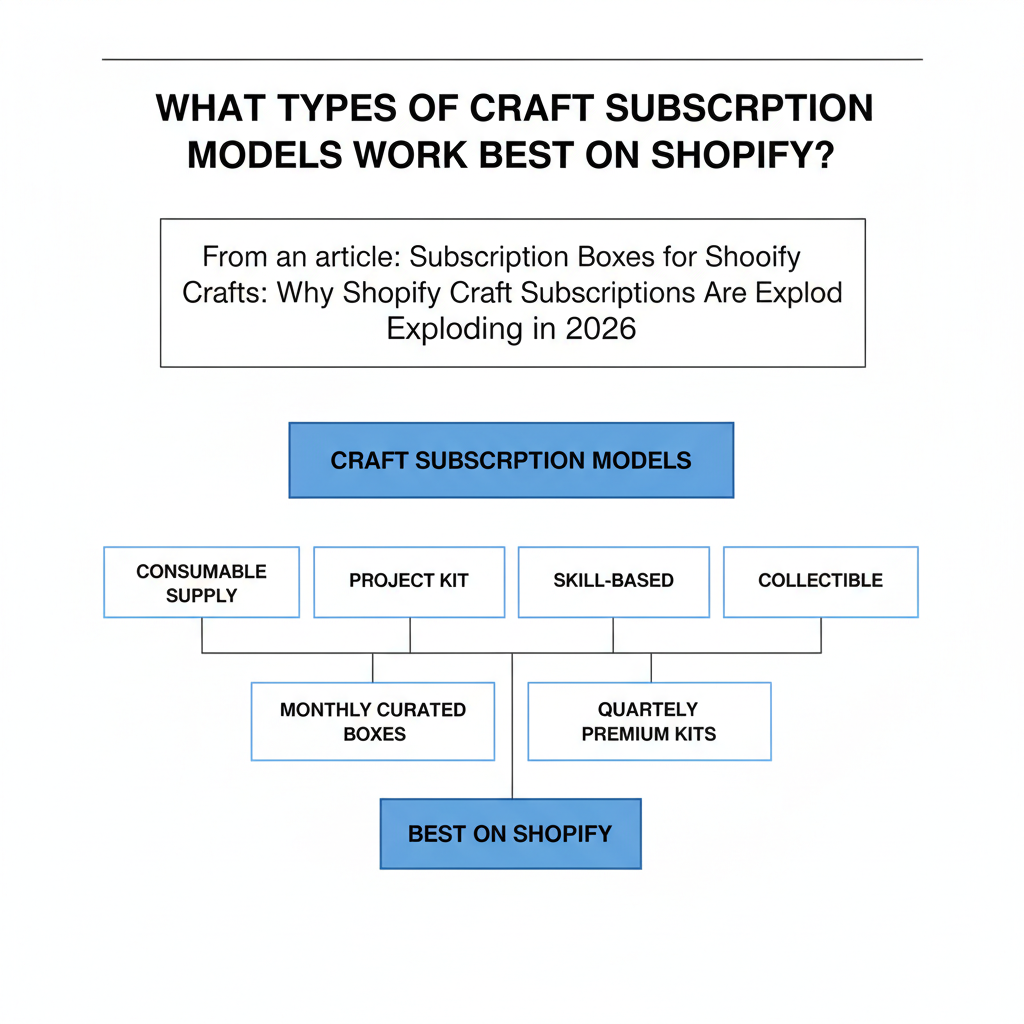
The best craft subscription model depends on whether your products are consumable, collectible, skill-based, or project-based. In most cases, monthly curated boxes and quarterly premium kits work best.
I usually think about craft subscriptions in four practical buckets:
- Consumable supply boxes - stickers, paper goods, beads, wax melts, paints, yarn, resin add-ons
- Project kit subscriptions - one complete DIY project each month with instructions and tools
- Skill-building subscriptions - progressive sewing, knitting, embroidery, woodworking, or journaling series
- VIP maker clubs - recurring access to exclusive patterns, tutorials, early releases, and members-only products
For most Shopify merchants, project kit subscriptions are the easiest starting point because the value is obvious. Customers understand what they are getting, and you can market each month's project clearly with photos, videos, and social proof.
Consumable boxes tend to have the best replenishment logic. Skill-building subscriptions often create the highest retention because customers want to continue the series. VIP clubs can be highly profitable, but they require stronger brand loyalty and content consistency.
Which cadence should you choose?
The best cadence for most craft brands is monthly for lower-ticket boxes and quarterly or bimonthly for premium kits. The right schedule depends on how quickly customers use the materials and how much work it takes you to curate each shipment.
Monthly works well for stickers, journaling supplies, planner accessories, and smaller DIY projects. Bimonthly or quarterly works better for larger sewing kits, premium mixed-media boxes, and home decor craft projects where customers need more time to complete each box.
In practice, I have seen merchants underestimate fulfillment pressure. If you are still validating demand, a bimonthly launch can be smarter than monthly. It gives you more breathing room while still creating recurring revenue.
What are the best examples of craft subscription boxes in 2026?
The best examples show clear positioning, strong perceived value, and a niche audience. They do not try to be everything to everyone.
Here is a comparison of notable craft subscription box models and pricing benchmarks from the latest research data.
| Box Name | Price | Frequency | Retail Value | Best For | Key Takeaway |
|---|---|---|---|---|---|
| CoraCreaCrafts Vintage Box | $50/month | Monthly | $100+ | Junk journaling and vintage beginners | Strong 2x value proposition with trend-led curation |
| CoraCreaCrafts Curiosities | $95 every 2 months | Bimonthly | $180+ | Eclectic collectors | Higher AOV through rare and premium inclusions |
| CoraCreaCrafts Treasure | $140 every 2 months | Bimonthly | $280+ | Serious hobbyists | Premium positioning supports better margins |
| CoraCreaCrafts Sticker Lovers | $24/month | Monthly | $45+ | Planner and sticker fans | Great entry-level subscription for broad appeal |
| Adults & Crafts Crate | About $40/month plus shipping | Monthly | N/A | All-in-one trendy projects | Prepaid discounts help cash flow |
| This Month's Craft | $35.97/month plus shipping | Monthly | N/A | Hands-on DIY subscribers | 35,160+ boxes sold shows real category demand |
| Create Box | From $64.99 | Bimonthly | N/A | Home decor craft projects | Higher ticket works when projects feel giftable |
| Craft in Style | About $30-40/month | Monthly | N/A | Pinterest-inspired crafts | Broad appeal, especially for social content |
The clear pattern is that the $25 to $50 per month range is the sweet spot for mainstream adoption. Premium boxes can work very well too, but they need stronger curation, stronger branding, and a customer who already trusts your taste.
How do I price a craft subscription box on Shopify?
The best way to price a craft subscription box is to balance perceived value, shipping complexity, and gross margin. Most successful boxes aim to feel like 2x retail value without destroying profitability.
In craft subscriptions, customers are not only paying for the raw materials. They are paying for curation, convenience, packaging, instructions, discovery, and the emotional value of a finished project. That means you can price above simple component cost, but you still need the math to work.
Here is a practical pricing framework I recommend:
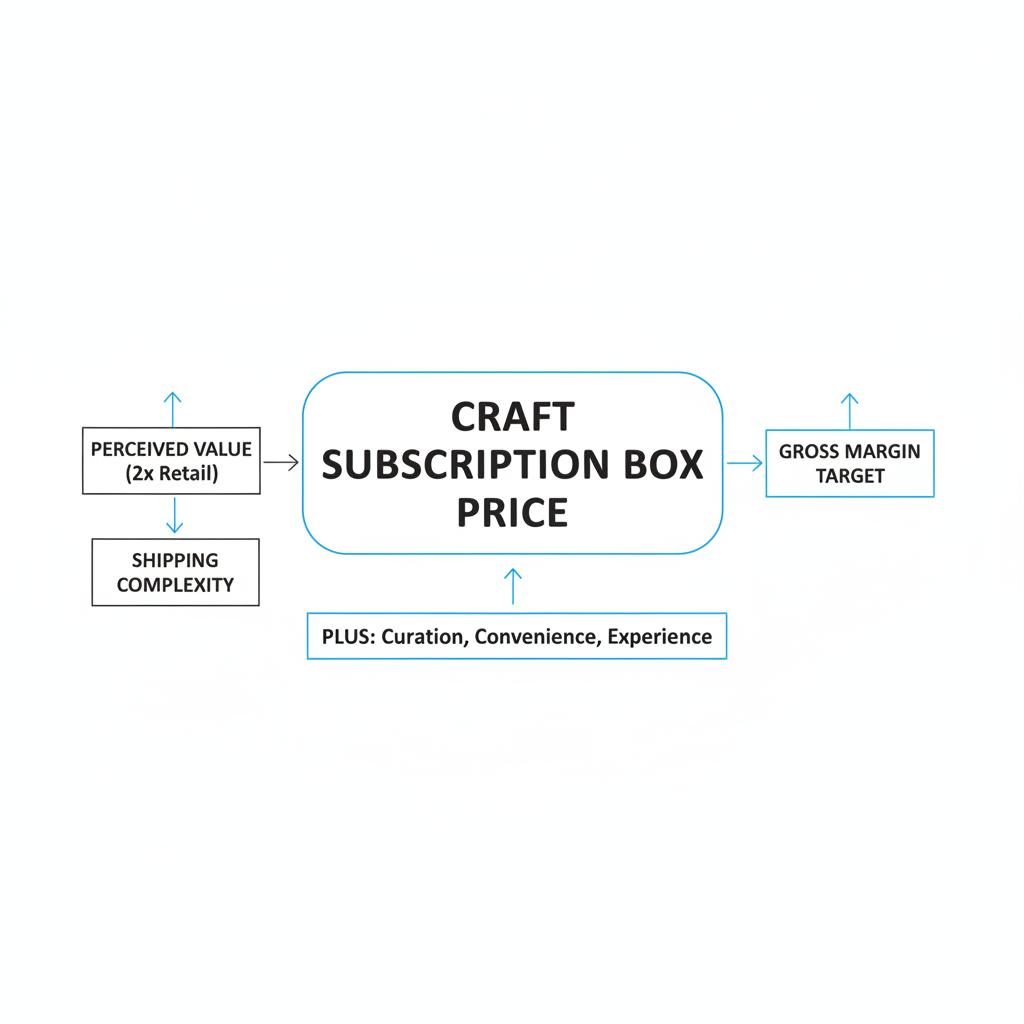
- Calculate product cost for every item in the box.
- Add packaging and inserts.
- Add average pick, pack, and shipping cost.
- Add app fees, payment fees, and expected damaged shipment cost.
- Target a gross margin that leaves room for acquisition and churn.
For many merchants, that leads to a box priced around 2.5x to 3.5x landed cost. If your landed cost is $14, pricing at $39 can be healthy. If your landed cost is $22, pricing at $49 to $59 may be more realistic.
Prepaid plans are especially useful here. Adults & Crafts-style offers with 6-month or 12-month prepay discounts improve cash flow and reduce churn risk. I am a big fan of prepaid options for craft brands because they also align well with gifting.
Should you offer free shipping?
Free shipping can improve conversion, but only if you have enough margin to absorb it. For heavier craft kits, baked-in shipping is often safer than truly free shipping.
In my experience, customers care more about clear shipping expectations than the exact label. If you say "$39 plus $8 shipping" and the box feels worth it, that can still convert well. What hurts conversion is surprise shipping added late in checkout.
How do you set up Shopify craft subscriptions?
You set up Shopify craft subscriptions by choosing a subscription app, creating your recurring products, defining billing rules, and building a landing page that explains the offer clearly. The technical setup is straightforward. The offer design matters more.
Shopify supports subscriptions through approved apps and subscription APIs. If you want a deep overview of the platform side, LaunchTip already has The Essential Guide to the Native Shopify Subscriptions App and a broader roundup in A Round-up of the 9 Best Subscription Apps for Shopify in 2026.
Here is the setup flow I would use for a new craft brand:
- Pick a niche - for example journaling, embroidery, candle-making, or kids' sensory crafts.
- Create one hero subscription - avoid launching three different boxes on day one.
- Use a subscription app like Recharge Subscriptions, Bold Subscriptions, or Subscribfy depending on your needs.
- Build a product page and landing page with examples of past boxes, FAQs, shipping schedule, and cancellation terms.
- Set up subscriber emails for renewal reminders, upcoming theme reveals, and skipped shipment recovery.
- Add upsells for one-time extras, previous boxes, or matching tools.
- Track churn, skip rate, and prepaid take rate from month one.
If your craft subscription includes optional add-ons, post-purchase upsells can work very well. I have seen simple add-ons like extra sticker packs, premium scissors, refill bundles, or matching paper sets lift order value without making the subscription itself more complex. If that is part of your strategy, you may also want to read How to Upsell Subscription Products on Shopify.
What is the best subscription app for Shopify craft subscriptions?
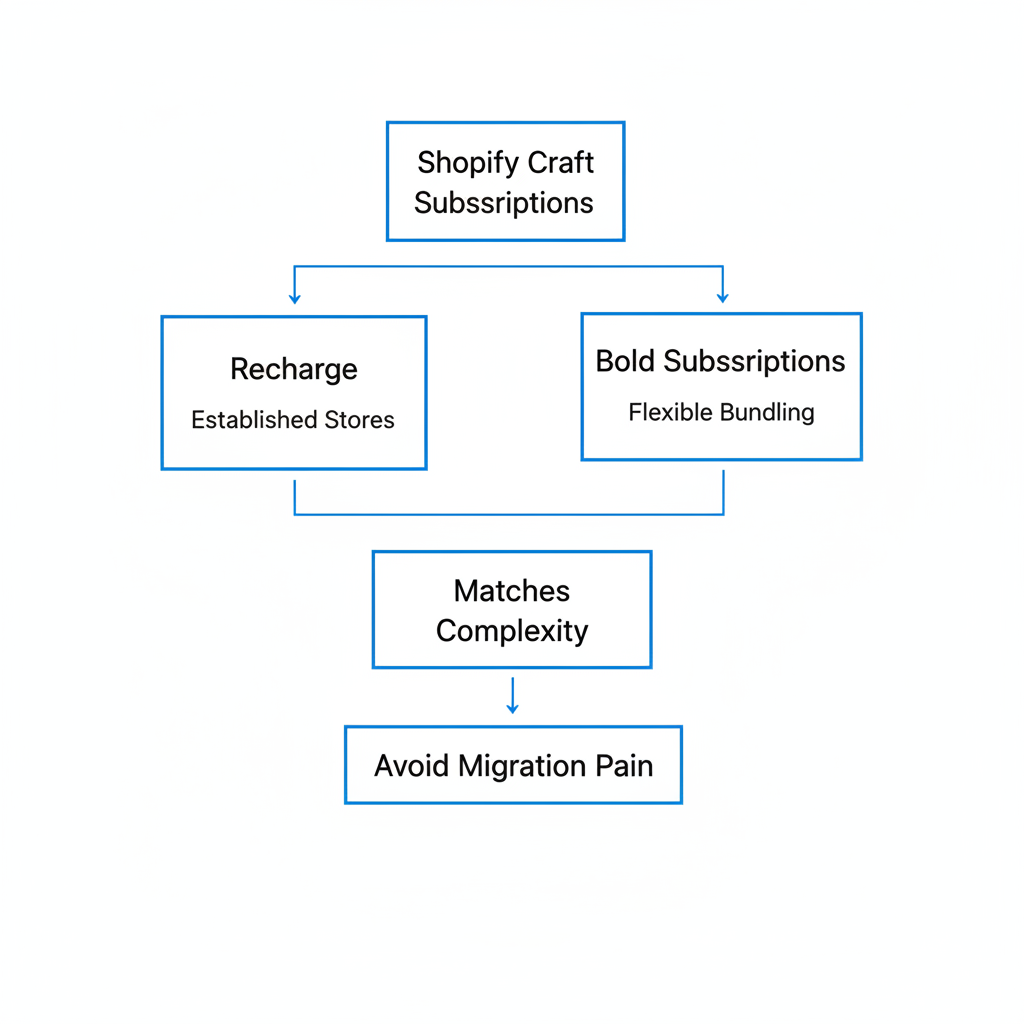
The best subscription app for Shopify craft subscriptions is the one that matches your complexity level. For most established stores, Recharge is the safest choice. For merchants who want flexible bundling and promotional logic, Bold Subscriptions is worth a look.
I would not choose an app based only on monthly price. For subscription businesses, migration pain is real. You want a platform that handles recurring billing, customer self-management, retries, analytics, and discount logic without constant workarounds.
| App | Best For | Why It Fits Craft Boxes | Link |
|---|---|---|---|
| Recharge Subscriptions | Scaling brands | Strong subscriber portal, analytics, workflows, and broad ecosystem adoption | View app |
| Bold Subscriptions | Flexible offers and bundles | Useful if you want more promotional and bundling control | View app |
| Subscribfy | Simpler setups | Good for merchants testing recurring products without a huge stack | View app |
| Appstle Subscriptions | Value-focused merchants | Popular in the Shopify ecosystem and often considered by early-stage stores | View app |
Research cited in this topic suggests Recharge powers 20,000+ stores and can contribute to a meaningful lift in lifetime value. Whether that exact uplift applies to your store depends on your offer and retention, but the broader point is true: subscription infrastructure matters.
If you are also selling curated kits, bundles, or build-your-own experiences, it is worth thinking beyond subscriptions alone. Related LaunchTip guides like How Best to Create a Build a Box in Shopify and How to Create Product Kits for Your Shopify Store in 2026 can help you structure the offer.
How can you reduce churn for a craft subscription box?
The best way to reduce churn is to make each shipment feel useful, exciting, and flexible. Customers stay subscribed when they consistently feel they are getting creative momentum, not just more stuff.
In craft subscriptions, churn usually comes from one of five problems: repetitive themes, too much unused inventory, lack of time to complete projects, shipping frustration, or poor value perception. Most of these are fixable.
Here are the retention levers I would prioritize:
- Preview upcoming themes so customers stay excited about the next box
- Allow skip, pause, and swap options to reduce cancellations
- Offer subscriber-only add-ons that personalize the box
- Use tutorials and community content so customers actually complete projects
- Reward tenure with exclusive tools, bonus patterns, or anniversary gifts
One thing I have learned from building apps around post-purchase and merchant workflows is that friction compounds. If a subscriber cannot easily update an address, skip a shipment, or understand their renewal date, churn rises. Convenience is part of the product.
For craft brands specifically, content can be a retention engine. A short video tutorial, printable instructions, or a members-only project gallery can make the same physical box feel much more valuable.
Do discounts reduce churn?
Discounts can reduce churn, but they work best when paired with a better offer. A discount alone rarely fixes a weak subscription concept.
Prepaid discounts can be excellent because they commit customers for longer. Save offers at cancellation can help too, but I prefer using them selectively. If too many subscribers only stay when discounted, your box may be priced or positioned incorrectly.
How much revenue can a Shopify craft subscription generate?
A Shopify craft subscription can generate meaningful recurring revenue even at a modest subscriber count. The model becomes especially attractive once you combine subscription income with add-ons, one-time boxes, and prepaid plans.
Let us use simple numbers. If you charge $39/month and reach 500 active subscribers, that is $19,500 in monthly recurring revenue before add-ons and shipping. At 1,000 subscribers, you are at $39,000 MRR. Annualized, that is roughly $468,000 ARR.
Now add one-time extras. If 20% of subscribers buy a $12 add-on each month, that is another $1,200 on 500 subscribers or $2,400 on 1,000 subscribers. This is why craft subscriptions can outperform plain product catalogs. They create recurring revenue and repeated merchandising opportunities.
The research behind this topic mentions that craft subscriptions often see 2x to 3x lifetime value because supplies deplete and themes rotate. That tracks with what I see in the broader Shopify ecosystem. When a subscription fits a recurring hobby, LTV can become very healthy.
What is the best niche for a new Shopify craft subscription?
The best niche is one with repeat purchase behavior, visual appeal, and a clear audience identity. For most new merchants, stickers and planner supplies, journaling ephemera, candle-making kits, and beginner embroidery or sewing projects are strong options.
I would avoid starting with a niche that requires too many custom components or high breakage risk. Fragile ceramics, highly regulated materials, or overly personalized projects can make fulfillment harder before you have proven demand.
When I test business ideas mentally, I ask three questions:
- Will customers want a fresh version of this every month?
- Can I show the value visually on product pages and social media?
- Can I pack and ship it consistently without chaos?
If the answer is yes to all three, it is probably a viable subscription niche. If you are still deciding what to build, LaunchTip also has a broader idea list in 59 Profitable Business Ideas You Can Launch on Shopify Today.
How should you market Shopify craft subscriptions?
The best way to market Shopify craft subscriptions is to sell the outcome, not just the contents. Customers subscribe because they want an easier, more inspiring creative routine.
Your landing page should show finished projects, not just loose supplies on a table. Your social content should show the unboxing, the making process, and the final result. If possible, show beginner-friendly moments. A lot of potential subscribers are not experts. They are aspiring hobbyists.
These channels tend to work best:
- TikTok and Instagram Reels for unboxings and project transformations
- Pinterest for evergreen discovery in sewing, journaling, and home decor niches
- Email for theme reveals, waitlists, and renewal engagement
- UGC and reviews for trust and social proof
- Gift campaigns around holidays, birthdays, and Mother's Day
Reviews matter a lot for subscriptions because customers are committing to an ongoing relationship. If you need stronger social proof, a reviews app like Lumo Reviews can help surface photo reviews and customer feedback more clearly.
For merchants using quiz-led personalization, a pre-subscription quiz can also work well. It helps route customers into the right box style or skill level. That is one reason I like guided selling for craft brands. It reduces uncertainty before the first order.
Are Shopify craft subscriptions worth starting in 2026?
Yes, Shopify craft subscriptions are worth starting in 2026 if you have a focused niche, a strong value proposition, and the operational discipline to ship consistently. This is not a get-rich-quick model, but it is one of the better recurring revenue opportunities for maker brands.
The market tailwinds are real. Consumer interest in hobbies, curated experiences, and recurring convenience is still strong. Shopify's subscription ecosystem is also much better than it was a few years ago, which means merchants no longer need awkward workarounds to get started.
That said, the winners will not be the stores with the most products. They will be the ones with the clearest concept. A subscription like "monthly vintage journaling treasures" is easier to market and retain than a vague "random craft box." Specificity sells.
In my experience, the best craft subscription stores treat the box as a product, a content engine, and a retention strategy all at once. If you can do that, shopify craft subscriptions can become the foundation of a very durable Shopify business.
How do I get started this month?
The fastest way to get started is to launch a simple pilot with one niche, one cadence, and one subscription app. You do not need a huge catalog to validate demand.
My recommended 30-day plan is straightforward:
- Choose one craft niche with clear visual appeal.
- Design one subscription box with a target price between $24 and $49.
- Source enough inventory for a small founding member batch.
- Set up the subscription in Recharge or a similar app.
- Create a landing page with FAQs, shipping dates, and a waitlist.
- Post unboxing and assembly content on social channels.
- Offer a founding member perk such as bonus supplies or a lower locked-in price.
If you can get the first 50 to 100 subscribers and keep them happy for three billing cycles, you will learn more than months of overplanning ever could. That is usually the point where the economics and retention patterns start becoming clear.
For craft merchants, recurring revenue is no longer just for beauty, coffee, or supplements. In 2026, it is becoming one of the smartest ways to build a differentiated Shopify brand around creativity, routine, and community.