Choosing the right CRM for your Shopify store can feel overwhelming. You need a system that tracks customer data, automates marketing, and grows with your business without breaking the bank. But with so many options, where do you start?
Today, we’re breaking down three of the most popular CRM solutions for Shopify merchants: HubSpot, Salesforce, and Klaviyo. We’ll compare their pricing, integration methods, ease of use, and which store sizes they serve best. By the end, you’ll know exactly which platform fits your business or whether a Shopify-native solution like NoteDesk might be the smarter choice.
The Quick Comparison: At a Glance
Before we dive deep, here’s what you need to know:
HubSpot: Best for businesses wanting an all-in-one marketing, sales, and service platform with strong automation capabilities.
Salesforce: Ideal for enterprise-level Shopify stores needing extensive customization and complex workflows.
Klaviyo: Purpose-built for ecommerce email and SMS marketing with deep Shopify integration.
NoteDesk: A native Shopify CRM designed specifically for merchants who want simple task management, customer notes, and team collaboration without the complexity or cost of enterprise platforms.
Integration: How They Connect to Your Shopify Store
HubSpot + Shopify Integration
Integration Type: Direct integration via HubSpot’s Data Sync app (available in Shopify App Store)
How It Works: HubSpot offers a native integration that automatically syncs customer data, orders, and products between platforms. As of 2025, HubSpot uses its Data Sync platform, which replaced the legacy integration in May 2025.
What Syncs:
- Customer profiles and contact information
- Order data (appears as deals in HubSpot)
- Product catalog
- Abandoned carts (cart object)
- Purchase history
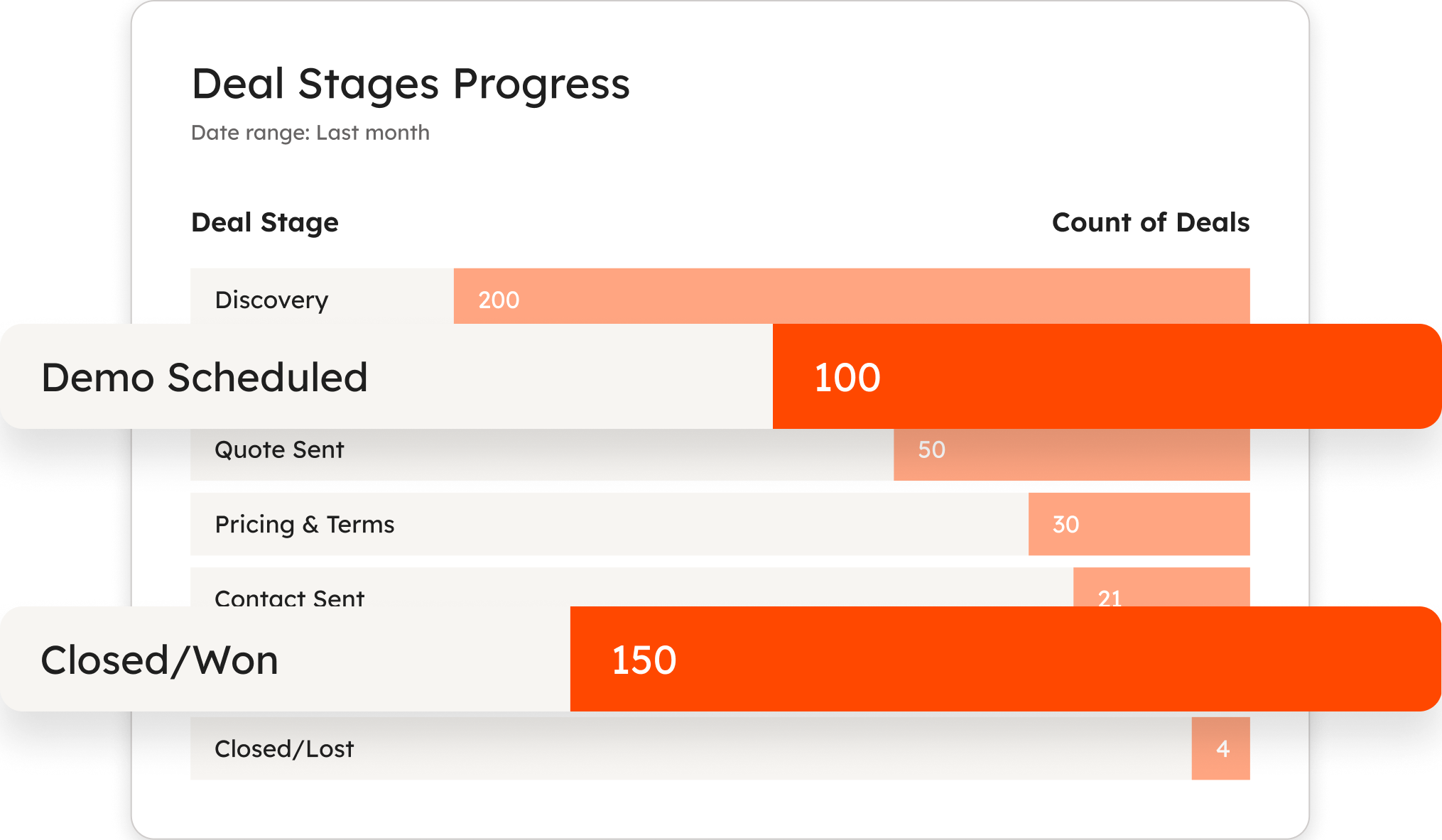
Sync Options: You can choose one-way or two-way sync. One-way sends Shopify data to HubSpot, while two-way sync updates customer information in both systems.
Setup Difficulty: Moderate. You’ll need super admin access or App Marketplace permissions in HubSpot. The integration requires configuring which objects to sync and setting up workflows.
Real-World Performance: Data syncs within 10 minutes of changes. HubSpot automatically adds tracking code to your Shopify store for behavioral tracking.
Potential Issues: Some merchants report challenges with the transition from the legacy app to Data Sync, including custom field mapping requirements and occasional sync errors that need troubleshooting.
Salesforce + Shopify Integration
Integration Type: Third-party apps required (no native direct integration)
How It Works: Unlike HubSpot and Klaviyo, Salesforce doesn’t offer a native integration built by Salesforce itself. You’ll need to use third-party connector apps available in both the Shopify App Store and Salesforce AppExchange.
Popular Connector Apps:
- CRM Perks: Salesforce Sync (starts at $19/month)
- Shophop: Salesforce Sync ($50/month)
- Shopperforce by Lean Rise
- Custom API integrations via developers
What Syncs:
- Customer data to Salesforce Contacts, Leads, or Accounts
- Order information as Sales Orders or Opportunities
- Product catalog
- Custom field mapping available
Setup Difficulty: Complex. Requires technical expertise or a Salesforce partner for optimal setup. You’ll need to configure object mapping, decide which Salesforce objects to use, and often customize workflows.
Real-World Performance: Sync speed varies by connector app. Real-time sync is possible with premium connectors, but many use batch syncing.
Potential Issues: Third-party dependency means you’re relying on another vendor for support. Custom development can be expensive. Multiple middleware options can be confusing to evaluate.
Klaviyo + Shopify Integration
Integration Type: Direct native integration (built by Klaviyo)
How It Works: Klaviyo offers the most seamless ecommerce-focused integration of the three. It’s specifically designed for online stores and syncs data in sub-200 milliseconds.
What Syncs:
- Customer profiles with purchase history
- Order data and revenue attribution
- Product catalog
- Browsing behavior (viewed products, collections)
- Abandoned cart data
- Custom properties
- Email and SMS subscription status
Sync Options: Two-way sync available. You can choose to sync all profiles or only Shopify-known profiles to Klaviyo.
Setup Difficulty: Easy. Most merchants complete the integration in under 15 minutes. The setup wizard guides you through permissions and data preferences.
Real-World Performance: Industry-leading sync speed at sub-200 milliseconds. Over 117,000 brands use Klaviyo with Shopify. The integration includes onsite tracking for behavioral triggers and sign-up forms.
Potential Issues: Very few integration issues reported. Most problems relate to email service provider conflicts if you don’t disconnect previous ESPs before installing Klaviyo.
Pricing Breakdown: What You’ll Actually Pay
HubSpot Pricing (2025)
Free Plan: Limited CRM functionality, not suitable for ecommerce integration
Marketing Hub Starter: $20/month per seat
- Basic email marketing (limited to 10 automated actions)
- Cannot integrate with Shopify effectively
- Not recommended for ecommerce
Marketing Hub Professional: Starting at $890/month (minimum 3 seats)
- Mandatory $3,000 onboarding fee
- Full Shopify integration capabilities
- Omnichannel automation
- Advanced reporting
- A/B testing
- Custom workflows
Marketing Hub Enterprise: $3,600/month for 10,000 contacts
- Advanced AI features
- Predictive lead scoring
- Custom reporting
- Priority support
Reality Check: To effectively use HubSpot with Shopify, you’re looking at a minimum investment of $3,890 in year one ($890 monthly x 12 months + $3,000 onboarding = $13,680 first year). This puts HubSpot firmly in the enterprise category for pricing.
Best For: Mid-sized to large Shopify stores with budgets exceeding $10,000/year who need comprehensive marketing, sales, and service tools in one platform.
Salesforce Pricing (2025)
Important Note: As of August 2025, Salesforce implemented a 6% price increase across most editions.
Free Plan: Starter edition for single user with basic features (not suitable for teams)
Starter Suite: $25/user/month
- Basic CRM for small businesses
- Sales, marketing, and service features
- Limited automation
- 10GB file storage
Sales Cloud Professional: $80/user/month (after August 2025 increase)
- Lead and opportunity management
- Forecasting
- Mobile app
- Integration API access
Sales Cloud Enterprise: $165/user/month (after August 2025 increase)
- Advanced customization
- Workflow automation
- Einstein AI capabilities
- API access for integrations
Sales Cloud Unlimited: $330/user/month (after August 2025 increase)
- Unlimited customization
- 24/7 support
- Advanced analytics
- Premier Success Plan included
Add-Ons to Consider:
- Third-party Shopify connector: $19-$50/month
- Data storage overages: Additional costs
- Marketing Cloud: Separate pricing starting at $1,250/org/month
- Implementation partners: $5,000-$50,000+ for complex setups
Reality Check: For a 5-person team using Enterprise Edition plus a Shopify connector, you’re looking at approximately $9,900/year ($165 x 5 x 12 = $9,900) plus connector fees and potential implementation costs. Salesforce requires annual contracts.
Best For: Large Shopify Plus stores or enterprise businesses needing extensive customization, multiple departments using CRM, and complex sales processes.
Klaviyo Pricing (2025)
Free Plan: Up to 250 contacts
- 500 email sends per month
- 150 SMS/MMS credits
- Full feature access (except mobile push)
- Perfect for testing
Email Plan: Usage-based pricing
- 500 contacts: $20/month
- 1,000 contacts: $30/month
- 2,500 contacts: $60/month
- 5,000 contacts: $100/month
- 10,000 contacts: $150/month
- Scales with your list size
Email + SMS Plan: Combined pricing
- 500 contacts: $45/month (includes 1,250 SMS/MMS credits)
- 1,000 contacts: $60/month
- 5,000 contacts: $155/month
- 10,000 contacts: $245/month
What’s Included (all paid plans):
- Unlimited email sends
- Pre-built automation flows
- Advanced segmentation
- A/B testing
- Predictive analytics
- Revenue reporting
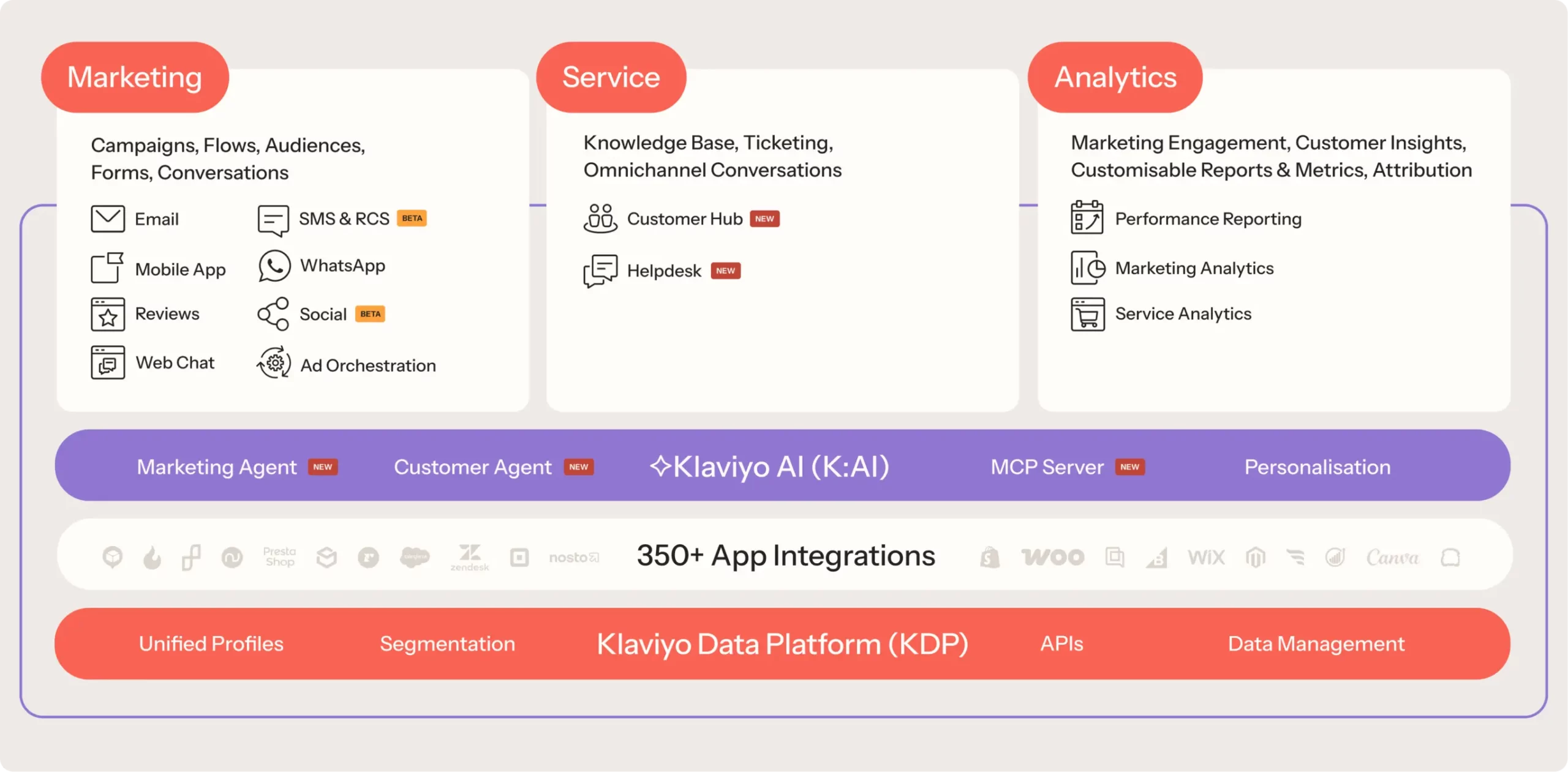
- 350+ integrations
- Email and chat support
Reality Check: A typical growing Shopify store with 2,500 contacts using email and SMS would pay $85/month ($1,020/year). This is 93% less expensive than HubSpot Professional and 89% less than Salesforce Enterprise for a 5-person team.
Best For: Small to medium Shopify stores focused on email and SMS marketing who want powerful automation without enterprise pricing.
Pricing Comparison Summary
| Platform | Entry-Level Annual Cost | Mid-Tier Annual Cost | Enterprise Annual Cost |
|---|---|---|---|
| HubSpot | $240 (inadequate for Shopify) | $13,680 (Professional + onboarding) | $43,200+ |
| Salesforce | $300 (single user) | $9,900 (5 users, Enterprise) | $19,800+ (5 users, Unlimited) |
| Klaviyo | Free (up to 250 contacts) | $1,020 (2,500 contacts, Email + SMS) | $3,540+ (15,000 contacts) |
Feature Comparison: What You Get for Your Money
Marketing Automation
HubSpot: Full marketing automation suite including email, social media, ads, landing pages, and workflows. Best for multi-channel marketing beyond email.
Salesforce: Requires Marketing Cloud (separate product, $1,250+/month) for advanced automation. Sales Cloud has basic email capabilities but not designed for marketing automation.
Klaviyo: Purpose-built for ecommerce marketing automation with 80+ pre-built flows, behavioral triggers, and predictive analytics. Limited to email, SMS, mobile push, and review collection.
Email Marketing
HubSpot: Professional-grade email builder with drag-and-drop editor. Deliverability rate: 75.83% (as of December 2024). Strong A/B testing capabilities.
Salesforce: Basic email functionality in Sales Cloud. Requires Marketing Cloud for advanced email marketing. Not optimized for ecommerce campaigns.
Klaviyo: Industry-leading ecommerce email platform with highly customizable templates. Deliverability rate: 43.66% (Q1 2025). Advanced segmentation based on purchase behavior, product recommendations, and predictive analytics.
Customer Relationship Management
HubSpot: Comprehensive CRM with contact management, deal tracking, pipeline visualization, and activity logging. Great for B2B and B2C businesses.
Salesforce: World’s #1 CRM with unmatched customization options. Best-in-class for complex sales processes, forecasting, and opportunity management. Steep learning curve.
Klaviyo: Customer profiles focused on purchase behavior and marketing engagement. Not a full-featured CRM but excellent for understanding customer lifetime value and purchase patterns.
Reporting & Analytics
HubSpot: Robust reporting with customizable dashboards, attribution reporting, and ROI tracking across marketing and sales activities.
Salesforce: Enterprise-level reporting and analytics. Tableau integration available. Revenue Intelligence costs $250/user/month. Complex but extremely powerful.
Klaviyo: Revenue-focused reporting with real-time dashboards showing email/SMS performance, customer lifetime value, predicted next order date, and attribution.
Team Collaboration
HubSpot: Built-in team features with task assignment, team inbox, internal notes, and notification systems. Designed for marketing, sales, and service teams working together.
Salesforce: Advanced team collaboration with Chatter, role-based permissions, and complex approval processes. Integrates with Slack (costs additional $6.75-$11.75/user/month).
Klaviyo: Basic team features with user permissions and shared campaign access. Not designed for extensive team collaboration beyond marketing.
Ease of Use: Learning Curve & Implementation Time
HubSpot
Learning Curve: Moderate to steep. The platform is extensive with many features across marketing, sales, and service.
Implementation Time:
- Basic setup: 1-2 weeks
- Full implementation with workflows: 4-8 weeks
- Professional onboarding (mandatory for Professional plan): Included
User Experience: Generally intuitive once learned. Navigation can be complex due to the breadth of features. Mobile app available.
Support Resources: Extensive knowledge base, HubSpot Academy (free certification courses), community forum, 24/7 support for paid plans.
Technical Expertise Required: Moderate. Marketers can handle basic setups, but complex workflows may require training or consultants.
Salesforce
Learning Curve: Very steep. Salesforce is notoriously complex and requires significant training.
Implementation Time:
- Basic setup: 2-4 weeks
- Enterprise implementation: 3-6 months
- Often requires Salesforce consultants/partners
User Experience: Powerful but not intuitive. The interface is dated compared to modern SaaS tools. Mobile app functional but complex.
Support Resources: Trailhead learning platform (excellent), massive community, extensive documentation. Support quality varies by plan (24/7 only with Unlimited or Premier Success Plan at 30% additional cost).
Technical Expertise Required: High. Most companies hire Salesforce administrators or work with implementation partners. Expect consulting costs of $5,000-$50,000+ depending on complexity.
Klaviyo
Learning Curve: Gentle to moderate. Purpose-built for ecommerce makes it more intuitive than general CRMs.
Implementation Time:
- Basic integration: 15-30 minutes
- First campaign: Same day
- Full automation setup: 1-2 weeks
User Experience: Modern, clean interface designed for marketers. Highly praised for usability. Mobile app available for monitoring campaigns.
Support Resources: Comprehensive help center, email and chat support (60 days free for new users, then paid plans only), extensive template library, and integration guides.
Technical Expertise Required: Low. Most merchants can set up and run Klaviyo without technical help. Advanced features may benefit from email marketing expertise.
Best CRM for Different Shopify Store Sizes
Startups & New Stores (0-$100K annual revenue)
Winner: Klaviyo (Free to $60/month)
Why: New stores need to focus on customer acquisition and retention without overspending. Klaviyo’s free plan gives you professional-grade email marketing tools to build your audience and recover abandoned carts.
Runner-Up: NoteDesk ($0-$19.99/month) for simple customer note-taking and task management.
Skip: HubSpot and Salesforce are overkill and too expensive at this stage.
Small Stores ($100K-$500K annual revenue)
Winner: Klaviyo ($60-$150/month)
Why: As your list grows, Klaviyo’s pricing remains affordable while providing increasingly sophisticated automation. Email marketing ROI is highest at this stage, making the investment worthwhile.
Consider: NoteDesk ($19.99-$59.99/month) alongside Klaviyo if you need better internal operations and team coordination.
Skip: HubSpot unless you have a dedicated sales team. Salesforce is still too complex and expensive.
Mid-Sized Stores ($500K-$2M annual revenue)
Winner: Klaviyo ($150-$400/month) OR HubSpot ($890+/month)
Why: Decision depends on your needs:
- Choose Klaviyo if email/SMS marketing is your primary growth channel
- Choose HubSpot if you need full marketing automation across multiple channels (ads, social, content marketing) plus sales pipeline management
Consider: Salesforce Enterprise if you have complex B2B wholesale alongside your DTC Shopify store.
Large Stores & Shopify Plus ($2M-$10M annual revenue)
Winner: Depends on complexity
Choose HubSpot ($3,600+/month) if:
- You have separate marketing, sales, and service teams
- You need sophisticated lead nurturing and content marketing
- You want one platform for all customer-facing operations
Choose Salesforce ($9,900+/year for 5 users) if:
- You have complex sales processes
- You need extensive customization
- You have multiple business units or brands
- You already have Salesforce expertise in-house
Keep Klaviyo alongside either option for superior ecommerce email marketing capabilities.
Enterprise Stores ($10M+ annual revenue)
Winner: Salesforce + Klaviyo combo
Why: At this scale, you need Salesforce’s enterprise capabilities for sales operations, custom workflows, and integration with other enterprise systems (ERP, data warehouses). However, Klaviyo often remains the better choice for ecommerce email marketing, so many enterprises run both.
Consider: HubSpot Enterprise if you prefer a more modern, all-in-one platform and don’t need Salesforce’s extreme customization.
The Hidden Costs You Need to Know
HubSpot Hidden Costs
- Mandatory $3,000 onboarding for Professional plan
- Additional seats beyond minimum (starts at 3 seats)
- Marketing contacts limits (you pay more as your database grows)
- Additional hubs (Sales Hub, Service Hub) if you want full functionality
- Add-ons for advanced features like custom reporting
Total Cost Example: Marketing Hub Professional for a team of 5 with 10,000 marketing contacts could reach $15,000-$20,000/year.
Salesforce Hidden Costs
- Premier Success Plan (30% of license cost) for 24/7 support
- Additional storage beyond basic 1GB data/10GB files
- Third-party Shopify connector apps ($19-$50/month)
- Implementation and consulting fees ($10,000-$100,000+)
- Separate pricing for Marketing Cloud, Service Cloud, etc.
- User licenses multiply quickly
- Training costs (Salesforce requires significant training)
Total Cost Example: Sales Cloud Enterprise for 10 users with Premier Support, connector, and basic implementation could exceed $30,000 in year one.
Klaviyo Hidden Costs
- SMS credits are consumption-based (additional cost)
- Dedicated IP address ($2,000/year if needed for high-volume senders)
- Price increases as your contact list grows
- Archived contacts still count toward your plan (though you can delete them)
Total Cost Example: Store with 25,000 contacts using Email + SMS could pay $6,000-$8,000/year, still far less than enterprise alternatives.
When to Choose Each Platform
Choose HubSpot If:
- You need marketing, sales, and service in ONE platform
- You have a budget of $10,000+ per year
- You’re doing multi-channel marketing beyond just email
- You have dedicated marketing and sales teams
- You value ease of use over extreme customization
- You’re a B2C brand that also has B2B wholesale
- You want modern UI and good user experience
Choose Salesforce If:
- You’re a Shopify Plus store with $5M+ revenue
- You need complex, customizable workflows
- You have multiple business units or brands
- You have B2B sales alongside ecommerce
- You already use Salesforce or have in-house expertise
- You need to integrate with enterprise systems (ERP, etc.)
- You have budget for implementation partners
- Your sales process is complex with long cycles
Choose Klaviyo If:
- Email and SMS marketing are your primary growth channels
- You’re a pure-play ecommerce business
- You want the best ROI for marketing automation
- You need fast implementation (days, not months)
- You have a limited budget (<$5,000/year)
- You want ecommerce-specific features (abandoned cart, product recommendations)
- You don’t need a full-featured CRM
- You value affordability and ease of use
The Shopify-Native Alternative: NoteDesk
While HubSpot, Salesforce, and Klaviyo are powerful platforms, they’re not built exclusively for Shopify merchants. Many store owners discover they need something simpler: a way to track customer interactions, manage tasks, and keep their team organized without the enterprise complexity or cost.
That’s where NoteDesk comes in.
What is NoteDesk?
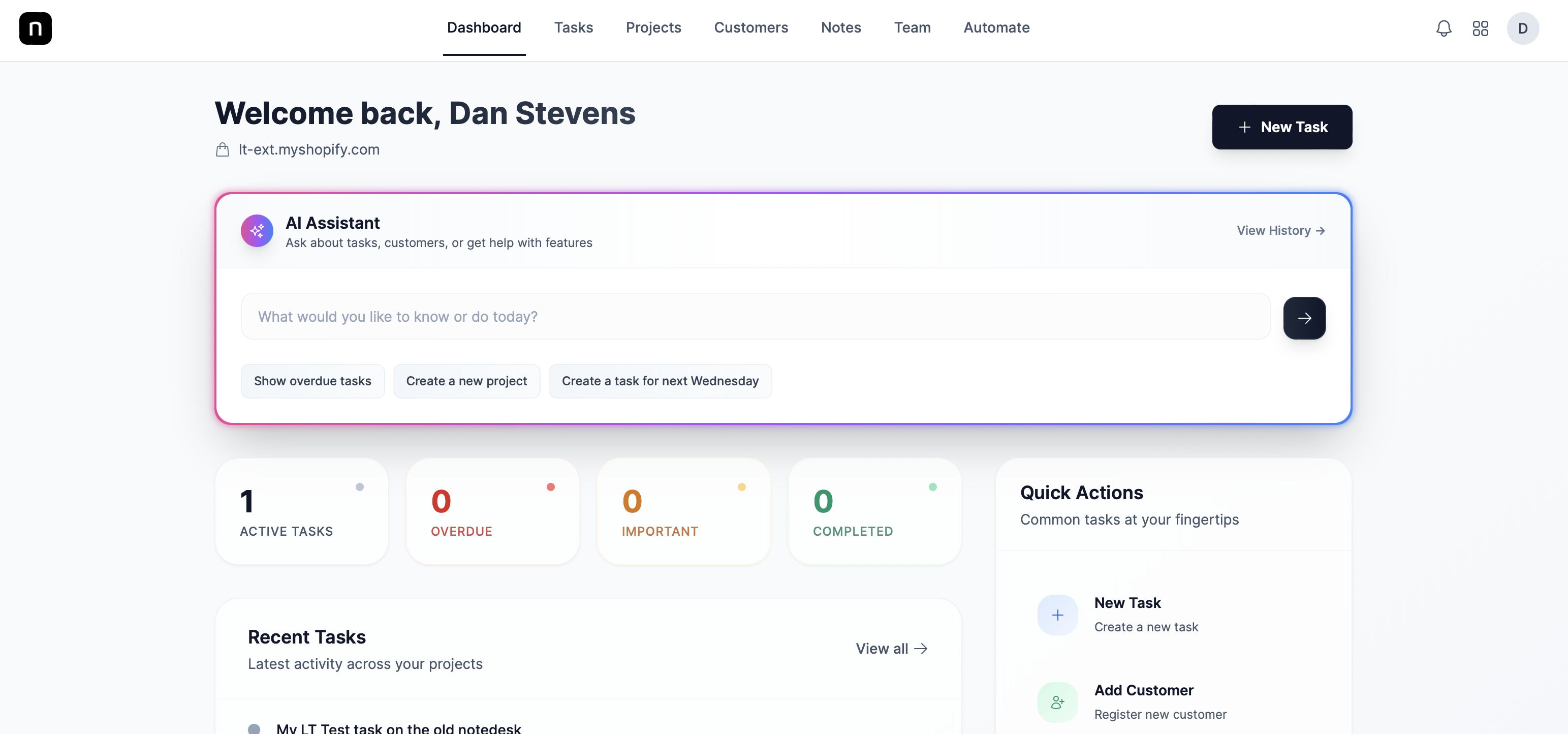
NoteDesk is a native Shopify app that functions as a lightweight CRM, ERP, and task management system built specifically for Shopify merchants. Instead of paying thousands per year for features you’ll never use, NoteDesk gives you exactly what ecommerce teams need.
Key Features
Task Management:
- Auto-create tasks from Shopify orders
- Set reminders and due dates
- Track order fulfillment and customer service issues
- Never miss important follow-ups
Customer Notes:
- Add detailed notes to customer profiles
- Track preferences, special requests, and history
- Share notes with your team
- Keep everything in one place
Team Collaboration:
- Assign tasks to team members
- Set role-based permissions
- Get notifications for updates
- Manage multiple projects
Automation:
- Smart workflows triggered by order events
- Automated task creation
- Webhook integration
- AI assistant for streamlined operations
Project Management:
- Organize work by projects
- Track progress across initiatives
- Collaborate on complex orders
- Manage B2B relationships
NoteDesk Pricing
Free Plan:
- Create and manage tasks
- Perfect for solo merchants testing the system
Solo Plan: $19.99/month
- Unlimited tasks
- Projects and notes
- Reminders and attachments
- Powerful automations
- AI assistant
- 7-day free trial
Team Plan: $59.99/month
- Everything in Solo
- Team management with permissions
- Ideal for stores with 2+ employees
- 7-day free trial
Why Choose NoteDesk Instead?
1. Shopify-Native: Built exclusively for Shopify, so it integrates seamlessly without middleware or complex setup.
2. Affordable: At $19.99-$59.99/month, you get CRM functionality for 1-5% of what you’d pay for HubSpot or Salesforce.
3. Simple: No training required. If you can use Shopify, you can use NoteDesk. Setup takes minutes, not weeks.
4. Ecommerce-Focused: Every feature is designed around ecommerce workflows: orders, customers, fulfillment, and support.
5. No Hidden Costs: Flat monthly pricing. No per-user fees, no contact limits, no surprise charges.
6. Fast Support: Responsive support from people who understand Shopify stores.
Who Should Choose NoteDesk?
NoteDesk is perfect for:
- Shopify merchants who need customer relationship tracking without enterprise overhead
- Small teams (1-10 people) managing order fulfillment and customer service
- Stores wanting to move beyond scattered notes and spreadsheets
- Merchants who find HubSpot/Salesforce/Klaviyo too complex or expensive
- B2B/wholesale sellers on Shopify who need detailed customer notes
- Stores with custom products requiring order-by-order tracking
- Teams that need task automation tied to Shopify events
NoteDesk vs The Big Three
NoteDesk vs HubSpot:
- 99% less expensive ($240/year vs $13,680/year)
- Shopify-native vs requires integration
- Simple vs complex feature set
- Task-focused vs full marketing suite
NoteDesk vs Salesforce:
- 98% less expensive ($240/year vs $10,000+/year)
- Minutes to setup vs months to implement
- No consultants needed vs often requires partners
- Ecommerce-specific vs general business CRM
NoteDesk vs Klaviyo:
- Different purposes (operations vs marketing)
- Use together for complete solution
- NoteDesk handles internal operations, Klaviyo handles external marketing
- Combined cost still less than HubSpot Professional
Real-World Use Case
Imagine you run a custom furniture Shopify store. A customer orders a desk with specific wood stain and dimensions. With NoteDesk, you can:
- Automatically create a task when the order comes in
- Add detailed notes about the customization requirements
- Assign the task to your production manager
- Set a reminder for quality check before shipping
- Collaborate with your team on any issues
- Track the project from order to delivery
All of this happens inside Shopify, without paying for a massive CRM platform you don’t need.
Making Your Decision: A Simple Framework
Still not sure? Use this framework:
Step 1: What’s your primary need?
- Email/SMS marketing → Klaviyo
- Full marketing suite → HubSpot
- Complex sales management → Salesforce
- Task management & customer notes → NoteDesk
Step 2: What’s your realistic budget?
- Under $1,000/year → Klaviyo or NoteDesk
- $1,000-$10,000/year → Klaviyo
- $10,000-$25,000/year → HubSpot or Klaviyo
- $25,000+/year → HubSpot or Salesforce (with Klaviyo)
Step 3: How complex is your operation?
- Solo merchant or small team → Klaviyo + NoteDesk
- Growing marketing team → Klaviyo or HubSpot
- Multi-department with sales team → HubSpot
- Enterprise with custom needs → Salesforce
Step 4: How quickly do you need results?
- Immediately (days) → Klaviyo or NoteDesk
- Soon (weeks) → HubSpot
- Eventually (months) → Salesforce
The Verdict: Which CRM Wins?
There’s no single winner because each platform serves different needs:
Klaviyo wins for: Ecommerce-focused email marketing, affordability, ease of use, and fast ROI. It’s the best choice for 80% of Shopify stores.
HubSpot wins for: All-in-one marketing, sales, and service needs with modern UI and decent pricing for what you get (if you can afford it).
Salesforce wins for: Enterprise complexity, extreme customization, and businesses with needs beyond ecommerce.
NoteDesk wins for: Shopify-native simplicity, task management, customer notes, and merchants who need operational tools rather than marketing platforms.
Our Recommendation by Store Type
New Stores (0-$100K): Start with Klaviyo Free + NoteDesk Free/Solo
Small Stores ($100K-$500K): Klaviyo Email Plan + NoteDesk Team
Mid-Sized Stores ($500K-$2M): Klaviyo or HubSpot (depending on needs) + NoteDesk
Large Stores ($2M-$10M): HubSpot or Klaviyo + NoteDesk + consider Salesforce if B2B complexity
Enterprise ($10M+): Salesforce + Klaviyo + NoteDesk for comprehensive coverage
Getting Started
If You Choose HubSpot:
- Book a demo with HubSpot sales team
- Understand total cost including onboarding
- Plan for 4-8 week implementation
- Invest in team training
If You Choose Salesforce:
- Contact Salesforce or an implementation partner
- Budget for consulting fees
- Allocate 3-6 months for implementation
- Hire or train a Salesforce administrator
If You Choose Klaviyo:
- Sign up for free account
- Install Shopify integration (15 minutes)
- Import your contacts
- Use pre-built flows to start automating
- Launch your first campaign within days
If You Choose NoteDesk:
- Install from Shopify App Store
- Start free or with 7-day trial
- Create your first task
- Add team members
- Begin tracking customer interactions immediately
Final Thoughts
The “best” CRM for Shopify isn’t about which platform has the most features. It’s about which platform matches your actual needs, budget, and technical capabilities.
Most Shopify merchants don’t need enterprise-level complexity. They need tools that work, don’t require extensive training, and deliver ROI without breaking the bank.
For pure email marketing excellence, Klaviyo is unmatched in the ecommerce space. For comprehensive business operations, HubSpot provides incredible value if you can afford it. For enterprise needs, Salesforce remains the gold standard despite its complexity.
But if you’re a Shopify merchant looking for simple, affordable CRM functionality built specifically for ecommerce operations, NoteDesk offers exactly what you need without the enterprise bloat or cost.
Your move? Start with what solves your immediate problem. You can always add more tools as you grow. The best CRM is the one you’ll actually use.
Ready to streamline your Shopify operations? Try NoteDesk free for 7 days and see how a Shopify-native CRM can transform your customer management and team collaboration. Install NoteDesk from the Shopify App Store.
Looking for advanced email marketing? Start with Klaviyo’s free plan and discover why over 117,000 brands trust it for ecommerce marketing automation.
Need enterprise capabilities? Contact HubSpot or Salesforce for a customized demo tailored to your business requirements.
Choose the platform that fits your business today, not the one you think you might need in five years. You can always upgrade as you grow.