Excluding your own IP address from Shopify stats is not possible directly inside Shopify’s core analytics. In 2026, the most reliable workaround is to use Google Analytics 4 to mark your traffic as internal and exclude it from reports.
I’ve worked on Shopify stores and Shopify apps for years, and this is one of those small setup jobs that makes a surprisingly big difference. When you are testing themes, checking carts, previewing products, or opening your store ten times a day, your own visits can distort session counts, bounce rates, and traffic source data.
That matters even more for newer stores. If you only have a few dozen daily sessions, a handful of your own visits can make reports look healthier or worse than they really are.
Can you exclude your own IP address from Shopify Analytics directly?
No, Shopify does not currently offer a built-in setting to exclude specific IP addresses from core Shopify analytics. That is still the case in 2026, despite a lot of outdated forum replies and blog posts suggesting otherwise.
This is the first thing to clear up because search results around this topic are messy. Some old discussions mention an “ignore IP” style feature, but Shopify’s native analytics does not provide a proper IP exclusion control for merchants.
There is one partial exception. Shopify may automatically exclude owner or staff visits from Traffic reports if you are logged into Shopify admin and viewing the storefront in the same browser tab or window. In practice, this is limited and inconsistent for real-world store testing.
- If you use incognito mode, your visit may still count.
- If you open the storefront in a different browser, your visit may still count.
- If you test on mobile, app previews, or a different device, your visit may still count.
- If team members are checking the site from home or the office, their visits can still pollute reports.
So if your goal is clean reporting, do not rely on Shopify’s automatic staff exclusion alone.
Why should you exclude your own visits from Shopify stats?
You should exclude your own visits so your reports reflect customer behaviour, not internal testing. This leads to better decisions around marketing, conversion optimisation, and merchandising.
In my experience building Shopify apps and reviewing merchant analytics, internal traffic causes the most damage on smaller stores. If a shop gets 50 to 200 sessions per day, staff activity can materially inflate traffic and make campaigns look more effective than they are.
It also affects how you interpret user behaviour. You might think a landing page has strong engagement, but in reality you and your team kept refreshing it while editing content.
What gets distorted when you do not exclude internal traffic?
Internal traffic can skew several key metrics at once. The result is poorer analysis and more guesswork.
- Session counts - your store appears busier than it is
- Bounce rate and engagement rate - repeated testing changes user quality signals
- Traffic source attribution - admin clicks from email, ads, or direct links can muddy acquisition reports
- Conversion rate - test carts and checkouts can distort funnel analysis
- Device breakdown - especially if you preview heavily on mobile
- Location reports - your office or home becomes an outsized traffic hotspot
One useful benchmark from ecommerce reporting is that after excluding internal traffic, some stores see real customer sessions appear 20 to 30% more meaningful because the noise is removed. The raw number may go down, but the data becomes far more actionable.
If you are trying to understand store behaviour properly, I’d also recommend reading Discovering Visitor Behavior on Your Shopify Store and What Is the Difference Between Sessions and Visitors on Your Shopify Store?. Both topics come up constantly when merchants start cleaning up analytics.
What is the best workaround for excluding your own IP from Shopify stats?
The best workaround is to use Google Analytics 4 and set your IP address as internal traffic. Then you activate GA4’s internal traffic data filter to exclude it from reporting.
This is the approach I recommend because it is free, supported, and relatively quick to maintain. It does not change Shopify’s own built-in reports, but it gives you a cleaner analytics layer for decision-making.
If you are already using the official Google & YouTube sales channel, setup is straightforward.

| Method | Works for Shopify core analytics | Works for GA4 reports | Best for |
|---|---|---|---|
| Stay logged into Shopify admin in same browser | Partly | No | Very light solo testing |
| GA4 internal traffic filter | No | Yes | Most merchants |
| IP blocking or firewall apps | No | No | Access control, not analytics cleanup |
| Third-party platform-specific filters | No | Sometimes | Filtering stats in those specific tools only |
How do I set up Google Analytics 4 on Shopify?
To set up GA4 on Shopify, create a GA4 property, connect it through Shopify’s Google & YouTube channel, and confirm your web data stream is active. This gives you the foundation needed to filter internal traffic properly.
Google fully replaced Universal Analytics with GA4, so if you still have an old tutorial bookmarked that mentions Universal Analytics views and filters, ignore it. Those instructions are outdated.

Step 1: Check whether GA4 is already installed
Make sure you do not have duplicate tracking before adding anything new. Duplicate analytics setup is one of the easiest ways to ruin reporting.
I still see this on stores where a theme has old tracking code, Google & YouTube is installed, and someone also added a GTM snippet manually. That can trigger duplicate page views or ecommerce events.
- Open Shopify admin
- Go to Online Store > Preferences
- Check whether Google integrations are already connected
- Review your theme or custom code for old GA scripts
- If needed, confirm in GA4 Realtime whether events are firing once, not twice
Step 2: Create a GA4 property
Create a Google Analytics 4 property if you do not already have one. You can use an existing Google account for this.
- Go to Google Analytics.
- Sign in with your Google account.
- In Admin, create a new Account if needed.
- Click Create Property.
- Enter your store name, reporting time zone, and currency.
- Create a Web data stream for your Shopify domain.
- Copy the Measurement ID that starts with G-.
If you need a Google account first, Google’s own guide is here: Create a Google account.
Step 3: Connect GA4 to Shopify
The easiest official route is through Shopify’s Google & YouTube sales channel. This is Shopify’s preferred integration path for most merchants.
- In Shopify admin, go to Settings or Online Store > Preferences, depending on your current interface.
- Open the option to manage your Google setup.
- Install or open Google & YouTube.
- Connect your Google account.
- Select the correct GA4 property.
- Confirm the connection and let Shopify sync data.
Once connected, GA4 can collect page views and commerce-related events. If your broader goal is better reporting rather than just IP exclusion, it is worth pairing this with cleaner onsite behaviour tracking too.
How do I exclude my IP address in Google Analytics 4?
In GA4, you exclude your IP by defining it as internal traffic and then activating the internal traffic data filter. Both steps matter.
This is where many guides are incomplete. They explain how to create the rule, but forget to mention that the filter must also be active or your traffic will continue appearing in reports.
Step 1: Find your current IP address
You need your public IP address before creating the rule. If you work from multiple locations, collect all relevant IPs first.
You can check your current public IP with a tool like WhatIsMyIPAddress. If you use broadband at home, there is a good chance it is dynamic, which means it can change over time.
For teams, I suggest keeping a shared document listing:
- Home IPs for key staff
- Office IP ranges
- Agency or developer IPs
- Any VPN exit IPs used for work
Step 2: Define internal traffic in GA4
Defining internal traffic tells GA4 which visits should be labelled as internal. This is the rule creation part.
- Log in to your GA4 property.
- Click Admin.
- Under Data collection and modification, click Data Streams.
- Select your Shopify web stream.
- Click Configure tag settings.
- Click Show more.
- Click Define internal traffic.
- Click Create.
- Give the rule a name such as Home Office or Store Team IPs.
- Leave traffic_type as internal.
- Choose the match type, such as IP address equals or a range-based match if needed.
- Enter your IP address or IP range.
- Save the rule.
If you are a solo merchant, one rule may be enough. If you run a team, it is cleaner to create multiple rules for different locations so you can maintain them more easily.
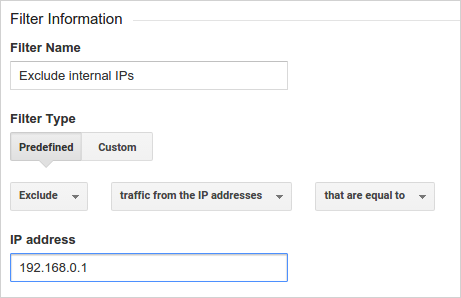
Step 3: Activate the internal traffic filter
After defining internal traffic, activate the GA4 data filter or nothing will actually be excluded from standard reporting. This is the step people miss most often.
- In Admin, go to Data Filters.
- Open the Internal Traffic filter.
- Check that the filter action is set to Exclude.
- Change the filter state from Testing to Active when you are ready.
- Save your changes.
My usual recommendation is to leave it on Testing briefly if you are unsure, confirm traffic is being identified correctly, and then switch it to Active. Once active, matching traffic is excluded from reports going forward.
How can I test whether the filter is working?
You can test the filter by visiting your store from the excluded IP and checking GA4 Realtime or DebugView. If setup is correct, your traffic should be marked as internal or excluded from standard reports after processing.
In my experience, testing immediately saves a lot of confusion later. Merchants often assume the filter is broken when the issue is actually one of these: wrong IP, wrong property, wrong stream, or the filter still left in testing mode.
- Open your storefront from the IP you excluded.
- Visit a few pages and trigger normal browsing behaviour.
- Check Realtime in GA4.
- If needed, use DebugView for more granular validation.
- Verify that the visit is being tagged as internal or no longer appears in processed reports.
Remember that some GA4 reports are not instant. Realtime helps with initial validation, but full reports can take longer to reflect changes.
What if your IP address changes regularly?
If your ISP gives you a dynamic IP, you need to review and update your GA4 internal traffic rules regularly. For many home connections, this is the biggest maintenance issue.
I normally suggest checking your IP once a month and again any time you notice your reporting looks unusually noisy. This is especially important if you restart your router often, switch between locations, or use a business VPN.
- Set a monthly reminder to verify your IP
- Keep a shared list of approved internal IPs
- Update rules after office moves or ISP changes
- Review traffic spikes that originate from your own town or office region
If you have a remote team, this gets harder fast. In that case, focus on excluding the most frequent internal sources first, such as the office and the people who do the most QA or merchandising work.
Does excluding your IP fix Shopify’s own reports?
No, excluding your IP in GA4 does not rewrite Shopify’s native analytics reports. It gives you a cleaner source of truth inside Google Analytics 4.
This distinction is important. If you are looking at Shopify Analytics, you may still see some internal activity there. GA4 is the workaround for cleaner reporting, not a patch for Shopify’s built-in analytics engine.
That said, many merchants already use GA4 as their main reporting layer for acquisition, behaviour, and conversion analysis. If you care about campaign quality and customer behaviour, GA4 is usually the better place to analyse trends anyway.
Are there any apps that can exclude IPs from Shopify stats?
No Shopify app reliably removes IP traffic from Shopify’s core analytics reports. Some apps can block access or filter their own platform data, but that is not the same thing.
This is another area where merchants get misled. Firewall and restriction apps can be useful for security, but they do not clean up Shopify analytics in the way most people expect.
| Tool type | What it does | Will it clean Shopify core stats? |
|---|---|---|
| Firewall or IP blocker app | Blocks or restricts site access | No |
| GA4 integration | Tracks and filters analytics externally | No, but cleans GA4 reports |
| Third-party personalisation/search platform | May filter traffic in its own dashboard | No |
For example, some third-party tools let you exclude office IPs from their own recommendation or search analytics. That only affects that tool’s reporting, not Shopify Analytics itself.
What is the best setup for small Shopify stores?
The best setup for small stores is simple: connect GA4 properly, exclude your main IPs, and use GA4 as your cleaner reporting source. You do not need an overcomplicated analytics stack to solve this problem.
If I were setting this up for a typical small merchant today, I would do the following:
- Install and verify Google & YouTube.
- Create one GA4 property per store.
- Define internal traffic for home, office, and agency IPs.
- Activate the internal traffic filter.
- Check the IP list monthly.
- Use GA4 for traffic analysis and campaign reporting.
This is best for small stores because it is low-cost, maintainable, and accurate enough for real decision-making.
What common mistakes should you avoid?
The most common mistakes are duplicate GA4 installs, forgetting to activate the filter, and using the wrong IP address. Any one of these can make the setup fail.
Here are the issues I see most often when helping merchants tidy up analytics:
- Leaving the filter in Testing mode forever
- Excluding the wrong property or web stream
- Using an old or changed home IP
- Forgetting mobile testing traffic
- Running duplicate GA4 implementations
- Assuming Shopify reports will also be cleaned automatically
If you are troubleshooting odd traffic quality, it can also help to review any other store changes that affect browsing and conversion behaviour. For example, product visibility and purchase flow changes often create misleading test traffic. These guides may help if that is part of your workflow: How to Hide the Add to Cart Button on Specific Products in Shopify and Shopify’s New Unlisted Product Status: What It Means for Your Store.
Should you still care about Shopify’s own analytics if GA4 is cleaner?
Yes, but use each tool for what it does best. Shopify Analytics is convenient for store-level snapshots, while GA4 is better for filtered traffic analysis and deeper reporting.
I still look at Shopify’s built-in reports for quick operational checks. But when I want cleaner behavioural data, campaign attribution, and a more controlled analytics setup, GA4 is the better source.
That is really the practical answer behind this whole topic. You are not trying to make Shopify do something it cannot do natively. You are building a more reliable analytics workflow around it.
Final thoughts on excluding your own IP address from Shopify stats
Shopify still does not let you exclude specific IP addresses from core analytics in 2026. The most effective workaround is to use Google Analytics 4 internal traffic filters and treat GA4 as your cleaner reporting layer.
In my experience, this is worth setting up as soon as a store starts getting serious about traffic and conversion analysis. It takes a bit of admin work, but cleaner analytics leads to better decisions, especially when you are spending on ads or testing changes to your storefront.
If you are the kind of merchant who checks your own site constantly, this setup is not optional. It is one of the easiest ways to stop misleading yourself with your own data.