
Shopify is the best choice for most non-technical merchants in 2026, while WooCommerce is the better fit for technical teams that want full control. I build Shopify apps for a living, so I naturally spend more time in the Shopify ecosystem, but I have also worked with plenty of merchants who moved from WordPress and WooCommerce and had very clear reasons for doing so.
If you are choosing between the two, the real question is not which platform is universally better. The real question is which platform matches your skills, budget, store complexity, and growth plans. In my experience, that is what decides whether a platform feels effortless or frustrating six months after launch.
There has never been a bigger opportunity to sell online. Global ecommerce keeps growing, and the barrier to launching a store is lower than ever. But the platform you choose still affects your costs, your speed to market, your maintenance workload, and how easily you can scale.
In this guide, I will compare Shopify and WooCommerce in the areas that actually matter in 2026: setup, pricing, customisation, SEO, performance, apps, support, ownership, and long-term total cost. I will also give you a blunt verdict on who should choose each platform.
What is the quick answer on Shopify vs WooCommerce in 2026?
Shopify is better for beginners, solo founders, and brands that want to launch quickly with less technical risk. WooCommerce is better for technical users, content-heavy businesses, and stores that need deep customisation.
If you want the simplest recommendation, this is it. Choose Shopify if you want an all-in-one hosted platform that handles security, hosting, updates, and performance for you. Choose WooCommerce if you want full code access, are comfortable managing WordPress, and do not mind handling hosting, plugins, and maintenance yourself.
I see this play out constantly. Merchants who value speed and reliability usually lean Shopify. Merchants who already live in WordPress, have a developer, or need very bespoke workflows often lean WooCommerce.
| Category | Shopify | WooCommerce | Winner |
|---|---|---|---|
| Ease of setup | Fully hosted, can launch in 1-2 hours | Requires WordPress, hosting, plugins, setup often takes 1-2 days | Shopify |
| Upfront cost | From $39/month | Core plugin is free, hosting from roughly $5-20/month | WooCommerce |
| Total cost for non-technical users | Usually $50-75/month all-in | Can rise fast with premium plugins and developer help | Shopify for predictability |
| Customisation | Strong, but more controlled | Nearly unlimited with full code access | WooCommerce |
| SEO and content | Good defaults, solid performance | Excellent content flexibility with WordPress | WooCommerce |
| Scalability | Managed scaling and traffic handling | Depends on your hosting and setup quality | Shopify |
| Maintenance | Low maintenance | Higher maintenance | Shopify |
| Ownership and flexibility | Platform rules and limitations apply | More ownership and platform freedom | WooCommerce |
What is the market share of each platform?
Both Shopify and WooCommerce are huge in 2026, but they dominate in slightly different ways. Shopify tends to lead in hosted ecommerce mindshare, while WooCommerce remains massive thanks to its WordPress footprint.
Recent market data varies depending on the source and methodology. Some datasets put WooCommerce at around 38.76% of ecommerce platform market share, while other sources show Shopify holding roughly 27% to 54% depending on whether you measure active stores, technology usage, or hosted platform share. That range is why raw market share alone is not enough to make the decision.
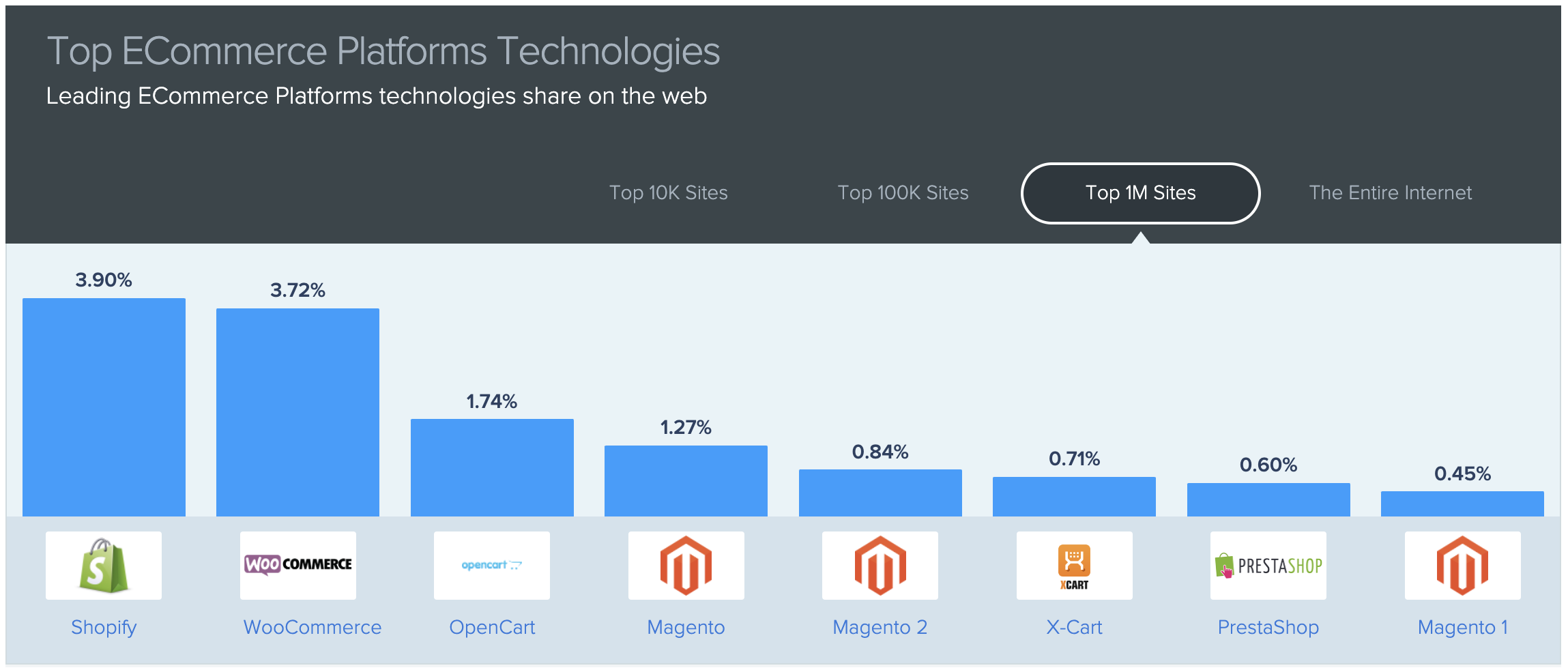
Source: SimilarTech / BuiltWith-style market data comparisons
BuiltWith-style tracking also suggests there are millions of live websites on both platforms. WooCommerce often shows a slightly larger number of total live sites, while Shopify tends to punch above its weight in terms of merchant revenue, newer store launches, and ecosystem momentum.
That matches what I see in practice. WooCommerce has enormous reach because WordPress has enormous reach. But Shopify has become the default recommendation for many new ecommerce founders, agencies, and app developers because it reduces technical overhead.
Google Trends tells a similar story. Over the past five years, Shopify has generally attracted more search interest than WooCommerce, especially during periods when lots of people were launching side businesses or moving offline sales online.
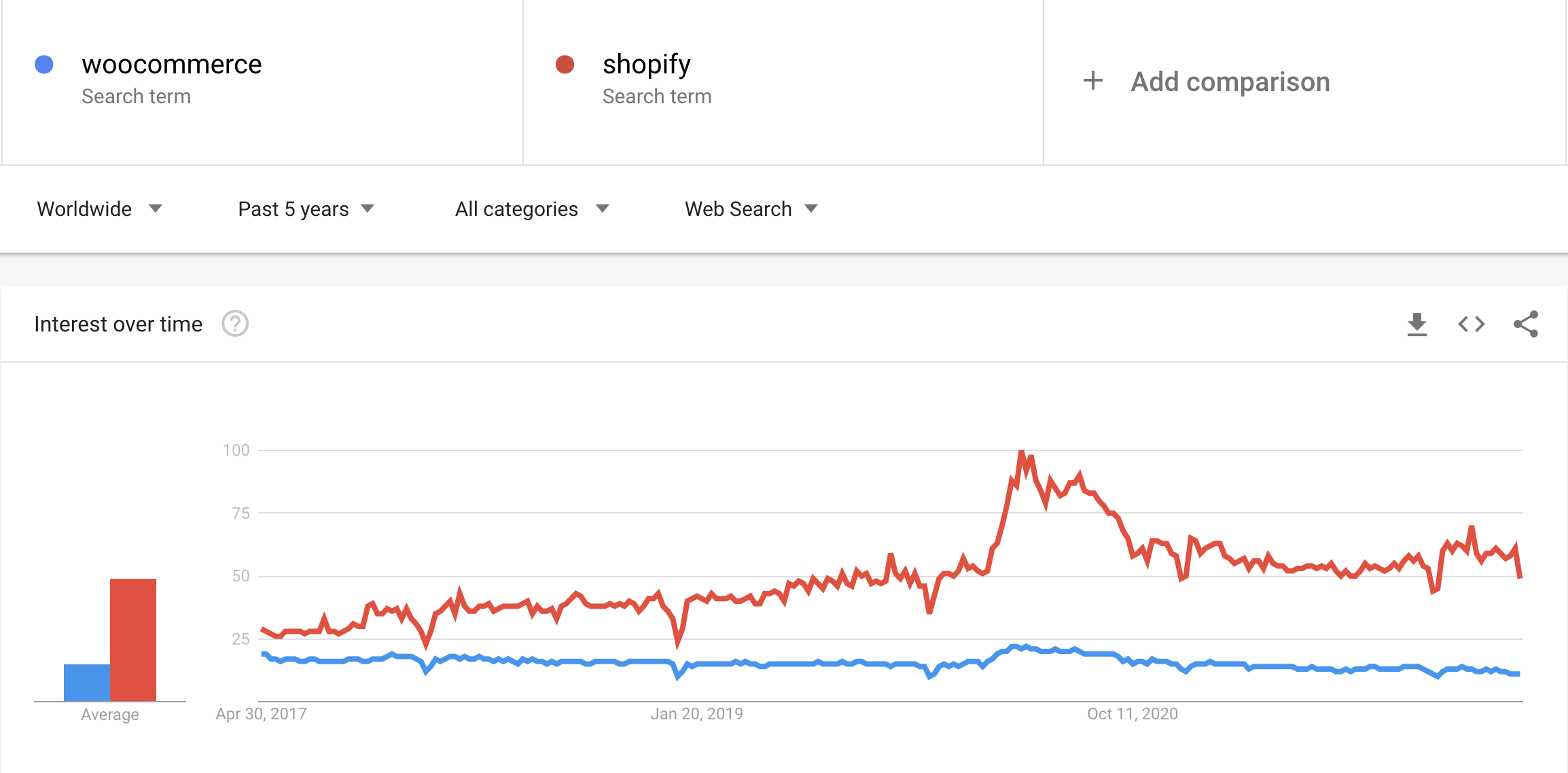
Source: Google Trends
Popularity matters, but only to a point. A platform can be popular and still be the wrong fit for your business. I would treat market share as a confidence signal, not a decision-making shortcut.
What is Shopify’s approach to ecommerce?
Shopify is an all-in-one hosted ecommerce platform built for speed, simplicity, and managed growth. It is designed so merchants can focus more on selling and less on infrastructure.
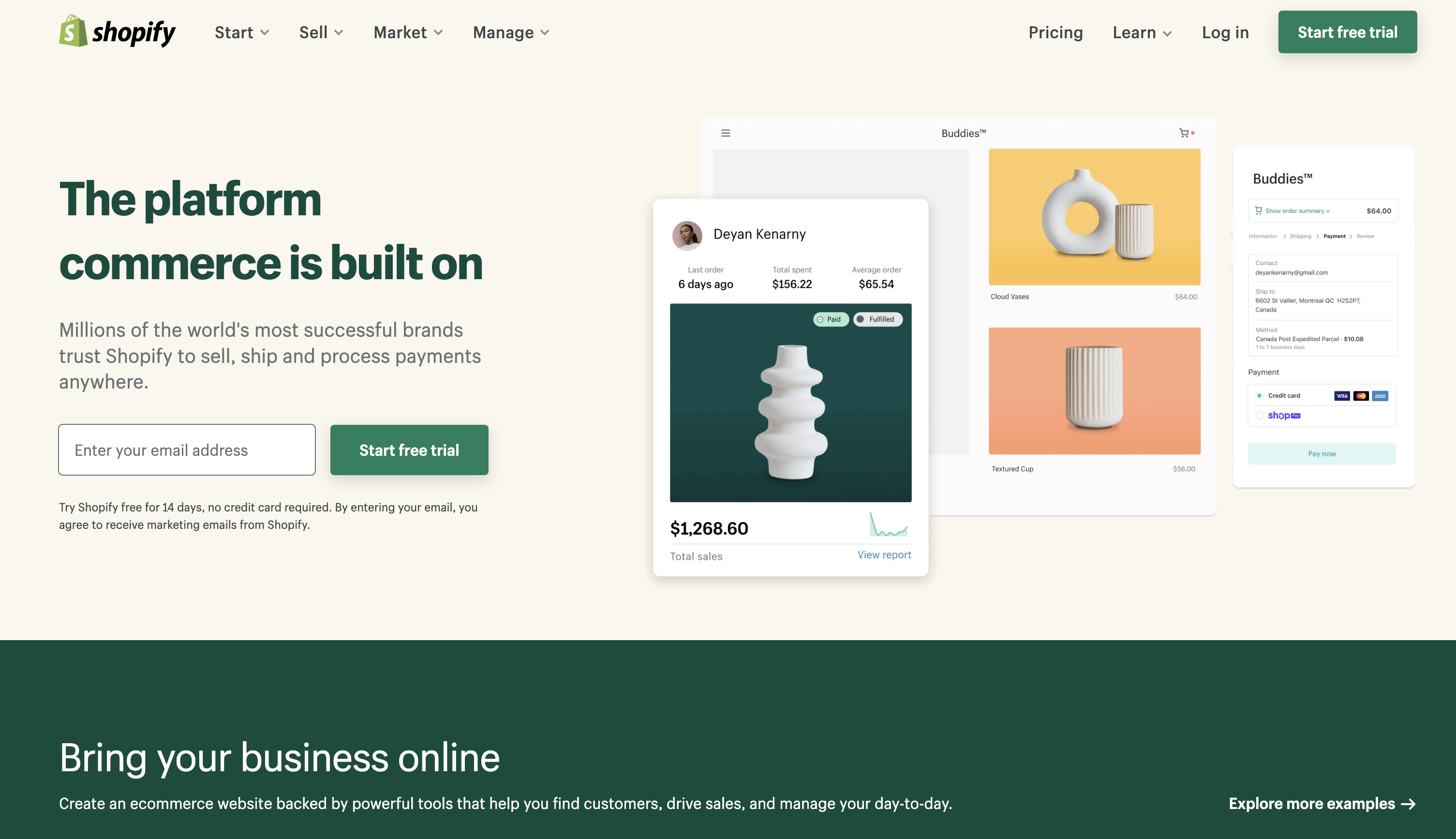
Shopify launched in 2006 after its founders, including Tobias Lutke, built it out of frustration with existing ecommerce tools. That origin still shows in the product. The platform is opinionated, polished, and built around the idea that a store owner should be able to get online quickly without needing to manage servers or patch software.
Source: shopify.com
In practical terms, Shopify handles hosting, security, SSL, software updates, checkout infrastructure, and much of the performance stack. You sign up, choose a theme, add products, connect payments, and start selling. For a lot of merchants, that convenience is worth more than unlimited flexibility.
As a Shopify app developer, I am obviously close to this ecosystem. I build apps because I like how predictable the platform is. There is a clear admin, a strong API ecosystem, a curated app marketplace, and fewer moving parts than a typical WordPress setup. That usually means fewer nasty surprises for merchants.
If you are brand new to ecommerce, Shopify is often the fastest path from idea to first sale. If you want to compare the migration path specifically, I covered that in this WooCommerce to Shopify migration guide.
What is WooCommerce’s approach to ecommerce?
WooCommerce is an open-source ecommerce plugin for WordPress that gives you far more control, but also far more responsibility. It is ideal for merchants who want flexibility and are comfortable managing a more technical stack.
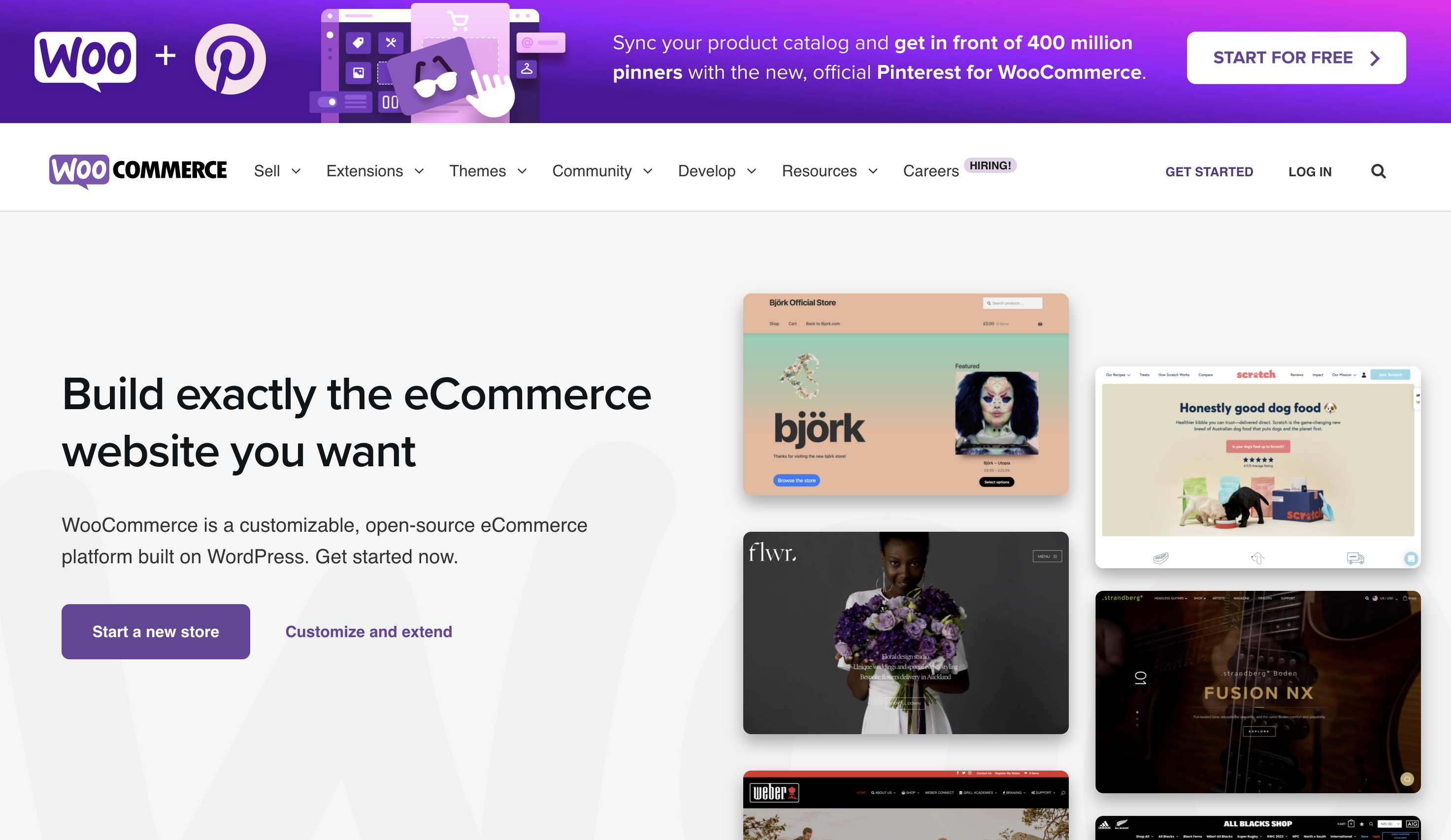
WooCommerce is not a standalone hosted platform in the same way Shopify is. You first need a WordPress website, then you install WooCommerce as a plugin. After that, you configure payments, shipping, tax, themes, plugins, hosting, security, backups, and performance optimisation.
Source: woocommerce.com
That sounds like more work because it is more work. But the upside is real. You get full access to your codebase, your server environment, your checkout flow, your database, and your plugin stack. If you need to create something highly bespoke, WooCommerce gives you more freedom.
You will also need hosting. Many merchants choose managed WordPress hosts such as Cloudways, Kinsta, or SiteGround to reduce the technical burden.
Source: cloudways.com
In my experience, WooCommerce works best when one of these is true: you already run WordPress, you have strong content and SEO needs, or you have technical support available. Without that, the flexibility can quickly turn into plugin sprawl and maintenance fatigue.
What are the main differences between Shopify and WooCommerce?
The biggest difference is convenience versus control. Shopify gives you a managed system with guardrails. WooCommerce gives you an open system with more freedom and more responsibility.
Shopify hosts your store and manages the core platform. WooCommerce needs separate hosting and ongoing WordPress maintenance. Shopify gives you a more standardised checkout and admin experience. WooCommerce lets you alter almost every part of the buying journey if you have the skills.
That sounds simple, but it affects nearly everything. It changes how fast you launch, how much you spend on technical help, how often things break, and how much effort it takes to keep the store secure.
One thing top-ranking comparison posts often get right is this: Shopify has the higher performance floor, WooCommerce has the higher customisation ceiling. I think that is the cleanest way to frame it in 2026.
| Difference | Shopify | WooCommerce |
|---|---|---|
| Hosting | Included and managed | You arrange and manage it |
| Software updates | Handled by Shopify | You manage WordPress, plugins, theme updates |
| Checkout flexibility | More limited, especially on lower plans | Highly flexible |
| App/plugin ecosystem | Curated app store with roughly 8,000+ apps | Massive WordPress ecosystem with 59,000+ plugins/themes overall |
| Maintenance burden | Low | Medium to high |
| Code access | Limited compared with open source | Full access |
Which platform is easier to launch a store on?
Shopify is clearly easier to launch on. Most merchants can get a basic store live in a few hours, while WooCommerce usually takes longer because there are more setup steps and more technical decisions.
With Shopify, you can sign up, choose a theme, add products, configure shipping, and connect Shopify Payments without touching hosting or server settings. In many cases, a same-day launch is realistic.
With WooCommerce, your launch timeline depends on the quality of your hosting, theme, plugin stack, and WordPress setup. Even if the core plugin is free, you still need to sort out domain, hosting, SSL, backups, security, and plugin compatibility. That often turns a quick launch into a weekend project or a developer task.
If speed matters most, Shopify wins comfortably. If you are still choosing a design foundation, my guide to the best free Shopify themes is a useful starting point.
How much does Shopify vs WooCommerce cost in 2026?
WooCommerce looks cheaper at first, but Shopify is often cheaper in real life for non-technical merchants. Your true cost depends on whether you value low monthly fees or low maintenance effort.
Shopify plans start from $39/month for the Basic plan in many regions, with higher tiers for growing brands. If you do not use Shopify Payments, you may also pay additional transaction fees of roughly 0.5% to 2% depending on your plan. For many stores, the realistic all-in spend lands around $50-75/month once apps are included.
WooCommerce itself is free, but that does not mean your store is free. You will usually pay for hosting, a domain, premium plugins, backups, security tools, and perhaps a paid theme. A lean setup might cost $20-50/month, but that can rise quickly if you need premium extensions or developer help.
In my experience, Shopify is more predictable and WooCommerce is more variable. WooCommerce can be cheaper long-term for technical teams, especially because there are no built-in platform transaction fees in the same way. But for solo founders, the hidden cost is often time.
| Cost area | Shopify | WooCommerce |
|---|---|---|
| Platform fee | $39+/month | Free core plugin |
| Hosting | Included | $5-20+/month for basic hosting, more for managed hosting |
| Theme costs | Free and paid themes available | Free and paid themes available |
| Apps/plugins | Usually paid as needs grow | Usually paid as needs grow |
| Developer costs | Often optional early on | More likely over time |
| Transaction fees | Extra if not using Shopify Payments | Depends on payment gateway, no platform fee equivalent |
Which platform is better for customisation and flexibility?
WooCommerce is better for deep customisation. Shopify is flexible enough for most stores, but WooCommerce gives you fewer platform restrictions and more direct control.
This is the area where WooCommerce wins most often. Because it is open source and built on WordPress, you can modify templates, functions, checkout logic, and server-level behaviour much more freely. If your store needs complex B2B rules, unusual product logic, or a bespoke checkout flow, WooCommerce is usually easier to bend to your will.
Shopify still offers plenty of flexibility through themes, metafields, APIs, and apps. I build apps in this ecosystem because there is a strong extension model, and there are thousands of options in the Shopify App Store. But there are still platform boundaries, especially around checkout customisation unless you are on higher-tier plans.
For most stores, Shopify is flexible enough. For edge cases, WooCommerce is more powerful. That is why I usually describe Shopify as better by default and WooCommerce as better when you know exactly what you need.
Which platform is better for SEO and content marketing?
WooCommerce has the edge for content-heavy SEO strategies, while Shopify has stronger out-of-the-box technical simplicity. Neither platform is bad for SEO in 2026.
Shopify does a lot well by default. You get fast hosting, a CDN, automatic sitemaps, responsive themes, and generally solid Core Web Vitals potential. For product-led brands that want good technical foundations without much setup, that is a big advantage.
WooCommerce benefits from WordPress, which is still excellent for publishing. If your strategy relies heavily on long-form content, category architecture, editorial workflows, and advanced SEO plugins like Yoast or Rank Math, WooCommerce gives you more control over URLs, canonicals, schema, and content structure.
That said, I have seen many merchants overestimate the SEO advantage of WooCommerce and underestimate the performance costs of a bloated WordPress stack. A fast, clean Shopify store will often outperform a messy WooCommerce build in real search results.
If content is central to your growth strategy, WooCommerce is appealing. If you mainly need reliable product and collection pages with fewer technical headaches, Shopify is usually easier to optimise consistently.
Which platform performs better and scales more easily?
Shopify is easier to scale because the infrastructure is managed for you. WooCommerce can scale well too, but only if your hosting and development setup are good enough.
This is one of the most underrated differences. On Shopify, traffic spikes, flash sales, and operational growth are easier to handle because the platform absorbs much of that complexity. For merchants, that means less server anxiety and fewer late-night firefights.
WooCommerce can absolutely support large stores, but performance depends on your host, caching, database optimisation, plugin quality, and developer input. A poorly configured WooCommerce site with 20-30 plugins can become slow very quickly.
In my experience building apps for Shopify merchants, the biggest operational benefit is not just speed. It is consistency. Shopify gives merchants a higher performance floor, which is why I often recommend it for founders who do not want infrastructure to become a second job.
What about apps, integrations, and ecosystem quality?
Shopify has the cleaner app ecosystem, while WooCommerce has the broader open ecosystem. The better option depends on whether you value curation or maximum choice.
The Shopify ecosystem is one of its biggest strengths. The Shopify App Store has thousands of curated apps covering upsells, reviews, shipping, subscriptions, support, SEO, and more. Because I build in this ecosystem myself, I appreciate that there are clearer standards, better merchant expectations, and a relatively consistent admin experience.
WooCommerce benefits from the entire WordPress plugin universe, which is enormous. That gives you more options, but also more quality variation. In practice, that means you need to be more careful about plugin compatibility, update conflicts, and long-term maintenance.
If you are building a Shopify stack, useful starting points include apps for upsells, reviews, support, and delivery messaging. I have covered related app categories in guides like the best Shopify add-on apps and the best Shopify shipping apps.
Which platform is better for support, security, and maintenance?
Shopify is better if you want professional support and less maintenance. WooCommerce is better if you prefer self-direction and do not mind assembling your own support stack.
Shopify offers 24/7 support, managed security, automatic platform updates, and a much simpler maintenance model. When something goes wrong, there is usually a clear place to start. For merchants, that peace of mind matters more than people realise.
WooCommerce support is more fragmented. You may rely on your host, your theme developer, plugin authors, WordPress forums, or your own developer. None of that is inherently bad, but it does mean problem-solving can take longer.
Security follows the same pattern. Shopify handles the platform-level basics. With WooCommerce, you are responsible for keeping WordPress, plugins, themes, backups, and security practices in good shape. If you are disciplined, that is fine. If not, it can become a risk.
What are the pros and cons of Shopify?
Shopify’s biggest strengths are simplicity, reliability, and speed to market. Its biggest weaknesses are platform limits and potentially higher total cost at scale.
What are Shopify’s main advantages?
Shopify is best for merchants who want a smooth launch and fewer technical jobs. That is why it is so often recommended to beginners.
- Fast setup with hosting, SSL, and core infrastructure included
- Low maintenance compared with self-hosted platforms
- Strong scalability for growing brands and traffic spikes
- Curated app ecosystem and polished admin experience
- 24/7 support and generally good default performance
What are Shopify’s main drawbacks?
Shopify is not perfect. The trade-off for convenience is less control in certain areas.
- Transaction fees can raise costs if you do not use Shopify Payments
- Checkout customisation limits are frustrating for some advanced stores
- App costs add up as your stack grows
- Platform dependency means you operate within Shopify’s rules
What are the pros and cons of WooCommerce?
WooCommerce’s biggest strengths are flexibility, ownership, and content control. Its biggest weaknesses are maintenance, complexity, and inconsistency.
What are WooCommerce’s main advantages?
WooCommerce is best for technical merchants or businesses with unusual requirements. It gives you a lot of room to build exactly what you want.
- Open-source flexibility with full code access
- No platform transaction fee equivalent in the same way as Shopify
- Excellent WordPress content capabilities
- Strong SEO control and plugin choice
- Potentially lower long-term costs for technical teams
What are WooCommerce’s main drawbacks?
WooCommerce asks more from you. That is the price of flexibility.
- Higher setup complexity
- Ongoing maintenance burden for updates, security, and backups
- Performance depends heavily on hosting and plugin quality
- Support is fragmented across multiple vendors
Who should choose Shopify in 2026?
Choose Shopify if you are a beginner, solo founder, small team, or fast-growing brand that wants a reliable platform with fewer technical distractions.
I would especially recommend Shopify if you fit one of these profiles:
- You want to launch quickly and start selling in days, not weeks
- You do not want to manage hosting, updates, or security
- You are selling fairly standard DTC products
- You want strong app support for upsells, reviews, bundles, and support
- You expect traffic spikes or want a safer path to scale
This is also why many merchants moving away from WordPress end up on Shopify. If that is your situation, read my migration guide before making the switch.
Who should choose WooCommerce in 2026?
Choose WooCommerce if you already use WordPress, have technical help, or need advanced customisation that would be awkward or expensive on Shopify.
WooCommerce makes more sense if:
- You run a content-heavy brand where publishing is central to acquisition
- You need a highly bespoke checkout or business logic
- You want full control over hosting, code, and data flows
- You have a developer or agency maintaining the store
- You are cost-sensitive at scale and want to avoid platform fee creep
For the right merchant, WooCommerce is excellent. I would just be careful not to choose it because it looks cheaper on paper if you are not comfortable managing the moving parts.
What is my honest verdict as a Shopify app developer?
For most online stores in 2026, Shopify is the better default choice. For specialist stores with technical resources, WooCommerce can be the better strategic choice.
I build Shopify apps, so I know the platform’s strengths very well. But my opinion is not simply brand loyalty. It comes from seeing how merchants actually operate once the excitement of launch wears off. Most founders do not want to be part-time sysadmins. They want to sell products, run campaigns, improve conversion, and serve customers.
That is where Shopify shines. It reduces complexity, shortens launch time, and gives merchants a cleaner path to growth. If you want to focus on conversion, merchandising, and customer experience rather than technical upkeep, Shopify is usually the safer bet. For growth-focused merchants, resources like how to get more customers for your Shopify store are often more valuable than spending weeks tweaking infrastructure.
WooCommerce still wins where ownership, flexibility, and WordPress-led content strategy matter most. If you have the technical confidence to use that freedom well, it can be fantastic. But if you are asking for the best platform for the average merchant, my answer is Shopify.
How should you decide between Shopify and WooCommerce?
Choose based on your operating model, not just the feature list. The best platform is the one you can run well six months from now.
- Assess your technical comfort. If hosting and plugin maintenance sound annoying, choose Shopify.
- Map your store complexity. If you need unusual workflows or deep code access, consider WooCommerce.
- Estimate total cost, not just monthly fees. Include apps, plugins, developer time, and maintenance.
- Think about content strategy. If SEO publishing is central, WooCommerce may suit you better.
- Think about speed and risk. If you want the lowest-friction route to launch and scale, Shopify is hard to beat.
If you are still unsure, test both. Start a Shopify trial and compare it with a basic WooCommerce setup. A few hours of hands-on testing will tell you more than a dozen comparison articles.
And if you do decide on Shopify, I would strongly suggest planning your app stack carefully from day one. Too many merchants install tools reactively instead of building a lean, conversion-focused setup from the start.