
If you run a candle brand on Shopify, candle seo shopify is really about matching how people search in 2026: by scent, use case, material, and gift intent. In my experience building Shopify apps and working with product-page conversion problems every week, candle stores usually do not lose rankings because Shopify is bad for SEO. They lose because their pages are too generic, their collection structure is weak, and their copy sounds the same as every other candle store.
The good news is that candle SEO is one of the easier Shopify niches to improve if you get specific. You do not need to rank for impossible head terms like scented candles. You need to rank for phrases like lavender candle for sleep, eco-friendly soy candles, and luxury candle gift set, then make those pages genuinely helpful and easy to buy from.
What is candle SEO on Shopify?
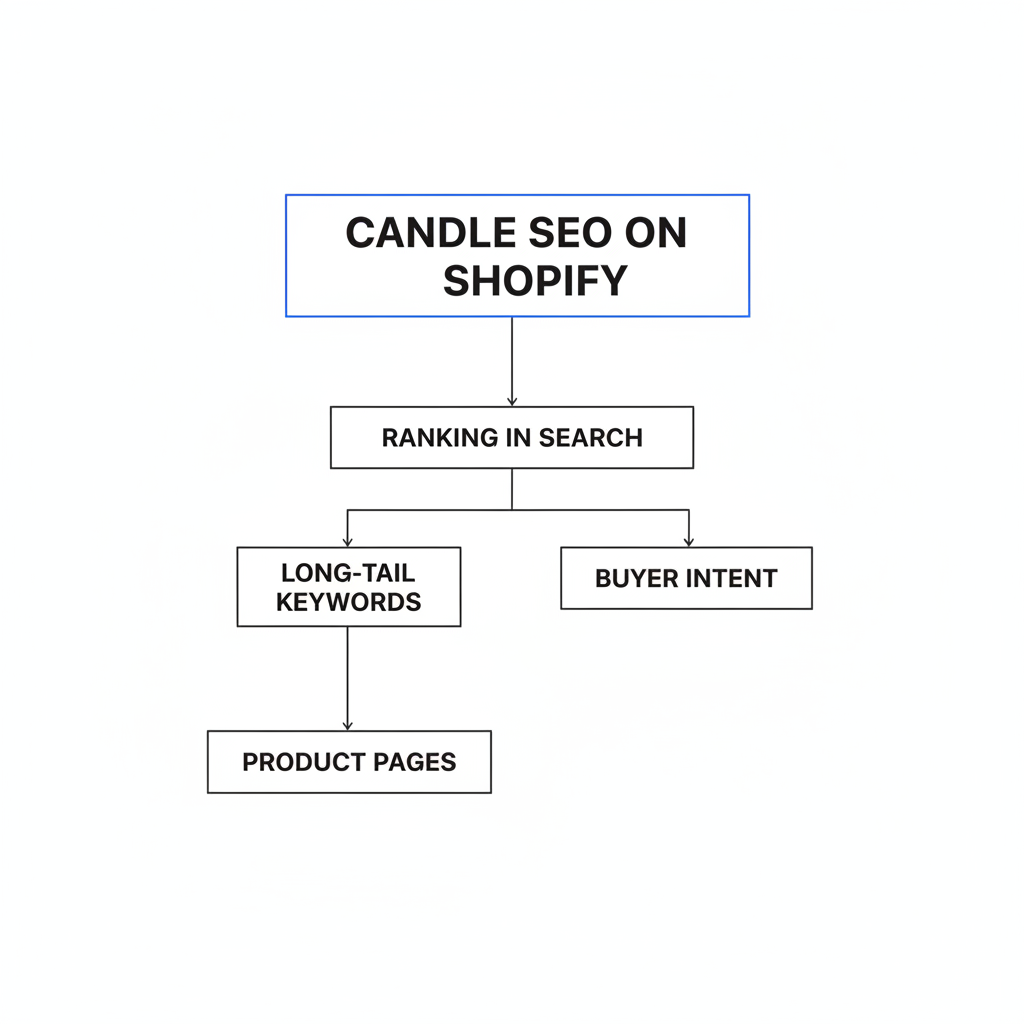
Candle SEO on Shopify is the process of optimizing your store so candle-related product pages, collections, and blog posts rank for buyer-focused searches in Google and AI search results. The best-performing strategy in 2026 is to target long-tail, intent-driven keywords instead of broad category terms.
That means building pages around how shoppers actually search. They rarely type one-word queries and stop there. They search for specific combinations like scent + benefit, wax type + room, or gift type + occasion.
For candle brands, SEO works best when your site architecture mirrors your catalog. If you sell soy candles, seasonal candles, gift sets, and bedroom-safe calming scents, those should exist as real collection pages with unique copy, internal links, and optimized metadata.
If you are still working on the basics, I would also read Essential SEO for New Shopify Stores: 11 Methods That Actually Move Rankings. It covers the foundation that every niche store, including candle brands, still needs.
Why is long-tail SEO the best strategy for candle stores in 2026?
Long-tail SEO is the best strategy for candle stores because it has lower competition and higher buying intent. Research consistently shows these phrases can convert up to 2.5x better than broad terms because the shopper already knows what they want.
A small Shopify candle store is not realistically going to outrank giant retailers for scented candles. But it can absolutely rank for fruit scented candles, vegan soy candles long-lasting, or candle to remove cooking smell. Those searches are more specific, easier to satisfy, and much closer to a purchase.
In my experience, small merchants often underestimate how much traffic can come from dozens of low-volume queries. One page that ranks for 20 related scent and use-case variations can outperform a generic collection page that was written for a single vanity keyword.
Which candle keywords should you target on Shopify?
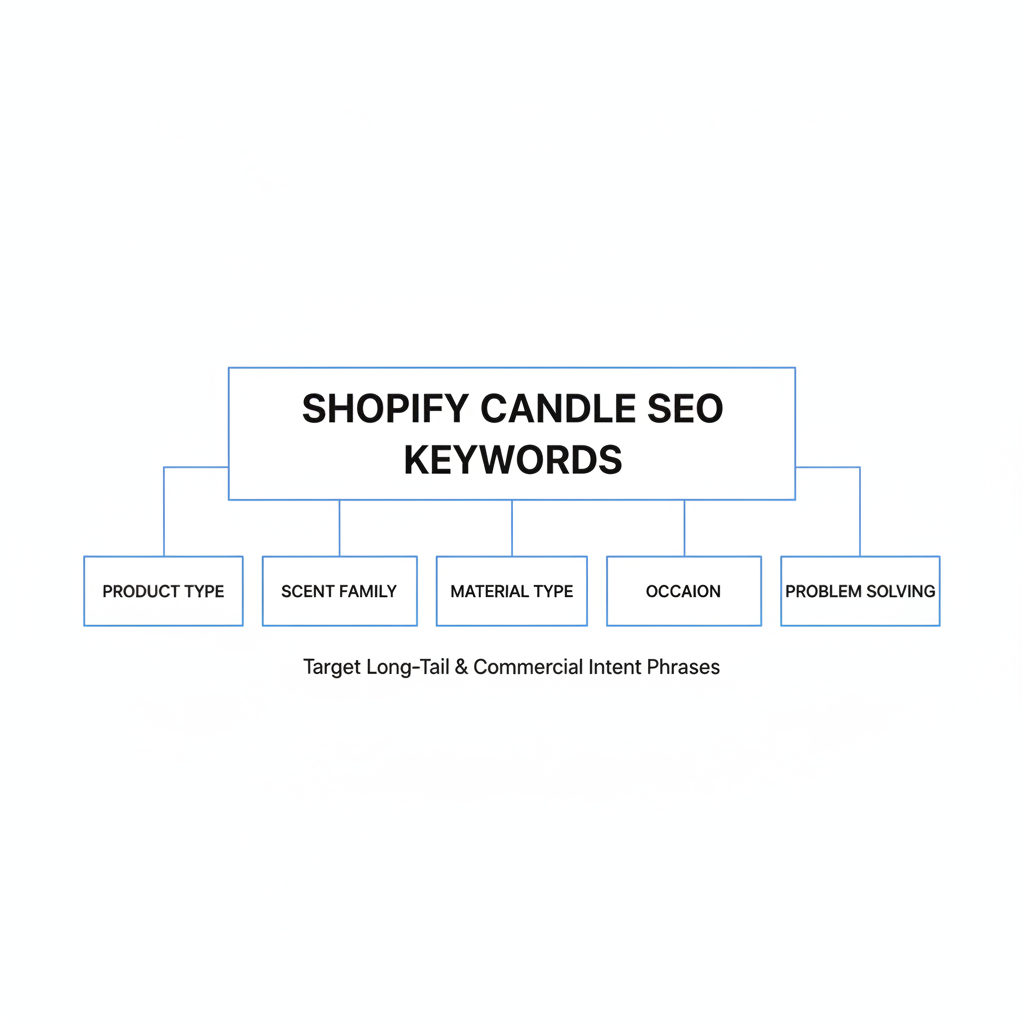
The best candle keywords for Shopify are long-tail phrases tied to products, scent families, materials, occasions, and problems solved. Start with keywords that show clear commercial intent and avoid broad phrases that large marketplaces dominate.
I like to group candle keywords into five buckets: product, scent, material, occasion, and problem-solving. That structure makes it much easier to map keywords to the right page type instead of stuffing everything into product descriptions.
| Keyword Type | Example | Estimated Search Volume | Difficulty | Best Page Type |
|---|---|---|---|---|
| Broad | scented candles | 1,000 | Hard | Usually not worth targeting directly for small stores |
| Long-tail product | fruit scented candles | 350 | Easy | Collection page |
| Transactional | luxury candles on sale | 500-1,000 | Medium | Sale collection or landing page |
| Gift intent | luxury candle gift set | 400+ | Medium | Collection page or featured product page |
| Problem-solving | candle to remove cooking smell | 200-500 | Easy | Blog post plus linked product page |
| Material-specific | eco-friendly soy candles | 300-600 | Easy | Collection page |
These are the kinds of phrases I would prioritize first on a candle store with limited authority. They are specific enough to rank, but still commercial enough to drive revenue.
How do I find candle SEO keywords for Shopify?
The fastest way to find candle SEO keywords is to combine Shopify Analytics, Google Search Console, autocomplete suggestions, and a keyword tool like Semrush or Ahrefs. The goal is to find phrases with buyer intent, not just search volume.
- Export your existing search queries from Google Search Console.
- Look for scent, wax, room, and gift modifiers already generating impressions.
- Use Google autocomplete for seeds like “lavender candle for”, “soy candle gift”, and “candle for small bedroom”.
- Check competitor collection pages and blog topics for gaps.
- Prioritize keywords where you can create a better page than what is ranking now.
If you need a deeper process for building keyword lists, I recommend Keyword Research SEO Techniques for Shopify Stores. The same workflow applies perfectly to candle brands.
Which scents perform best for candle SEO?
Lavender, citrus, fruit, linen, and seasonal scents are some of the strongest scent angles for candle SEO in 2026. Scent keywords can drive a huge share of candle search traffic because shoppers often start with fragrance preference before brand preference.
Recent trend data shows lavender searches up about 25% and citrus up about 18%. That matches what I see across ecommerce in general: shoppers search by mood and outcome, not just by product category.
For example, “lavender candle” is decent, but “lavender candle for sleep” is stronger because it includes purpose. “Citrus candle” is broad, but “grapefruit scented candles” or “lemon essential oil candle” gives you a much clearer topical target.
| Scent Theme | Example Keyword | Search Intent | Recommended Page |
|---|---|---|---|
| Relaxation | lavender candle for sleep | Problem-solving | Product page + blog support |
| Fresh | fresh scent for small bedroom | Use-case | Collection page |
| Citrus | grapefruit scented candles | Product discovery | Collection page |
| Luxury | orange blossom perfume candle | Premium purchase intent | Product page |
| Seasonal | Christmas fruit candles | Occasion | Seasonal collection |
| Clean home | candle to remove cooking smell | Problem-solving | Educational article + product links |
My advice is to build scent-specific collections before you write a huge amount of blog content. Collections usually monetize faster, and they help search engines understand your catalog structure.
How should you structure candle collections for SEO?
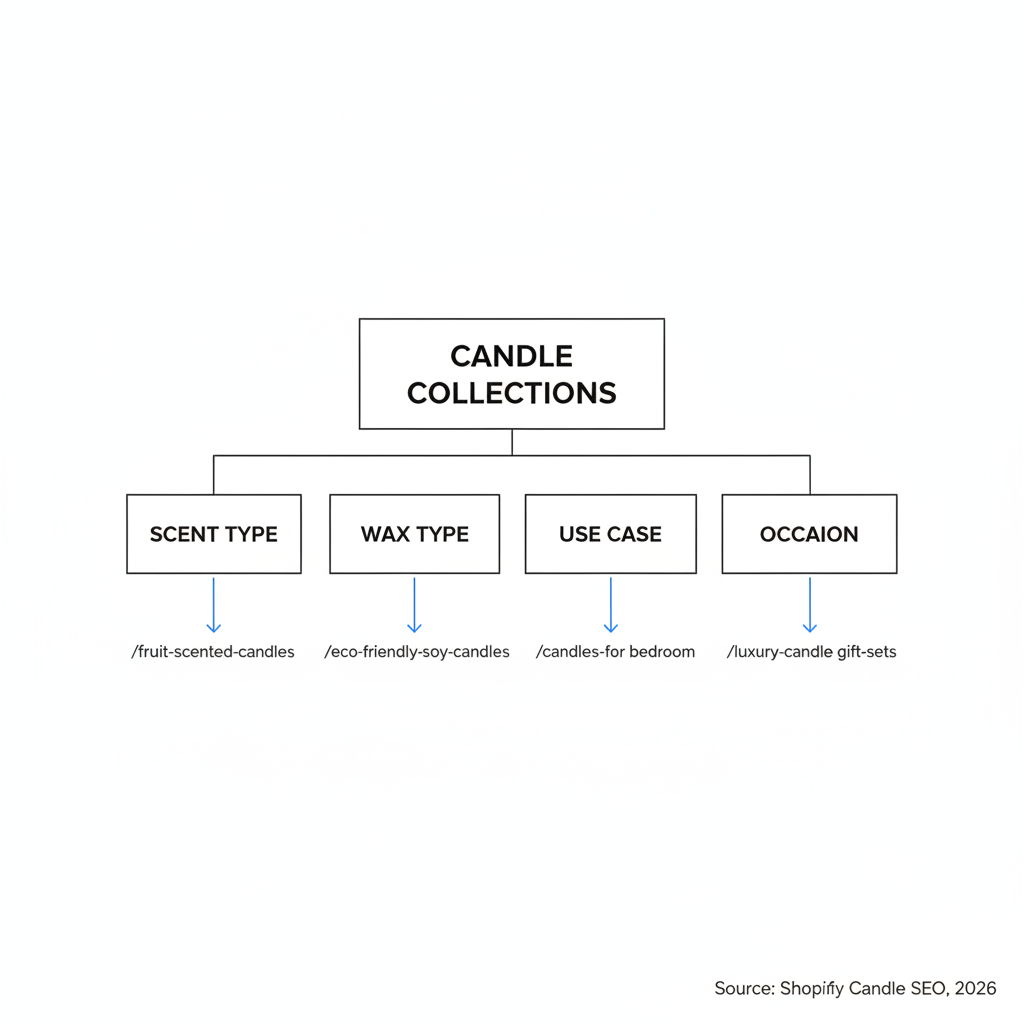
The best candle collection structure groups products by scent, wax type, use case, and occasion. This creates topical authority and gives you more entry points from search.
Instead of one giant “Candles” collection, I would create focused collections like:
- /collections/fruit-scented-candles
- /collections/eco-friendly-soy-candles
- /collections/luxury-candle-gift-sets
- /collections/candles-for-bedroom
- /collections/holiday-candles
Each collection should have a unique intro, a clear H1, internal links to related collections, and a short FAQ if the theme allows it cleanly. I have seen merchants get better crawl coverage just by turning vague navigation into a more logical taxonomy.
This is also where URL quality matters. If you need help keeping URLs clean and keyword-aligned, read How Best to Create Custom URLs on Shopify in 2026.
How do I optimize a candle product page on Shopify to rank?
A candle product page ranks better when it combines strong keyword targeting, unique copy, useful buying details, and technical SEO basics. In 2026, product pages need to satisfy both search engines and shoppers quickly.
Here is the structure I recommend for almost every candle product page.
What should the product title look like?
The best candle product titles are short, specific, and front-load the main keyword. Put the scent or product type first, then the differentiator.
| Weak Title | Better Title | Why It Works |
|---|---|---|
| Soy Candle | Lavender Soy Candle for Sleep | Specific scent + benefit |
| Luxury Candle | Orange Blossom Luxury Candle Gift | Targets premium and gift intent |
| Fruit Candle | Grapefruit Scented Candle - Long Burn Soy Wax | Adds scent, material, and feature |
Try to keep titles under about 60 characters when possible for search display, but do not obsess over exact character counts if the title reads naturally.
What should the meta description say?
Your meta description should include the target keyword and a clear reason to click. Think scent, material, burn time, gift value, or shipping offer.
Example: Eco-friendly soy candles in fresh citrus scents. Long-burn, non-toxic, and gift-ready. Shop luxury candle sets today.
A good meta description will not guarantee rankings, but it can improve click-through rate. In crowded search results, that matters.
How long should the product description be?
The ideal candle product description is usually 300-500 words of unique copy. That gives you enough room to explain scent notes, wax type, burn time, room fit, and use case without sounding bloated.
I would structure the description like this:
- Opening paragraph with the main benefit and target keyword
- Short section on scent profile
- Short section on materials and burn quality
- Short section on where or when to use it
- Bullet list for burn time, vessel size, wick type, and care instructions
Do not reuse the same description across 20 scent variants with only one adjective changed. Duplicate or near-duplicate product copy is one of the most common SEO issues I see on Shopify stores.
If you want a framework for stronger product copy, I would also check How to Generate Powerful Shopify Product Descriptions Using AI in 2026. Even if you use AI, you still need to add real scent and usage details.
What questions should a candle page answer?
The best-ranking candle pages answer practical buyer questions directly on the page. This helps with conversions and makes your content more extractable for AI search systems.
- What does it smell like?
- How long does it burn?
- Is it soy, beeswax, coconut, or another wax?
- Is it non-toxic or phthalate-free?
- Is it suitable for small rooms or bedrooms?
- Is it giftable?
- How should it be burned for the best performance?
These details are not filler. They are often the difference between a page that ranks and a page that bounces traffic.
What technical SEO matters most for Shopify candle stores?
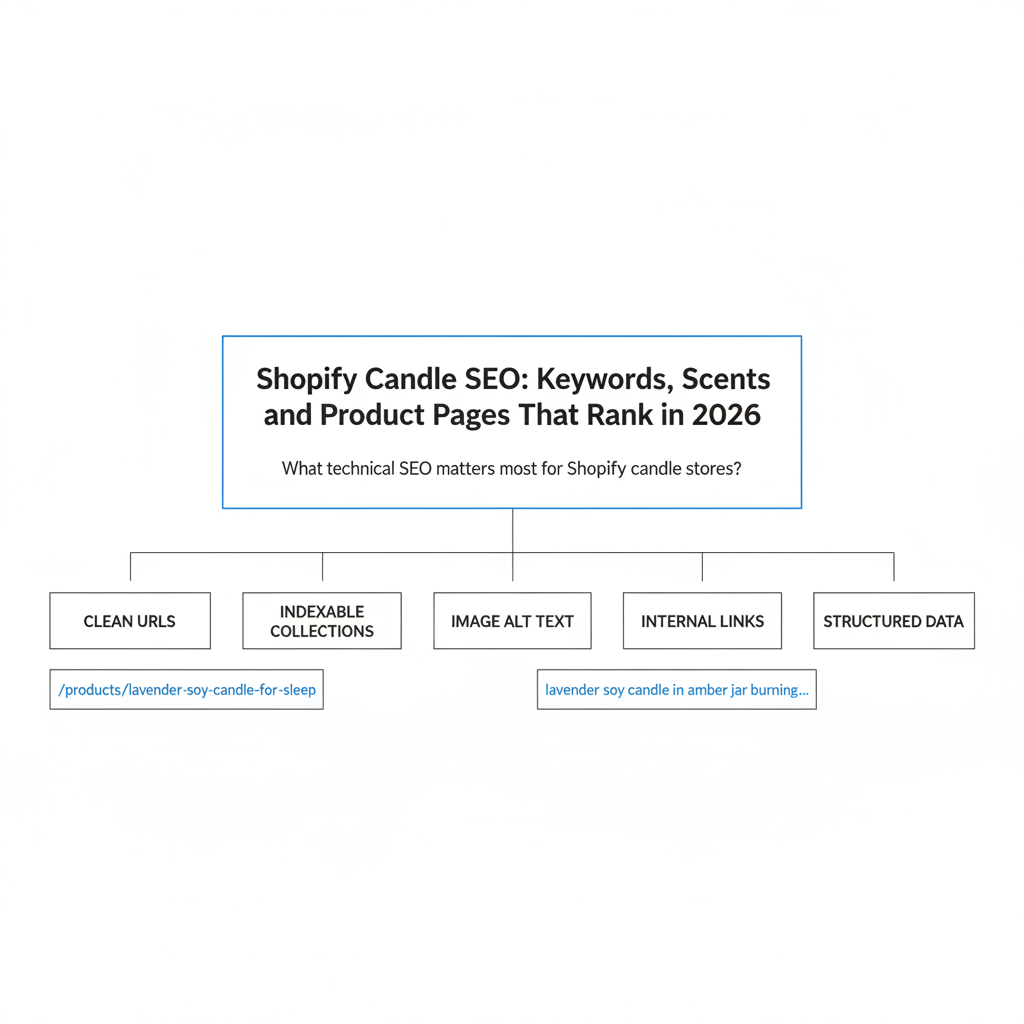
The most important technical SEO elements for candle stores are clean URLs, indexable collections, image alt text, internal links, and structured data. You do not need an enterprise setup to compete in this niche.
These are the technical fixes I would prioritize first:
- Use descriptive URLs like /products/lavender-soy-candle-for-sleep
- Add alt text such as “lavender soy candle in amber jar burning on bedside table”
- Implement product schema for price, availability, and reviews
- Link products to collections and collections to helpful articles
- Keep Core Web Vitals healthy by compressing imagery and limiting heavy apps
Structured data is especially valuable because rich results can lift click-through rate significantly. On product-heavy stores, even a modest CTR bump can turn into meaningful revenue.
If you want a broader technical framework, read Complete Shopify SEO Health Check: Your Technical SEO Checklist for 2026. It is a useful checklist for catching the issues that quietly hold rankings back.
How important are images and alt text for candle SEO?
Images matter for candle SEO because candles are highly visual products and image search can drive qualified traffic. Good alt text also improves accessibility and helps search engines understand your product imagery.
Candle stores often upload beautiful photos with filenames like IMG_4837.jpg and leave alt text blank. That is a missed opportunity. Every product should include descriptive alt text covering the scent, container, wax type, and sometimes the setting.
Examples:
- grapefruit scented soy candle in frosted glass jar
- lavender candle for bedroom on wooden nightstand
- luxury candle gift set with three white linen scents
For candle stores, I also like lifestyle images that reinforce search intent. If the keyword is “candle for small bedroom,” show the candle in a realistic bedroom setting.
Should candle brands create blog content or focus only on products?
Candle brands should do both, but product and collection pages should come first. Blog content works best when it supports commercial pages rather than replacing them.
In my experience, blog posts are most useful for problem-solving and educational searches that are hard to target with a product page alone. Great examples include:
- How to make candles last longer
- Best candle scents for sleep and relaxation
- How to choose a candle gift set
- Soy vs beeswax candles: which is better?
- Best candles to remove cooking smells
Each article should link naturally to relevant collections and products. That internal linking helps distribute authority and gives readers a next step.
If you are improving content across your store, these LaunchTip guides are also relevant: Boost Product Discoverability: Essential SEO Tips for Shopify Product Pages and How to Rank Your Shopify Store on Google: 9 Key Methods.
How do reviews help candle SEO on Shopify?
Reviews help candle SEO by adding fresh, keyword-rich content and improving trust signals. They are especially useful for capturing long-tail phrases that merchants forget to include in product copy.
For candle stores, I would actively prompt customers with review questions like:
- What room did you use this candle in?
- How would you describe the scent?
- Did you buy it for yourself or as a gift?
- How long did it burn?
That tends to generate natural language like best lavender candle for bedtime or great citrus candle for kitchen smells. Those phrases are SEO gold because they come from real customers, not forced copywriting.
If you need a review app, my own bias is obvious since I build apps in the Shopify ecosystem, but whatever tool you use, make sure it outputs crawlable review content and schema. You can also browse the Shopify App Store review app category for options.
What tools should I use for candle SEO on Shopify?
The best candle SEO tool stack is simple: Google Search Console, Shopify Analytics, a keyword research tool, and one solid SEO app if you need help managing metadata or schema.
This is the stack I would recommend for most candle stores:
| Tool | Best For | Why It Matters |
|---|---|---|
| Google Search Console | Query data and indexing | Shows what you already rank for |
| Google Analytics | Traffic and conversion paths | Connects SEO traffic to revenue |
| Shopify Analytics | Product performance | Helps identify pages worth optimizing first |
| Semrush | Keyword research | Good for intent filtering and content gaps |
| Ahrefs | Keyword and competitor analysis | Useful for SERP difficulty and content ideas |
If you want to improve merchandising alongside SEO, I would also look at related product and upsell tools. Better internal linking and stronger product discovery can help both rankings and revenue. For example, my app SellUp is built for upsells and product recommendations, and you can find it on the Shopify App Store.
What is a realistic SEO plan for a small Shopify candle store?
A realistic SEO plan for a small candle store is to optimize 5-10 high-intent pages first and expand from there. You do not need 100 blog posts to start seeing movement.
- Choose 3-5 collection pages tied to scent, material, or gift intent.
- Choose 2-5 top-selling products with unique search potential.
- Rewrite titles, meta descriptions, and product copy around one primary keyword each.
- Add internal links between collections, products, and supporting articles.
- Implement product schema and improve image alt text.
- Publish 2-3 supporting blog posts around common buyer questions.
- Track impressions, clicks, and conversions for 90 days in Search Console and Shopify Analytics.
Based on the benchmark data in your research, a focused rollout like this can reasonably produce 20-50% traffic growth in 3-6 months if the site is technically sound and the niche is not overcrowded.
What mistakes should candle stores avoid with Shopify SEO?
The biggest candle SEO mistakes are targeting broad keywords, using duplicate descriptions, and creating weak collection pages. Most ranking issues I see are structural, not mysterious algorithm penalties.
- Going too broad with targets like “candles” or “home fragrance”
- Copy-pasting descriptions across scent variants
- Skipping collection copy on important category pages
- Ignoring gift and problem-solving intent
- Using poor image alt text or none at all
- Publishing blog posts without internal links to products
- Letting apps slow down the theme and hurt page speed
One more mistake is writing for search engines instead of shoppers. If your copy sounds robotic, stuffed, or vague, it will probably underperform in both rankings and conversions.
What does a high-ranking candle SEO page actually look like in 2026?
A high-ranking candle SEO page in 2026 is specific, useful, technically clean, and conversion-friendly. It clearly answers the searcher’s question and makes the next step obvious.
For example, if the target keyword is lavender candle for sleep, the page should include:
- A title that uses the phrase naturally
- A product description explaining the scent profile and bedtime use case
- Burn time, wax type, and room suitability
- Images that match the calming bedroom context
- Review snippets mentioning relaxation or sleep
- Schema markup for price, stock, and ratings
- Internal links to related calming or bedroom candle collections
That is the level of specificity that wins now. Search engines are much better at spotting thin ecommerce pages, and shoppers are much less patient with them.
In my experience building Shopify apps and analyzing product-page behavior, the stores that win organic traffic are usually not the ones with the fanciest SEO theory. They are the ones that make every important page more specific, more useful, and easier to understand than the competing result.
If you sell candles on Shopify, that is your opportunity in 2026. Own the scent, own the use case, and build product pages that deserve to rank.