Wil je verkeer naar je website sturen via TikTok? Met meer dan 1,5 miljard maandelijks actieve gebruikers wereldwijd kan TikTok jouw nieuwe geldmachine worden. Door de groeiende populariteit van TikTok is de concurrentie in talloze sectoren flink toegenomen. Om succesvol te zijn, moet je uniek zijn, zodat je opvalt tussen anderen en geweldige video’s maakt.
Hoe je viraal gaat op TikTok

Laten we kijken naar de manieren waarop je je TikTok-video’s viraal kunt laten gaan.
Houd je video’s kort
Hoewel TikTok nu video’s tot 10 minuten toestaat, ligt de sweet spot om viraal te gaan een stuk korter. In 2025 zijn video’s tussen 21-34 seconden ideaal voor snelle viraliteit, terwijl content van gemiddelde lengte rond 90-120 seconden vaak de hoogste betrokkenheid oplevert. De gemiddelde TikTok-videolengte is in 2024 gestegen naar ongeveer 43 seconden, maar korte content blijft koning als het gaat om aandacht trekken. Onthoud: het TikTok-algoritme geeft prioriteit aan de completion rate, dus een video van 10 seconden die volledig wordt bekeken presteert beter dan een video van 60 seconden die mensen halverwege verlaten.
Blijf bij met de nieuwste trends
TikTok is enorm trendgedreven, dus het is superbelangrijk dat je trends goed begrijpt. Het algoritme in 2025 focust op communities en micro-viraliteit, en geeft de voorkeur aan relevantie boven klakkeloos kopiëren. Met de Discover-pagina en TikTok’s Creative Center zie je welke video’s, audio en hashtags trending zijn. Dat kan variëren van trending sounds tot een trending nummer of een trending dansvideo. En zo gaat het maar door. Een trend vinden die bij je past en die gebruiken voor je content kan je profiel een flinke boost geven. Vergeet alleen niet je eigen unieke twist toe te voegen om op te vallen.
Bron: Giphy
Promoot je TikTok-content op andere socialmediaplatforms
De trend van korte TikTok-video’s heeft ook andere socialmediaplatforms beïnvloed. Het lijkt er nu op dat Facebook, Instagram en zelfs YouTube korte videocontent promoten. Wil je op een makkelijke manier je social media-bereik vergroten, probeer dan je TikTok-content te cross-promoten op je andere kanalen. Plaats bijvoorbeeld een van je best presterende korte video’s als Instagram Reel. Dat kan je kansen vergroten om viraal te gaan op TikTok.
Upload regelmatig content
Dit is waarschijnlijk een open deur, maar regelmatig posten op je TikTok-pagina helpt om viraal te gaan. Je wilt vaak én consistent uploaden, omdat het TikTok-algoritme content creators bevoordeelt die veel verkeer naar het platform zelf brengen. In 2025 posten creators voor optimale resultaten 1-3 keer per dag. Hoe meer verkeer je brengt, hoe vaker je content wordt getoond. Dat betekent niet dat je elk uur moet posten, maar zoek een schema dat bij je past en houd je eraan. Je volgers leren wanneer je post en zullen rond die tijd eerder je profiel bekijken.
Zorg voor interactie op je content

Het wordt makkelijk vergeten, maar je wilt dat zoveel mogelijk mensen met je video’s interacteren. Dat laat TikTok zien dat je actief bent en dat mensen je content waarderen. Het TikTok-algoritme in 2025 geeft meer prioriteit aan kijktijd dan aan andere engagement-signalen, maar reacties, shares en saves dragen allemaal bij aan het succes van je video. Vergeet ook niet om op reacties te antwoorden; dat is een fantastische manier om nieuwe volgers te krijgen. Geef gebruikers daarnaast de mogelijkheid om te Stitch’en of te Duetten met jou om de interactie op bepaalde video’s te verhogen.
Gebruik de Duet-functie
Zoals hierboven genoemd, kun je met de Duet-functie video’s maken die reageren op content van andere creators. Deze functie is uniek voor TikTok, dus gebruik hem om andere gebruikers aan te moedigen op jouw video’s te reageren door deze functionaliteit in te schakelen.
Haal het maximale uit relevante hashtags
Aansluitend op het vorige punt: relevante hashtags helpen om je video op te laten vallen en de ranking te verbeteren. Vermijd generieke hashtags zoals #foryou en #fyp. Gebruik hashtags die je zichtbaarheid echt vergroten. Een toptip om viraal te gaan op TikTok: gebruik 3-5 relevante hashtags en combineer branded, actuele en trending hashtags. Het TikTok-algoritme gebruikt hashtags om je content te begrijpen en te categoriseren, dus werk met een doordachte hashtagstrategie. Je vindt trending hashtags in TikTok’s Creative Center.
Vind het beste moment om te posten
Nog een belangrijk punt om zoveel mogelijk aandacht op je content te krijgen. Het beste moment om je video’s te posten hangt af van je doelgroep. Je wilt weten wanneer zij het meest actief zijn en video’s kijken op TikTok. Als je doelgroep bijvoorbeeld vooral actief is nadat ze klaar zijn met werk, probeer dan ’s avonds te posten wanneer ze tijd hebben om te kijken. Pro tip: post 5-10 minuten vóór je piekmoment, zodat volgers het als eerste zien en je kijktijd en engagement meteen op gang komen.
Gebruik call-to-actions (CTA’s)
Je wilt niet dat slechts één video viraal gaat; je wilt dat gebruikers blijven terugkomen voor meer. Het is belangrijk dat je sterke CTA’s gebruikt om kijkers enthousiast te maken over toekomstige content en ze te stimuleren je volgende video te bekijken. Je kunt iets heel simpels gebruiken, zoals ‘volg mij’ voor dagelijkse updates en tips, waarmee je kijkers aanmoedigt je te volgen.
Hoe je sales haalt uit TikTok
Je zou echt moeten nadenken over hoe je TikTok kunt inzetten om je bedrijf te laten groeien en te promoten. Als je meer verkeer naar je website wilt sturen en meer sales wilt realiseren, dan kan dit precies de route voor jou zijn.
Gelukkig zijn er talloze manieren om te profiteren van TikTok’s enorm betrokken gebruikers. Zoveel merken gebruiken dit social platform en plukken er de vruchten van, dus het is tijd dat jij ook de sprong waagt.
Laten we manieren bespreken waarop je sales uit TikTok kunt halen om je merk te laten groeien. Eerst kijken we naar manieren waarop je meer verkeer naar je website kunt sturen. Dat zou vervolgens moeten converteren naar sales.
Voeg een link toe in je bio
Het lijkt heel vanzelfsprekend, maar je zou verbaasd zijn hoeveel merken dit over het hoofd zien. De link op je TikTok-profiel is een van de weinige plekken waar je een klikbare link kunt toevoegen. Dus die is superwaardevol als je websiteverkeer en sales wilt stimuleren.

Om in 2025 een klikbare link in je bio toe te voegen, moet je aan één van twee voorwaarden voldoen: minimaal 1.000 volgers hebben op een persoonlijk account, of overstappen naar een TikTok Business Account (waarvoor geen volgerseis geldt). Business accounts hebben direct toegang tot de linkfunctie, waardoor het voor merken makkelijker is om meteen verkeer te gaan sturen.
Om je link toe te voegen, ga je naar je TikTok-profiel, kies je ‘Edit profile’ en voeg je je link toe in het websiteveld. Zorg dat je URL het volledige webadresformaat bevat (https://yourwebsite.com) zodat het goed werkt.
Snelle tip! Word lid van het Rack platform om je tiktok-kanaal te monetizen en je eigen advertenties & sponsorships te verkopen. Je kunt ook advertentieruimte verkopen op andere kanalen, zoals je Shopify-blog, nieuwsbriefpubliek en meer.
Koppel je andere socialmediaprofielen
Een snelle manier om verkeer vanuit je TikTok-profiel te sturen, is door je andere social accounts te koppelen. TikTok laat je vanuit je profiel direct Instagram-, YouTube- en Lemon8-links koppelen. Selecteer gewoon ‘Edit profile’ en koppel vervolgens je social accounts. Het is supermakkelijk en rechttoe rechtaan.
Wanneer je Instagram-account is gekoppeld aan je TikTok-account, kunnen je volgers en andere gebruikers het Instagram-icoon op je profielpagina selecteren. Er verschijnt dan een popup met links naar je andere socialmediaprofielen.
Deze links naar andere social media toevoegen is een geweldige manier om je content te cross-promoten.
Pas je contentstrategie aan
TikTok for Business maakt het eenvoudig om fantastische videocontent te maken. Door je producten te combineren met een trending video kun je jezelf klaarzetten voor groot succes. Of ga nog een stap verder en creëer je eigen trending video’s.
Neem bijvoorbeeld @itsdanielmac. Hij heeft zijn eigen succes gecreëerd door naar mensen met supercars toe te gaan en te vragen wat ze doen voor de kost. Dat levert interessante en boeiende content op.

Een geweldige manier om verkeer en sales uit TikTok te halen, is door je producten te integreren in je contentstrategie. Het is zó effectief en geeft je volgers en andere gebruikers een goed beeld van waar je producten voor staan, doordat je awareness opbouwt.
Wanneer je captions gebruikt bij je TikTok-video’s, houd er dan rekening mee dat hoe langer ze zijn, hoe meer ze je daadwerkelijke videocontent in de weg zitten. TikTok-captions kunnen in 2025 tot 4.000 tekens lang zijn, waardoor je genoeg ruimte hebt om keywords toe te voegen voor TikTok SEO. Toch kan het slim zijn om die captionruimte te bewaren voor een belangrijke call-to-action over hoe je volgers je producten kunnen shoppen.
Gebruik TikTok ads
Als je een klikbare knop op je video’s wilt plaatsen, zijn TikTok ads de enige manier om dat te doen. Dat maakt ze extra waardevol voor bedrijven en merken die verkeer en websiteverkopen willen stimuleren.
Met ads kun je je volgers en andere gebruikers aanmoedigen om je producten nu te shoppen, of om vanuit je TikTok-video je website te bezoeken. TikTok ads zorgen ervoor dat je video’s daadwerkelijk bereik krijgen, omdat je betaalt om ze aan je geselecteerde doelgroep te laten zien.
Bundel je krachten met influencers
Content maken met andere influencers en content creators is een fantastische manier om merkbekendheid te vergroten en sales te stimuleren. Neem de tijd om de juiste mensen te vinden om mee samen te werken. Je wilt zeker weten dat je de juiste partnerships kiest die je merk helpen groeien.
Je wilt samenwerken met influencers die een doelgroep hebben die aansluit bij jouw merk en producten. Zo voelt de content authentieker en echter, en levert het meer interacties en sales op.
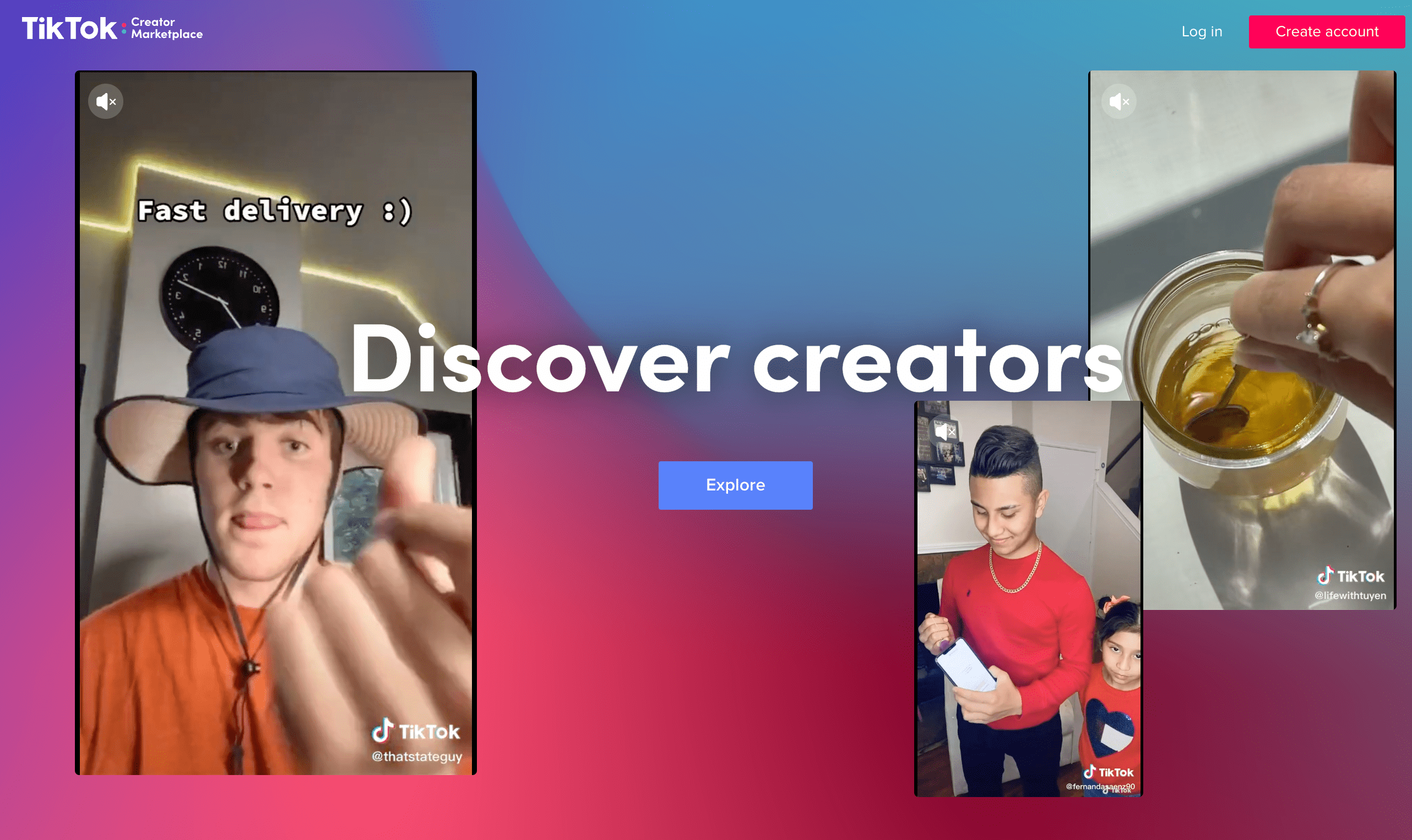
Je kunt TikTok’s Creator Marketplace gebruiken om te starten met je zoektocht naar influencer-samenwerkingen.
Ga live!
Zodra je 1.000 volgers op TikTok hebt, kun je live gaan. In 2025 moet je bovendien minimaal 16 jaar oud zijn om een livestream te starten (en 18 jaar of ouder om virtuele gifts van kijkers te ontvangen). Live gaan op TikTok is een geweldige manier om direct contact te maken met je volgers. Je kunt live sales doen van je producten en alles gebeurt in real time, wat het persoonlijker maakt.
Het kan ook helpen om je vindbaarheid te vergroten, zodat je profiel aan meer gebruikers wordt getoond. Het enige wat je hoeft te doen om live te gaan, is het + icoon selecteren en naar het tabblad LIVE swipen. Vul een titel in voor je uitzending, kies een coverafbeelding en je bent klaar om te gaan.
Helaas kun je geen klikbare link toevoegen in een TikTok LIVE, maar het is nog steeds een geweldige manier om merkbekendheid en sales te stimuleren. Je kunt je nieuwste producten laten zien en live sales aanbieden om je totale omzet te verhogen.
Conclusie
Al met al biedt TikTok geweldige manieren om meer verkeer naar je website te krijgen en sales te verhogen. Het heeft fantastische functies die je niet wilt missen en die direct sales vanuit TikTok kunnen opleveren.
Met de juiste strategie zou je binnen de kortste keren websiteverkeer en sales vanuit TikTok moeten zien.