The best ChatGPT prompts for Shopify stores help you create better product copy, faster customer support replies, stronger SEO content, and more effective marketing campaigns without starting from scratch every time.
As a Shopify app developer, I use AI every week across product copy, support workflows, onboarding emails, FAQ generation, and conversion testing. ChatGPT is not a magic button, but with the right prompts, it becomes a very practical assistant for merchants, agencies, and solo founders who need to move quickly.
This guide gives you 36 practical ChatGPT prompts for Shopify stores, grouped by use case and updated for how merchants are actually using AI in 2026. I have also included prompt-writing tips, examples, and the mistakes I see most often when merchants rely too heavily on generic AI output.
If you are also thinking beyond content and want your store to be more visible in AI-driven discovery, read How to Get Your Shopify Store into ChatGPT: Step-By-Step Guide and How to Optimize Your Shopify Store for AI Shopping Agents. Those two topics are becoming more important as AI search and shopping assistants influence more purchase journeys.
What are ChatGPT prompts for Shopify stores?
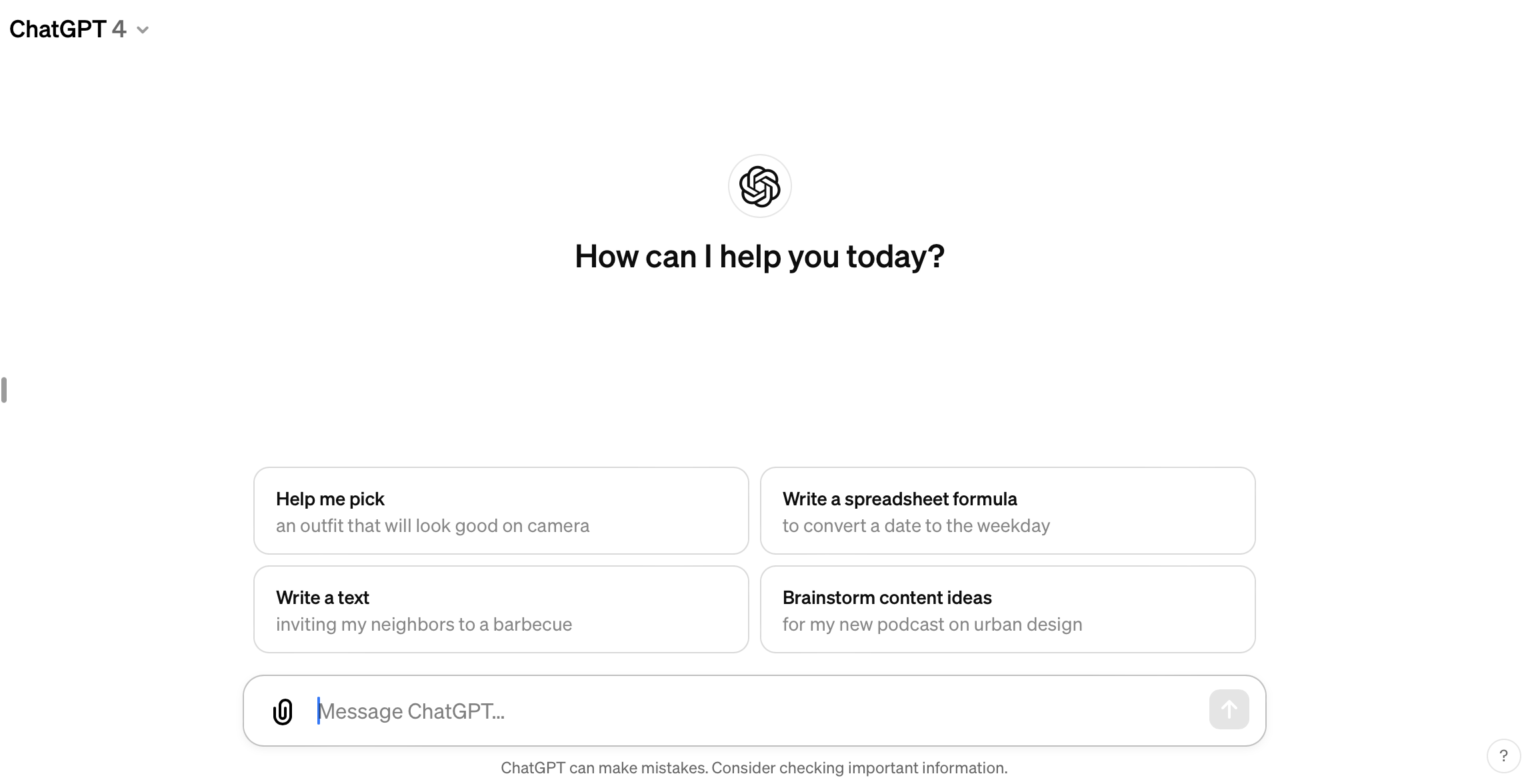
ChatGPT prompts for Shopify stores are instructions you give AI to generate store-specific outputs such as product descriptions, ad copy, FAQs, support replies, and SEO content. The better the prompt, the better the output.
In practice, a prompt is not just a question. It is usually a short brief that includes your product details, brand voice, target customer, and desired format. In my experience building Shopify apps, this is the difference between getting bland filler copy and getting something you can actually publish after a quick edit.
For Shopify merchants, prompts are useful because they reduce blank-page syndrome. Instead of asking AI to “write a product description”, you can ask it to write a benefit-led, SEO-aware description for a specific buyer type, at a specific price point, in a specific tone.
Why should Shopify merchants use ChatGPT prompts in 2026?
Shopify merchants should use ChatGPT prompts in 2026 because they save time, improve consistency, and help small teams produce more content and support material with less effort. AI works best as a force multiplier, not a replacement for judgement.
Most stores do not struggle because they lack ideas. They struggle because they lack time to turn ideas into polished assets across product pages, emails, ads, FAQs, and customer support. That is where structured prompts help. They speed up repetitive work while keeping your brand more consistent.
There is also a discoverability angle now. AI tools increasingly influence how people research products, compare options, and ask pre-purchase questions. If you want to prepare for that shift, I would also look at 5 GPTs to Help Shopify Merchants with Their Business in 2026, because the ecosystem is expanding beyond one general-purpose chatbot.
What are the main benefits?
The main benefits are speed, consistency, better first drafts, and lower workload for small teams. Used properly, prompts can improve output quality across multiple store functions.
- Product content at scale - useful for stores with large catalogues or frequent launches.
- Faster support drafting - especially for shipping, returns, sizing, and stock questions.
- Marketing ideation - emails, ad angles, social posts, and campaign hooks.
- SEO support - FAQs, blog outlines, collection copy, and keyword clustering.
- Conversion optimisation support - objection handling, bundle positioning, and upsell messaging.
One thing I have learned firsthand is that merchants get the best results when they combine AI with store data. If you feed ChatGPT real reviews, support tickets, and product specs, the output becomes much more persuasive.
How do I write better ChatGPT prompts for Shopify?
The best Shopify prompts include context, constraints, audience, and formatting instructions. Generic prompts produce generic copy.
Here is the framework I recommend using before every prompt:
- Role - tell AI who it is. Example: “You are a Shopify ecommerce copywriter.”
- Context - describe the product, niche, customer, and brand voice.
- Task - explain exactly what you want created.
- Constraints - word count, tone, structure, banned phrases, reading level.
- Output format - bullets, HTML, table, email, FAQ, meta title, etc.
A simple improvement I often suggest is adding examples of your existing brand copy. If you paste in two or three examples of your tone, ChatGPT usually produces something much closer to your brand standards.
| Weak prompt | Better prompt |
|---|---|
| Write a product description for my candle | You are a Shopify copywriter. Write a 180-word product description for our soy candle aimed at women aged 28-45 who buy premium home fragrance. Focus on relaxation, giftability, and clean ingredients. Use a warm, modern tone. Include 3 bullet points and a subtle urgency line. |
| Write an email for abandoned carts | Write 3 abandoned cart emails for a skincare brand. Audience: first-time visitors. Tone: reassuring, science-backed, premium. Include subject line, preview text, body copy, and CTA. Address hesitation around skin sensitivity and price. |
What are the 36 best ChatGPT prompts for Shopify stores?
These are the 36 best ChatGPT prompts for Shopify stores I would actually recommend using. They cover product descriptions, social content, ads, email marketing, customer service, SEO, and store strategy.
To get the best results, replace the bracketed placeholders with your real details. I also recommend adding your brand voice at the start of each prompt, such as “minimalist and premium”, “playful and youthful”, or “clinical and expert-led”.
1) Product descriptions and product page copy
Product page prompts should help you sell the outcome, not just list the specs. The best product prompts combine benefits, objections, and buyer context.
- Sensory product description: “Write a sensory product description for [product] that appeals to the senses. Describe how it looks, feels, smells, sounds, or tastes. Make the reader feel like they are experiencing it. 200 words, luxury brand tone.”
- Problem-solution description: “Write a problem-solution description for [product] starting with customer pain points: [list 3]. Position it as the solution, end with social proof and urgency. 180 words.”
- Comparison-led description: “Write a comparison description positioning [product] against alternatives without naming competitors. Highlight 5 superior features: [list]. Confident but not aggressive tone.”
- Story-driven description: “Write a story-driven description as a mini-story of a customer's day with [product]. Show how it fits their routine. Relatable and aspirational, 200 words.”
- Limited edition launch copy: “Build a product description for our limited edition [product] launching [date]. Mention scent notes/features and why buy now before stock runs out.”
- SEO-optimised description: “Generate a SEO-optimized product description for [product] targeting keyword '[keyword]'. Include benefits, features, and urgency. 150-200 words.”
- HTML product description: “Create HTML code for a [product] description with keyword '[keyword]', bullet points for features, and schema markup for rich snippets.”
- Objection-handling description: “Write a benefit-led description for [product] handling common objections like [objection 1, 2]. Lead with benefits, add urgency. Reference [photo details].”
- Bundle description: “Draft a bundle description for [product A] + [product B], explaining value savings and use cases. 150 words, promotional tone.”
- Rewrite existing copy: “Rewrite [existing description] to be more persuasive, adding emotional hooks and 3 testimonial-style proof points. Match [brand tone].”
When I test AI-written product copy, the biggest gains usually come from prompts 2, 8, and 9 because they force the model to address real buying friction. If you sell products with multiple use cases, pairing this with a quiz can work well too. Quizive is built for that kind of guided product discovery.

2) Social media and ad copy prompts
Social and ad prompts should give you multiple angles to test, not one polished post. Variation is the real advantage of using ChatGPT here.
- Instagram caption pack: “Write 10 Instagram captions for [niche] store: 3 product showcases, 3 behind-the-scenes, 2 customer spotlights, 2 educational. Hook first, 80-120 words, 5-8 hashtags, CTA.”
- Ad creative concepts: “Generate 10 ad creative concepts for [product]: visual, headline, body, CTA. Mix static, carousel, video. Target [demographic].”
- UGC encouragement posts: “Write 5 social posts to encourage user-generated content. Include CTAs, hashtags, incentives like discounts or features.”
- TikTok scripts: “Create 5 TikTok scripts for [product]: 15-30 seconds, trending sound ideas, hook in first 3 seconds, shop link CTA.”
- Facebook ad variations: “Draft 8 Facebook ad variations for [product] using AIDA structure. Test pain points versus benefits. Keep each under 125 words.”
- Pinterest pin descriptions: “Generate Pinterest pin descriptions for [product images]: 100-150 characters, keywords, questions to drive clicks.”
- LinkedIn posts for B2B: “Write LinkedIn posts for B2B [product]: 3 value-focused, 2 case studies. Professional tone, include poll ideas.”
- Carousel ad script: “Create carousel ad copy for [product]: 5 slides educating on problem-solution-journey. End with discount CTA.”
- UGC contest ideas: “Brainstorm 10 UGC contest ideas for [niche], with post templates and rules.”
- Retargeting ad copy: “Write retargeting ad copy for abandoned carts: empathetic tone, urgency, 20% off incentive.”
If you already run paid traffic, ask ChatGPT to generate copy based on your best-performing hooks. Feed it your top ad headlines from Meta or TikTok and ask for 20 variations in the same style. That tends to outperform fully generic prompt outputs.
If you want more ideas around social proof and customer-led creative, see 6 Best User-Generated Content Shopify Apps for 2026. UGC and AI copy work especially well together when you use real customer language as input.
3) Email marketing and customer service prompts
Email and support prompts are some of the highest ROI uses of ChatGPT for Shopify. These tasks are repetitive, structured, and easy to improve with templates.
- Welcome email series: “Write a welcome email series: 3 emails for new subscribers. Include store story, top product, 10% discount.”
- Shipping delay email: “Draft a shipping delay email for weather issues: honest explanation, new ETA, no auto-compensation.”
- Win-back campaign: “Create win-back email for inactive customers: segment by last purchase, personalised offer.”
- Customer service response bank: “Generate 10 customer service responses for [common issues: refunds, sizing, tracking]. Empathetic, solution-focused.”
- Post-purchase thank-you: “Write post-purchase thank-you email with upsell: review request, related products.”
- SMS flows: “Draft SMS flows: cart abandonment, order confirmation, shipping update. Under 160 characters.”
- FAQ email template: “Create FAQ email template answering [top 3 questions] with links to help docs.”
- Loyalty programme invite: “Write loyalty programme invite email: benefits list, sign-up CTA.”
In my own work, support prompts are often the easiest win because they reduce response time immediately. You still need a human to review policy-sensitive replies, but AI can give your team a strong first draft for common tickets.
If your store gets lots of product-selection questions before purchase, a guided quiz can reduce support load as well as increase conversion rate. That is one reason I like Quizive for merchants with larger catalogues or more nuanced product matching needs.
4) SEO, blog, and store strategy prompts
SEO and strategy prompts are best used for planning, outlining, and research support. Do not publish AI output blindly, especially for search-focused content.
- FAQ generation: “Generate 15 FAQs for [product]: 80-150 words each. Categories: product, shipping, returns, usage. FAQ schema format.”
- 30-day content calendar: “Create 30-day content calendar for [niche] blog: title, keyword, intent, word count, link ideas. 40% educational.”
- SEO blog outline: “Write SEO blog post outline on '[topic]' for Shopify store: H1-H3 structure, 2000 words, 5 internal links.”
- Keyword brainstorming: “Brainstorm 20 keyword ideas for [niche] store, with search volume estimates and content angles.”
- Competitor audit prompt: “Audit [competitor URL] and suggest 10 SEO improvements for my Shopify store.”
- Pricing strategy prompt: “Generate pricing strategy for [product]: competitor analysis, value tiers, discount rules.”
- 30-day marketing plan: “Create 30-day marketing plan: channels, goals, KPIs for [niche] launch.”
- Customer journey map: “Develop customer journey map for [niche] store: touchpoints, pain points, optimisation ideas.”
These prompts are especially useful if you are a solo founder trying to get organised. I would still validate keyword data in a dedicated SEO tool, but ChatGPT is very good at turning rough ideas into a workable content plan.
For merchants publishing educational content, it also helps to think about AI visibility alongside traditional SEO. That is where posts like How to Optimize Your Shopify Store for AI Shopping Agents become relevant, because the content structure that helps Google often helps AI systems too.
Which ChatGPT prompt categories matter most for Shopify growth?
The most valuable prompt categories for Shopify growth are product page copy, email marketing, customer support, and SEO FAQs. These tend to influence conversion and workload most directly.
| Prompt category | Best for | Typical impact | My view |
|---|---|---|---|
| Product descriptions | Improving PDP clarity and persuasion | Higher conversion rate, lower bounce | Best place to start |
| Email marketing | Lifecycle automation and retention | More repeat purchases | High ROI for most stores |
| Customer service | Reducing support workload | Faster replies, better consistency | Excellent for small teams |
| Social and ads | Creative testing | More angles to test quickly | Useful if you already run traffic |
| SEO and blog | Content planning and FAQ expansion | More organic visibility over time | Strong long-term play |
| Strategy prompts | Launches, pricing, journey mapping | Better planning and prioritisation | Good for founders wearing many hats |
What mistakes should I avoid when using ChatGPT for Shopify?
The biggest mistakes are using vague prompts, publishing unedited output, and trusting AI with factual claims it has not verified. AI is fast, but it is not automatically accurate.
- Do not use one-line prompts if the task affects revenue.
- Do not publish AI copy without editing for tone, accuracy, and differentiation.
- Do not invent product claims such as unsupported health benefits or material specs.
- Do not let every page sound the same. AI sameness is very real.
- Do not ignore compliance for regulated niches like supplements, skincare, or baby products.
I also recommend avoiding overuse of obvious AI phrasing. If your copy sounds polished but generic, it usually means the prompt lacked real customer language. A quick fix is to paste in five customer reviews and ask ChatGPT to reuse the vocabulary patterns naturally.
How can I get better results from these ChatGPT prompts?
You will get better results by giving ChatGPT more store-specific inputs and by iterating. The first draft is rarely the final draft.
Use this simple prompt stack
A prompt stack is a sequence of prompts that improves output quality step by step. It works better than asking for everything in one go.
- Ask for a first draft.
- Ask it to improve the draft for one goal, such as clarity or SEO.
- Ask it to rewrite for your brand tone.
- Ask it to shorten or format for Shopify HTML.
- Ask it to identify weak spots or objections it has missed.
For example, I might first generate a product description, then ask the model to rewrite it for a more premium tone, then ask for bullet points, then ask for a shorter mobile-first version. That workflow tends to produce much better copy than a single prompt.
Feed it real data from your store
The best source material is your own store data. Use reviews, support tickets, quiz answers, on-site search terms, and top-performing ad hooks.
If you use a product recommendation quiz, the answers customers give are especially useful. They reveal intent, hesitation, and desired outcomes in plain language. That is exactly the kind of input AI needs to produce stronger copy and better support responses.
If quizzes are part of your strategy, you might also find How to Add a Quiz to Shopify and 8 Best Quiz Apps for Shopify in 2026 useful alongside this guide.
Can ChatGPT build or optimise a Shopify store for me?
ChatGPT can help you plan, write, and improve many parts of a Shopify store, but it cannot fully replace design, development, merchandising, and QA. Think assistant, not autopilot.
It can absolutely help with product copy, navigation ideas, FAQ drafting, policy simplification, campaign planning, and conversion hypotheses. It can also generate HTML snippets, though you should still test them carefully in your theme.
As someone who builds Shopify apps, I would say the strongest use case is augmentation. AI helps merchants move faster, but the stores that win still apply human judgement around brand, offer, positioning, and customer experience.
What is the best way to use ChatGPT with Shopify apps?
The best way to use ChatGPT with Shopify apps is to combine AI-generated content with tools that capture real shopper intent. AI works better when another app provides structured customer input.
A good example is pairing AI with a quiz app. A quiz captures preferences, needs, and constraints, then AI helps turn that information into personalised follow-up copy, email flows, or product explanations. For merchants selling skincare, supplements, fashion, home fragrance, or gifts, that combination can be very effective.
Quizive is worth a look if you want to recommend products based on answers rather than leaving shoppers to browse a large catalogue on their own. In my experience, guided selling plus strong AI-assisted copy is a very practical combination for improving conversion rate and average order value.
Final thoughts on the best ChatGPT prompts for Shopify stores
The 36 best ChatGPT prompts for Shopify stores are the ones that help you turn AI into a repeatable workflow, not a novelty. The real value is not in asking clever questions once. It is in building prompt templates you can reuse across launches, campaigns, support tickets, and SEO tasks.
If I were advising a new merchant today, I would start with product descriptions, welcome emails, FAQ generation, and customer service templates. Those four areas usually deliver the fastest return and the clearest time savings.
And if you want to stay competitive as AI shopping becomes more mainstream, make sure your store is structured in a way that both search engines and AI systems can understand. That means clear product data, strong content, useful FAQs, and consistent brand messaging across every touchpoint.