

If you want to know when a product was first published on Shopify, the quickest method is usually to show the Published at or Online Store Schedule column in your product list or bulk editor. Shopify does store this data, but it is not always obvious in the admin unless you know where to look.
In my experience building Shopify apps and helping merchants troubleshoot store data, this is one of those questions that sounds simple but often turns into a hunt through the admin, exports, and API fields. The good news is that there are now a few reliable ways to check a product's first publish date, and some are much easier than the old workarounds.
Whether you need this for inventory analysis, launch reporting, SEO audits, or simply to confirm when a product went live, I will walk through the best methods below, starting with the easiest admin-based option.
How do I check when a product was first published on Shopify?
The easiest way to check when a product was first published on Shopify is to open Products in your admin and add the Published at or Online Store column. This shows the publication date directly for many stores without needing an app or custom report.
This is the method most merchants should try first because it is fast, native, and works well when you want to inspect multiple products at once. It also aligns with what Shopify community answers have been recommending more recently.
- Log in to your Shopify admin.
- Go to Products.
- Click the Columns button above the product list, if available in your view.
- Look for Published at and enable it.
- If you do not see that exact option, look for Online Store or Online Store Schedule.
- Review the date shown for the product you want to check.
If your product list view does not expose the field clearly, the next best option is the bulk editor.
How do I use Shopify bulk edit to see product publish dates?
The bulk editor is one of the most reliable admin workarounds for checking product publish dates in Shopify. You can select products, open the bulk editor, and add a publication-related column to inspect multiple items in one screen.
I like this method because it scales well. If you are checking ten products from a recent launch, or hundreds of older catalogue items, bulk editing is often faster than opening each product one by one.
- In Shopify admin, go to Products.
- Select the products you want to inspect.
- Click Bulk edit.
- Inside the bulk editor, click Columns.
- Add Online Store, Published at, or a similarly named publishing field depending on your admin view.
- Read the date or schedule value shown for each product.
For many merchants, this is the best no-code solution. It is especially useful if you are trying to answer questions like:
- Which products went live this month?
- Was this product published before or after a campaign launched?
- Did a team member schedule a product instead of publishing it immediately?
Shopify's admin interface changes over time, so the exact column label can vary slightly. If you do not see Published at, check for anything related to sales channels, Online Store, or scheduling.
Can I see the publish date from an individual product page?
Sometimes, yes, but not always in a clearly labelled way. Shopify does not consistently surface the first publish date prominently on the individual product page for every admin layout, so the product list or bulk editor is usually better.
That said, the product page can still help you confirm whether a product is active, which channels it is published to, and whether there is any publishing schedule in place. If you only need to check one item, open the product and review the Sales channels and apps section and any scheduling details shown there.
If you are trying to work out whether a product was created long before it was published, it is worth comparing created date and published date. Those are not always the same thing, especially for stores that prepare products in draft before a launch.
What is the difference between created date and published date in Shopify?
The created date is when the product record was added to Shopify, while the published date is when it became available on a sales channel such as the Online Store. A product can be created days, weeks, or months before it is actually published.
This distinction matters more than many merchants realise. In my experience, teams often confuse these dates during reporting, which can distort launch analysis and product performance reviews.
| Field | What it means | Why it matters |
|---|---|---|
| Created date | When the product was first added in Shopify | Useful for catalogue management and internal workflows |
| Published date | When the product was made live on a channel | Useful for launch tracking, SEO timing, and sales analysis |
| Updated date | When the product was last changed | Useful for edit history and content maintenance |
For example, if a product was created in January but only published in March, your launch date is March, not January. That is the date you should usually use when assessing early sales performance.
Can I check when a product was first published using products.json?
Yes, /products.json can expose product metadata including publication-related fields, but it is not the best option for every store. It is more technical and may be limited depending on storefront access, channel setup, and what data is publicly exposed.
This older workaround still gets mentioned a lot because it can work, and it was one of the few practical options years ago. However, I would now treat it as a secondary method rather than the first thing to try.
To test it, append /products.json to your store URL, for example:
https://your-store.myshopify.com/products.json
If accessible, Shopify returns product data in JSON format. You can then search for the relevant product and inspect fields such as created_at, updated_at, and in some contexts published_at.
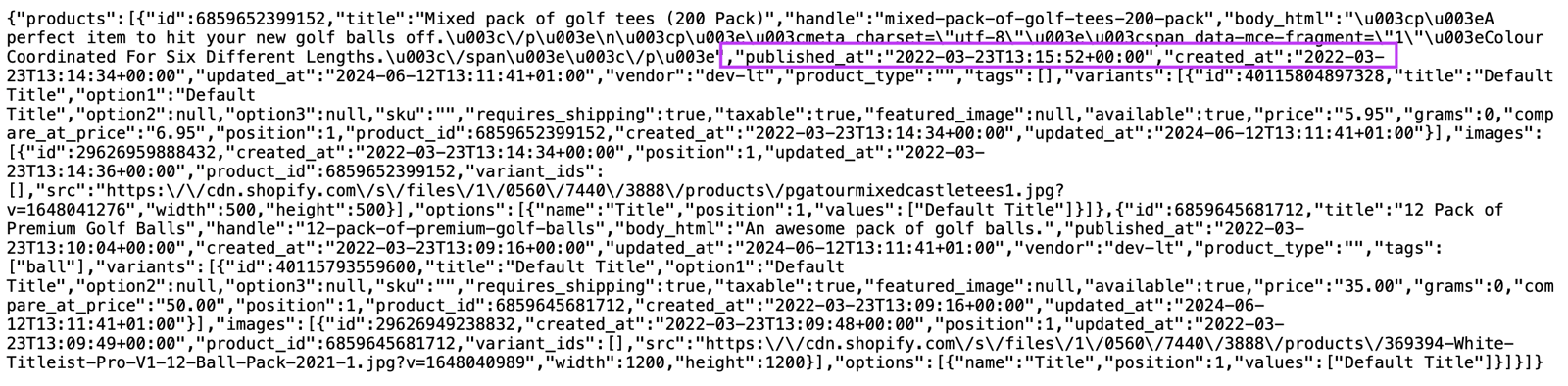
There are a few important caveats:
- Not every store exposes the same data publicly.
- Large catalogues may be paginated, so you might not see every product in one request.
- Storefront JSON output is not ideal for auditing hundreds of products.
- Draft or unpublished products may not appear in the same way.
If you are comfortable with APIs, Shopify's developer documentation is the better route for programmatic access than relying on public JSON endpoints. You can review Shopify's API docs at shopify.dev/docs/api.
How do I check product publish dates using the Shopify API?
The Shopify API is the most flexible way to retrieve product publish data at scale. If you need accurate reporting across many products, the API is usually the best long-term option.
As a developer, this is the route I trust most when merchants want repeatable exports or automated checks. It gives you more control than clicking around the admin, especially for larger stores.
There are two main API approaches:
- GraphQL Admin API for modern, efficient queries
- REST Admin API for legacy workflows and existing scripts
Relevant fields can include publishedAt, createdAt, and channel publication data depending on the object and API version. If you are building internal tooling, I would strongly recommend using GraphQL for new projects.
Useful references:
If you are not technical, skip this and use bulk edit or a reporting app instead.
Can I use Shopify reports or inventory reports to find publish dates?
Yes, in some cases Shopify reports can include created_at and published_at fields, especially in more advanced reporting contexts. This is one reason Shopify community threads often mention inventory or custom reports.
Whether this is available depends on your plan and the report customisation options in your admin. If you already use reports heavily, it is worth checking before installing another app.
Open your reporting area and look for:
- Inventory reports
- Custom reports
- Product performance reports
If the report builder lets you add fields or dimensions, search for anything matching product created or product published. In practice, I have found this less intuitive than bulk edit, but it can be useful if you want to combine publish dates with sales or stock data in one report.
How can I see product history or publish-related events in Shopify?
If you need more than the date itself, Shopify event history can help you understand who changed a product and when. This is useful when you are investigating whether a product was republished, edited, or scheduled by a staff member or app.
This angle has become more relevant because merchants increasingly want an audit trail, not just a single timestamp. In some cases, event logs can reveal publishing activity that the standard product view does not make obvious.
Start with the product's activity timeline in the admin if available. For more technical users, event endpoints and product-related event data may show publishing or update actions.
The exact visibility depends on your admin permissions, plan, and Shopify's current interface. If your goal is a reliable audit process rather than a one-off check, I would usually recommend a reporting workflow or app instead of relying solely on event history.
What is the best app for checking Shopify product publish dates?
The best app depends on whether you need a one-time export, scheduled reporting, or broader analytics. For most merchants, a reporting app is only worth it if the native admin methods are too limited or you need repeatable exports.
As someone who builds Shopify apps, I try not to recommend installing an app for something the admin can already do well. But if you need to audit lots of products regularly, apps can save a lot of time.
Is Xporter Data Export Tool a good option?
Xporter Data Export Tool is a strong option if you want flexible exports and spreadsheet-friendly reporting. It is especially useful for stores that already export operational data into Excel, CSV, or external systems.

You can view the app here: Xporter Data Export Tool.
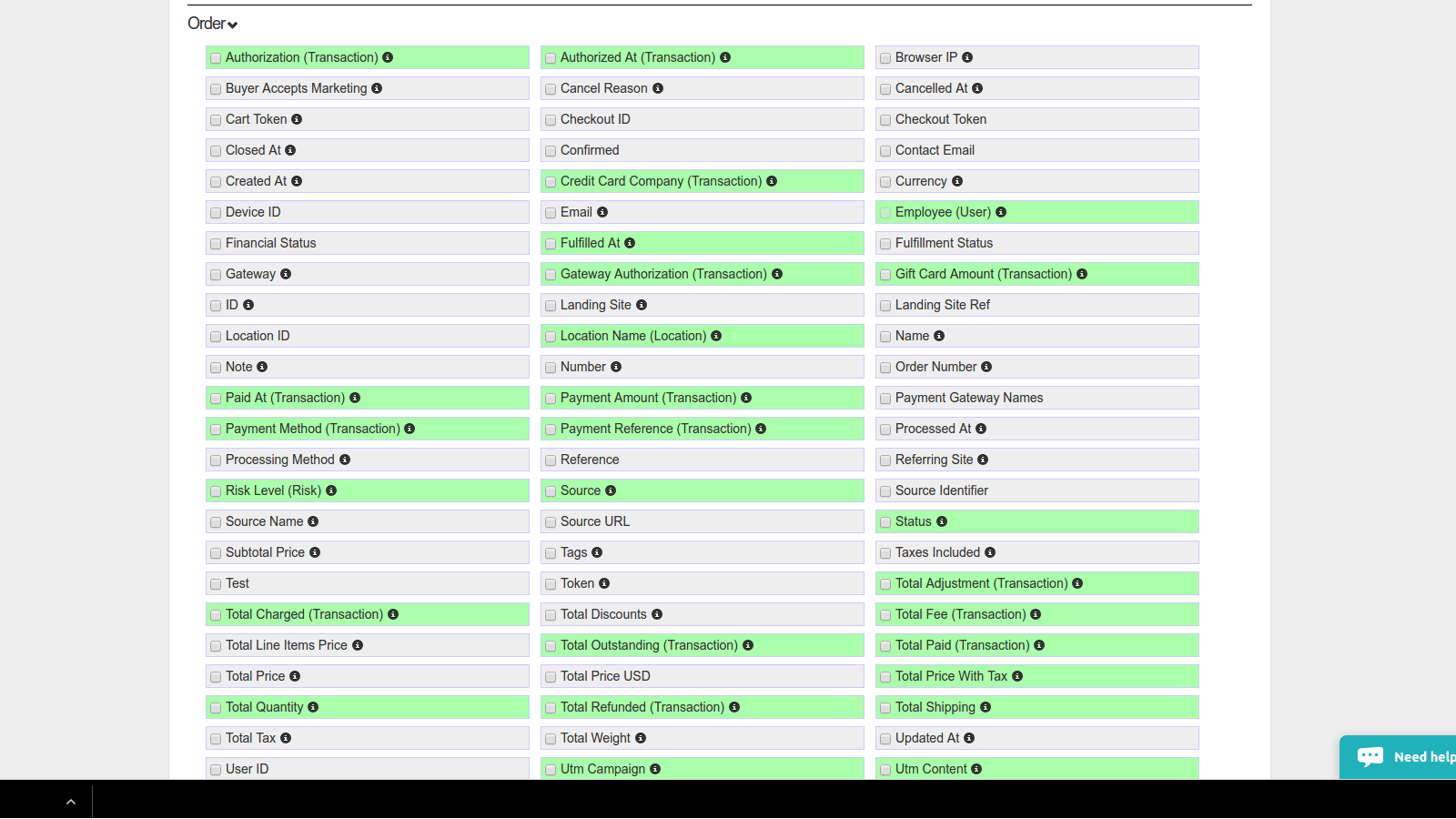
What I like about Xporter is that it is built for merchants who need custom exports, scheduled reports, and access to fields that are awkward to extract manually. If your operations team lives in spreadsheets, this is often the most practical route.
Is DeepMine useful for this?
DeepMine can also help if your main goal is advanced reporting rather than a simple one-off date check. It is better suited to merchants who want custom reports across products, orders, vendors, costs, and operational data.

You can view the app here: DeepMine.
In other words, both apps can work, but they are probably overkill for small stores that only need to check a handful of products occasionally.
| Method | Best for | Pros | Cons |
|---|---|---|---|
| Product list columns | Quick checks | Native, fast, no extra cost | Field visibility can vary |
| Bulk editor | Checking many products manually | Good for batch review, no app needed | Still manual |
| Reports | Merchants already using analytics | Can combine data points | Not always intuitive or available |
| /products.json | Technical users | Can expose raw metadata | Less reliable as a modern workflow |
| Shopify API | Developers and large stores | Most flexible and scalable | Requires technical setup |
| Xporter or DeepMine | Scheduled exports and advanced reporting | Powerful, repeatable, spreadsheet-friendly | Extra cost and setup |
Why would a merchant need to know when a product was first published?
Merchants usually need the first publish date for launch analysis, stock planning, financial reporting, or SEO review. The date helps you measure how long a product has actually been live, not just how long it has existed in the admin.
This matters a lot when you are running a store with seasonal launches, pre-launch drafts, or frequent product refreshes. I have seen teams make poor decisions simply because they were comparing sales against the wrong start date.
- Inventory management - understand how long a product has been on sale before reordering or clearing stock
- Campaign analysis - match launch timing with email, paid ads, or influencer pushes
- SEO tracking - estimate how long a product page has had to gain search visibility
- Finance and accounting - support internal reporting and audit trails
- Catalogue clean-up - identify stale products that were published long ago but never performed
If you are reviewing old products, you may also find these guides useful: Archiving No Longer Available Products in Shopify: 2026 Guide and How to Retrieve Specific Item Data Using Product ID in Shopify.
What should I do if the published date is missing or unclear?
If the published date is missing, first check whether the product is actually published to the Online Store or another sales channel. Then compare the admin view, bulk editor, reports, and API or export data to confirm whether the field exists in another context.
In my experience, missing dates usually come down to one of three issues: the product was never published to that channel, the admin view is hiding the relevant field, or the merchant is looking at created rather than published data.
Try this troubleshooting order:
- Open the product and confirm it is active and published to the correct channel.
- Use bulk edit and add publication-related columns.
- Check whether a custom report exposes the field.
- Export the data with an app such as Xporter Data Export Tool or DeepMine.
- If needed, inspect the product via the Shopify API.
If you are also managing product visibility and merchandising, you might want to read Shopify’s New Unlisted Product Status: What It Means for Your Store. It is relevant if you are trying to understand why a product exists in Shopify but is not visible in the way you expect.
What is the best method for most Shopify merchants?
For most merchants, the best method is Products > Bulk edit > Columns and then showing Published at or Online Store. It is the fastest balance of accuracy, ease, and zero extra cost.
If that does not give you what you need, move to a reporting app or the API depending on how often you need the data. I would only use /products.json as a fallback or quick technical check.
Here is my practical recommendation based on store size:
- Small stores - use product list columns or bulk editor
- Growing stores - use reports or export tools if you need recurring checks
- Large catalogues or agency workflows - use the API or automated reporting
If your next step is analysing how products perform after launch, these may help too: 25 Quick Methods to Land Your First Sale on Shopify in 2025 and Finding Your Shopify Store’s Product Feed RSS URL (2025).
Final thoughts on checking a product's first publish date in Shopify
Shopify does let you find when a product was first published, but the field is not always surfaced in the most obvious place. The bulk editor and product list columns are now the best starting points, with reports, apps, and APIs as stronger options for deeper analysis.
In my experience, the real win is not just finding the date once. It is setting up a workflow so your team can check launch timing, product age, and catalogue performance without guessing. If you do that, your merchandising and reporting decisions get much easier.