

Shopify Plus statistics 2026 show a clear pattern: more high-growth brands are upgrading because they need better checkout control, stronger automation, and a platform that can handle serious scale without a long replatform project. From what I have seen building Shopify apps for growing merchants, Plus is no longer just for household-name brands. It is increasingly the next step for stores that have outgrown workarounds on standard Shopify.
The most useful way to look at Shopify Plus adoption in 2026 is not just raw store counts. It is who is upgrading, what problems they are trying to solve, and whether the economics actually make sense. In this article, I will break down the latest numbers, explain why tracker counts vary, and share my practical take on when Plus is worth the jump.
What are the latest Shopify Plus statistics for 2026?
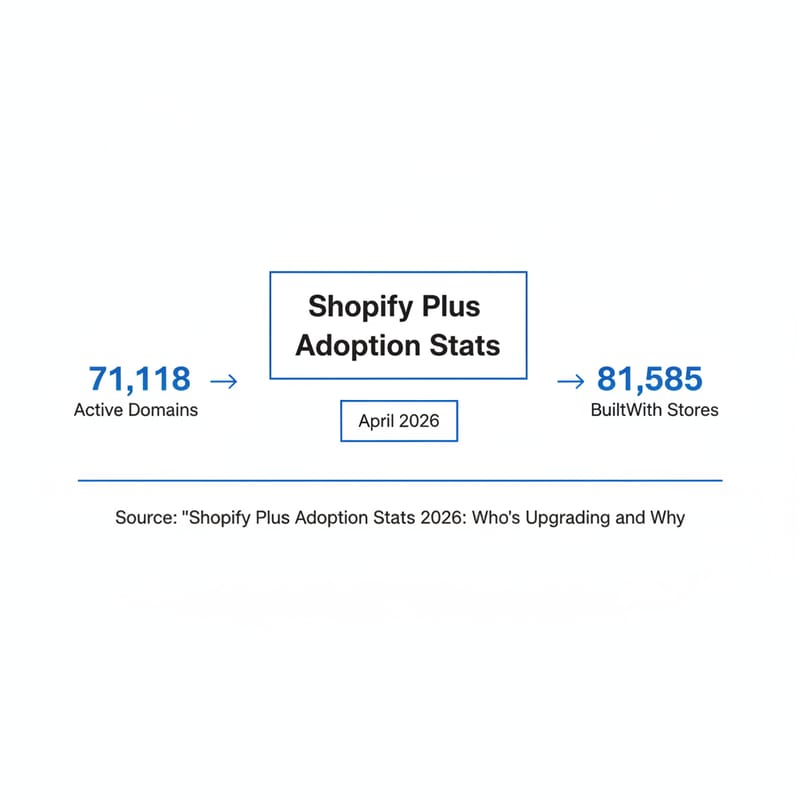
Shopify Plus adoption in 2026 is growing fast, but the exact count depends on the tracker. The latest research puts Shopify Plus at 71,118 active domains in April 2026, up from 30,619 in mid-2025, while BuiltWith tracks 81,585 stores and more than 43,764 in the US.
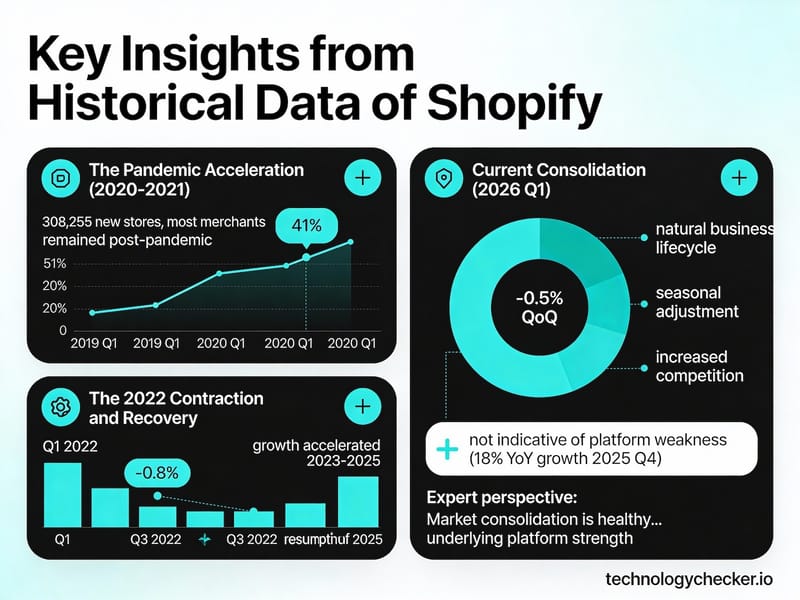
This is one of those topics where headline numbers can be misleading if you do not know the source. In my experience, merchants and agencies often quote a single Shopify Plus count as if it is definitive, but tools like BuiltWith, Store Leads, and TechnologyChecker all use different detection methods. That is why you will see a range from roughly 30,000 to 81,000 depending on whether the source is counting active domains, historical installs, or detected enterprise stores.
Still, the direction is obvious. Shopify Plus is expanding, and the enterprise segment is one of Shopify's strongest growth areas. Several sources now estimate 34% year-over-year growth in enterprise adoption, with more than 47,000 enterprise stores on Shopify Plus according to some trackers.
| Metric | 2026 Figure | Why it matters |
|---|---|---|
| Active Shopify Plus domains | 71,118 | Best recent snapshot of active adoption |
| BuiltWith tracked stores | 81,585 | Broader detection, often includes historical and detected usage |
| US stores | 25,413 to 43,764 | The US remains the largest Plus market by far |
| Enterprise adoption growth | 34% YoY | Shows Plus is still gaining share in the enterprise segment |
| Internal upgrades from Shopify | 628 | Evidence that standard Shopify merchants are moving upmarket |
| Retention at 24 months | 87% | Suggests Plus is sticky once merchants implement it well |
If you want the short version, Shopify Plus is not niche anymore. It is still a small percentage of total Shopify stores, but it represents a much bigger share of serious revenue and operational complexity.
Who is upgrading to Shopify Plus in 2026?
The merchants upgrading to Shopify Plus in 2026 are mostly high-revenue SMBs and enterprise brands, not tiny stores. Many have lean teams, fast growth, and a real need for better automation, international selling, and checkout flexibility.
One stat I find especially useful is that 81% of Plus merchants have fewer than 50 employees. That surprises people. They assume Plus is mainly for giant organizations with huge ecommerce departments, but in practice a lot of Plus stores are run by compact teams doing outsized revenue.
Average store GMV is estimated around $3.8 million annually per Plus store. That does not mean every merchant at that level should upgrade, but it does tell you the typical Plus merchant is already operating at a scale where platform limits, launch speed, and ops efficiency start to matter more than monthly subscription savings.
Which countries have the most Shopify Plus stores?
The United States dominates Shopify Plus adoption. After the US, the UK, Australia, Canada, and Germany are the most visible markets in tracker data.
That lines up with what I see in the app ecosystem. A lot of Plus feature demand comes from North American brands first, especially around promotions, subscriptions, B2B, and multi-store setups. Shopify Plus is now available in 40 countries, but the US remains the center of gravity.
| Country | Estimated Plus Store Count |
|---|---|
| United States | 25,413 to 43,764 |
| United Kingdom | 3,285 |
| Australia | 3,056 |
| Canada | 2,835 |
| Germany | 1,376 |
What kinds of brands are moving up to Plus?
The most common upgrade profiles are fast-scaling DTC brands, omnichannel retailers, international stores, and merchants with complex operations. Brands doing launches, flash sales, wholesale, or multi-region expansion are overrepresented.
In my experience building apps for Shopify merchants, the trigger is rarely just traffic. It is usually a combination of issues: the team wants more control, they are stitching together too many apps, or they are losing time on manual processes. When those problems stack up, Shopify Plus starts looking less like a luxury and more like infrastructure.
- DTC brands with strong paid social or influencer growth
- Retailers expanding internationally with multiple storefronts or currencies
- B2B and hybrid brands needing customer segmentation and custom workflows
- High-volume launch brands that need reliable checkout performance
- Teams replacing legacy enterprise platforms like Magento or Salesforce Commerce Cloud
For merchants trying to decide if they fit this profile, I covered the decision framework in more detail here: When to Upgrade Your Store to Shopify Plus: A Practical 2026 Guide.
Why are merchants upgrading to Shopify Plus in 2026?
Merchants upgrade to Shopify Plus in 2026 for four main reasons: cost efficiency, speed, checkout performance, and operational flexibility. The common thread is that growth creates complexity, and Plus helps reduce the friction.
I think this is where a lot of articles oversimplify the story. They frame Plus as a prestige plan for big brands. In reality, most upgrades happen because the merchant is trying to remove bottlenecks. The platform becomes a growth lever when it helps the team launch faster, automate more, and convert better.
Is lower total cost of ownership a real reason to switch?
Yes, lower total cost of ownership is one of the biggest reasons enterprise brands move to Shopify Plus. Research commonly cites around 23% lower TCO versus Salesforce Commerce Cloud, especially when you factor in implementation speed and ongoing maintenance.
That number makes sense to me. I have worked with enough Shopify merchants to know that simplicity has real financial value. If your team can ship changes faster, rely on a larger app ecosystem, and avoid expensive custom platform maintenance, the subscription fee stops being the whole story.
Shopify Plus starts from around $2,300 to $2,500 per month, which is not cheap. But compared with the cost of maintaining a more complex enterprise stack, it can be the more economical option.
How much does performance matter in the upgrade decision?
Performance matters a lot, especially for brands running launches, promotions, and BFCM campaigns. Shopify Plus is often cited as supporting up to 10,000 checkouts per minute, which is a meaningful benchmark for high-volume events.
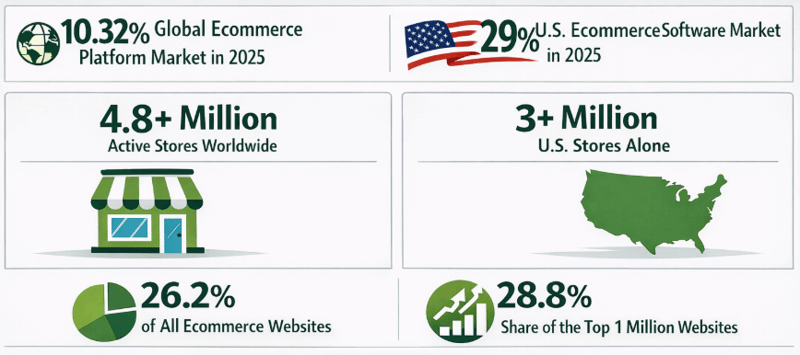
That matters because BFCM is still a stress test for every ecommerce platform. Shopify's ecosystem processed $14.6 billion during BFCM 2025, up 27% year over year. Merchants watching those numbers are not just thinking about scale in theory. They are thinking about whether their checkout will hold up when traffic spikes.
Do merchants actually see revenue gains after upgrading?
Some data sources report an average 126% year-over-year revenue increase after moving to Shopify Plus, but that figure needs context. It reflects the fact that fast-growing brands are more likely to upgrade in the first place.
I would not present that stat as a guaranteed outcome. Plus does not magically double revenue. What it can do is remove constraints that were holding back growth. Better checkout experiences, stronger promotions, improved speed, and cleaner operations can absolutely help revenue, but the merchant still needs product-market fit, traffic, and solid execution.
If your main goal is increasing order value rather than replatforming, it is also worth looking at the lower-cost tactics first. I have written about that in How to Upsell on Shopify in 2026 and How to Increase Your Shopify Store’s Average Order Value in 2026.
Where are Shopify Plus merchants coming from?
A large share of Shopify Plus growth is coming from migrations away from legacy enterprise platforms, especially Magento and Salesforce Commerce Cloud. Shopify is also getting a steady stream of internal upgrades from standard Shopify plans.
One of the strongest signals in the data is migration momentum. Around 42.2% of enterprise switches target Shopify, and some tracking sources show a dramatic 56:1 gain ratio versus Magento. That is a huge statement about where the market thinks commerce infrastructure is heading.
When I talk to merchants or agencies, the Magento comparison comes up constantly. The pain points are familiar: long dev cycles, expensive maintenance, and too much technical debt for what should be routine ecommerce work. Shopify Plus wins when the merchant values speed and simplicity over total backend freedom.
| Migration Source | Why merchants leave | Why Shopify Plus wins |
|---|---|---|
| Magento 1 / Magento 2 | Maintenance overhead, slower releases, technical debt | Faster time-to-market, simpler operations, strong app ecosystem |
| Salesforce Commerce Cloud | High cost, complexity, slower iteration | Lower TCO, easier admin experience, quicker deployments |
| Legacy custom platforms | Fragile infrastructure, poor scalability, hard to maintain | Stable hosted platform, better ecosystem support |
| Standard Shopify | Need for more automation and advanced features | Checkout extensibility, organization features, higher limits |
There were also 628 upgrades from standard Shopify, with 564 in the last year. That is not massive compared with the whole ecosystem, but it is enough to show that Plus is part of a natural merchant progression.
What does a typical Shopify Plus store look like in 2026?
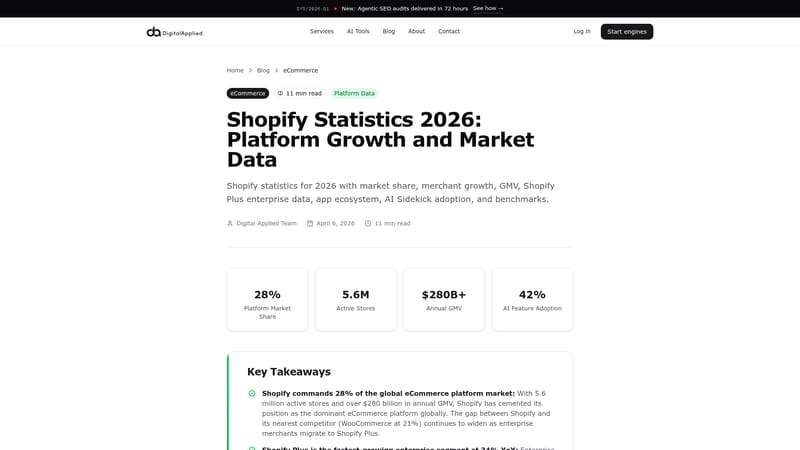
A typical Shopify Plus store in 2026 is lean, app-enabled, mobile-heavy, and growth-oriented. The average Plus store has 11.4 apps installed, gets around 60% of traffic from mobile, and sees 30% more social traffic than non-Plus stores.
That profile feels accurate to me. Plus merchants are usually not trying to run a minimalist setup. They are building systems around subscriptions, reviews, search, merchandising, personalization, support, and post-purchase flows. The app stack becomes part of the operating model.
Implementation timelines are also more manageable than many enterprise teams expect. A new Shopify Plus build averages around 3.2 months, which is one reason agencies and in-house teams like it. Compared with traditional enterprise replatform projects, that is fast.
Is Shopify Plus worth it for every growing store?
No, Shopify Plus is not worth it for every growing store. It is worth it when the operational and conversion gains are likely to outweigh the higher monthly cost and implementation effort.
This is where I think merchants need a reality check. Some stores upgrade too early because they think Plus itself will unlock growth. Others wait too long and end up patching around limitations with manual work and app complexity. The right timing usually sits somewhere in the middle.
As a rough rule, Plus becomes more compelling when you are already doing meaningful revenue, have a team that can use the extra flexibility, and have clear use cases for advanced features. If you do not yet need those features, standard Shopify is often the smarter choice.
What are the signs a merchant should upgrade?
The best signs are operational pain, international complexity, and high-stakes checkout needs. Revenue level matters, but it is not the only factor.
- Your team is spending too much time on manual workflows that should be automated.
- You need more checkout customization for promotions, B2B, or post-purchase flows.
- You are expanding internationally and need better multi-store management.
- Your launches or seasonal events create traffic spikes that make platform resilience critical.
- You are comparing against a more expensive enterprise platform and Plus lowers overall cost.
If checkout customization is part of the equation, this related guide may help: Top 7 Checkout Customization Apps for Shopify Plus in 2026.
What are the biggest limitations or risks with Shopify Plus?
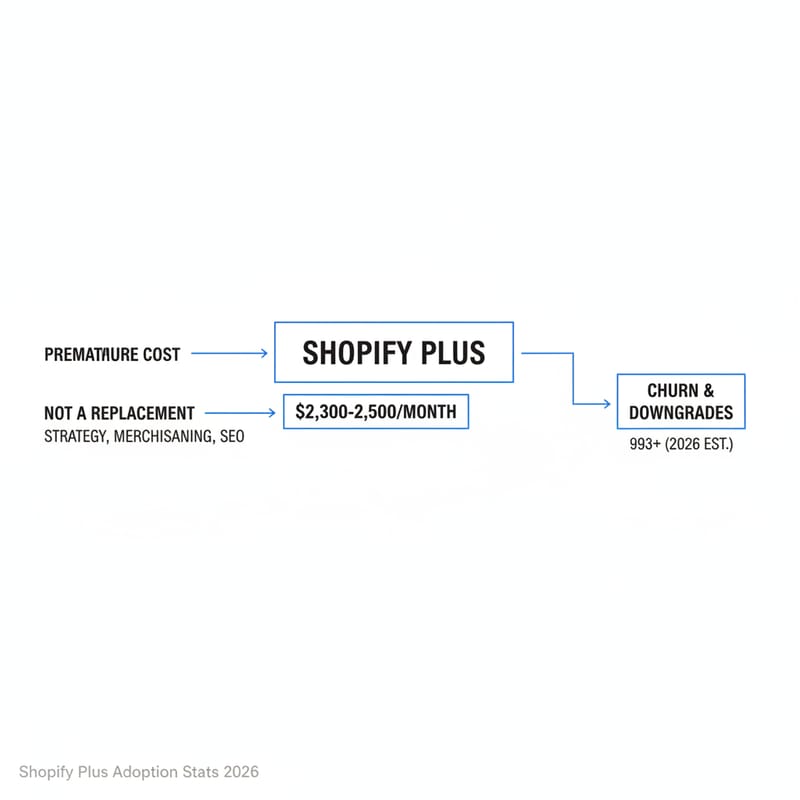
The biggest risk is paying for Shopify Plus before you can use its advantages. The second risk is assuming Plus will replace strategy, merchandising, and conversion optimization work.
There is also evidence of churn and downgrades. Research notes around 993 downgrades, which is important because it shows Plus is not automatically sticky for everyone. The $2,300 to $2,500 monthly price point can be hard to justify if the merchant upgraded based on ambition rather than actual requirements.
I have also seen merchants underestimate the implementation side. Shopify Plus is easier than many enterprise platforms, but it still requires planning. If you migrate without cleaning up your catalog, discount logic, data flows, and app stack, you can carry old problems into a nicer admin.
My honest take: Shopify Plus is usually a great fit for merchants with real complexity, but it is not worth it unless you can point to specific use cases that impact revenue, operations, or expansion.
How should merchants interpret Shopify Plus statistics in 2026?
The best way to interpret Shopify Plus statistics 2026 is to focus on trends, not a single headline number. Adoption is rising, migrations are strong, and the platform is winning more enterprise business, even if tracker counts differ.
That is the key takeaway I would want any merchant to understand. The exact count may vary by source, but the market signal is consistent: Shopify Plus is moving further into the enterprise mainstream. It is attracting both big-brand migrations and a steady layer of internal upgrades from standard Shopify.
For merchants, the practical question is not whether Shopify Plus is growing. It clearly is. The question is whether your store has reached the point where checkout control, automation, multi-store management, and enterprise-grade reliability will produce a return that justifies the cost.
If you are still in growth mode but not ready for Plus, there are plenty of ways to improve revenue first. On LaunchTip, I have covered the best upsell apps for Shopify and shared a real Shopify upsell case study with a 27% increase in AOV. For many merchants, those gains come before a platform upgrade.
Which sources are worth checking for Shopify Plus adoption data?
The most useful sources are BuiltWith, public Shopify investor materials, migration trackers, and reputable industry analysis. No single source is perfect, so cross-checking matters.
When I research platform trends, I usually compare multiple datasets before drawing conclusions. That is especially important with ecommerce platform detection, where methodology differences can create big gaps in reported totals.
- BuiltWith Shopify Plus trends
- Shopify investor reports
- TechnologyChecker Shopify Plus data
- Uptek Shopify Plus statistics
- Digital Applied Shopify statistics 2026
- Mastroke on why brands switch to Shopify Plus
- Official Shopify Plus page
If you are evaluating an upgrade, I would combine the market data with a feature and ROI review of your own store. Statistics are useful, but they are only the starting point.