
In der dynamischen Welt des E-Commerce, in der Personalisierung und einzigartige Produkte an erster Stelle stehen, hat die Print-on-Demand-(POD)-Branche neue Höhen erreicht. Da der Markt bis 2025 voraussichtlich 12,96 Milliarden US-Dollar erreichen wird und mit einer beeindruckenden CAGR von 26% wächst, ermöglicht dieser innovative Ansatz Unternehmen und Einzelpersonen, individuelle Produkte zu erstellen – ganz ohne den Aufwand für Lagerverwaltung oder hohe Anfangsinvestitionen.
Wenn du deinen Onlineshop mit unverwechselbaren, personalisierten Produkten aufbauen oder ausbauen möchtest, ist die Zusammenarbeit mit dem richtigen POD-Anbieter entscheidend.
In diesem umfassenden Leitfaden stellen wir dir die acht besten Print-on-Demand-Apps vor, die 2025 im Shopify App Store verfügbar sind. Dieses Wissen hilft dir, fundierte Entscheidungen zu treffen, die das Potenzial deines Unternehmens steigern und deine Zielgruppe begeistern.
1. Printful: Print on Demand
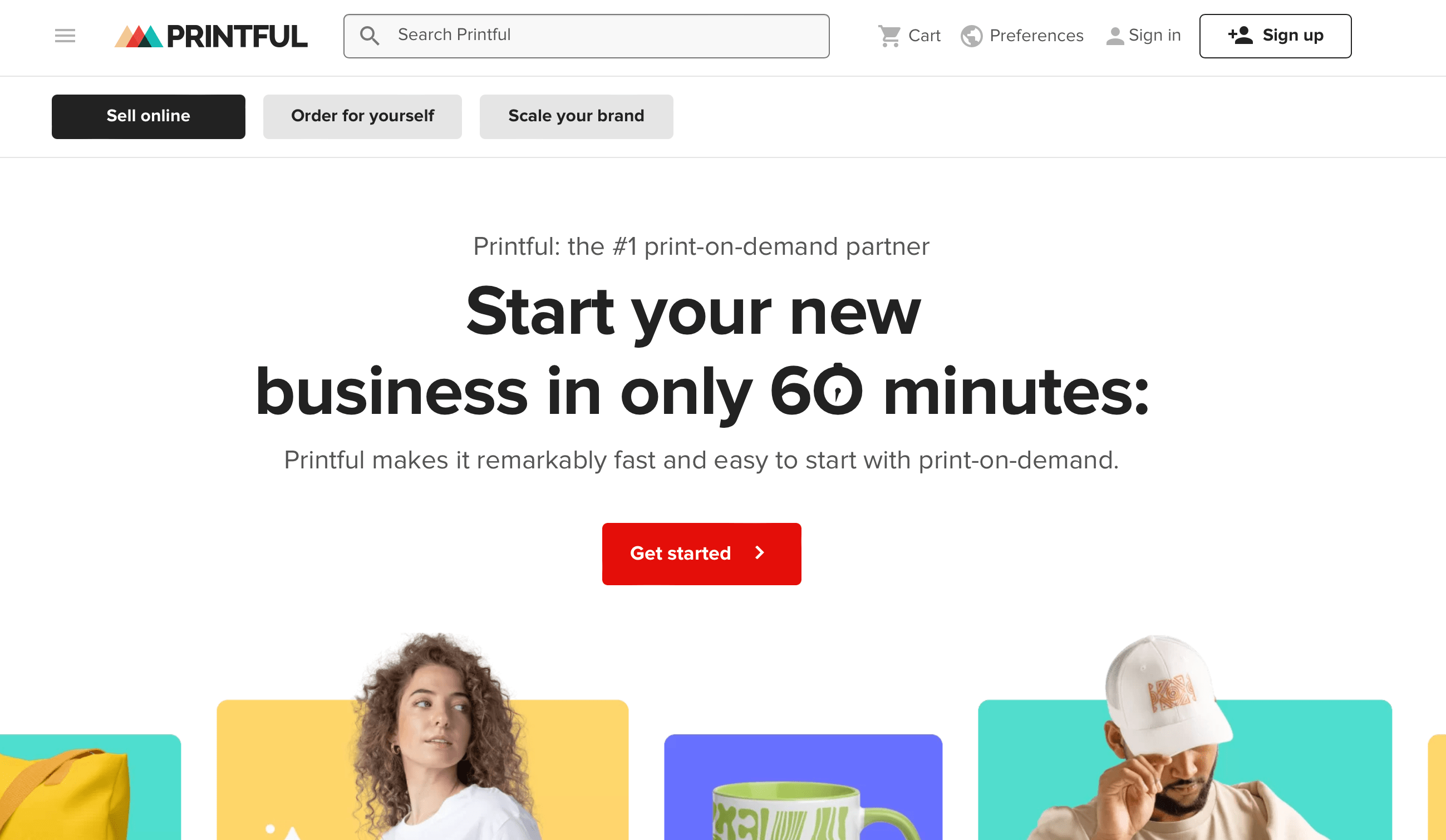
Als echter Vorreiter in der Print-on-Demand-(POD)-Landschaft gilt Printful als verlässlicher Maßstab für herausragende Qualität, eine außergewöhnliche Vielfalt und konsequente Zuverlässigkeit. Printful ist einer der etabliertesten und vertrauenswürdigsten Namen im Print-on-Demand-Bereich und bekannt für hochwertige Produktion sowie eine reibungslose Integration mit großen E-Commerce-Plattformen.
Von aufstrebenden Startups bis hin zu etablierten Unternehmen: Printful überzeugt durch einen umfassenden, vielfältigen Katalog, der weit über das Erwartbare hinausgeht. Printful übernimmt die Inhouse-Produktion für über 300 Produkte und sorgt so für gleichbleibende Druckqualität und schnelleren Versand dank kontrollierter Produktionsprozesse.
Modische Kleidung, Accessoires, die Trends neu definieren, und Wohnaccessoires, die Räume mit Charme erfüllen – das ist nur ein kleiner Einblick in die facettenreiche Welt von Printful. Die Stärke zeigt sich jedoch nicht nur in der Produktpalette, sondern auch in pünktlicher Abwicklung und nahtlosem Service.
Und weil Exzellenz hier Standard ist, hebt die reibungslose Integration mit Shopify das Erlebnis auf ein neues Level. Echtzeit-Tracking für Bestellungen und Versand steht für Effizienz und vereinfacht den Prozess für Händler und Kunden gleichermaßen. Wenn Printful Teil deiner E-Commerce-Reise wird, arbeitest du nicht einfach mit einem POD-Anbieter zusammen – du entscheidest dich für ein Vermächtnis aus Qualität, Vielseitigkeit und Klasse.
2. Printify: Print-on-Demand
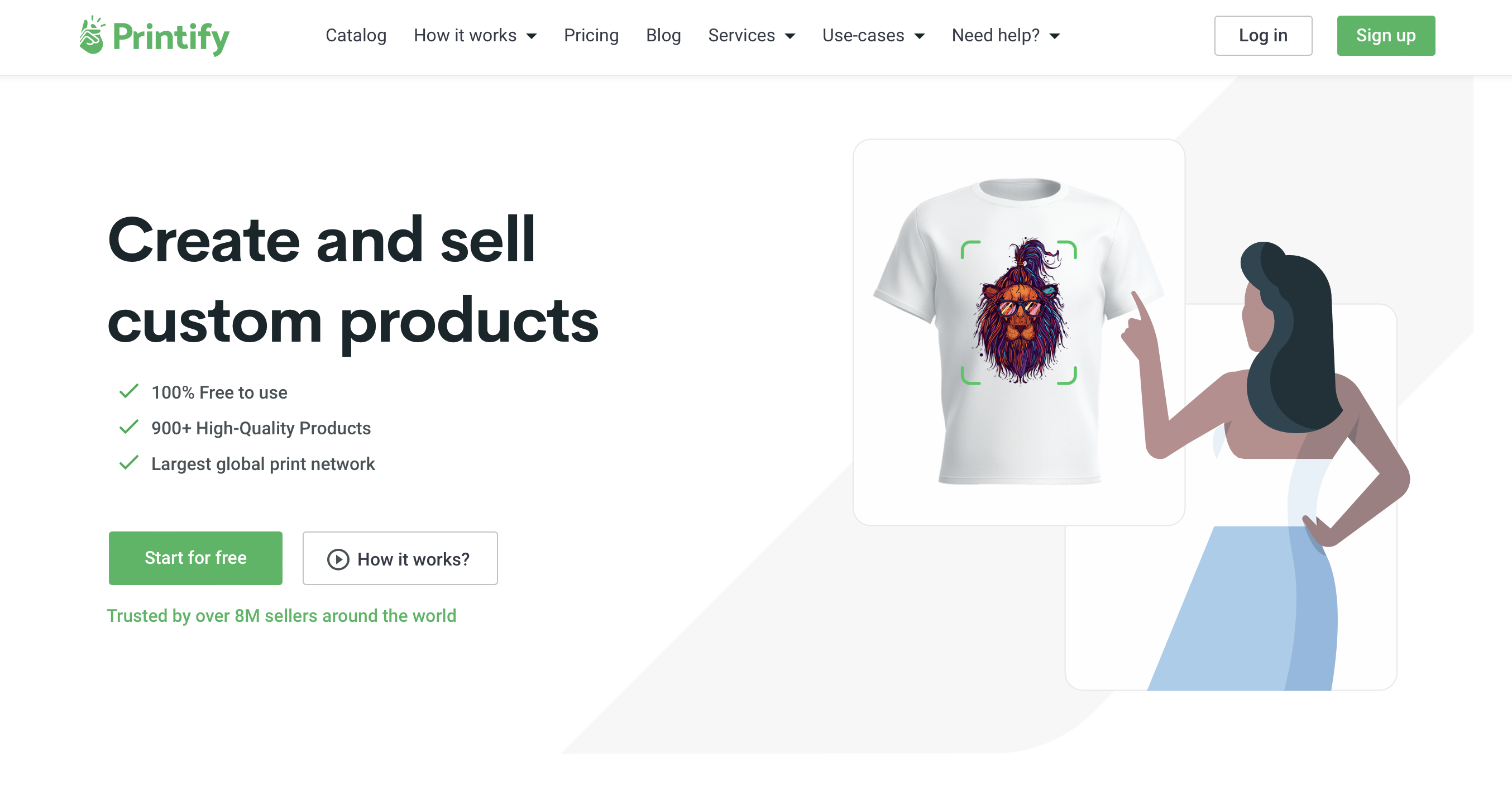
Der Aufstieg von Printify in der POD-Branche ist kein Zufall – er ist das Ergebnis einer intuitiven Benutzeroberfläche und eines weitreichenden Netzwerks an Druckpartnern, das Unternehmen ganz neue Möglichkeiten eröffnet. Printify bietet die größte Auswahl an individualisierbaren Produkten und kann durch die Anbindung an ein globales Netzwerk von Druckpartnern eine riesige Produktbibliothek bereitstellen.
Der Kern von Printifys Stärke liegt darin, den Personalisierungsprozess zu vereinfachen – egal, ob du auffällige Kleidung oder beeindruckende Wohnaccessoires gestalten möchtest. Der Printify-Katalog umfasst über 1.300 Produkte und bietet Verkäufern eine beispiellose Auswahl und Flexibilität für ihr Sortiment.
Im E-Commerce ist Effizienz entscheidend – und Printify trägt die Krone mit Stolz. Die harmonische Integration mit Shopify macht jeden Schritt nahtlos: von der ersten Designidee bis zur finalen Auftragsabwicklung. Das Ergebnis? Eine Symphonie der Personalisierung, die bei deiner Zielgruppe nachhaltig nachklingt.
Wenn du dich für Printify entscheidest, startest du nicht einfach ein Business – du betrittst eine Welt, in der Visionen zu greifbaren, personalisierten Produkten werden, die begeistern und verbinden.
3. Gelato: Print on Demand
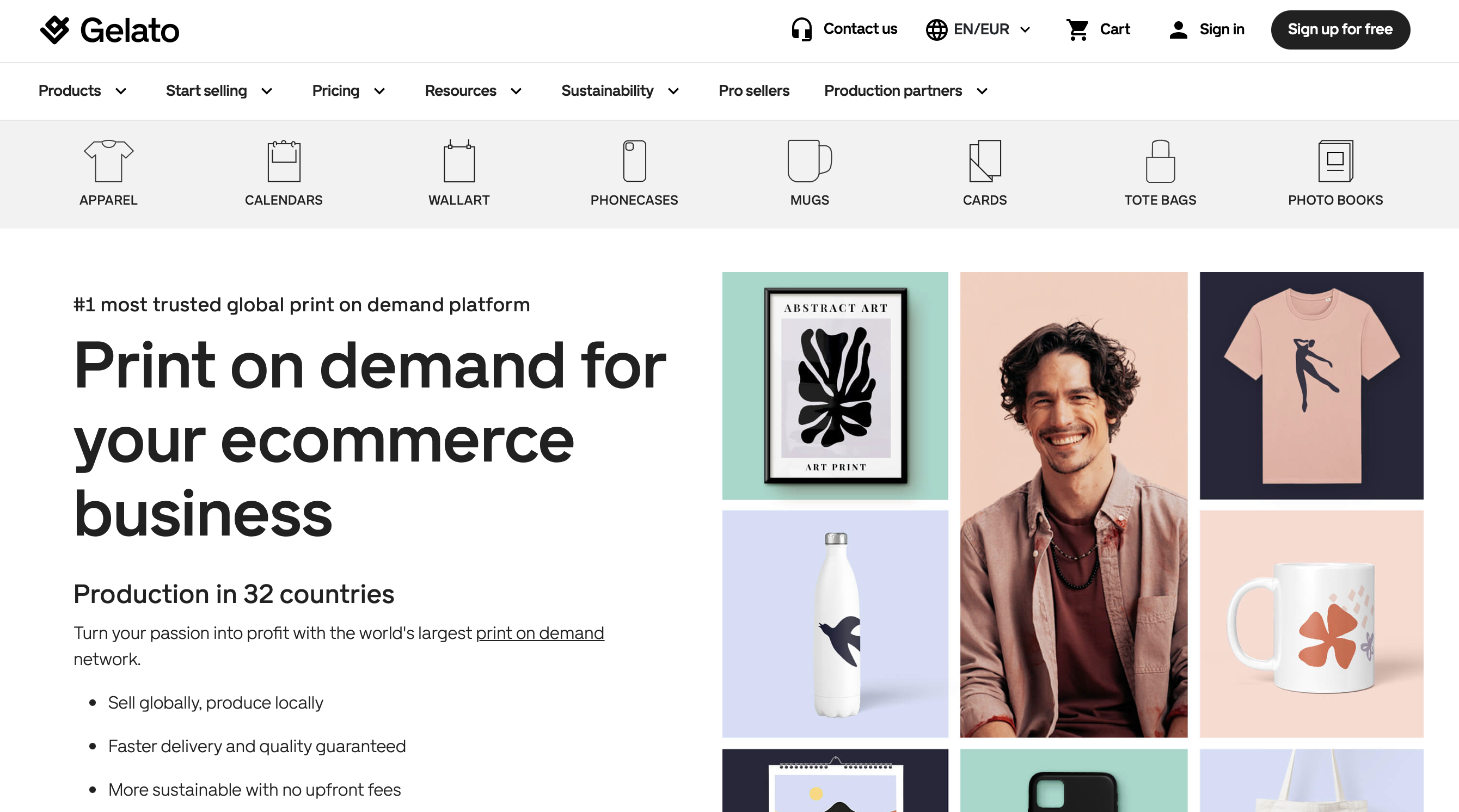
Der Reiz von Gelato liegt in der Fähigkeit, globale Reichweite mit lokaler Exzellenz zu verbinden – und so eine nahtlose Brücke zwischen Kreativität und Lieferung zu schlagen. Gelato ist eine globale Print-on-Demand-Plattform mit Fokus auf lokale Produktion und Distribution. Mit 140 Produktionspartnern in 32 Ländern werden Versandwege verkürzt und der CO₂-Fußabdruck reduziert.
Dieser geografische Vorteil bedeutet: Produkte werden in den Einrichtungen gefertigt und versendet, die am nächsten bei den Kunden liegen – für einen Ablauf, der ebenso effizient wie kostengünstig ist.
Über die Logistik hinaus setzt Gelato kompromisslos auf Qualität – sichtbar in jedem Detail der Produkte. Gelato ist für seine Umweltfreundlichkeit bekannt und lässt sich mit vielen E-Commerce-Marktplätzen und Plattformen integrieren – ideal für Unternehmen, die Nachhaltigkeit und schnellere Lieferzeiten priorisieren. Die benutzerfreundlichen Design-Tools laden Kreative und Unternehmer gleichermaßen dazu ein, die Grenzen der Individualisierung auszuloten.
Die Integration mit Shopify ist das Tor zu einer Welt, in der kreative Ideen greifbare Realität werden. Wenn du dich für Gelato entscheidest, arbeitest du nicht einfach mit einem POD-Anbieter zusammen – du begibst dich auf eine Reise, die geografische Distanzen überbrückt und den Gipfel von Personalisierung und Exzellenz zeigt.
4. Gooten: Print on Demand
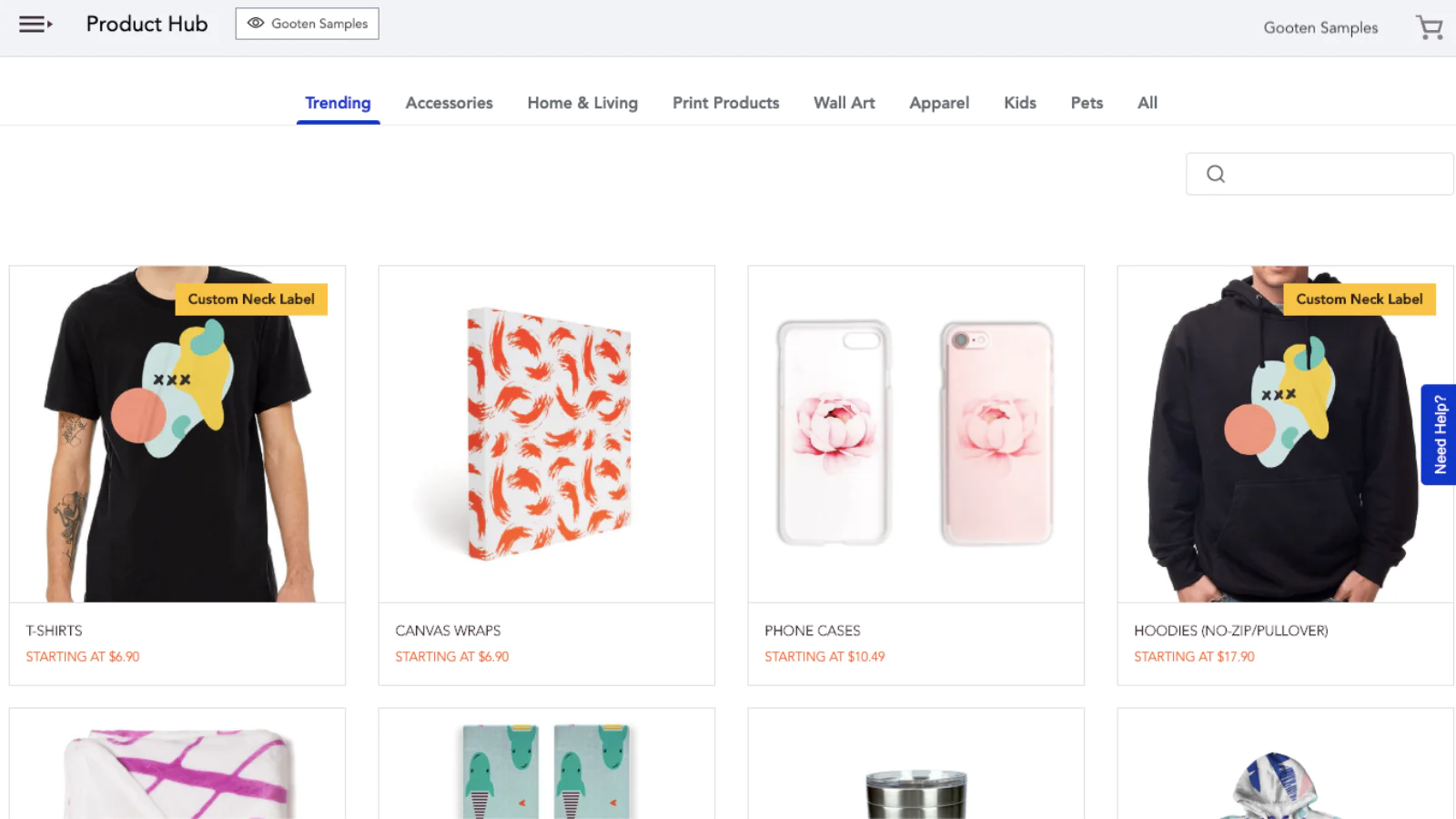
In der geschäftigen Landschaft des POD-Marktes hat sich Gooten als Symbol für Komfort und als Wegbereiter für Individualisierung etabliert. Mit einem Fulfillment-Netzwerk aus über 50 Herstellern in mehr als 70 Regionen weltweit unterstützt Gooten Print-on-Demand-Unternehmen dabei, zu wachsen und über Regionen hinweg zu verkaufen.
Gootens Werkzeugkasten geht weit über reine Design-Tools hinaus – er ist eine Symphonie aus Branding und einem globalen Netzwerk an Produktionsstandorten. Diese besondere Kombination ermöglicht es Unternehmen, nicht nur einzigartige Produkte zusammenzustellen, sondern ihnen auch eine klare Identität zu verleihen. Gooten bietet verschiedene Druckverfahren an, darunter Direct-to-Garment, Direct-to-Film, Dye-Sublimation, Cut-and-Sew All-Over-Print, Inkjet-Digitaldruck, UV-Druck und Stickerei. Die meisten Produkte sind innerhalb von 3 bis 4 Werktagen versandbereit.
Als Unternehmer arbeitest du nicht einfach mit Gooten zusammen – du nutzt die Chance, Kundenerlebnisse neu zu definieren und Komfort mit einer spürbaren Portion Persönlichkeit zu verbinden. In der E-Commerce-Welt, in der jedes Detail zählt, überzeugt Gooten mit einem Gesamtpaket aus Bequemlichkeit, Individualisierung und globaler Verfügbarkeit.
5. SPOD ‑ Print‑on‑Demand
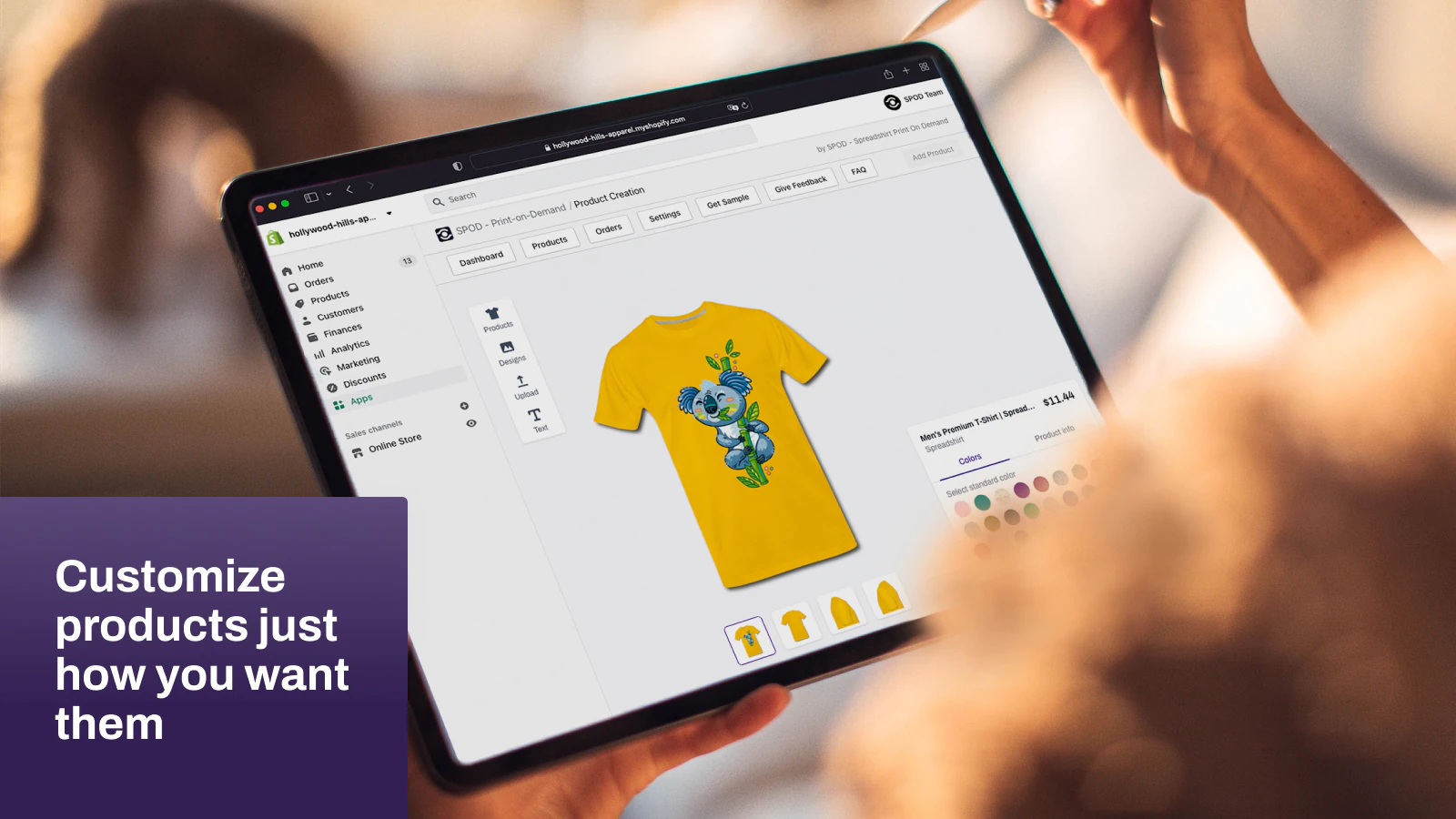
In der schnelllebigen Welt des E-Commerce hat sich SPOD (Spreadshirt Print-On-Demand) als Synonym für Geschwindigkeit und als Hüter der Qualität etabliert. Schon der Beiname „Print-On-Demand on Steroids“ bringt das Versprechen auf den Punkt: blitzschnelle Fulfillment-Zeiten – ohne auch nur den kleinsten Kompromiss bei der Qualität.
Mit Produktionsstandorten in den USA und Europa werden die meisten Bestellungen innerhalb von 48 Stunden versendet. Damit gehört SPOD zu den schnellsten verfügbaren POD-Anbietern und bietet über 250 individualisierbare Produkte, darunter Kleidung, Tassen, Poster und Accessoires.
Doch SPODs Stärke beschränkt sich nicht nur auf Tempo. Das Angebot umfasst eine breite Produktpalette – von Apparel bis hin zu Homeware. SPOD unterstützt mehrere Drucktechniken – wie Digitaldruck, Sublimation und DTF – für brillante und langlebige Prints.
Was SPOD jedoch wirklich abhebt, ist die nahtlose Einbindung benutzerfreundlicher Design-Tools. In einer Welt, in der Komfort zählt, wird die Oberfläche zum Zugang für optimierte Personalisierung – und macht SPOD zu einem verlässlichen Partner für Unternehmen, die Effizienz, Qualität und Geschwindigkeit in jeden Teil ihrer Abläufe bringen möchten.
6. Printy6 ‑ Print On Demand
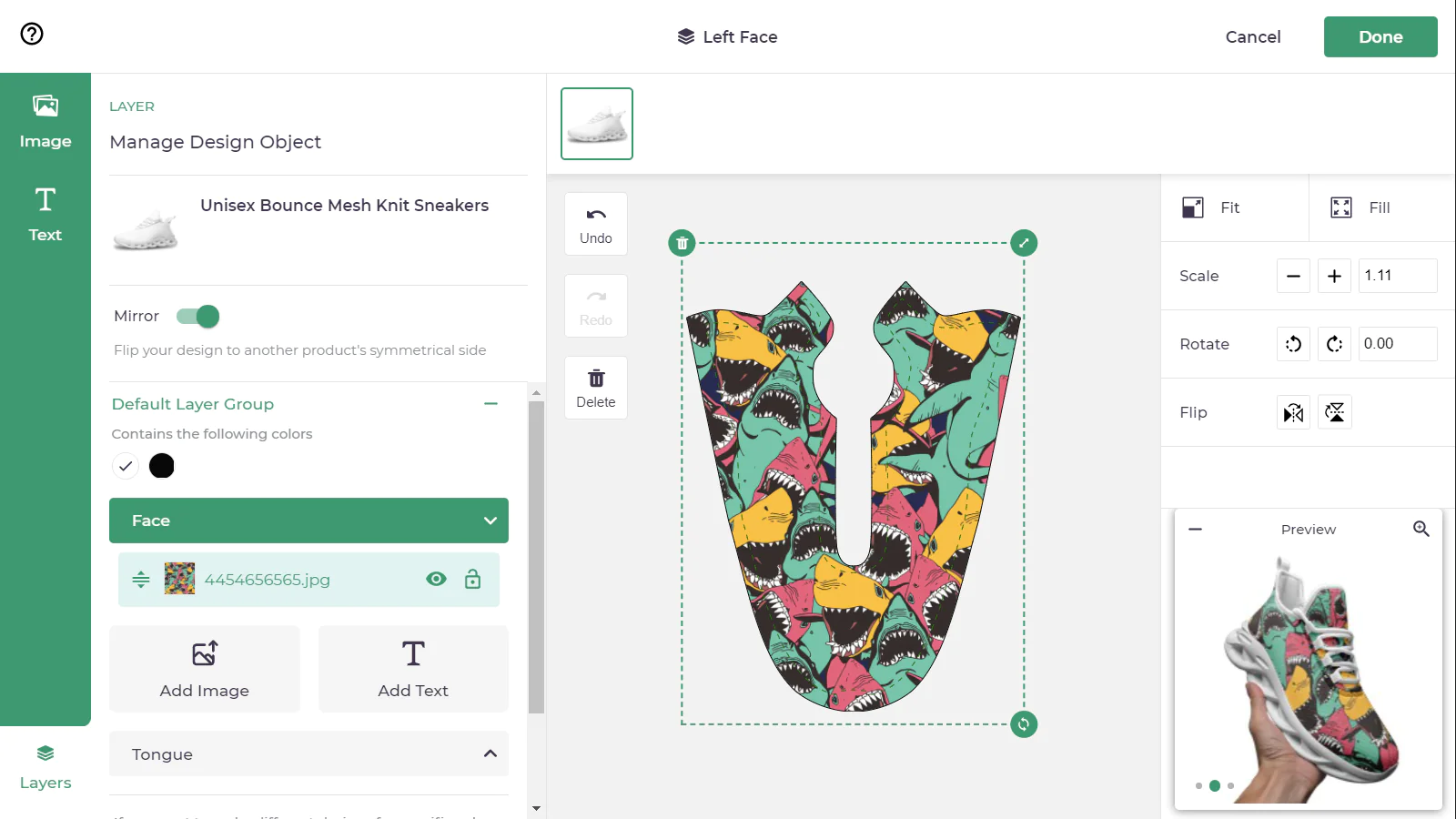
Printy6 hat sich in der Print-on-Demand-Welt eine besondere Nische geschaffen, indem es bewusst über das Konventionelle hinausgeht. Die Spezialisierung auf ungewöhnliche, auffällige Produkte ist ein Spielplatz für grenzenlose Kreativität.
Von Schuhen, die bei jedem Schritt Kunst transportieren, bis hin zu Bettwäsche, die Schlafzimmer in Fantasiewelten verwandelt: Printy6 liefert nicht einfach Produkte – es bietet eine Leinwand, auf der Kreative ihre Visionen ausmalen können.
Die All-Over-Printing-Technik von Printy6 sorgt dafür, dass Designs keine Grenzen kennen und die gesamte Oberfläche jedes Produkts einnehmen. Diese akribische Liebe zum Detail führt zu außergewöhnlichen Artikeln, die Aufmerksamkeit und Vorstellungskraft gleichermaßen fesseln.
Mit einem klaren Fokus auf lifestyle-orientierte Produkte, die Nischenmärkte ansprechen, wird Printy6 mehr als nur ein POD-Anbieter – es wird zum Partner, der unkonventionelle Träume Wirklichkeit werden lässt.
7. Inkthreadable: Print on Demand
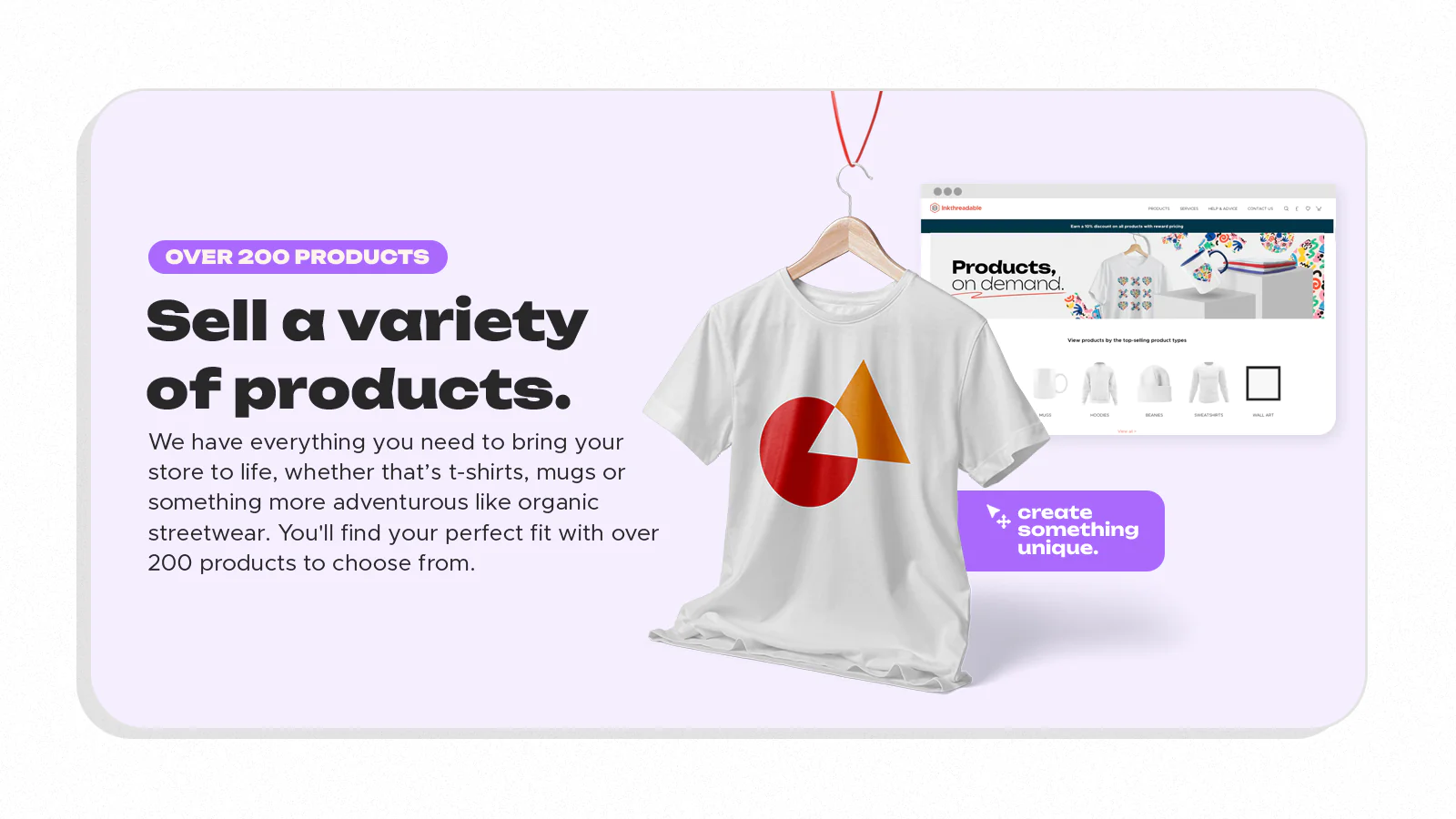
Inkthreadable ist nicht einfach ein POD-Anbieter – es ist ein Hüter personalisierter Wearables, die das Gewöhnliche übertreffen. Mit Fokus auf individuelle Bekleidung – darunter Kleidung, Accessoires und Heimtextilien – widmet sich Inkthreadable der Herstellung von Produkten, die Markenidentitäten widerspiegeln und bei Zielgruppen ankommen.
Jede Naht, jede Stoffwahl und jedes Designelement zeugt von dem Anspruch, personalisierte Mode auf ein höheres Niveau zu heben.
Das Zusammenspiel aus Inkthreadables Design-Tools und der Shopify-Integration macht Individualisierung zur Kunstform. Diese harmonische Synergie ermöglicht es Unternehmen, kreative Konzepte zum Leben zu erwecken – und Wearables zu schaffen, die Trends überdauern und die Essenz einer Marke authentisch widerspiegeln.
Wenn du dich für Inkthreadable entscheidest, erstellst du nicht nur individuelle Produkte – du formst eine tragbare Identität, die bei deiner Zielgruppe auf einer sehr persönlichen Ebene ankommt.
8. CustomCat: Print on Demand
Wenn es um Personalisierung geht, ist CustomCat ein wahrer Maestro – und orchestriert eine Symphonie an individualisierbaren Produkten, die bei unterschiedlichsten Zielgruppen Anklang finden.
Von Kleidung, die den persönlichen Stil auf den Punkt bringt, bis hin zu Accessoires und Wohndeko, die Räume aufwerten: CustomCats Sortiment ist ebenso breit wie ideenreich. CustomCat bietet einen großen Katalog und branchenführendes US-Fulfillment in 2–3 Tagen – besonders attraktiv für Unternehmen mit Fokus auf den US-Markt.
CustomCats Katalog und die Shopify-Integration sind ein nahtloses Portal in eine Welt kreativer Möglichkeiten. Die Vielzahl an Design-Tools ermöglicht es Unternehmen, Produkte zu gestalten, die die eigene Markenästhetik widerspiegeln – und so eine emotionale Verbindung zur Zielgruppe aufzubauen.
Wenn du dich für CustomCat entscheidest, wählst du nicht einfach einen POD-Anbieter – du setzt auf eine Plattform, die dich dabei unterstützt, personalisierte Erlebnisse zu liefern, die deinen Kunden im Kopf und im Herzen bleiben.
In der sich rasant wandelnden E-Commerce-Landschaft war die Rolle von Print-on-Demand-Anbietern noch nie so entscheidend wie heute. Jede dieser acht außergewöhnlichen Plattformen schlägt einen eigenen Weg in Richtung Personalisierung, Komfort und Qualität ein.
Für Kreative, Unternehmer und Unternehmen, die bei ihrer Zielgruppe wirklich ankommen möchten, wird die Wahl des POD-Anbieters zu einem zentralen Baustein auf dem Weg, Kunden auf einer tieferen Ebene zu erreichen.
Ob du höchste Qualität, einfache Personalisierung, globale Reichweite oder besonders schnelles Fulfillment anstrebst – diese Plattformen bieten ein ganzes Spektrum an Möglichkeiten. Zu den aufkommenden Trends im Print-on-Demand-Markt zählen eine stärkere Integration mit E-Commerce-Plattformen und KI-gestützte Design-Tools. KI verbessert das Kundenerlebnis und ermöglicht eine schnellere, stärker personalisierte Produkterstellung.
Im Kern geht es im E-Commerce darum, durch Kreativität und Individualisierung Verbindungen zu schaffen – und diese acht POD-Anbieter sind die Architekten dieser Transformation. Nutze das Potenzial, entdecke diese Plattformen und hebe dein Angebot im sich stetig weiterentwickelnden E-Commerce des Jahres 2025 auf ein neues Niveau.