
Shopify upsell on the product page is one of the most effective ways to increase average order value because it reaches shoppers at the exact moment purchase intent is highest. When I test upsell placements across Shopify stores, the product page consistently outperforms weaker placements because the customer is already evaluating value, features and add-ons.
That matters because a good product page upsell does not feel like a distraction. It feels like a helpful next step. Done properly, it can lift AOV by 10-30%, improve basket completeness, and create a smoother buying experience without pushing shoppers away from the page.
If you are also looking at cart and post-purchase offers, I have covered those in more detail in How to upsell on Shopify in 2026 and How to Create Shopify Cart Drawer Upsells That Boost AOV. In this guide, I am focusing specifically on upselling on the Shopify product page, which is what most merchants actually mean when they want add-ons, bundles, upgrades or frequently bought together blocks.
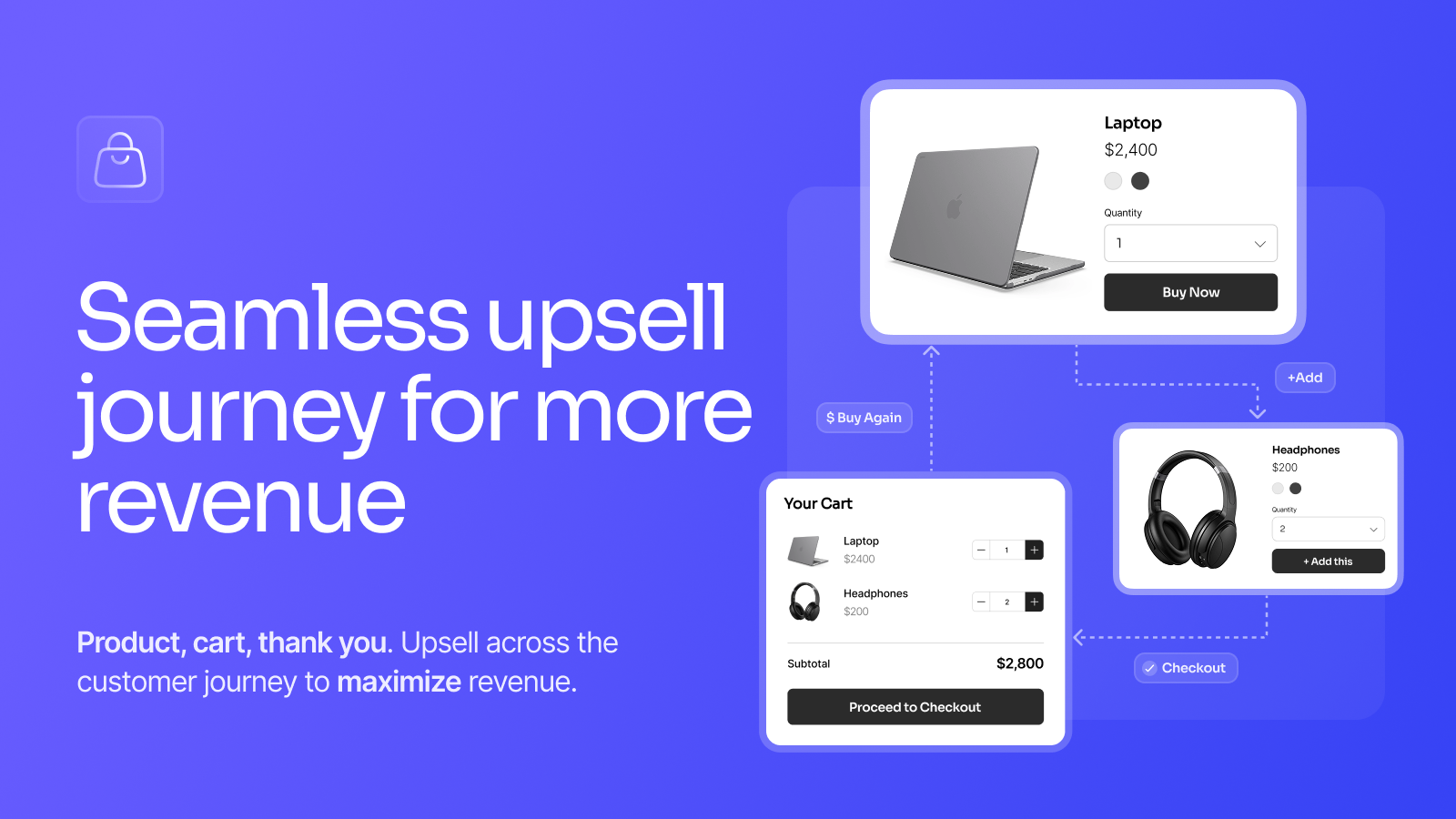
What is Shopify upsell on the product page?
Shopify upsell on the product page means showing a relevant higher-value option, add-on, bundle or complementary product directly on the product detail page before the shopper adds the main item to cart. The goal is to increase order value without interrupting the buying flow.
Strictly speaking, upselling and cross-selling are different. Upselling usually means encouraging a shopper to choose a better or more expensive version, while cross-selling means suggesting related products like accessories or extras. In real Shopify usage, merchants often group both under the same label, especially in apps and search results.
That is exactly what the current SERP shows. Ranking pages talk about add-ons, frequently bought together widgets, popups, bundles and upgrades, not just classic premium-version upsells. So if you want to compete for this keyword, your page needs to cover the full range of product page offer types.
Why should you upsell on the product page?
The product page is usually the best pre-purchase upsell placement because shopper intent is strongest there. Customers are already comparing options, reading benefits and deciding whether the product is worth the price.
In my experience building Shopify apps, product page upsells work best because they feel native to the shopping journey. A shopper looking at a coffee machine is naturally open to filters, cleaning tablets or a premium bundle. The same shopper is far less receptive to random offers that appear later with no context.
The data backs this up. Research commonly shows upsells and cross-sells can increase AOV by 10-30%. Product bundling can be especially effective because it raises perceived value while reducing decision fatigue. Personalised offers also tend to perform better than generic ones, which is why most serious upsell apps now support targeting by product, collection, vendor or exclusions.
The real win is not only a bigger basket. It is a better order. If someone buys a phone case with the phone, or gift wrap with a personalised necklace, you reduce the chance they leave to find those extras elsewhere.
What types of product page upsells work best on Shopify?
The best product page upsells are relevant, easy to understand and simple to add in one click. The highest-performing offers usually fit into a small number of proven formats.
When I review merchant stores, I usually see the strongest results from five approaches: add-ons, bundles, upgrades, urgency-based offers and service extras. Here is how I think about each one.
How do add-on upsells work?
Add-on upsells are small complementary products shown near the buy button, price or product description. They are usually the easiest product page offer to implement and often the safest place to start.
Examples include gift wrap, warranty, charger, refill pack, monogram upgrade, rush production or priority processing. These offers work because they are low-friction and tightly connected to the main purchase.
If you sell custom products, service add-ons can be especially strong. That is one reason I often recommend reading How to Add a Rush Order or Production Option to Your Shopify Store alongside any upsell strategy.
How do frequently bought together offers work?
Frequently bought together widgets group the main product with one or more related items and let shoppers add them together. This is one of the most recognisable product page upsell formats on Shopify.
It works well because it mirrors what shoppers already expect from larger marketplaces. Instead of forcing them to browse for matching extras, you present a ready-made combination with clear value.
For fashion, that might be a shirt plus belt plus socks. For skincare, it might be cleanser plus toner plus moisturiser. For print on demand or personalised stores, it might be the main item plus gift box plus rush handling.
How do upgrade upsells work?
Upgrade upsells encourage the shopper to choose a better version of the same product or a higher-value bundle. This is the purest form of upselling.
Examples include a larger size, premium material, subscription upgrade, multi-pack or deluxe edition. In practice, these work best when the price jump feels reasonable. A common sweet spot is around 25-40% more than the base option, enough to improve revenue without creating price shock.
If you sell recurring products, you should also look at How to Upsell Subscription Products on Shopify because subscription logic changes which upgrades convert best.
How do bundle discounts work?
Bundle discounts increase AOV by rewarding shoppers for buying a logical product set. The discount does not need to be huge. It just needs to make the combined purchase feel smarter.
I have seen merchants overdo discounts and kill margin for no reason. In many cases, a modest incentive like 10% off when buying 2 items or a free gift threshold is enough. The key is that the bundle must solve a real buying need, not just clear inventory.
How do service and convenience add-ons work?
Service add-ons are one of the most underrated upsell formats on Shopify. They usually have high margins and low fulfilment complexity.
Examples include priority processing, gift messaging, assembly, installation support, extended returns, premium packaging or production upgrades. I like these because they often convert even when shoppers are not interested in extra physical products.
What is the best placement for a Shopify product page upsell?
The best placement is usually close to the buy button, price or variant selector, where the offer feels like part of the purchase decision. For most stores, placing upsells too far down the page reduces visibility and conversion.
Based on what I have seen across Shopify themes and app installs, these are the most common placements that actually work:
- Below the add to cart button - great for add-ons and service extras
- Above the buy button - strong for premium upgrades, but can be too aggressive if overused
- Below the product description - useful for bundles and frequently bought together blocks
- Sticky add-on modules - good on mobile when screen space is limited
- Popup on product view - useful for free gift or special promotions, but easier to get wrong
My rule is simple: the more essential the offer, the closer it should sit to the buy action. Optional extras can sit lower. High-friction popups should be used sparingly because they can hurt the user experience if they interrupt variant selection or mobile browsing.
Which Shopify apps are best for product page upsells?
The best Shopify apps for product page upsells are the ones that offer strong targeting, easy theme placement, one-click add-to-cart and clear performance tracking. In 2026, merchants are no longer satisfied with basic static widgets.
Current search results for this keyword prominently feature apps, community recommendations and setup tutorials. That tells me search intent is partly informational and partly commercial. People want to know how to do it, but they also want to know which app to use.
| App | Best for | Key product page features | Link |
|---|---|---|---|
| SellUp: Add ons & Cart Upsell | Flexible add-ons and one-click upsells | Add-ons, product page offers, cart upsells, thank you page upsells, custom CSS, multi-currency support | View app |
| BOGOS | Frequently bought together and gift offers | Add-ons section, popup offers, free gifts, discount logic, manual and automatic product selection | View app |
| Upsell.com by ReConvert | Embeddable widgets and broader funnel upsells | Product widgets, custom placements, post-purchase extensions, funnel-style upsells | View app |
| Section Store | No-code theme sections | Theme editor sections, product page blocks, code-free placement | View app |
| AfterSell | Stores that want upsells across the full journey | Custom widgets, post-purchase offers, checkout extensions on eligible plans | View app |
Because I build apps in this space, I care a lot about whether an upsell app feels native and does not slow the page down. Merchants should care about that too. If an app gives you ten targeting options but creates a clunky mobile experience, it is not worth it unless the revenue lift clearly outweighs the UX cost.
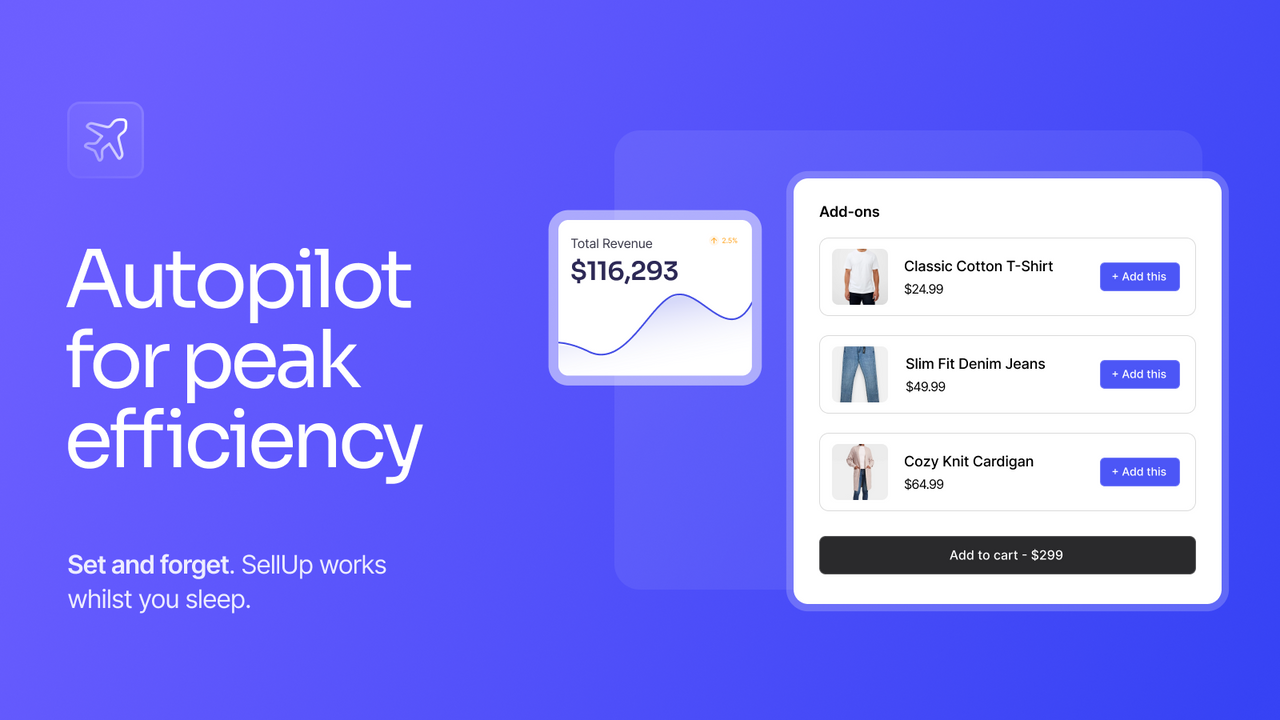
Why I still rate SellUp highly for this use case
SellUp is well suited to this keyword because it was built specifically around add-ons and upsells across the customer journey, including the product page. It supports one-click add-ons, custom styling and placements that merchants can actually use without heavy development work.
It is also one of the few apps ranking directly in the SERP for this topic, which shows how closely it matches search intent. If you want to explore it, here is the app listing for SellUp: Add ons & Cart Upsell.
I am obviously close to this category, so I will be direct: no app is best for every store. But for merchants who want product page add-ons, cart upsells and a straightforward setup, this is exactly the sort of app I would shortlist.
How do I set up Shopify upsell on the product page?
You can set up Shopify product page upsells with an app, a theme section, or custom development. For most merchants, an app-based setup is the fastest and safest option.
The exact steps depend on the app, but the setup flow is usually very similar. Here is the process I recommend.
- Choose your offer type - add-on, bundle, upgrade, free gift or service extra.
- Define the trigger - specific products, collections, vendors, tags or exclusions.
- Select the upsell products manually where possible. Manual curation usually beats generic automation early on.
- Pick the placement - below buy button, above description, in a dedicated block or popup.
- Add a clear CTA such as “Add for £9.99” or “Complete the set”.
- Apply any discount logic carefully. Use just enough incentive to improve conversion.
- Preview on desktop and mobile before publishing.
- Track AOV, take rate and conversion rate for at least 2-4 weeks before making major changes.
Apps like BOGOS make this easy with dedicated offer types such as frequently bought together. Apps like Upsell.com by ReConvert and AfterSell are useful if you want product-page logic plus broader funnel optimisation.
If you prefer a no-code route, a section-based approach via Section Store can work well, especially for merchants comfortable using the Shopify theme editor.
What should a high-converting product page upsell look like?
A high-converting product page upsell should be specific, relevant and quick to act on. The shopper should understand the offer in seconds.
In practice, the best-performing offers usually share the same traits:
- Relevant to the product being viewed
- Priced sensibly relative to the main item
- Visible without overwhelming the page
- Easy to add in one click
- Written with benefit-led copy rather than vague labels
For example, “Add gift wrap for £4.99” is better than “Optional extra”. “Protect your order with a premium case” is better than “Recommended product”. Copy matters more than many merchants realise.
If you are working on the wider conversion side of your product pages, I would also read How to Maximize Revenue from Your Shopify Product Pages. Upsells work best when the underlying product page already converts well.
What mistakes should you avoid with product page upsells?
The biggest mistake is showing irrelevant offers. If the upsell does not logically connect to the product, it adds friction and weakens trust.
I see the same problems repeatedly when auditing Shopify stores:
- Too many offers on one page, which creates choice overload
- Random recommendations that have no clear relationship to the main product
- Poor mobile layout where the widget pushes important content too far down
- Weak CTAs that do not explain the benefit or price
- Heavy discounting that trains customers to wait for deals
- No exclusions which leads to duplicate or conflicting offers
Another common issue is speed. Some merchants stack multiple apps that all inject scripts into the product page. That can damage performance and create layout shifts. If you have not reviewed this recently, read The Hidden Truth About Shopify Speed Optimization Scams because speed and conversion are tightly linked.
How do I measure whether my Shopify product page upsell is working?
You should measure product page upsells by tracking AOV, upsell take rate, conversion rate and revenue per visitor. Looking at AOV alone can be misleading.
Here are the metrics I care about most when testing upsell performance:
| Metric | What it tells you | Why it matters |
|---|---|---|
| AOV | Average order value after upsell changes | Shows whether basket size is increasing |
| Upsell take rate | Percentage of shoppers who accept the offer | Shows whether the offer itself is compelling |
| Product page conversion rate | How many product page visitors convert | Ensures upsells are not hurting core conversion |
| Revenue per visitor | Total revenue divided by product page visitors | Useful for measuring the net impact |
| Attach rate by product | Which main products generate the most upsell acceptance | Helps you identify your best pairings |
In my experience, merchants often stop testing too early. Give a product page upsell at least 2-4 weeks of clean data unless traffic is very high. Seasonality, promotions and traffic source mix can distort short-term results.
Should you use AI for product page upsells on Shopify?
AI can improve product page upsells, but only if the recommendations stay relevant and understandable. AI is useful for suggestion logic, not for replacing merchant judgement.
There is a lot of hype around AI-generated recommendations in ecommerce right now. Some of it is justified. AI can help identify patterns in what products are commonly bought together or which segments respond to upgrades. But if the output becomes unpredictable, it can hurt trust.
I think the best use of AI is to support curation rather than fully automate it. If this is an area you are exploring, read AI-powered upsells: the future of ecommerce conversion, How to upsell on Shopify leveraging AI and How to Optimize Your Shopify Store for AI Shopping Agents.
What is the best strategy for different store types?
The best strategy depends on your catalogue, margins and buying behaviour. A jewellery store should not use the same upsell structure as a supplements brand or a print on demand shop.
| Store type | Best product page upsell type | Example |
|---|---|---|
| Fashion | Frequently bought together | Dress + belt + matching accessory |
| Beauty | Routine bundles | Cleanser + serum + moisturiser |
| Electronics | Add-ons and protection | Device + charger + case + warranty |
| Print on demand | Service add-ons | Gift wrap + rush production + premium packaging |
| Subscription | Upgrade upsells | Monthly plan to larger bundle or longer commitment |
| Homeware | Bundle discounts | Main item + care kit + matching set |
If you run a custom or made-to-order business, product page upsells often work best when tied to operational workflows. That is why articles like How to Track Customized Orders in Shopify can be surprisingly relevant to upsell planning too.
Is Shopify upsell on the product page worth it?
Yes, for most stores it is absolutely worth it, provided the offers are relevant and the implementation is clean. It is one of the few conversion tactics that can raise revenue without needing more traffic.
That said, not every store should start with the same setup. If you are early-stage, begin with one or two tightly matched add-ons. If you already have strong traffic and clear product affinities, test bundles, dynamic recommendations and upgrade logic.
My honest view after years in the Shopify ecosystem is this: product page upsells are not magic, but they are one of the most practical revenue levers available to merchants. The stores that win are the ones that keep the experience simple, relevant and measurable.
If you want a broader roadmap beyond the product page, I would next read How to upsell on Shopify in 2026 and How to Cross-Sell Matching Variants and Boost Your Shopify Store’s AOV.