If you want to change the tracking number on automatic notifications in Shopify, the quickest method is to edit the tracking details on the fulfilled order and tick the option to notify the customer. Shopify then updates the tracking information across the order, the customer timeline, and the relevant shipping emails.
That is the short answer, but there are a few important caveats. In my experience building Shopify apps and helping merchants troubleshoot post-purchase flows, most tracking problems are not caused by the email itself. They usually come from the wrong carrier being selected, a custom notification template missing the right Liquid variables, or a fulfilment being updated without sending the customer a fresh notification.
This guide walks through the exact steps, what Shopify sends automatically, how to fix broken tracking links in your email templates, and when it makes sense to use an app instead.
How do I change the tracking number on automatic notifications in Shopify?
You change the tracking number by editing the fulfilment on the order and resending the shipping update notification. The key step is enabling the customer notification when you save the new tracking details.
Here is the current process in Shopify admin for already fulfilled orders:
- Go to Orders in your Shopify admin.
- Open the order you want to update.
- In the Fulfilment section, find the fulfilled shipment.
- Click the three-dot menu or more actions menu next to that fulfilment.
- Select Edit tracking.
- Update the tracking number.
- Select the correct shipping carrier so Shopify can generate the right tracking link.
- If needed, add a custom tracking URL or extra tracking numbers for multi-package shipments.
- Tick the box to send a notification email to the customer.
- Click Save.
If you skip the notification checkbox, Shopify will still update the order internally, but the customer may not receive a fresh automatic email with the corrected tracking number. That is the part many merchants miss.
Does Shopify automatically send tracking number updates?
Yes, Shopify can automatically send tracking updates, but only if the relevant customer notifications are enabled and you choose to notify the customer when editing fulfilment tracking. Automatic emails are not guaranteed if your notification settings or templates have been customised incorrectly.
Go to Settings > Notifications > Customer notifications and check the shipping-related templates. The most relevant ones are usually Shipping confirmation and Shipping update. Depending on your setup, you may also see Out for delivery and Delivered notifications.
Shopify's own help docs on customer notifications and order status updates confirm that updated tracking can trigger customer-facing emails when configured properly.
If your store uses the default Shopify templates, tracking links usually work out of the box. If you or a developer customised those templates months or years ago, it is worth reviewing them carefully. I have seen plenty of stores accidentally remove key Liquid variables while rebranding emails.
How do I add or change tracking before fulfilling an order?
You can add the tracking number during fulfilment, which is often the cleanest option because Shopify includes it in the initial shipping confirmation email. This is the best route if the order is still unfulfilled or partially fulfilled.
Follow these steps:
- Go to Orders in Shopify admin.
- Open the relevant order.
- In the Unfulfilled section, click Fulfil item(s).
- In Tracking information, enter the tracking number from your carrier.
- Check whether Shopify auto-detects the carrier correctly.
- If the carrier is unsupported, choose Custom carrier and paste the full tracking URL.
- Click Fulfil item(s).
This matters because a valid tracking number plus the correct carrier usually gives the customer a clickable tracking link in the shipping confirmation email and on the order status page.
If you also want to improve the post-purchase experience beyond email, Shopify's Shop delivery tracking documentation is worth reading. It explains how customers can track orders in the Shop app when the tracking data is complete.
Why is the tracking link in my Shopify email not working?
The most common reasons are an incorrect carrier, a malformed tracking number, or a customised email template that no longer includes the right tracking variables. In other words, the problem is often with the data or template, not Shopify itself.
Here are the issues I see most often:
- The wrong carrier is selected, so Shopify builds the wrong tracking link.
- Extra spaces or characters were pasted into the tracking number field.
- The carrier is unsupported, but no custom tracking URL was added.
- Your notification template was customised and the tracking link code was removed or broken.
- The customer was not re-notified after the tracking number was changed.
- Multiple fulfilments exist and the wrong one was edited.
In my experience, the quickest fix is to first edit the fulfilment, reselect the carrier, save, and resend the notification. If that does not solve it, inspect the email template next.
How do I edit Shopify notification templates to include tracking links?
You edit Shopify notification templates from the Notifications area in admin. The important part is preserving the Liquid variables Shopify uses to output the tracking URL.
If the tracking information is missing from your emails entirely, do this:
- Go to Settings > Notifications.
- Open Shipping confirmation or Shipping update.
- Click Edit code.
- Check that the template still contains the tracking-related Liquid variables.
- Save your changes and send a test email.
Shopify's guide on customising notification templates is the official reference here.
Important: do not remove variables like {{ tracking_url }} or loop structures that output multiple tracking URLs. If you do, the email may still send, but the customer will not get a usable link.
What code should I use to show the tracking link?
A simple loop over the fulfilment tracking URLs is usually enough. This is the safest approach if you want a clickable button or link for each package.
You can use this snippet in the relevant notification template:
{% for tracking_url in fulfillment.tracking_urls %}

<a href="{{ tracking_url | escape }}" class="button__text">Track your package</a>

{% endfor %}
If you ship multi-package orders, looping through fulfillment.tracking_urls is better than hard-coding a single link. It is more resilient and closer to how Shopify structures fulfilment data now.
How do I test the updated email template?
You should always preview and test the notification before relying on it. A test email catches broken markup, missing variables, and awkward branding issues quickly.
- Use Preview in the notification editor.
- Click Send test email to send it to your admin address.
- Open the email on desktop and mobile.
- Click the tracking link and confirm it opens the correct carrier page.
- If you use a custom carrier URL, verify the full link structure carefully.
I also recommend testing with a real fulfilment on a low-risk order. Preview emails are useful, but nothing beats checking the exact customer experience end to end.
What is the difference between Shipping confirmation and Shipping update in Shopify?
Shipping confirmation is usually sent when an order is fulfilled and tracking is first added. Shipping update is typically sent when tracking details are changed after fulfilment.
This distinction matters for this keyword because many merchants edit the tracking number successfully, but then wonder why the customer did not receive a second email. The answer is often that the Shipping update notification is disabled, or the agent editing the order did not tick the notification box.
Here is a quick comparison:
| Notification | Typical trigger | What it should include | Common issue |
|---|---|---|---|
| Shipping confirmation | Initial fulfilment | Tracking link, shipped items, order status link | Tracking was not added at fulfilment time |
| Shipping update | Tracking edited after fulfilment | Updated tracking details | Notification disabled or customer not re-notified |
| Out for delivery | Carrier status update | Expected delivery messaging | Carrier data not passing through cleanly |
| Delivered | Carrier marks parcel delivered | Delivery confirmation | Carrier not supported or event not recognised |
If you are also improving your broader order communications, these related guides may help: How to Customize the Order Status Page on Shopify and How to Update the Text on the Shopify Order Confirmation Page in 2026.
Can I change tracking numbers in bulk on Shopify?
Shopify's native admin is best for individual edits, but bulk tracking changes usually require an import workflow or a specialist app. This becomes important once you are handling dozens or hundreds of fulfilment corrections per day.
The original version of this article mentioned CSV imports, and that is directionally useful, but in practice most high-volume merchants now use an app-based approach for safer bulk updates. A tool like Matrixify is commonly used for export-edit-import workflows, especially when dealing with large order sets and post-fulfilment data changes.
For stores processing a lot of orders, I would usually recommend one of these routes:
- Manual edits in Shopify admin for occasional corrections.
- Spreadsheet import workflows when operations teams need to update many orders at once.
- Carrier or tracking apps when you want branded tracking, automatic sync, and better customer visibility.
When I have worked with stores at scale, the biggest gain has not been speed alone. It has been reducing human error when copying tracking numbers between systems.
What is the best app for Shopify tracking notifications?
The best app depends on whether you want branded tracking pages, self-serve order lookup, or operational automation. For most stores, AfterShip, ParcelPanel, and Tracktor are the main names worth comparing.
These apps are especially useful if you want more than Shopify's standard shipping emails. They can improve the customer experience with branded tracking pages, proactive updates, and better support for a wide range of carriers.
How do AfterShip, ParcelPanel and Tracktor compare?
All three can help with tracking visibility, but they are aimed at slightly different use cases. In my view, the right choice depends on whether you prioritise carrier coverage, dropshipping workflows, or a cleaner self-serve tracking portal.
| App | Best for | Strengths | App Store |
|---|---|---|---|
| AfterShip | Best for multi-carrier tracking at scale | Strong carrier coverage, branded tracking pages, delivery notifications | View app |
| ParcelPanel | Best for dropshipping and branded tracking | Real-time tracking, custom pages, useful for AliExpress-style fulfilment setups | View app |
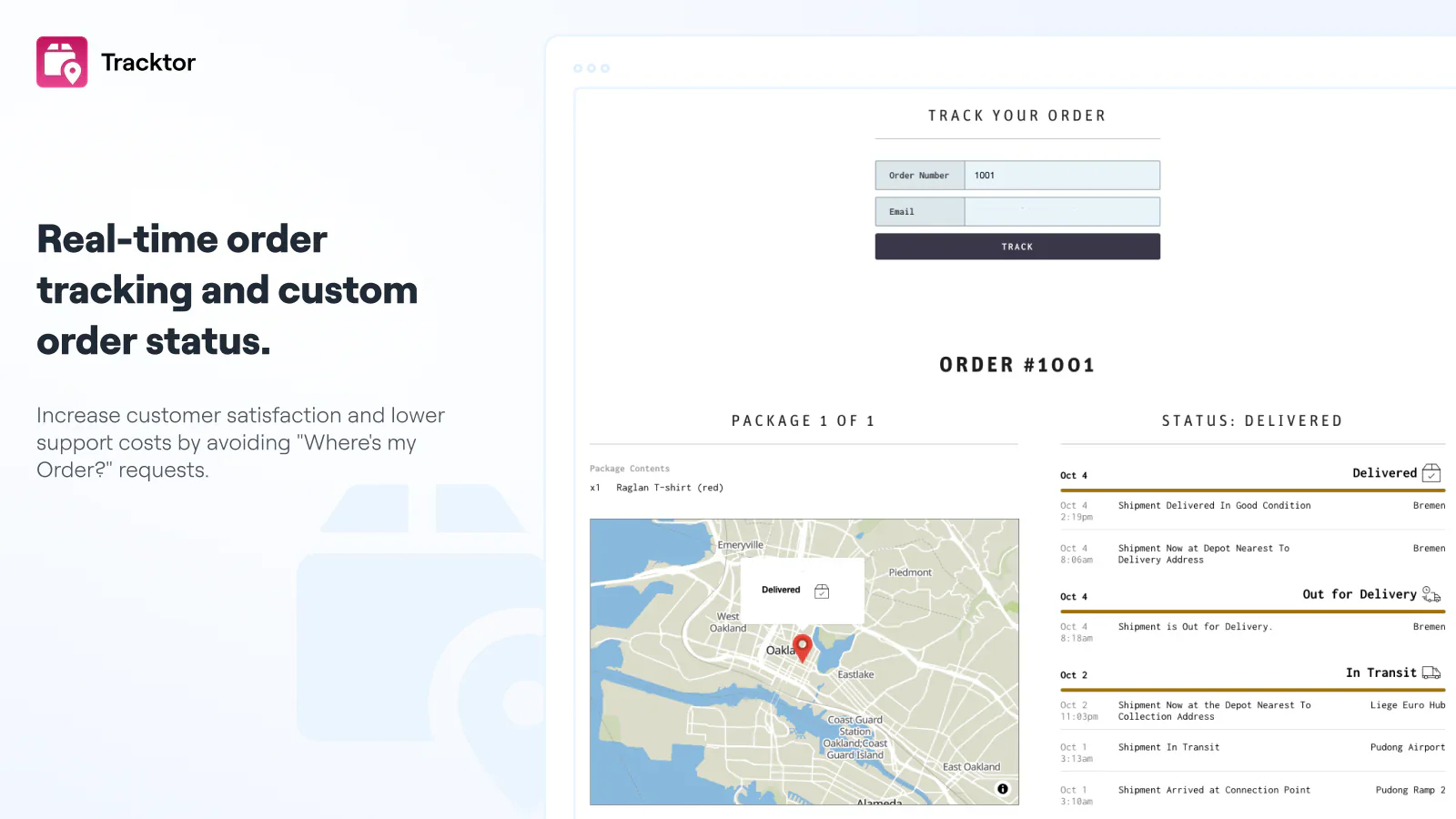
| Tracktor | Best for self-serve order lookup | Customer-facing tracking portal, automation options, simple experience | View app |
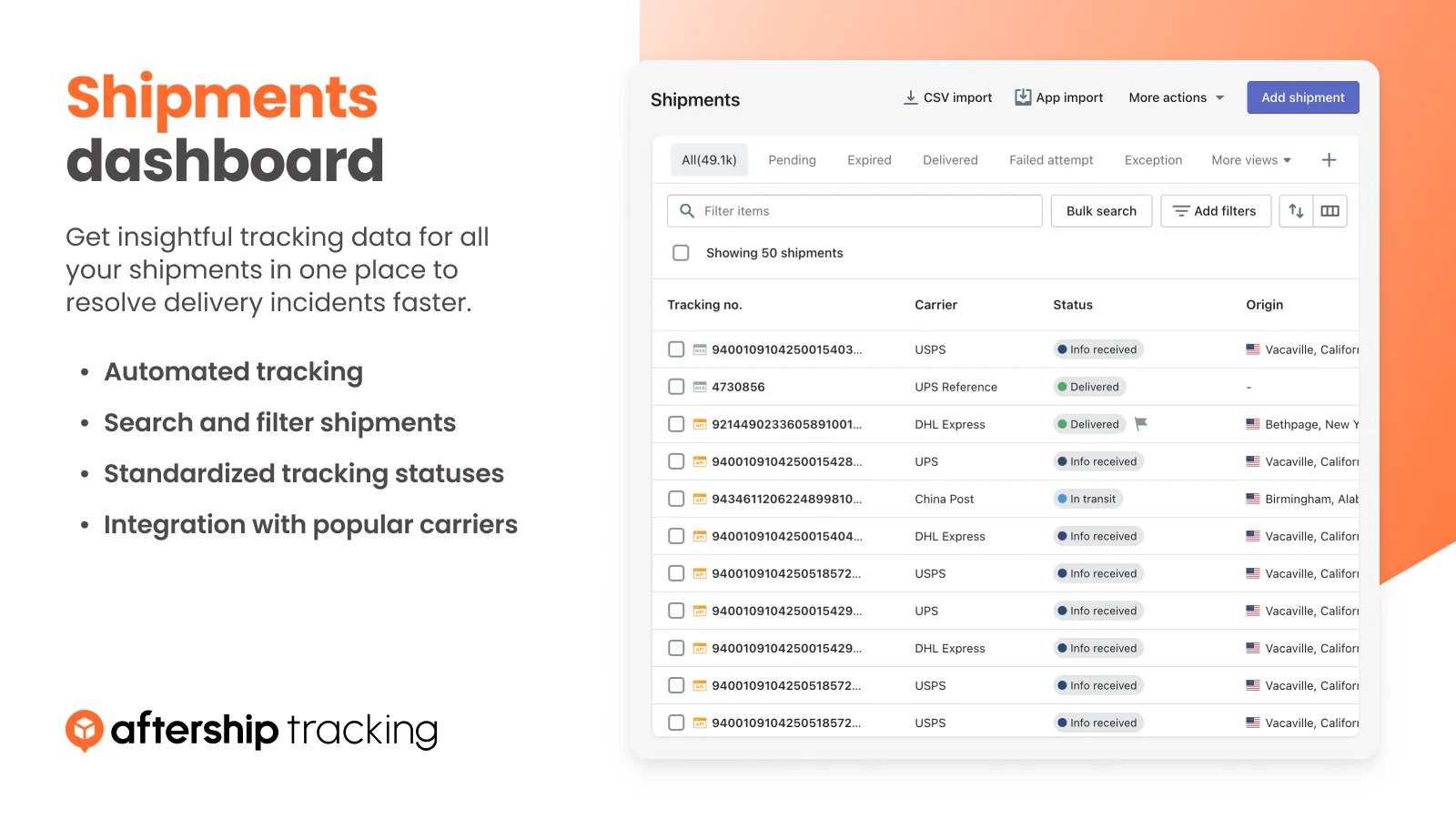
AfterShip
AfterShip is one of the best-known Shopify tracking apps for stores that need broad carrier support and polished post-purchase updates.

If your main pain point is customers asking where their parcel is, AfterShip is a strong option. It is particularly useful for stores shipping internationally or using multiple fulfilment partners.
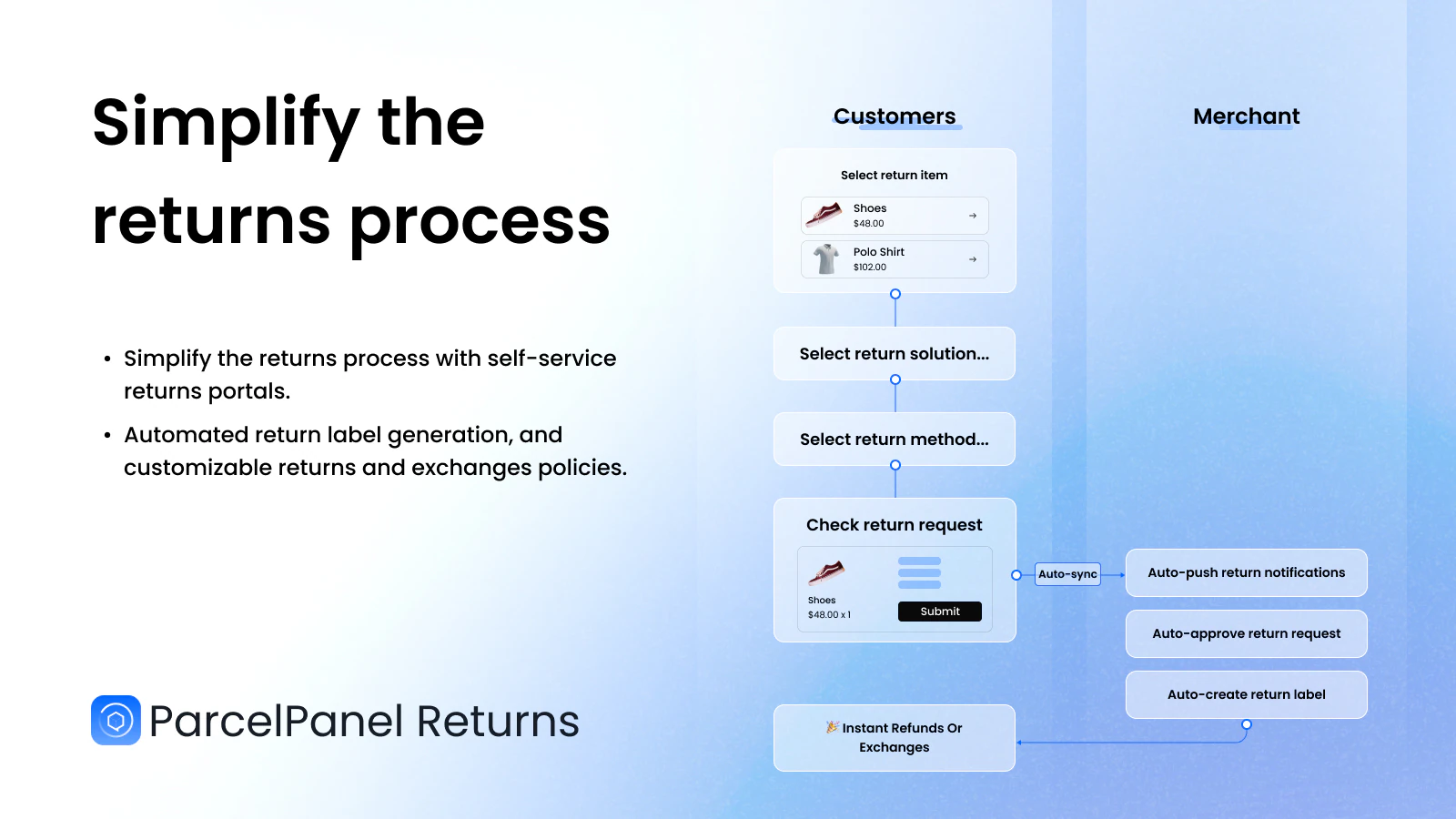
ParcelPanel
ParcelPanel is a good fit for merchants who want branded tracking pages and smoother support for dropshipping-style fulfilment chains.

I have seen ParcelPanel used effectively by stores that want to replace generic carrier pages with a more on-brand experience. That can help keep customers on your site rather than sending them elsewhere.
Tracktor
Tracktor is often the easiest option if you want a dedicated order lookup portal where customers can check status themselves.

Tracktor is worth considering if your support inbox is full of WISMO queries. A decent self-serve tracking page can cut repetitive tickets noticeably.
Should I use Shopify Flow for tracking updates?
Shopify Flow is useful for automation around fulfilment events, but it is not a direct replacement for proper tracking setup. It works best as a layer on top of clean fulfilment data.
For example, you can use Shopify Flow to tag orders when tracking is missing, alert your team when a fulfilment is created without a carrier, or trigger internal follow-up tasks. That is especially helpful for larger teams where mistakes happen between warehouse and support.
In my experience, Flow is excellent for operational guardrails. It is less useful if the underlying issue is simply that the wrong tracking number was entered in the first place.
What else should I check if customers still cannot track their orders?
If you have already edited the tracking number and resent the email, the next step is to check the full post-purchase chain. Tracking issues can surface on the order status page, in the Shop app, or in your fulfilment workflow itself.
Run through this checklist:
- Confirm the tracking number works directly on the carrier's website.
- Verify the carrier selected in Shopify matches the real carrier.
- Make sure the order's correct fulfilment record was edited.
- Check that Shipping update notifications are enabled.
- Review the notification template for missing Liquid variables.
- Test whether the issue appears in the order status page as well as email.
- If using Shop, confirm the tracking data is complete enough for Shop tracking.
If the order status page itself needs work, LaunchTip has a more detailed guide on customising the Shopify order status page. If you are trying to tighten up the whole fulfilment side of operations, you may also find How to Update the Order Status to Delivered in Shopify useful.
What are the best practices for Shopify tracking notifications?
The best practice is simple: add accurate tracking as early as possible, use the correct carrier, and test your customer emails regularly. Most tracking complaints are preventable with a cleaner fulfilment process.
These are the habits I recommend:
- Add tracking immediately when it becomes available.
- Let Shopify auto-detect the carrier, but always verify it.
- Use a custom tracking URL for unsupported carriers.
- Enable Shipping update notifications so edited tracking can be resent.
- Keep your notification templates close to Shopify defaults unless you really need custom code.
- Send test emails after any template changes.
- Consider a tracking app if you want branded pages and proactive updates.
- Use automation to flag fulfilments with missing or malformed tracking.
Accurate tracking does more than reduce support tickets. It also improves trust after checkout, which matters if you want repeat purchases and fewer chargebacks.
Frequently asked questions about changing tracking numbers in Shopify
These are the questions merchants ask most often when fixing automatic tracking notifications.
How do I update my tracking number in Shopify?
Open the order, go to the fulfilment section, choose Edit tracking, replace the number, and save with customer notification enabled. That updates the order and can send a fresh shipping update email.
Does Shopify automatically send tracking numbers?
Yes, Shopify can automatically send tracking numbers in shipping emails when fulfilment notifications are enabled and tracking is added correctly. If templates are customised badly, the link may not appear as expected.
How do I edit notifications on Shopify?
Go to Settings > Notifications, open the relevant customer notification, and edit the content or code. Always test before publishing changes.
How do I get a tracking number for Shopify?
Shopify does not generate carrier tracking numbers itself. You get the number from your shipping carrier, fulfilment provider, or shipping app, then add it to the order in Shopify.
Can I add multiple tracking numbers to one order?
Yes, Shopify supports multiple tracking numbers for multi-package fulfilments. This is especially useful when one order ships in separate parcels.
Will changing the tracking number update the order status page too?
Yes, in most cases the updated fulfilment tracking details appear on the order and its status page once saved. The customer still needs a new email or direct access to that page to see the change promptly.
When is it worth going beyond Shopify's default tracking setup?
Shopify's built-in tracking is enough for many stores, but it starts to feel limited when you need branded tracking pages, better analytics, or more reliable multi-carrier communication. That is usually the point where an app becomes worth the cost.
As a rule of thumb, I would stick with native Shopify if you have low order volume, simple fulfilment, and mainstream carriers. I would look at apps if you have international shipping, dropshipping suppliers, or a support team drowning in tracking questions.
If your post-purchase emails are part of a bigger retention strategy, it is also worth tightening up review requests after delivery. We have a related guide on how to easily send automatic review requests in Shopify in 2026.
Ultimately, changing the tracking number on automatic notifications in Shopify is straightforward once you know where to look. The real win is building a process where those corrections are rarely needed in the first place.